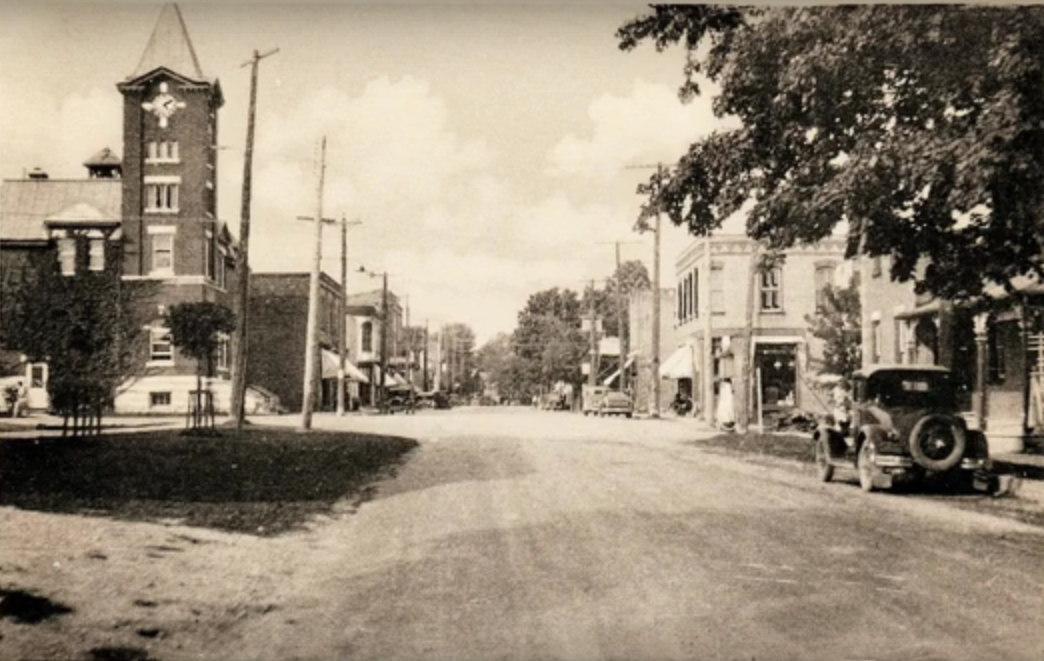
A Time Capsule From 1864 Was Opened At Peterborough County Court House

On Friday (August 19th), a time capsule from 1864 sealed in a large glass jar was removed from the site of the Peterborough County Court House—which began construction that same year.

To put this in perspective, at the time this capsule was put in place, John A. McDonald and George-Étienne Cartier were discussing Confederation and the birth of our nation (1867).

Items from the time capsule.

The items in the time capsule will be catalogued and researched with the intent to create a display at the Peterborough County Courthouse.

The time capsule was placed under the cornerstone of the internal jail cell structure in 1864 and was discovered after County staff undertook to find it based on research of the site and assistance from local residents and historians.

Left to right: Daryl Bennett – Mayor, City of Peterborough; Basia Baklinski – Conservator, Lang Pioneer Village Museum; Jeff Leal – MPP Peterborough

The jar was carefully removed from the site and opened by a Conservator from Lang Pioneer Village Museum, Basia Baklinski—along with Warden J. Murray Jones, MPP Jeff Leal and Mayor Daryl Bennett.

Left to right: Jeff Leal – MPP Peterborough; Joe Taylor – Deputy Warden, Peterborough County; Daryl Bennett – Mayor, City of Peterborough
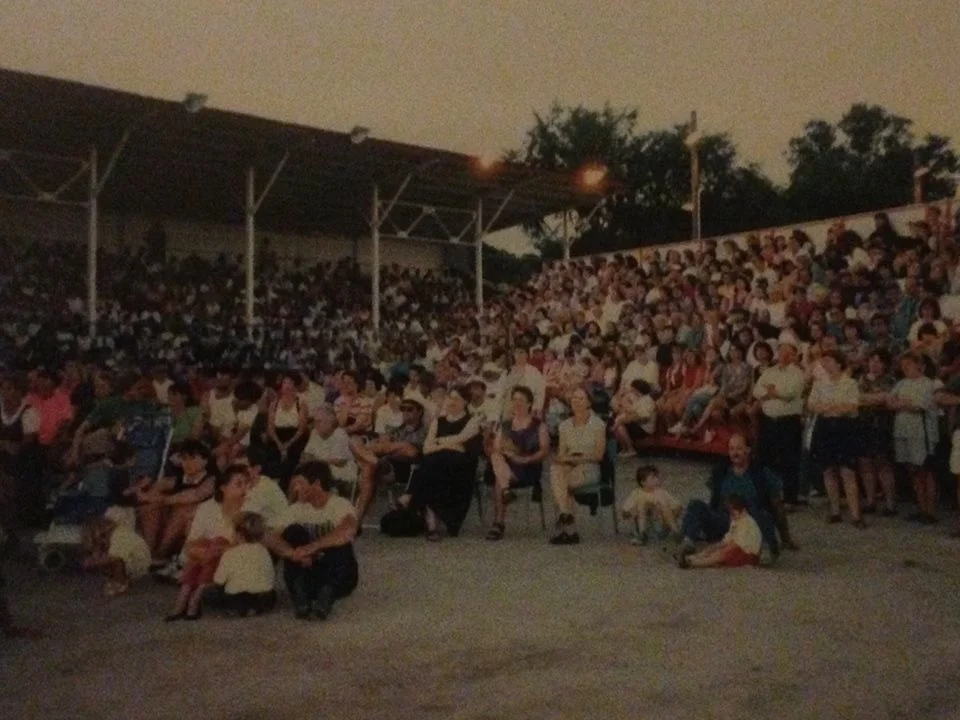

Items inside the capsule included coins, Minutes of Peterborough County Council, The Peterborough Examiner dated June 9, 1864, photos and other documents.

A new time capsule at the site will be placed there in 2017 for our future generations to learn about this era.

Engage with us on social media on Twitter, Instagram and Facebook. Write to us at tips@ptbocanada.com. Sign up for PTBOBuzz newsletter here. Watch our PTBOCanada Love video here.

Neat Historical Pictures From 170 Years Of The Peterborough Ex

Neat Historical Pictures From 170 Years Of The Peterborough Ex

We can smell the cotton candy on these

Read More

15 Neat Facts About The Construction Of The Peterborough Lift Lock

1. The Peterborough Lift Lock on the Trent-Severn Waterway—aka Lock 21—was built between 1896 and 1904 in an era when the strength of people, horse and steam power was shaping the transportation systems of a growing nation.

Opening Day: July 9th, 1904

2. The Lift Lock was part of a larger construction project to canalize the Otonabee River—allowing the Kawartha Lakes to connect with Peterborough's commercial centre.

3. To establish the foundations for the Lift Lock at Armour Hill during construction, 76,000 cubic yards of sand, soil and gravel were excavated until the limestone bedrock was reached 40 feet down.

4. The presswells for the hydraulic rams were excavated a further 75 feet into the rock.

5. A foundation of granite blocks—some weighing a whopping ten tons—was lowered to the bottom to provide a footing for the rams.

6. When completed, over 26,000 cubic yards of Portland cement had been poured, without a single piece of *reinforcing steel.

7. The Lift Lock was at the time the largest structure ever built in the world with unreinforced Portland cement. To compress the Portland cement, Rogers employed hundreds of hand-held air driven compactors.

8. The installation of the steel chambers and hydraulic rams by Dominion Bridge Company of Montreal began in 1901 and was completed in 1904.

9. The original steelwork is still in use today, modified by zinc refinishing and welding on the boat chambers. (New aluminum gates were added during the mid-60s.)

10. Peterborough's Richard Birdsall Rogers (aka R.B. Rogers)—a civil and mechanical engineer from Peterborough who studied at McGill—oversaw the design and construction of the Lift Lock.

RB Rogers, pictured in the dark jacket near the centre, with his team of engineers.

11. As originally built, the Lift Lock could generate all the necessary compressed air and water pumping pressure to operate the gate pivot engine, gate water seals and control systems by opening a water penstock set in the lock's upper reach.

Lift Lock nearing completion, 1903

12. The natural gravity fall of water powered the lock's internal machinery. This included a Taylor hydraulic air compressor, water turbines, water driven gate-engines and pumps.

13. The dual lifts are the highest hydraulic boat lifts in the world, with a lift of 19.8 m (65 ft).

14. The Lift Lock opened July 9th, 1904 to a huge crowd (see photo at top of post).

15. The Lift Lock, which was designated a National Historic Site in 1979, took eight years to construct.

*In the era of construction, the use of reinforcing steel was only just beginning, and the technique was viewed with professional skepticism.

Engage with us on social media on Twitter, Instagram and Facebook. Write to us at tips@ptbocanada.com. Sign up for PTBOBuzz newsletter here.


Timeless Message From 1928 For Peterborough About Buying Local & Believing In Your City

This historical message about Buying Local below is powerful stuff.

"Someone dropped it off to the Chamber," Stu Harrison, CEO of the Peterborough Chamber, tells PTBOCanada. "It's from the 1928 Peterborough Examiner. Apparently it ran several time during the months of March and April that year. A timeless message, 88 years old."

"I have seen things like this," Peterborough historian Elwood Jones tells PTBOCanada. "There were several Buy Local campaigns in the 1920s and 1930s. It may have been a joint venture with the Chamber of Commerce, downtown businesses and the city. We have a scrapbook at Trent Valley Archives, and I think it is in there too."

So yes, in 1928 supporting the Peterborough business community and the entrepreneurial/community spirit was vital—as it is today. Bring it Team Peterborough. It's in our DNA to collaborate and support each other.

Engage with us on social media on Twitter, Instagram and Facebook. Write to us at tips@ptbocanada.com


Engineering Marvel: The Amazing Story Of The Hunter Street Bridge

Engineering Marvel: The Amazing Story Of The Hunter Street Bridge

A Photo Essay by Elwood Jones & Scott Arnold

Read More

These Retro Peterborough Police Car Pictures Are Pure Awesome

Thanks to Lauren Gilchrist, Media Relations and Communications Coordinator from Peterborough Police Service, for digging these gems from the police archives for us.

Tip us at tips@ptbocanada.com. Follow us on Twitter and Instagram, and Like us on Facebook.

Here's A Really Neat Historic Map Of Peterborough

This is an amazing old historic map when Peterborough was basically all land—and was wrapped around the downtown. Can you spot where your house/residence is now?

The map is on a wall in the boardroom in the planning department at City Hall.

Tip us at tips@ptbocanada.com. Follow us on Twitter and Instagram, and Like us on Facebook.

Amazing Late 1940s Footage Of Chemong Lake "Floating Causeway"

Before the Causeway was completed in 1949, there was a floating bridge—aka "Floating Causeway"—connecting Bridgenorth to Ennismore for many years.

It must have been like driving on water, or car surfing, or driving on a dock—especially when waves would come crashing over it.

Watch this amazing footage below from Roy Studios in the late '40s from a promotional film called Call of the Kawarthas showing the Chemong Lake floating bridge in use...

Here is a short bit of film from 'Call of the Kawarthas', a promotional film made by Roy Studios in the late 1940's. It shows the Chemong Lake floating bridge in use.

Posted by Vintage Peterborough, Lindsay and the Kawartha Region on Thursday, March 7, 2013

So let's just never complain about the Causeway again.

Tip us at tips@ptbocanada.com. Follow us on Twitter and Instagram, and Like us on Facebook.

Pagoda Bridge In Jackson Park To Undergo Restoration

The City of Peterborough has hired Wilson Carpentry from Peterborough to undertake an extensive restoration of the Pagoda Bridge located in Jackson Park. The project will address structural and roof components required due to significant deterioration.

File Photo By Evan Holt

File Photo By Evan Holt

Work is scheduled to start this week and will continue for eight to 10 weeks. This preservation project is important, as the bridge is a significant piece of Peterborough's architectural heritage.

In order to ensure public and worker safety, the bridge—which made our list of top romantic spots in Peterborough—will be closed to pedestrian travel beginning August 27th for about six weeks. Pedestrians should plan alternate routes during this period.

Tip us at tips@ptbocanada.com. Follow us on Twitter, Pinterest and Instagram, and Like us on Facebook.