Peterborough Player/Coach Helps Bring Awareness and Pioneer Women's Lacrosse For France
/France Lacrosse is putting a bigger stamp on the map thanks to Peterborough’s Lou Warner, who has helped make that mark since May of 2023.
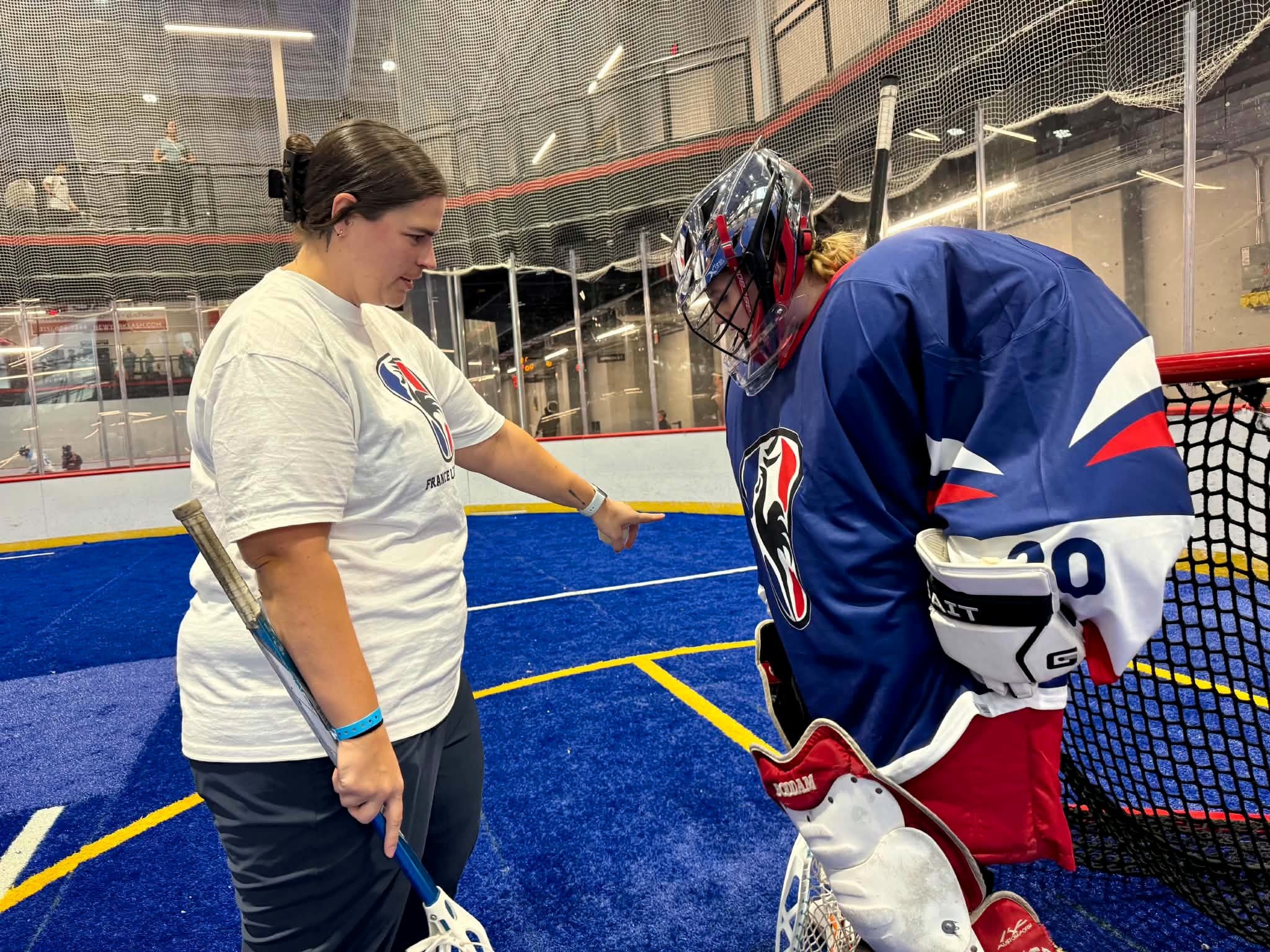
Warner (left) coaching France goaltender Chelsea Breault (right) during warm-ups before a game at the North American Invitational (LAXNAI) at the Utica University Nexus Center in downtown Utica, N.Y. Photo by David Tuan Bui.
She began working with France Lacrosse after her husband, Justin Warner— who is also a lacrosse coach — referred her during his job search with the club when he learned they needed someone to help build the women’s program.
“There was a posting (from France Lacrosse) looking for help; he applied for that, and a week later, he got an interview with our vice president, Dylan,” explained Lou. “He mentioned that I have been playing lacrosse for 20 years and am fluent in French. They flew us to France next week.”
Although she has no biological connection to France, Warner is fluent in French, having grown up in an immersion program throughout school and studied it at Laurentian University in Sudbury.
Warner has worked in multiple roles as a coach for France Lacrosse. She has served as an assistant coach for the men’s and women’s sixes teams.
She recently head-coached the women’s team for box lacrosse when they made their debut at the North American Invitational (LAXNAI) in Utica, N.Y. France had a hot start, winning its first two games against the Valkyries and Poland Heritage. They finished 3-2 and fell short of a bronze medal, losing 3-1 to Poland Heritage in a rematch.
“I thought they (France) did fantastic. I wanted to get that France jersey out there,” explained Warner. “I wanted people to be aware of our program.”
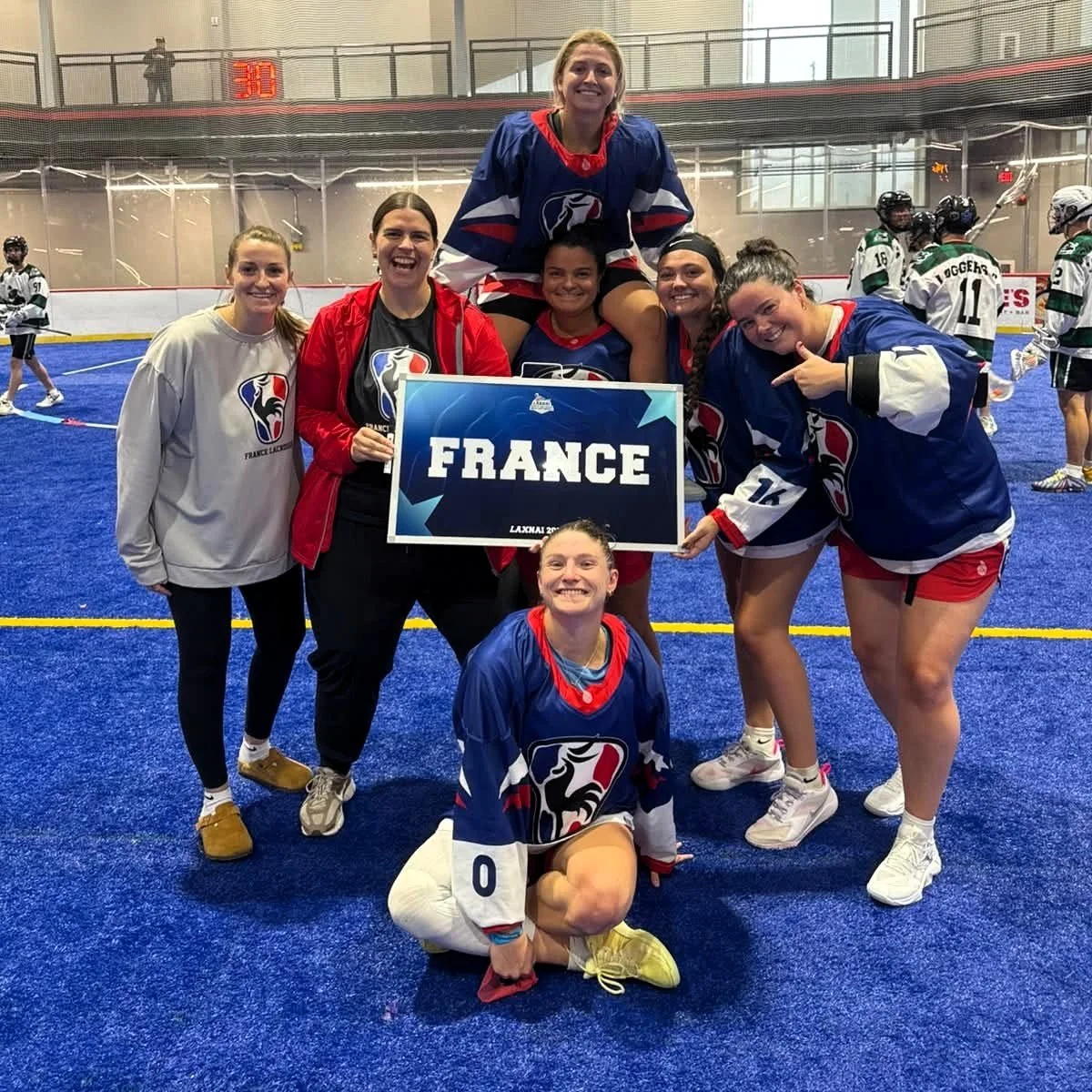
Lou (second from left) with Team France after placing fourth in the LAXNAI 2026 Women’s Division. Photo courtesy of Lou Warner.
Lou was no stranger to LAXNAI as she won the inaugural women’s tournament in 2023 for the Toronto-based BP Lawyers team as their goaltender alongside other Peterborough natives including Erica Evans and Payton Crough. While BP Lawyers did not register a team in this year’s tournament, it gave Lou the opportunity to focus on raising awareness for the French women’s national team at LAXNAI.
“Typically, the BP Lawyers put in a team and this year they did not,” she said. “If they had, I probably would have played and coached. My priority would be coaching because I’m trying to build this program.”
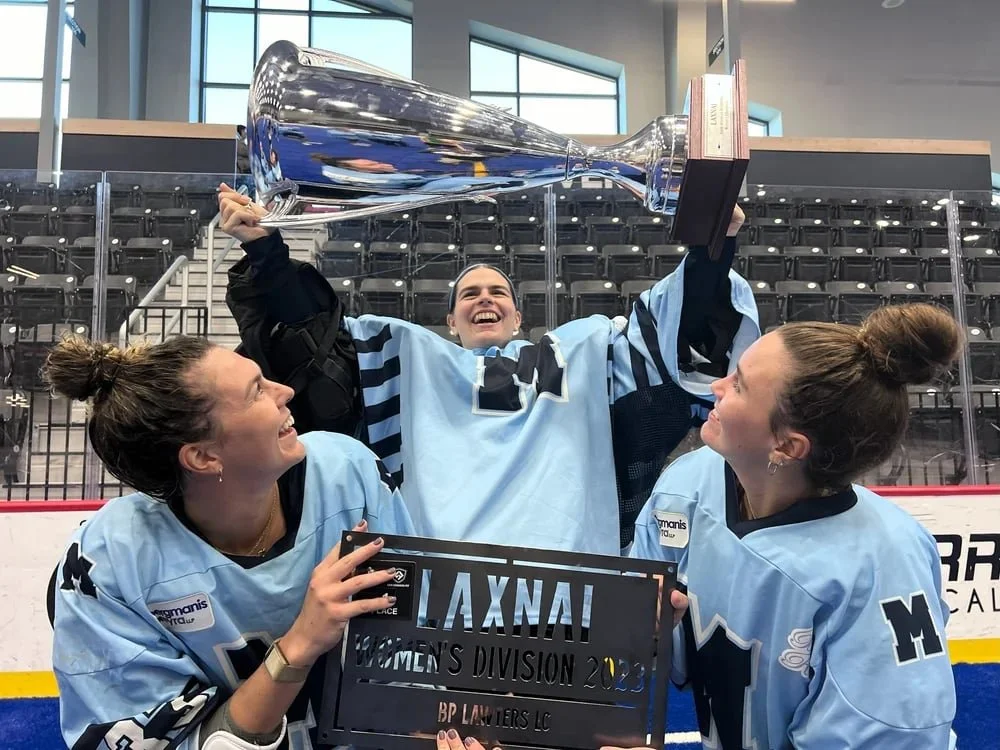
Erica Evans (left), Lou Warner (middle) and Payton Crough (right) celebrating the first-ever LAXNAI Women's tournament championship held in 2023. photo By David Tuan Bui.