Piece Of Peterborough History On Display At Auto Connect Sales

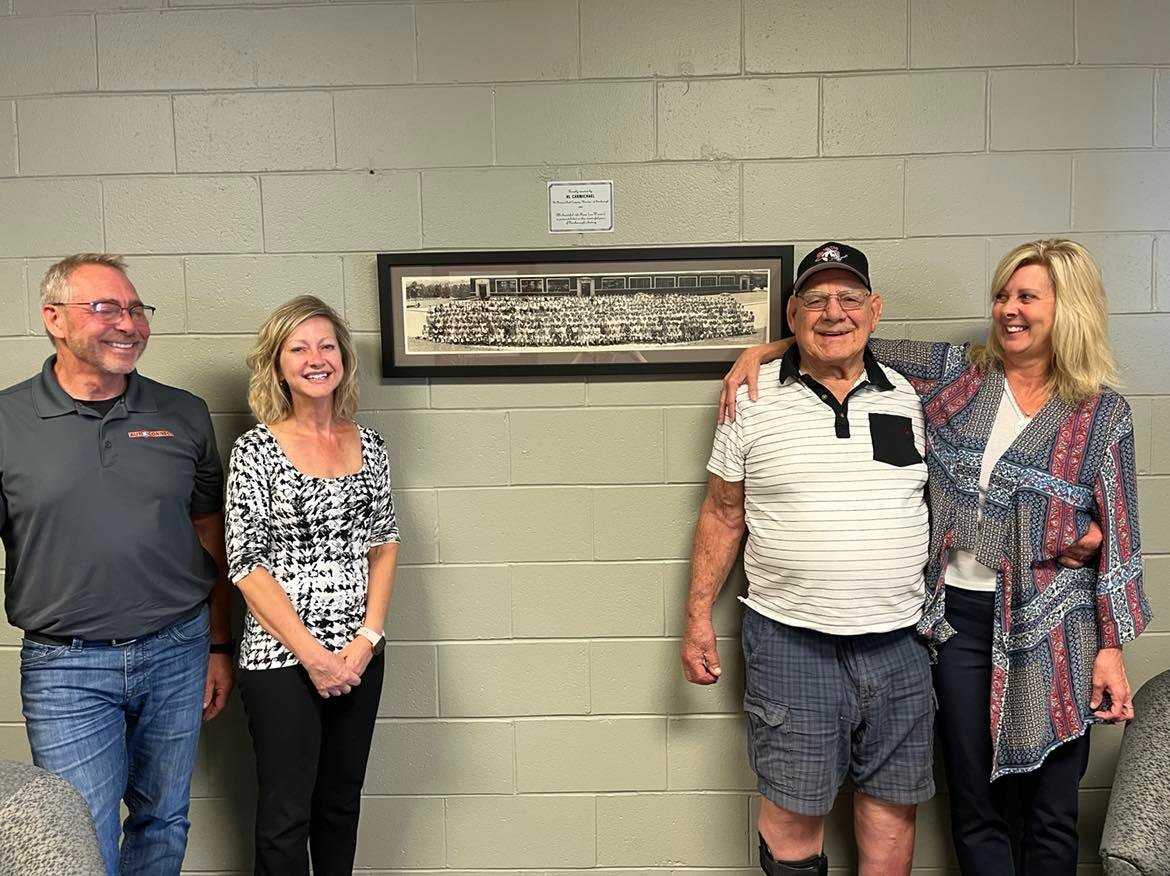
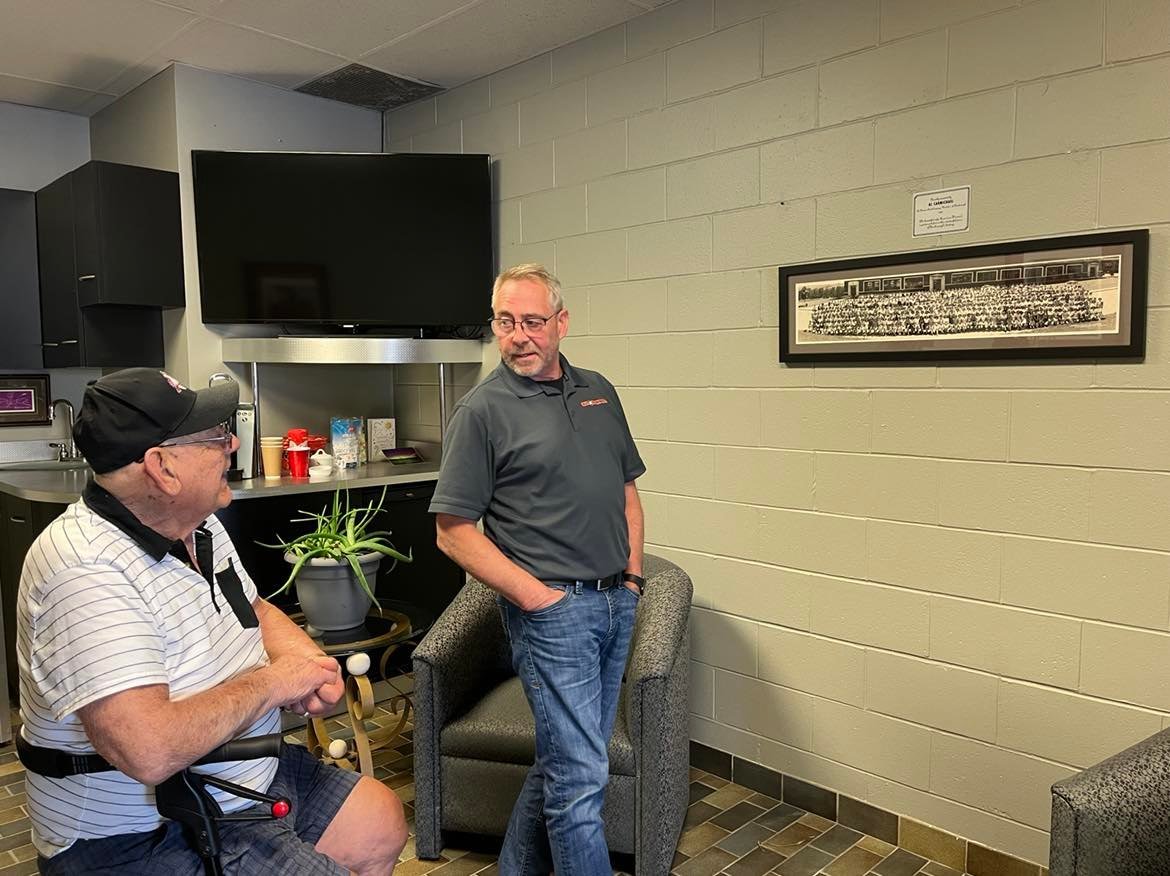
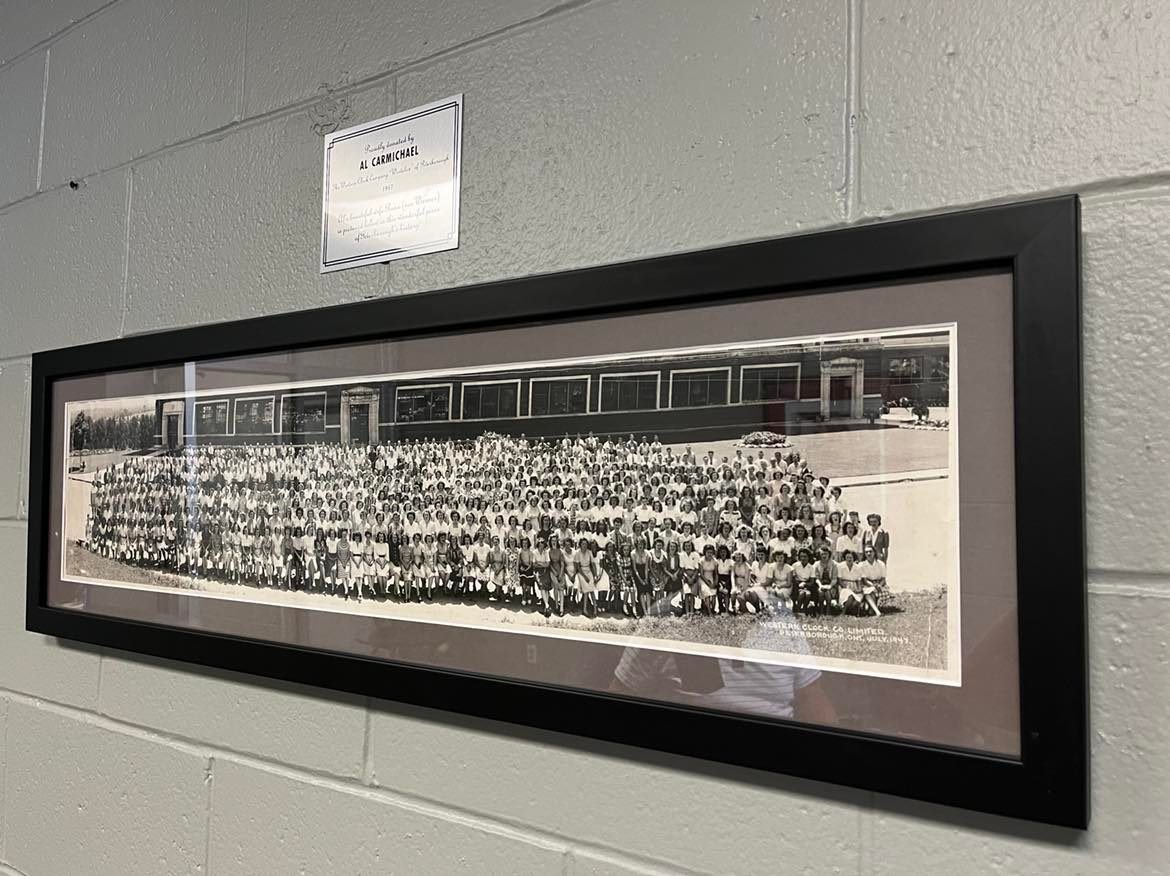
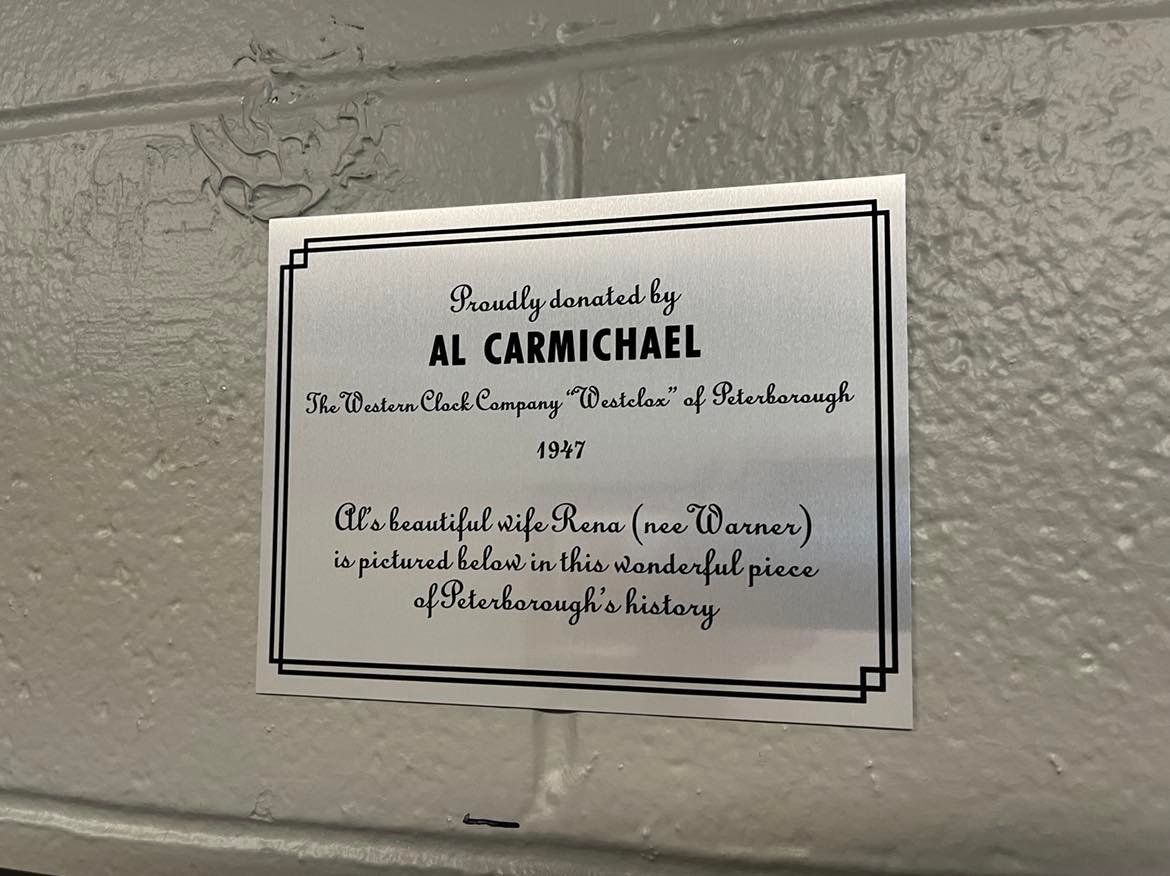
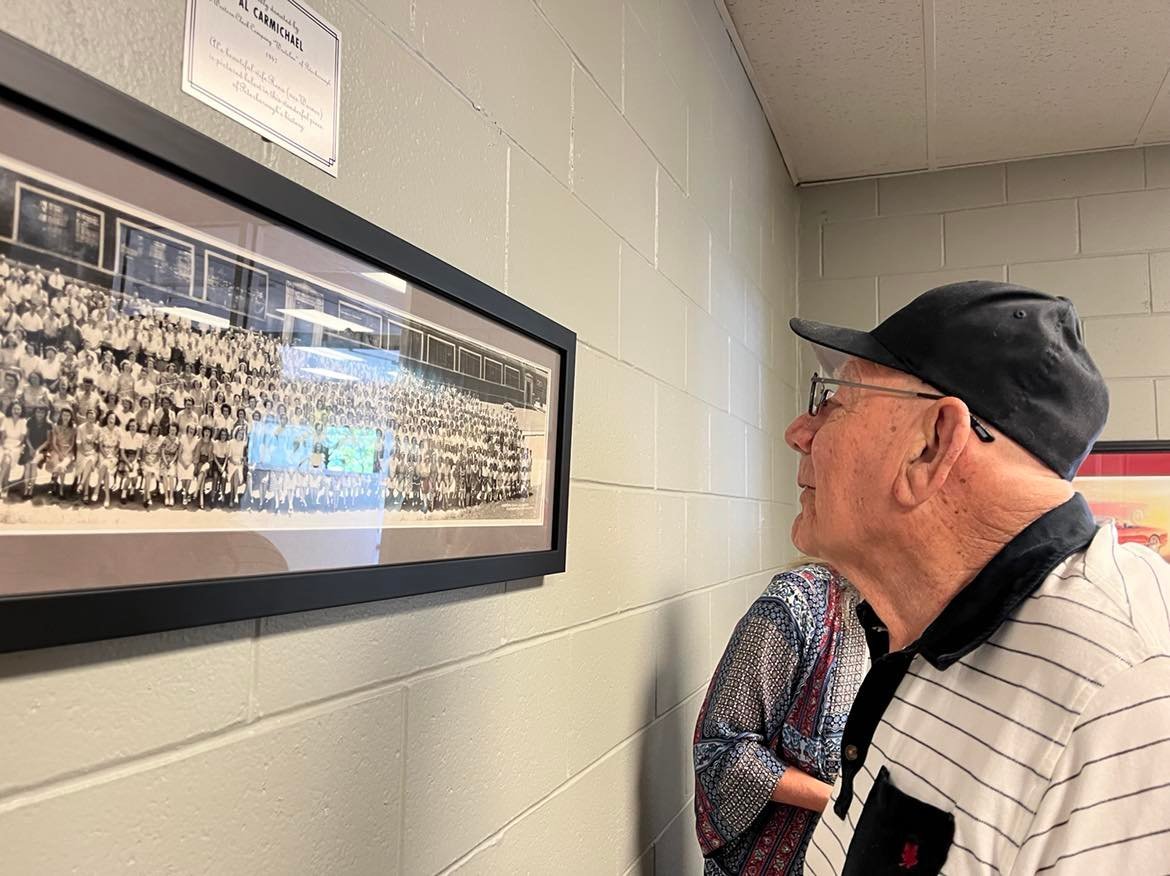
Auto Connect Sales invites the public to visit and view their newly installed photo of Westclox staff in 1947. This piece of Peterborough history was donated by Al Carmichael, who’s wife Rena (nee Warner) can be found in the photo.

Westclox opened in Peterborough in 1920 and made timepieces that were shipped around the world.

Rena worked there before switching careers and working at General Electric, another iconic Peterborough fixture.

Carmichael, who turned 94 on June 1, came to Peterborough from Nova Scotia in 1949.

He began working for ESSO and met his wife on a blind date set up by a friend.

The two were married a few years after the photo was taken, and remained together for 58 years until Rena’s passing.

Carmichael says the photo was found rolled up in the drawer of an old dresser.

Carmichael remained friends with Auto Connect salesperson Alexis Raffan after purchasing a car years ago and the two decided the photo would be best if displayed for everyone to see.

Auto connect owners Cheryl and Martin invite anyone to come in and admire this important piece of Peterborough history.

Engage with us on social media on Twitter, Instagram, Facebook and Tiktok. Write to us at tips@ptbocanada.com. Sign up for PTBOBuzz newsletter here.


Lakefield WWII Veteran Arnold Graham Reflects on Remembrance Day

Arnold Graham, now a month shy of 96-years-old, enlisted with the 2nd (Reserve) Battalion, Prince of Wales Rangers (Peterborough Regiment) on Dec. 2, 1942, just ten days before his 17th birthday.

Left, Arnold Graham 1943, Royal Canadian Airforce (Photo courtesy of Lakefield War Vets) Right, Arnold at the Buckhorn Community Centre, 95 years old. Photo by Angela O’Grady

Graham, the youngest of twelve children born to Claire and Isaiah Graham, was the last of his six brothers to enlist in the army.

“I joined up when I was 17 years old,” he said. “My mother said she didn’t want me to go, but I said I want to go because I had six brothers fighting all over Europe and I want to help them get home a little sooner.”

Graham was released from the Reserve Service May 8, 1943 in order to enlist with the Royal Canadian Air Force.

Because he was not yet 18 his mother was required to provide a letter authorizing his entrance into the RCAF which she provided.

He got his wings in Quebec, then headed to England where he became part of an air crew flying Lancaster four engine bombers.

Graham joined the 433 Squadron of the RCAF, the “Porcupines”, Bomber Command, and became a Flight Sergeant Air Gunner.

The 433 Porcupine Bomber Squadron’s 1st Op was on Jan 2, 1944 (mining) and the last Op was on Apr 25, 1945 (bombing). They flew 2,316 total sorties with a 90.07% success rate.

During one particular mission with the 433 Porcupine Squadron on March 31, 1945 on Op 208 – Hamburg, a 500-bomber raid, set out with Mustang fighter escorts for the first time. F/Sgt Graham, manning the Mid/Upper Gun, was credited with shooting down an Me 262 Schwalbe (Swallow); the first German jet aircraft which had attacked 16 times in 9 minutes. He was the first Canadian Gunner to do so and also recorded the only kill for their Lancaster.

Pictured at the Remembrance Service at the Buckhorn Community Centre are Robert Ough, Arnold Graham and John Bannon, WWII Veteran. Photo by Angela O’Grady.

When Graham reflects on his time in the air force, he recalls his mother.

“My mother was a widow,” he said. “She walked to the post office every day, never missed a day, to get a letter from one of her boys. When she met me when I came home and got off the train in Peterborough she looked at me and said ‘Oh my baby’s home’. I was her baby.”

He also recalls the men he served with in the Air Force.

“I had 13 brothers that I fought with during the war. My own six brothers, and seven in the Air Force. Everytime I go to the Cenotaph on Remembrance Day I start to cry.”

Engage with us on social media on Twitter, Instagram and Facebook. Write to us at tips@ptbocanada.com. Sign up for PTBOBuzz newsletter here.


PTBO Celebrates the 101st Anniversary for the Trent-Severn Waterway of Parks Canada In Video Series

Historian Dennis Carter-Edwards takes you through the history of the Peterborough Lift Lock with the start of an amazing series with PTBOCanada with never-before-seen photos!

This summer series explores the history of Trent-Severn Waterway of Parks Canada on its 101st anniversary!

Part 1: Lift Lock Origins

Carter-Edwards takes us through the story of how canal construction began in Peterborough including Cobourg entrepreneur James Grey Bethune and his mishaps with the Commission.

Part 2: Thomas Stafford Rubidge

Canal engineer Thomas Stafford Rubidge conducts surveys to feasibly further canal works and maybe getting in a fistfight with his assistant.

Part 3: Richard Birdsell Rogers, Henry Holgate and the Lift Lock Construction

Carter-Edwards takes us through the story of how canal construction began in Peterborough including Cobourg entrepreneur James Grey Bethune and his mishaps with the Commission.

Part 4: The Liberal Party and the Peterborough Lift Lock in 1896

See how the Liberal Party thought of the canal system and the Lift Locks after winning the federal election in 1896.

Part 5: Extending the Canal System Amidst the 1911 Election

Despite that the Liberal and Conservative Parties were in favour of an extended navigation system from Lake Simcoe to Georgian Bay, see how politics and the canal system would intersect through the 1911 election.

Part 6: Maintenance, Improvements and Tourism of the Trent Severn Waterway

Following the 1920s, the government had the challenge of maintaining and upkeeping the Lift Locks while using it as a tool to promote tourism.

Engage with us on social media on Twitter, Instagram and Facebook. Write to us at tips@ptbocanada.com. Sign up for PTBOBuzz newsletter here.

Hunter Street Bridge Documentary Set to Premiere For Peterborough

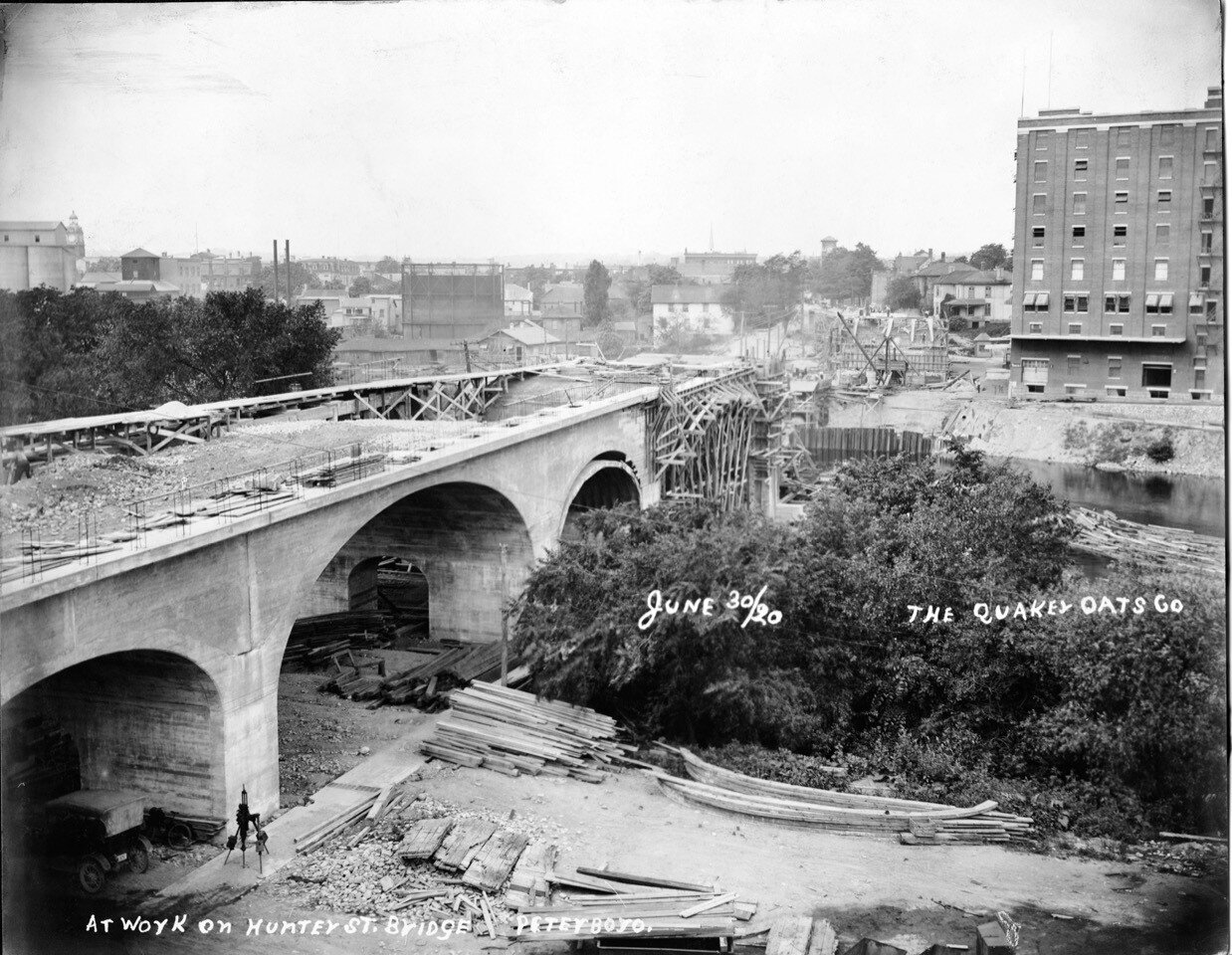
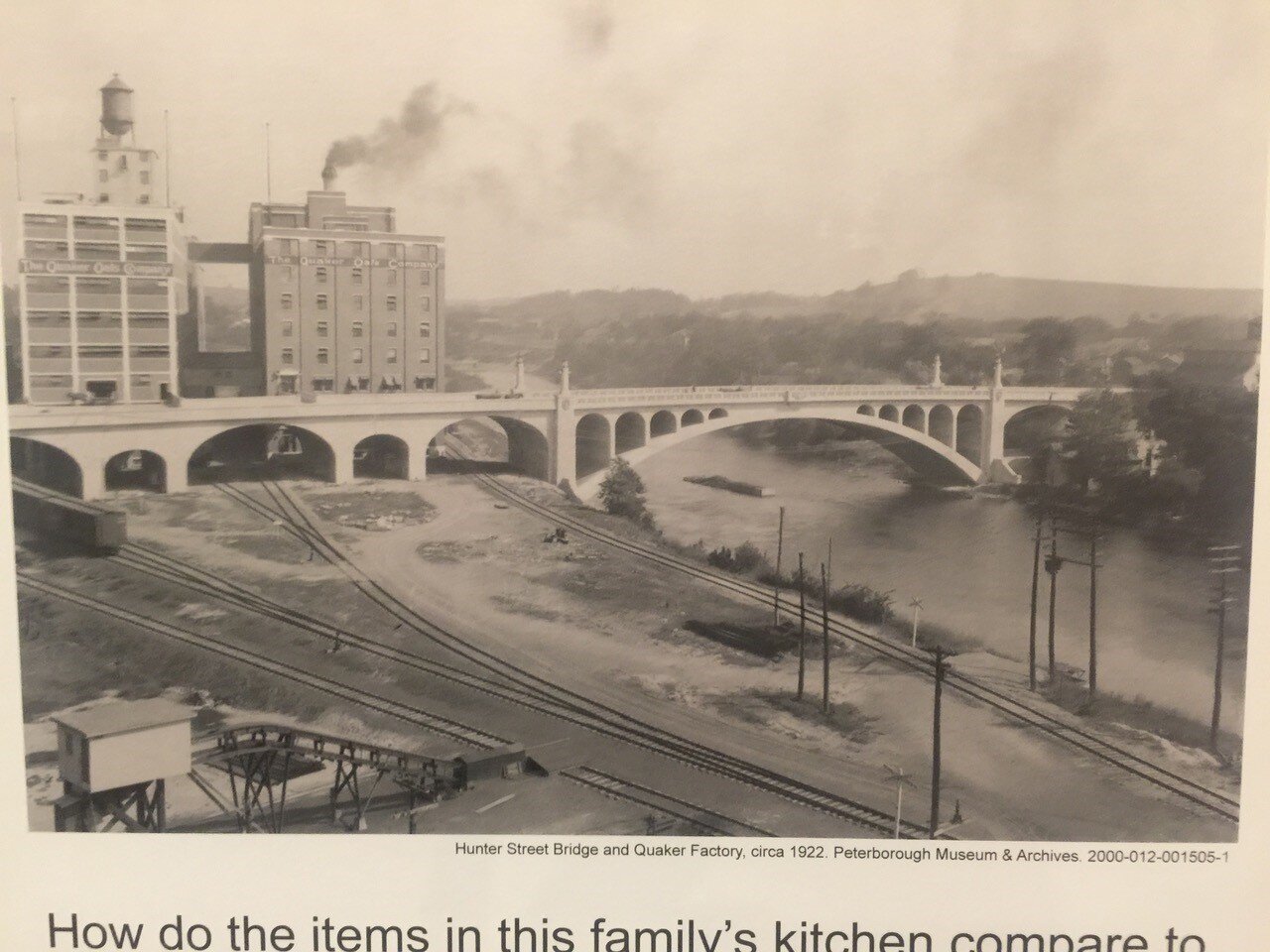
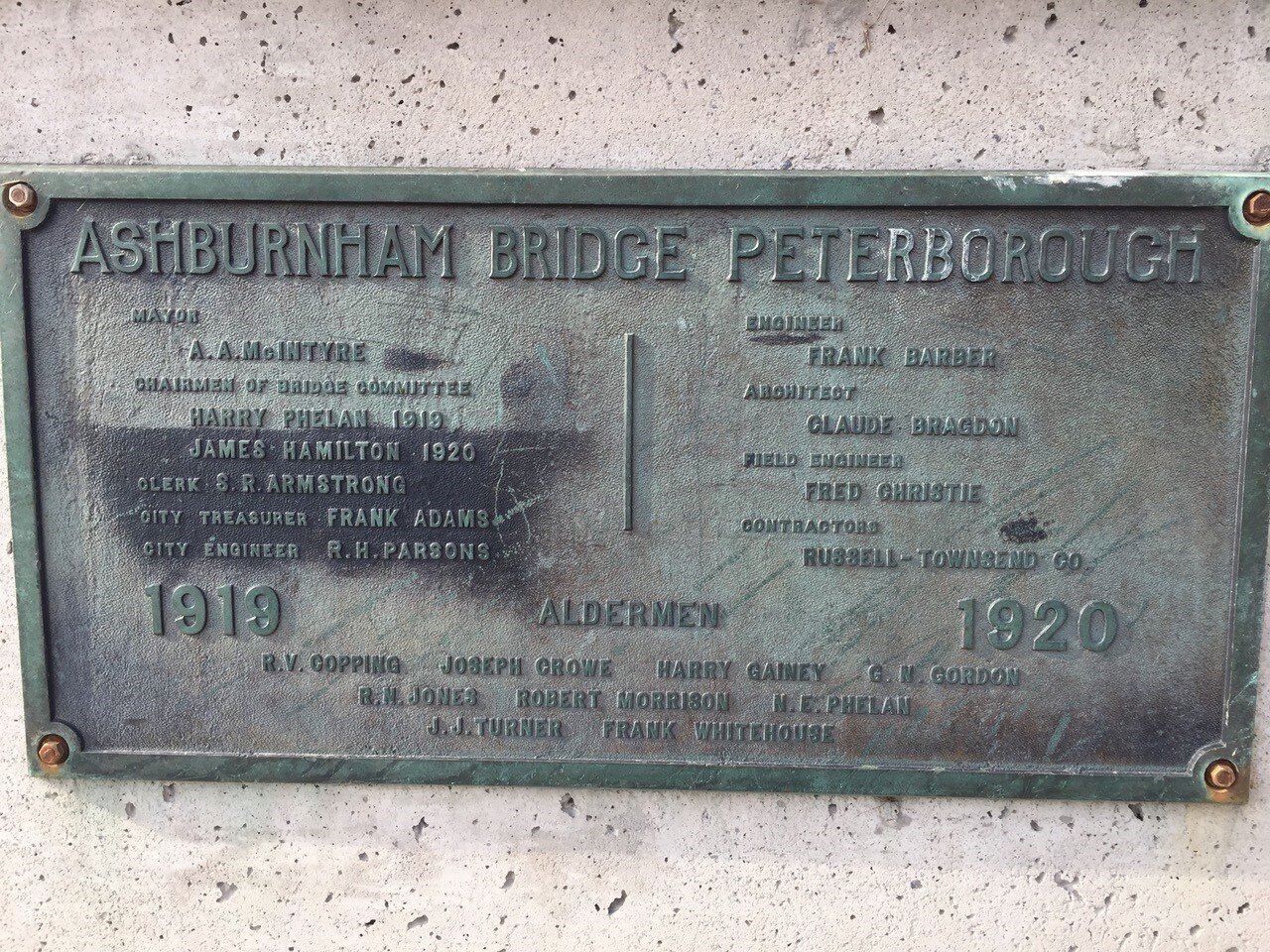
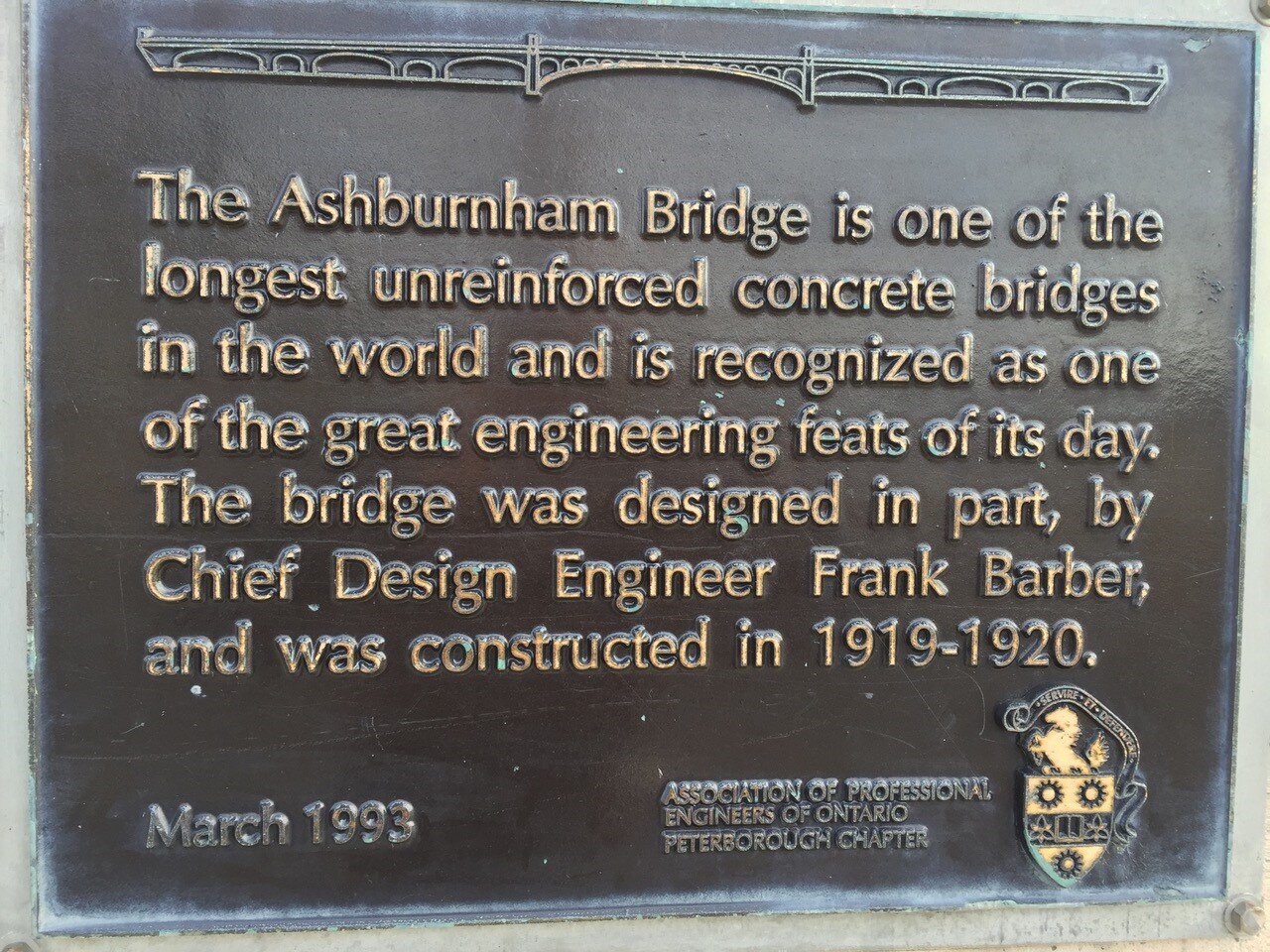
As the Hunter Street bridge celebrates its 100th anniversary this year, a documentary marking the milestone called “Building the Ashburnham Bridge” will air on YourTV on Aug. 2.

Steve Russell, project manager of the documentary was the eldest of four children in his family. Photo by David Tuan Bui.

Steve Russell, project manager of the documentary was the eldest of four children in his family. Photo by David Tuan Bui.

The documentary was created by archivist Elwood Jones and former engineer Steve Russell. It tells the story of the planning and construction of the bridge — also known as the Ashburnham Bridge — between 1919 and 1921.

The project began in 2019 after a grant was given to the Trent Severn Waterway from the Trillium Foundation to take all the old pictures of Quaker Oats and the bridge construction according to Russell.

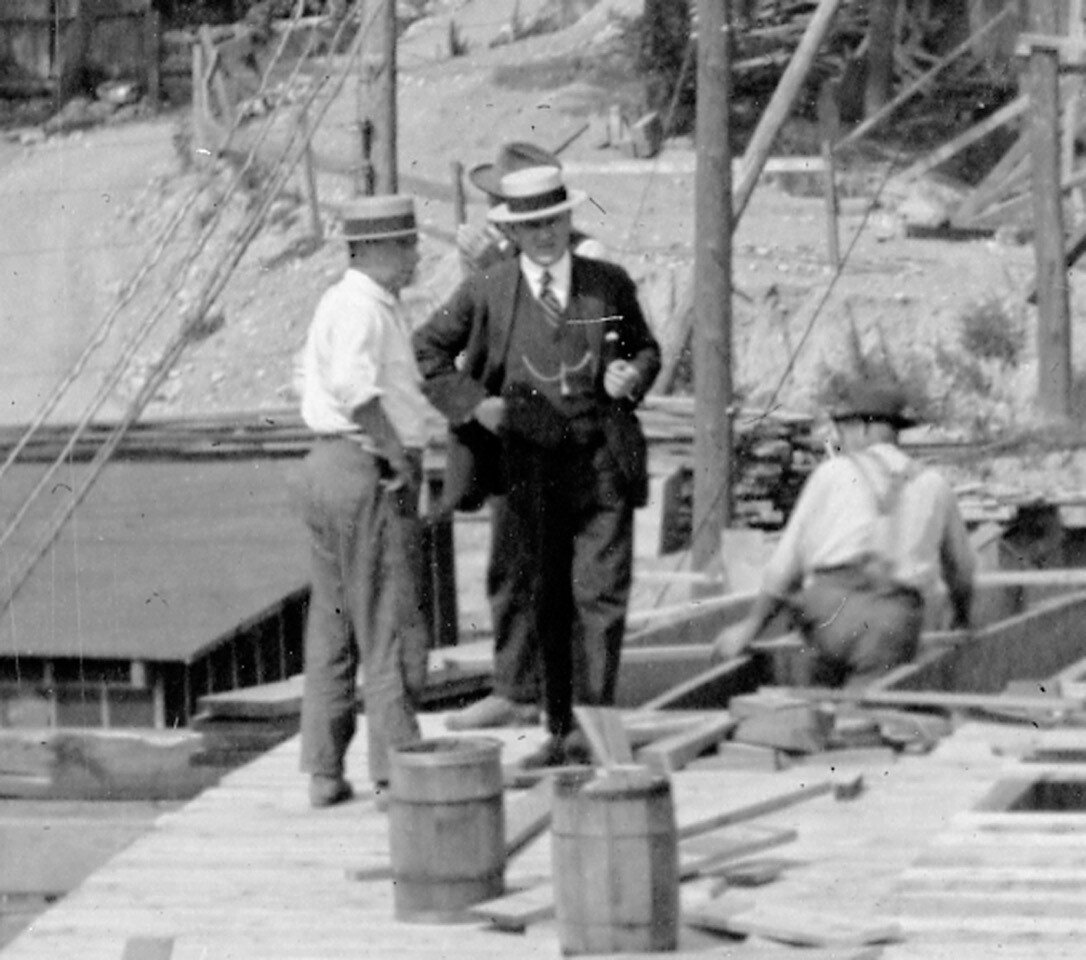
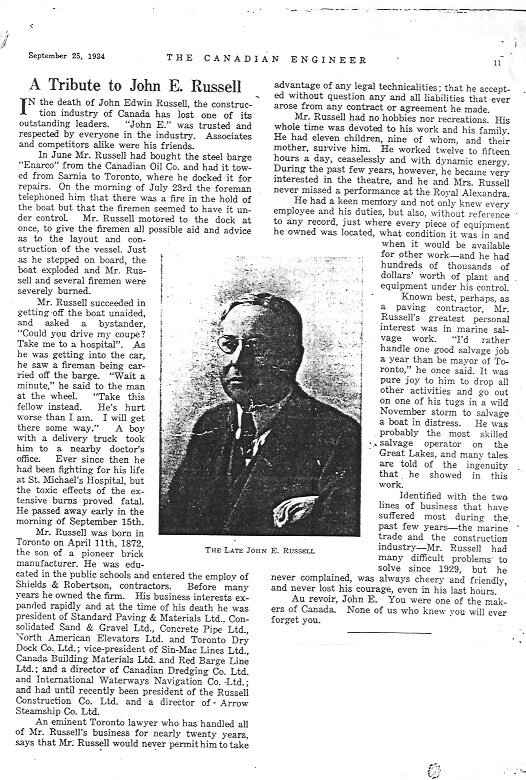
Russell’s grandfather, John E. Russell from the Russell-Townsend Company built the bridge during interesting economic and political times of Peterborough’s history.

That inspired Steve to do the documentary after learning that fact and discovered his grandfather in archived photos.

“Once I identified him (grandfather), that really accelerated my interest for the documentary,” said Steve.

Longtime retired broadcast journalist Graham Hart narrated the half-hour documentary where he met with Steve weekly to work on the project.

“Building the Ashburnham Bridge” airs at 7:00 p.m. on YourTV on Aug. 2.

Engage with us on social media on Twitter, Instagram and Facebook. Write to us at tips@ptbocanada.com. Sign up for PTBOBuzz newsletter here.

Lang Pioneer Village Museum Welcomes Visitors Back For Its 54th Season

As Lang Pioneer Village Museum kicks off its 54th season, they will be open to the public beginning on July 2 according to a press release on Wednesday.

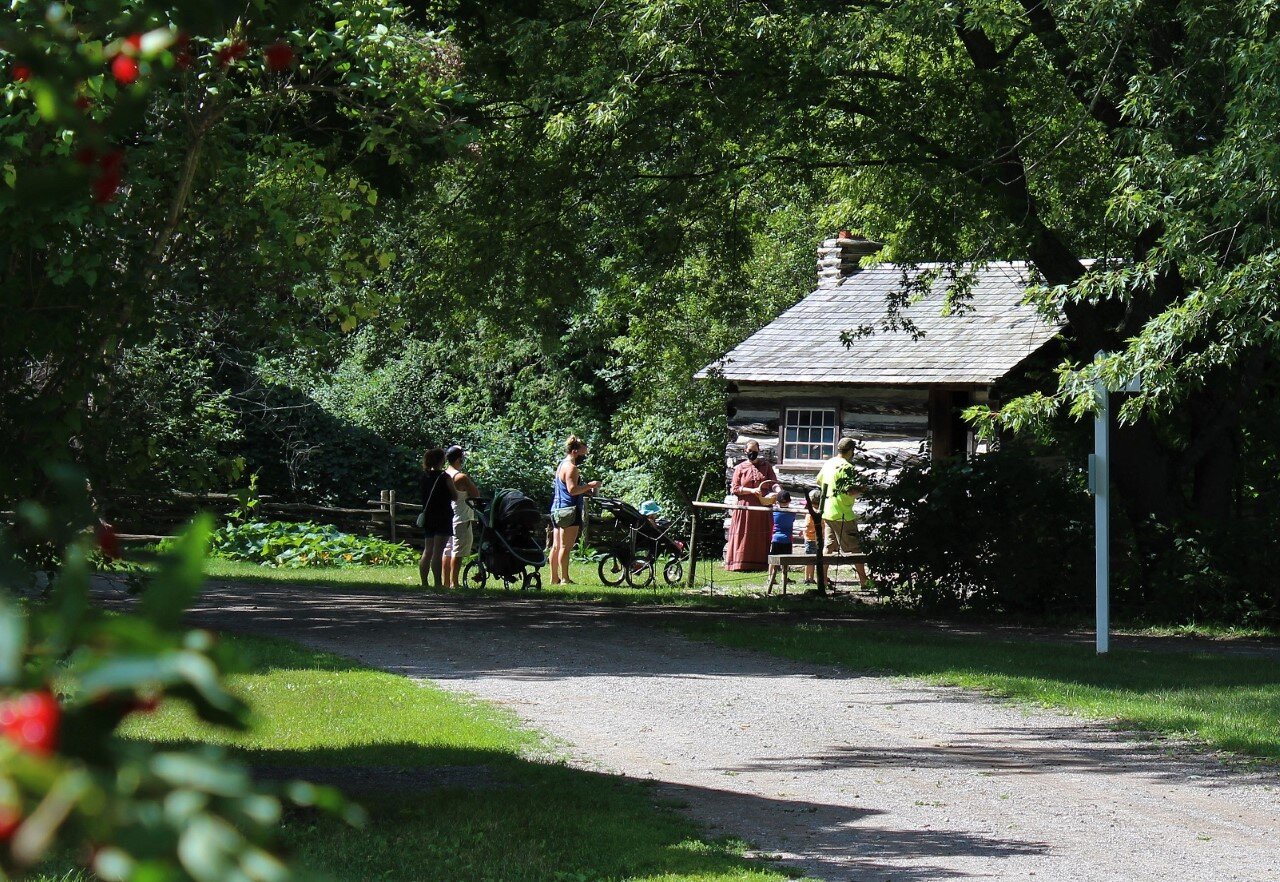
A guided tour of the museum that complied with the COVID-19 protocols in 2020. Photo Courtesy of Lang Pioneer Village.

A guided tour of the museum that complied with the COVID-19 protocols in 2020. Photo Courtesy of Lang Pioneer Village.

The Museum will be open Wednesday through Sunday for pre-booked guided tours until Labour Day weekend. A new feature to the historical site is a full-time First Nations interpreter at the village’s Aabnaabin Camp.

Under step one of the Ontario Roadmap to Reopen plan, the guided tours are required to be outdoors only. The museum is uncertain if step two of the plan will permit visitors to enter the historic buildings however outdoor-only tours will include additional trades demonstrations like blacksmithing or tinsmithing.

Interpreter guides will open doors for a peek inside while sharing the history of the historic home or business. Once the province moves to a stage that permits the opening of the historic buildings, visitors will be permitted to tour the lower levels of the Village buildings.

Staggered tours will begin every 15 minutes and must be booked in advance by visiting the Museum’s Shopify page.

Pre-booked guided tours are $40 for a group of four. Additional group members may be added to the tour at an additional cost, up to the current group maximum as regulated by Peterborough Public Health.

The museum’s snack shop will not be open but packaged traditional treats, drinks and museum shop items can be purchased at the time of booking.

Visitors will be required to self-screen prior to coming on-site, observe physical distancing with other groups and wear masks when in buildings.

The museum is offering special events this fall. they are also launching a new digital accessibility platform that will provide guests with mobility challenges the opportunity to sign out a tablet with access to a database of photographic and video footage of the inaccessible spaces within the village.

Engage with us on social media on Twitter, Instagram and Facebook. Write to us at tips@ptbocanada.com. Sign up for PTBOBuzz newsletter here.


Local Tech Company Launches Virtual Reality Platform For Users To Explore Global, Historical & Archaeological Sites

Peterborough-based tech company AVROD have officially launched their virtual reality (VR) platform for users to explore global, historical and archaeological sites for free on Viveport, Steam, and SideQuest platforms.

The platform is dedicated to digitizing and sharing the world's archaeological and cultural heritage sites for study and exploration, and is pivoting as a Covid-19 solution to add remote travel and tourism.

AVROD founder Jeremy Brooks using the platform

AVROD founder Jeremy Brooks using the platform

Users all over the world are now able to virtually travel to 40 real-world, photorealistic locations within the United States, France, Mexico, England, Portugal, Australia, Egypt, Spain, Canada, Scotland, Italy, Sweden, Greece, Japan, India, Belize, Mongolia and Guatemala.

Users can access different locations by using a headset and their preferred platform to experience and interact with the world around them. In addition to Steam, Viveport, and SideQuest, it will be launching soon on the Oculus Store and for Oculus Quest VR headsets.

Ruin's of a Nun's Cell at the medieval site of the Convent of Our Lady of the Salutation from the 1500's (Montemor-o-Novo, Portugal).JPG

Jeremy Brooks started AVROD with the help of the Innovation Cluster and its Virtual and Augmented Reality Zone while an archaeology student at Trent University, and his timing couldn’t be more right for a platform like this.

According to Globe Newswire, the augmented and virtual reality market is expected to see an overwhelming growth of over $2 billion dollars by 2027. The current pandemic supports this growth, as industries start to turn virtual. Museums and other tourist attractions now offer virtual tours, and companies continue to look for ways to give customers an out-of-home experience.  
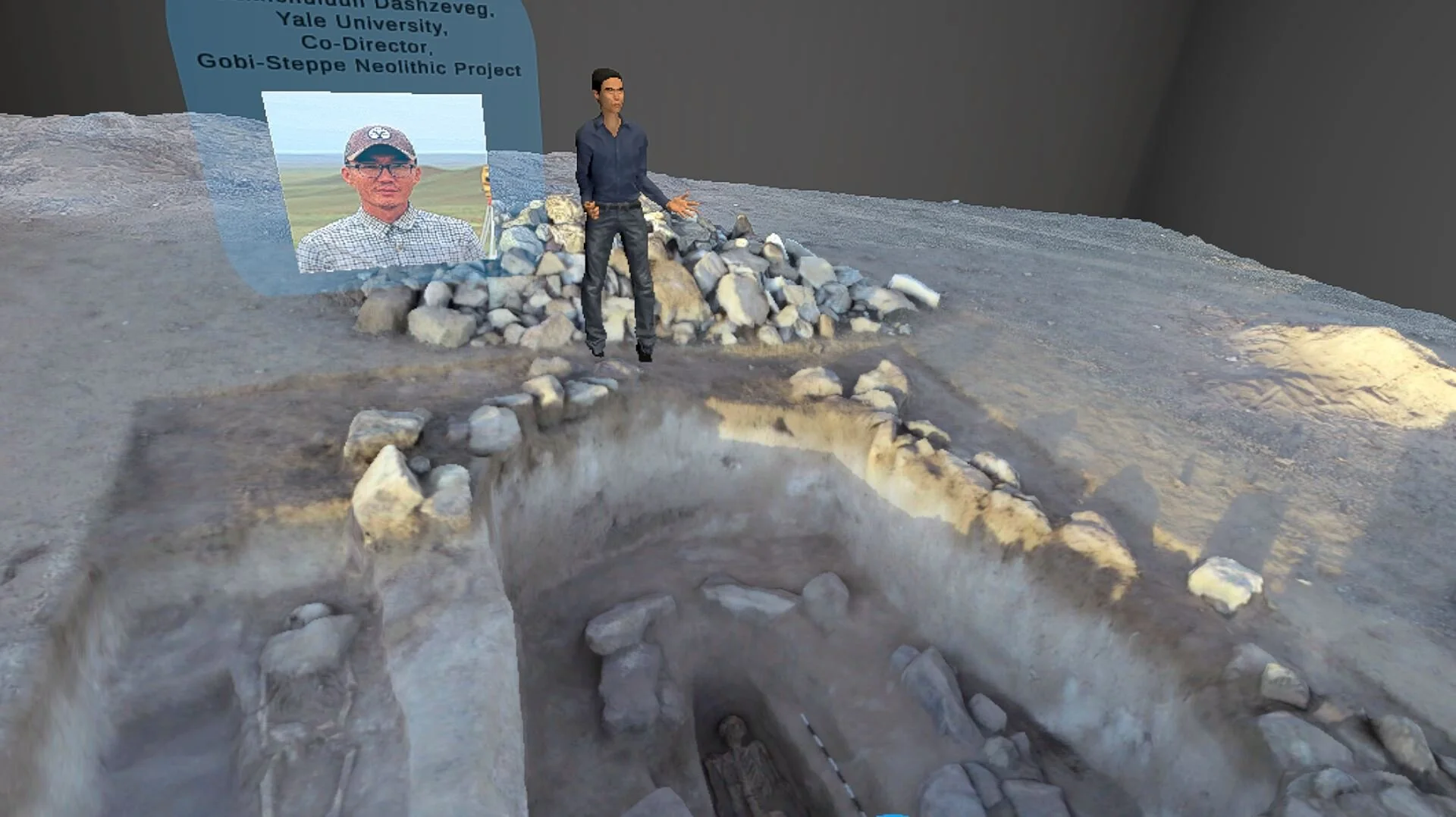
Bronze Age archaeological site, Zara Uul excavated with representatives from Trent University in the summer of 2018 in the Gobi Desert (Hedgehog Mountain, Mongolia).JPG

Brooks and AVROD’s Lead Developer, Manan Patel, have been working hard to bring AVROD to life.

 “Our team of students and young professionals, many of whom are from the Peterborough and Kawarthas area, have achieved incredible milestones to launch Canadian-built AVROD globally—including completely developing and launching AVROD remotely during the lockdown,” says Brooks.  

“We are expecting a global demand for our platform as people look to travel, explore, learn, and collaborate remotely and safely,” he adds. “As the company grows, we will be looking to create new jobs, starting here in Peterborough.”

(Apollo 11 Command Model) - Smithsonian National Air and Space Museum (600 Independence Ave SW, Washington, DC 20560, United States) ....JPG

“The launch for AVROD is perfectly positioned as we deal with the global pandemic and a significant worldwide reduction in travel,” says Michael Skinner, CEO of the Innovation Cluster.

“While people are asked to stay indoors, AVROD can provide an alternative experience for people who want to continue to experience the world with this at-home immersive experience. As virtual reality becomes more and more accessible, AVROD is very well aligned to benefit from the endless possibilities of this industry.” 


Engage with us on social media on Twitter, Instagram and Facebook. Write to us at tips@ptbocanada.com. Sign up for PTBOBuzz newsletter here.

Where Was Peterborough Located Millions Of Years Ago?

DinosaurDatabasePeterborough.jpg

We know Peterborough was incorporated as a city in 1905 (she’s looking pretty good at 115), and we think that if we asked most Ontarians to point to where Peterborough would be on a map, they could tentatively point somewhere between Ottawa and Toronto.

If we were to ask you where the physical location of Peterborough 400 million years ago (hint… it was under water) or even 750 million years ago, you might not know where to look.

Check out the cool site The Dinosaur Database that has a slick animated map to help you find out how the very spot that we are standing on changes over time. Our planet has sure changed through history!

—by Evan Holt

Engage with us on social media on Twitter, Instagram and Facebook. Write to us at tips@ptbocanada.com. Sign up for PTBOBuzz newsletter here.


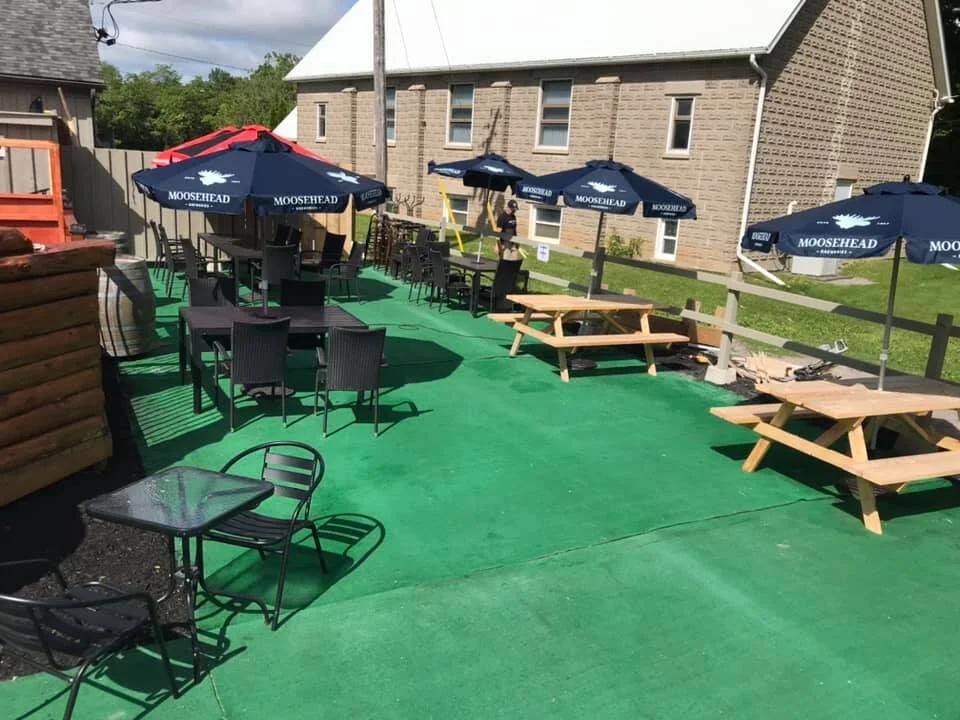
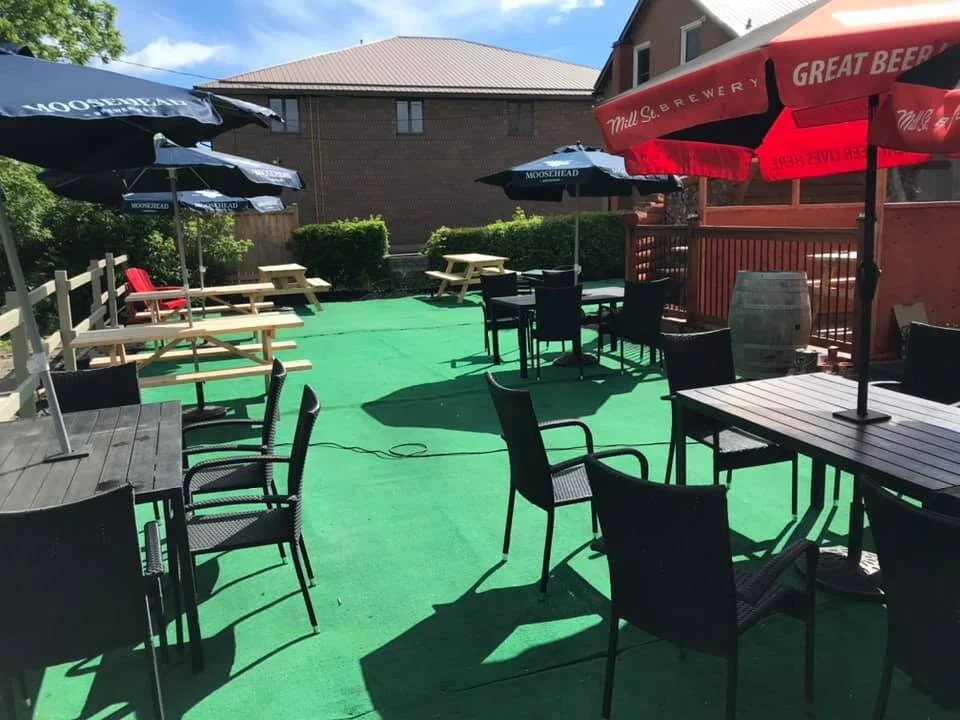
Canoe & Paddle's New Patio Is Built On AstroTurf The Toronto Blue Jays Won World Series On

It’s not often—or ever—that you get the chance to eat delicious pub food on a patio in the Kawarthas that sits on AstroTurf that the Toronto Blue Jays won the 1993 World Series on. But that opportunity is now on deck at Lakefield’s Canoe & Paddle, whose new patio sits atop some of the old turf that is such a huge piece of Canadian sports history.

Indeed, the Canoe & Paddle were lucky enough to secure some of the old AstroTurf that the Toronto Blue Jays won the World Series on at SkyDome (now Roger’s Centre) on Joe Carter’s dramatic walk-off home run in Game 6 in ‘93, giving the Jays back-to-back World Series titles.

Photo courtesy Canoe & Paddle

Photo courtesy Canoe & Paddle

Jake Exton from Canoe & Paddle is at bat, and tells PTBOCanada the backstory behind it:

“It was a chance conversation about three years ago with Ian Knott from Indian Rubber Tire Shop in Buckhorn. He built an indoor baseball and lacrosse training centre at his business. He was a pitcher in the U.S., and had contacts within the business. He bought four rolls of AstroTurf when the SkyDome switched the surface in 1994. I remembered him talking about it about three years ago, and on the announcement that we would be able to expand our patios, I made a call and found he still had two rolls—which he was happy to sell to us!”

Photo courtesy Canoe & Paddle

Photo courtesy Canoe & Paddle

They built the patio within a day, not quite as long as it took to build SkyDome, and the response has been fantastic to eating on the turf—a field of dreams, if you will.

”People love the history behind it and love telling us their stories of watching the game on TV or being there live to watch it happen,” Exton tells PTBOCanada.

Yep, to say they knocked this one out of the park would be an understatement.


And for those that forget…

Engage with us on social media on Twitter, Instagram and Facebook. Write to us at tips@ptbocanada.com. Sign up for PTBOBuzz newsletter here.

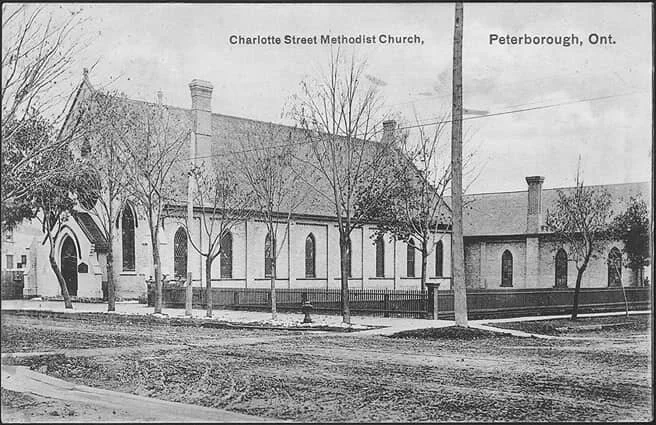
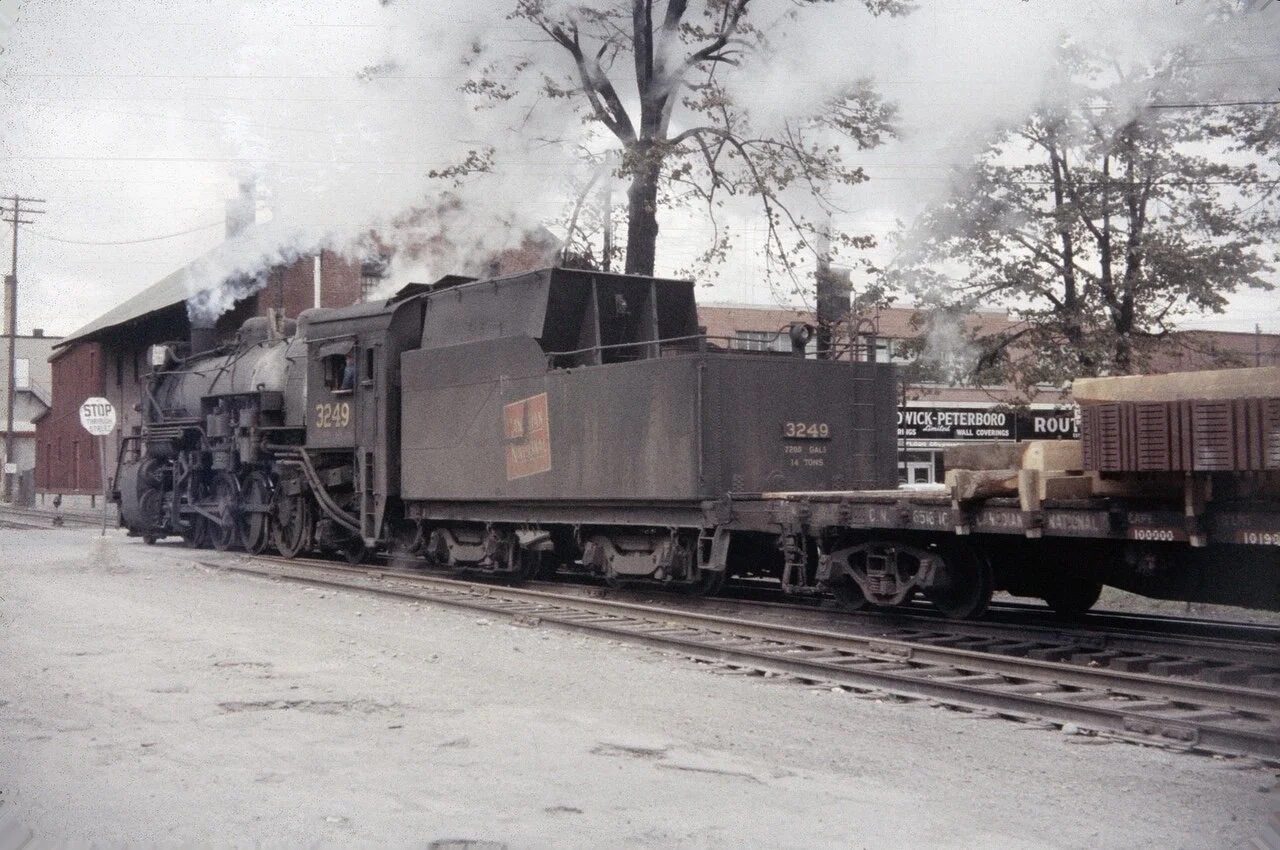
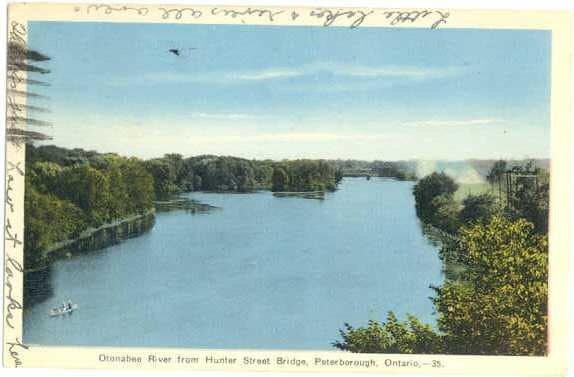
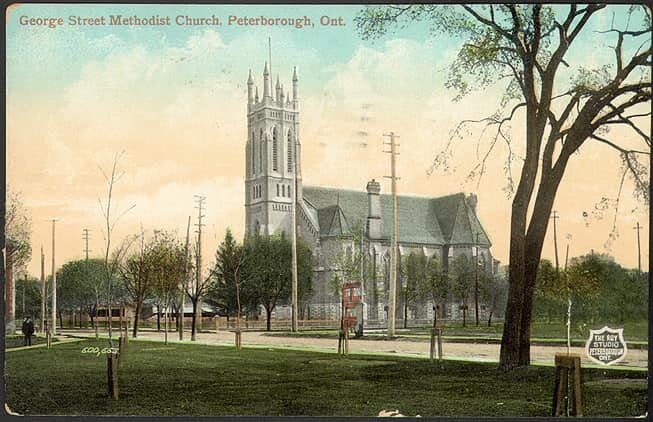
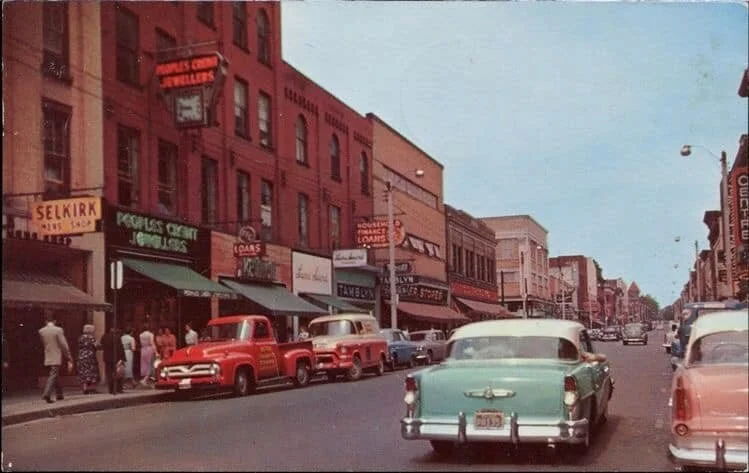
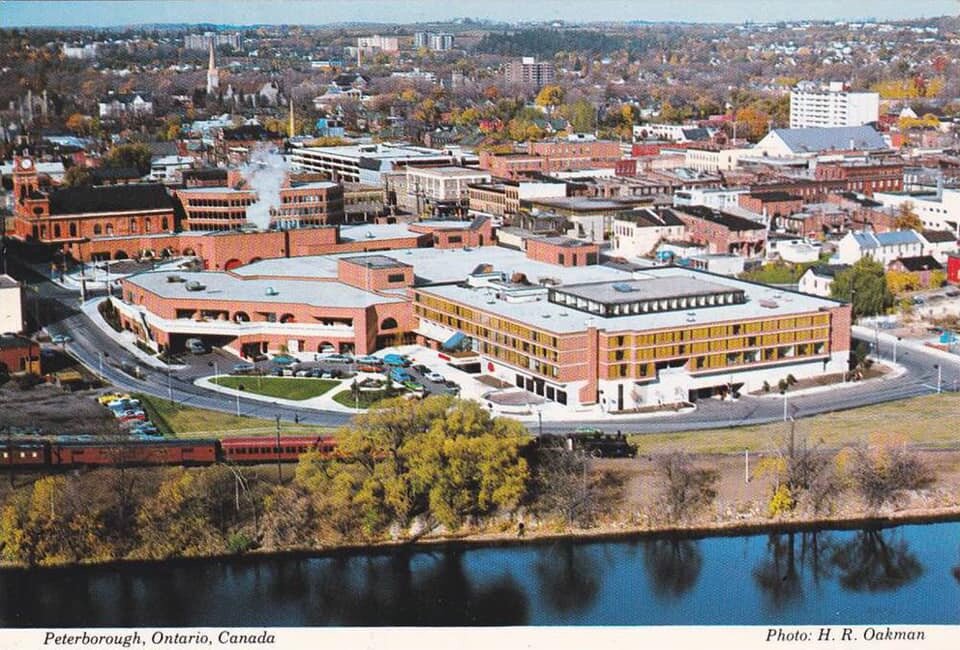
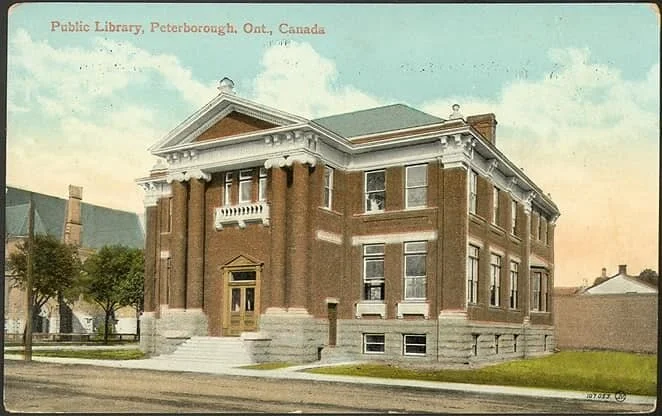
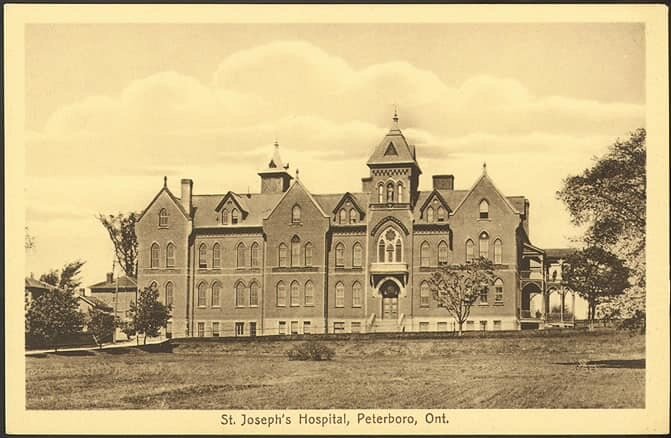
Neat Retro Pictures Of The Electric City To Make You All Nostalgic

Many of these gems come via the awesome Old Ontario Series Facebook page that people have been sharing in the “I grew up in Peterborough Ontario 50s and 60s” Facebook group.…

Engage with us on social media on Twitter, Instagram and Facebook. Write to us at tips@ptbocanada.com. Sign up for PTBOBuzz newsletter here.


Once Upon A Time Peterborough Downtown Was Movie Theatre Row

Those new to the city or born later might not realize that once upon a time, Peterborough’s downtown was “Movie Theatre Row” where it was a big social activity to go downtown, pick a movie, and choose a theatre.

Indeed, in a photo shared to their Facebook page (see below) from 1961 taken on George Street, Trent Valley Archives writes that “you can see the imposing signs of the Capitol, Odeon, and Paramount theaters, which made up movie theater row.”

Photo courtesy Trent Valley Archives

Trent Valley Archives adds that going back further in the 1950s, “Peterborough residents would have been able to choose between these three theaters (and the Centre theater, which closed in 1956) when they wanted to see a movie.”


Here is another view of movie theatre row back in the day looking down George Street...

Another view of movie theatre row

To entice patrons, each theater would advertise the films they were showing on their marquee board and in the Peterborough Examiner, according to TVA.

Share your memories of going to these theatres on our Facebook page.

Engage with us on social media on TwitterInstagram and Facebook. Write to us at tips@ptbocanada.com. Sign up for PTBOBuzz newsletter here. Watch our PTBOCanada Love video here.