
Peterborough Blogs



Voice of Business: Keeping Passenger Rail Service On Track
/Passenger train service to Peterborough is closer to reality now than it has been since it ceased in 1990.

Getting here didn’t happen easily or quickly and we are still years away from having shovels in the ground.
Our Chamber of Commerce has been a fierce advocate for its return for well over a decade. Our Chamber has been integral in the process, including funding the creation of the Shining Waters Railway Corporation. Our team, both staff and volunteer board and committee members, have put many years into researching and developing the business case behind the proposal and laying out the logistical hurdles we would need to jump to get there. People like Dick Crawford, Jim Hill, Stuart Harrison and the late Tony Smith worked tirelessly with our leadership over the years, including former MPs Maryam Monsef and Dean Del Mastro, former MPP Jeff Leal, and former Mayors Darryl Bennett and Diane Therrien.
The original plan was to connect the Peterborough area to Toronto with a line terminating at the rail yard in Havelock. That all changed in 2016 when VIA Rail entered the conversation, proposing High Frequency Rail (HFR) not just to Toronto, but to Ottawa as well. That proposal would grow to include Montreal, Trois-Rivières, and Quebec City.
On Thursday, Minister of Transport Omar Alghabra came to the Peterborough and the Kawarthas Chamber of Commerce office to announce the next phase of development — beginning the Request for Qualifications (RFQ) process.
As per Transport Canada: The purpose of the RFQ is to identify and qualify up to three top candidates who will be invited to participate in the Request for Proposals (RFP) process, anticipated to begin in summer 2023. The procurement process will help select a private developer partner to work in collaboration with VIA HFR, the newly created subsidiary of VIA Rail, to design and develop the High Frequency Rail project.
And:
The High Frequency Rail procurement process is designed to encourage innovation, provide flexibility, and identify the optimal solution for the project. Therefore, RFQ respondents will have the flexibility to consider alternatives to meet or exceed the project results described in the Request for Qualifications. This would include opportunities to increase speeds beyond 200 kilometers per hour on some segments of the High Frequency Rail project, if it is cost effective to do so.
As Minister Alghabra stated, this is the largest infrastructure project. It will cost billions of dollars to build and it will take years before trains arrive.
Progress on this portfolio is exciting and the enthusiasm surrounding it is contagious.
However, announcements on this subject also elicit skepticism. The return of passenger rail service to Peterborough has been generating headlines for the last 15 years. There have been overly optimistic projections on when rail service would return. People are understandably a bit frustrated that it hasn’t happened yet and a little disillusioned as to whether it will happen at all.
What is missing from that narrative is that the champions of this project essentially spent a decade drumming up interest in connecting passenger rail to Peterborough and seeking out willing partners within the rail industry and within our government. It took years of research, planning and meeting with industry players to get this to the point where the industry would take over and lead it. This is exactly what happened when VIA Rail jumped in back in 2016.
We now have willing partners with VIA Rail and VIA HFR driving the train with the support and endorsement of municipal, provincial and federal government leaders across Ontario and Quebec. This project going forward is bigger in scope and service than what we started out with. We are focusing on mostly electric trains that will even further minimize our carbon footprint. We are looking into the merits of making sections high-speed, taking passengers at speeds beyond 200 km/h. This project will provide frequent service to communities from Toronto to Quebec City on a reliable schedule that dedicated passenger tracks afford. Travel time between Ottawa and Toronto may be as low as 3 hours and 15 minutes.
This project is now far bigger than a commute from Peterborough to Toronto — it’s going to serve 19 million people in Canada’s most densely populated corridor. It will dramatically reduce carbon emissions, cutting 12.5 Million tons of tCO2e, the equivalent of a car-pool reduction of 2.8 million vehicles.
We’re moving forward and it’s exciting!
Content provided by the Peterborough and the Kawarthas Chamber of Commerce.
Engage with us on social media on Twitter, Instagram, Facebook and Tiktok. Write to us at tips@ptbocanada.com. Sign up for PTBOBuzz newsletter here.
Voice of Business: Five Key Areas the Federal Budget Needs To Target
/The Government of Canada is expected to release its 2023 budget in the coming weeks.

The Canadian Chamber of Commerce has put together its submission aimed at breaking down barriers and improving the competitiveness of Canadian businesses.
In his letter to Finance Minister Chrystia Freeland, Canadian Chamber of Commerce (CCC) President and CEO Perrin Beatty writes:
“The Canadian Chamber urges the government to focus its budget on the imperative for growth driven by the private sector: we cannot borrow our way to prosperity. The government’s role must be to ensure an environment that encourages private sector investment, and to foster the conditions for economic growth. Many of the measures included in our submission, including regulatory reform and dismantling internal barriers, will cost little or nothing now but will generate future wealth for our society.
In the aftermath of the pandemic, our international competitors continue to outpace us. In the areas where it must use tax dollars, the government must distinguish between spending and genuine investment: the bar must be whether an initiative will generate economic growth and create a higher standard of living for Canadians. Decisions we make in 2023 will determine whether future generations will enjoy the opportunities and prosperity we have been so fortunate to inherit. Our ability to respond to today’s health crisis or tomorrow’s climate emergency will be determined by whether we have built good jobs and robust growth across our economy.”
The proposals in the CCC’s submission fall under five categories:
• Building Trade-enhancing Infrastructure
As geopolitical tensions continue to disrupt global supply chains, Canada faces both an opportunity and an obligation to export our abundant natural resources. However, our inadequate trade-enabling infrastructure impedes our ability to get goods like food, fuel, fertilizer, and critical minerals to our domestic manufacturers, ports of export, and international partners.
• Easing the Burden of Doing Business
Developing a closer partnership with business need not cost the government anything, but it will help draw much-needed investment to Canada. Similarly, we must modernize the tax system to make it simpler, more efficient, and fairer. Our submission includes a series of low- and no-cost measures that can promote economic growth.
• Transitioning to Net-Zero
For Canada to become a global leader in producing and exporting sustainably produced energy, carbon dioxide-removal technologies, clean fuels, critical minerals, and sustainable goods, the government must implement and sustain investment and production tax credits alongside a trade corridors strategy that addresses supply chain concerns. Our goals of “friendshoring” ring hollow if we cannot demonstrate that Canada is a reliable business partner to our friends and allies.
• Attracting and Retaining Talent
With one million job vacancies, Canada needs a coherent plan to attract and retain a Twenty-first Century workforce, including through targeted supports for traditionally underrepresented workers. This plan must link our broader immigration targets to the skilled talent employers need right now, as well as to how we attract, retain, and provide international students with pathways to work and permanent residency.
• Enabling an Innovative Economy
To maintain a competitive edge that stimulates growth in emerging sectors, the government should capitalize on our innovative advantages in Artificial Intelligence, cybersecurity, digital health, clean tech, and clean fuels by modernizing research and development processes, and by stimulating product development and commercialization.
Check out the Canadian Chamber of Commerce Pre-Budget Submission for the list of recommendations.
We are heading into 2023 with record low confidence in our economy. Inflation is slowing along with the overall economy. How our governments invest in areas like climate change, innovation, workforce development, trade, and taxation will set the course for our economy and the resiliency of our local business community for years to come.
Content provided by the Peterborough and the Kawarthas Chamber of Commerce.
Engage with us on social media on Twitter, Instagram, Facebook and Tiktok. Write to us at tips@ptbocanada.com. Sign up for PTBOBuzz newsletter here.
Voice of Businesss: Businesses Are Optimistic About Themselves But Lack Confidence In the Economy
/Coming out of few rocky years and into another year of economic uncertainty, business confidence has dropped to a new low according to the Ontario Chamber of Commerce’s (OCC) seventh annual Ontario Economic Report (OER).

“Ontario business confidence has dropped to a record low in 2023. Labour shortages, inflation, health care system vulnerabilities, and forecasts of an economic contraction are dampening confidence in the province’s economic outlook,” said Rocco Rossi, President and CEO, OCC. “Only 16 percent of organizations surveyed have confidence in the economy. This is down from 29 percent last year. Promisingly, most businesses feel confident they can withstand these headwinds and continue to grow in the year ahead.”
The Ontario Economic Report is an interactive report with regional and sector-specific data on business confidence, public policy priorities, regional forecasts, and timely business issues such as employee health and well-being, climate change, succession planning, diversity and inclusion, reconciliation, and remote work.
Key highlights of the report include:
Business confidence has dropped to a new low, with only 16 per cent of organizations expressing confidence in the outlook of Ontario’s economy in 2023 (down from 29 per cent in 2022).
Inflation and labour shortages are primary concerns for organizations.
Despite low confidence in the economy, 53 percent of businesses are optimistic about the outlook and growth prospects of their own organizations, as high employment rates and population growth should prevent a sharp decline in consumer spending.
Small businesses want governments to prioritize policies and programs that support their immediate financial and operational challenges, while large businesses are more interested in broader workforce development and health care issues.
Labour shortages are directly impacting most employers and 87 per cent of large businesses. Shortages are especially acute in education, construction and accommodation and food services.
Businesses appreciate the importance of employee health and well-being, diversity and inclusion, economic reconciliation and climate action – but there are notable gaps in addressing them.
After experiencing two years of employment growth of 2.4 per cent in 2021 and 3.8 per cent in 2022, employment in our region of Muskoka-Kawarthas is forecasted to grow by only 0.2 per cent next year. For our region, 51 per cent of businesses reported feeling confident in their own organization, 32 per cent were neutral and 13 per cent were not confident. These numbers show an increase in confidence in their own organizations over 2021 when 18 per cent reported not being confident. Despite this optimism, local businesses feel less confident in the Ontario economy than the provincial average.
Locally, our top 10 policy priorities are:
Invest in broadband internet infrastructure – 50 per cent
Reduce/simplify business taxes – 44 per cent
Encourage Ontarians to buy/travel locally – 44 per cent
Invest in workforce development – 35 per cent
Address health care system capacity – 34 per cent
Support businesses with energy costs – 32 per cent
Strengthen local supply chains, industries, and manufacturing – 31 per cent
Expand/improve access to mental health and addictions programs and services – 27 per cent
Enhance access to credit/capital – 25 per cent
• Support businesses with technology adoption – 22 per cent
“This year’s OER makes it clear that leaders in the public and private sectors must invest strategically in productivity, resilience, and long-term growth,” said Claudia Dessanti, Senior Manager, Policy, OCC. “Unsurprisingly, labour shortages continue to dominate as a source of concern directly impacting most employers and 87 percent of large businesses. Shortages are especially acute in specific sectors such as education, construction, and accommodation and food services.”
The seventh annual OER offers unique insights into business perspectives across Ontario. It is informed by data from the annual Business Confidence Survey (BCS) and economic forecasts for the year ahead. The BCS was conducted online from Oct.18 to Nov. 30 last year, attracting responses from 1,912 organizations across Ontario.
Check out the Ontario Economic Report here.
Content provided by the Peterborough and the Kawarthas Chamber of Commerce.
Engage with us on social media on Twitter, Instagram, Facebook and Tiktok. Write to us at tips@ptbocanada.com. Sign up for PTBOBuzz newsletter here.
Voice of Business: It’s Time to Take a New Look at Getting Goods to Market
/When all is running well, supply chains operate largely invisible to consumers.

Most of the time the massive choreographed dance of production, ships, ports, rail, trucks, planes, warehouses, couriers, border crossings, delivery systems, and 820,000 Canadians works relatively seamlessly, moving $1 trillion in goods. Your local business either already has the product you’re after or is able to get it to you in short order.
But all that changed in recent years as the words ‘supply chain’ entered our common lexicon as we talked with businesses, friends, and co-workers. We shared the common frustration of not being able to get the products we want when we want them.
Some of what led to these challenges has largely been resolved, like public health shutdowns and closed borders. Like many things, the pandemic accelerated issues the industry was already facing. Meanwhile, the world changed dramatically.
A report titled ‘A time of renewal for Canada’s supply chains’ from KPMG and the Ontario Chamber of Commerce delves into the challenges facing the industry and how it can get back to invisibly running in the background.
The report notes that current risks for governments and businesses include:
Chronic underinvestment in supply chain modernization
Continued risk-laden dependence on single suppliers
The need to innovate amid soaring goods and services costs
Evolving and ever-increasing consumer expectations
Ongoing labour shortages and skills gaps
KPMG’s 2022 Global CEO Survey reveals a total of 55 percent of leaders agreed or strongly agreed that supply chain risks will have an impact on their business over the next three years.
One key area they highlighted is that governments need to collaborate with each other in new ways to reshape supply chain capabilities and mitigate risk in the global digital economy. This includes innovative trade agreements, investments in infrastructure, and the re-orienting of supply chains amid over-reliance on individual nations such as China.
Nearly three quarters of global CEOs agreed that access to capital for new investments in their supply chain is having an impact on their business. The report makes continued references to the need to spend time and money on innovation. Rather than putting band-aids on the current system, we need to take a hard look at new ways to provide consumers with the goods they want.
The industry is moving away from a ‘just-in-time’ to a ‘just-in-case’ mindset. Saving money through single-supplier relationships has made the supply chain rigid, resulting in inefficiency and vulnerability.
The report pushes the need to foster and accelerate digital technology adoption to increase supply chain visibility, become more efficient, manage rising costs, and meet consumer expectations.
There are also issues around people’s expectations. Without some serious investment and innovation, our supply chain is struggling with the flexibility, speed, and reliability necessary to meet the standard that Infinite choice and instant delivery have set.
Like many sectors, the supply chain network is struggling to attract and retain workers with the skills they need. Answers lie in upskilling, reskilling, and automation.
Our economy and the standard of living we have come to enjoy require that the public and private sectors modernize our supply chain through innovation and strategic investments. These issues aren’t going away on their own. The time to invest is now.
Read the full report online.
Content provided by the Peterborough and the Kawarthas Chamber of Commerce.
Engage with us on social media on Twitter, Instagram, Facebook and Tiktok. Write to us at tips@ptbocanada.com. Sign up for PTBOBuzz newsletter here.
Voice of Business: First-in-a-Generation Labour Market Shift Leaves Jobs Vacant
/Workers hold a level of bargaining power not seen in a generation as labour shortages are creating pressure on wages, working conditions and benefits. Many employers and employees alike have not encountered a labour market shift like this. Employers will need to continue to be flexible in negotiations in order to fill vacancies.

For the last 40-odd years, employers held the market over employees as inflation rates soared during the 1970s and 1980s and industries found cheaper alternatives through offshoring, especially after China joined the World Trade Organization in 2001. Because of these shifts, workers struggled to find jobs and wages were suppressed as employers held most of the bargaining power. As a result, companies found it easier to hire and retain. That is not the case, however, in today’s working environment.
According to Statistics Canada’s December Labour Survey, more Canadians are working or actively seeking work. The rate of workers aged 15 or older has been rising year-over-year by about 3 per cent, the unemployment rate dropping by 0.1 per cent to 5 per cent, and employment increasing by 0.5 per cent. Regardless of these statistics, more than one-third of Canadian employers are expected to face labour shortage issues in the next few months to years due largely to the rapidly aging working-age population.
As our aging workforce begins to retire, job vacancies in our country are at an all-time high. Despite the trends in our neighbouring country to the south, Canada’s workforce has not seen the same ‘Great Resignation’ trend. More than 1 in 5 workers in Canada are between 55-64 and from 2016 to 2021, the number of those 65 and older increased by 18.3 per cent to 7 million according to another Statistics Canada report. Our labour market shortage isn’t caused by the ‘Great Resignation,’ but rather by the ‘Great Retirement.’
Employers and industries that are struggling to fill vacancies will need to adapt their reopening and rehiring plan to offer more lucrative and competitive wages and benefits. The early pandemic shifted the mindset of workers as mass layoffs and hiring freezes caused many to reevaluate their work and worth. Now, according to this article from Ranstad, these are the top items employees are seeking in the post-pandemic world:
Flexible work-life
Having the ability to set their own schedules
2-3 working from home days
Recognition and reward
Celebrating ‘small wins’ and showing appreciation for the employee
Opportunity for growth
Additional training following years of pandemic working
Salary increases
Shifting of responsibility
Resources for remote work
Funding or resources provided for home office setups
Empathetic Leadership
Accommodative and supportive leadership with a focus on mental wellbeing
Safe workspaces
PPE and health and wellness programs to keep teams happy
Workplace culture
Collaborative projects
Team building initiatives
Effective communication
Luckily for employers, there are still tons of options and assistance for hiring and training staff in our increasingly post-pandemic economy and employment agencies across Peterborough and the Kawarthas are eager to help fill voids.
Content provided by the Peterborough and the Kawarthas Chamber of Commerce.
Engage with us on social media on Twitter, Instagram, Facebook and Tiktok. Write to us at tips@ptbocanada.com. Sign up for PTBOBuzz newsletter here.
Voice of Business: Pharmacies Treating Common Ailments
/Pharmacists can now help treat some common ailments, saving you a trip to your doctor’s office. The Peterborough and the Kawarthas Chamber of Commerce helped make this happen.

The province announced a new healthcare initiative, expanding the role pharmacists play in patient care. The growing portfolio of pharmacists is something the Chamber of Commerce has been lobbying toward for some time.
In 2008, the Peterborough and the Kawarthas Chamber developed a Policy Resolution titled “Addressing Access Bottlenecks to Primary Health Care.” While the document suggested several strategies, the first outcome was the Provincial Government approving Pharmacists to administer flu shots in 2012. Now, Ontario pharmacists can renew prescriptions for most medications and offer prescriptions for common illnesses and conditions.
Last month, they began prescribing the COVID-19 treatment Paxlovid.
Pharmacists can now offer prescriptions for:
hay fever (allergic rhinitis)
oral thrush (candidal stomatitis)
pink eye (conjunctivitis; bacterial, allergic and viral)
dermatitis (atopic, eczema, allergic and contact)
menstrual cramps (dysmenorrhea)
acid reflux (gastroesophageal reflux disease (GERD))
hemorrhoids
cold sores (herpes labialis)
impetigo
insect bites and hives
tick bites (post-exposure prophylaxis to prevent Lyme disease)
sprains and strains (musculoskeletal)
urinary tract infections (UTIs)
A recent study from the University of Waterloo stated, “more than one-third (34.8%) of avoidable visits could potentially be managed by a pharmacist.”
The Peterborough Examiner reported in 2021 that 11,000 people in Peterborough were without a family doctor and an additional 22 doctors were expected to retire over the next few years.
This expanded role could cut down on clinic and emergency room visits. With an alternative healthcare option for those in need with smaller ailments, this could cause offer some relief to the medical industry.
However, because of the time needed to deliver this service, some of the smaller independent pharmacies in Ontario with limited staff might find this challenging. Patient assessments take time and are not something all locations are equipped to deal with. With growing responsibilities and a worldwide drug shortage on the tail end of the pandemic, many pharmacists have reported staff shortages and burnout. To address this, each location can decide on how they will implement this service. Either a delayed start or on an ailment-by-ailment basis.
This service is free for Ontarians with a health card.
For the full news release from the Premier’s office, visit https://bit.ly/ONrelease
Content provided by the Peterborough and the Kawarthas Chamber of Commerce.
Engage with us on social media on Twitter, Instagram, Facebook and Tiktok. Write to us at tips@ptbocanada.com. Sign up for PTBOBuzz newsletter here.
Voice of Business: Increased Investment Needed In Critical Mineral Production
/Demand for critical minerals is expected to increase by 400 per cent to 600 per cent by 2040, according to the report titled Enhancing Domestic Critical Mineral Supply Chains commissioned by the Canadian Chamber of Commerce (CCC) Critical Minerals Council.
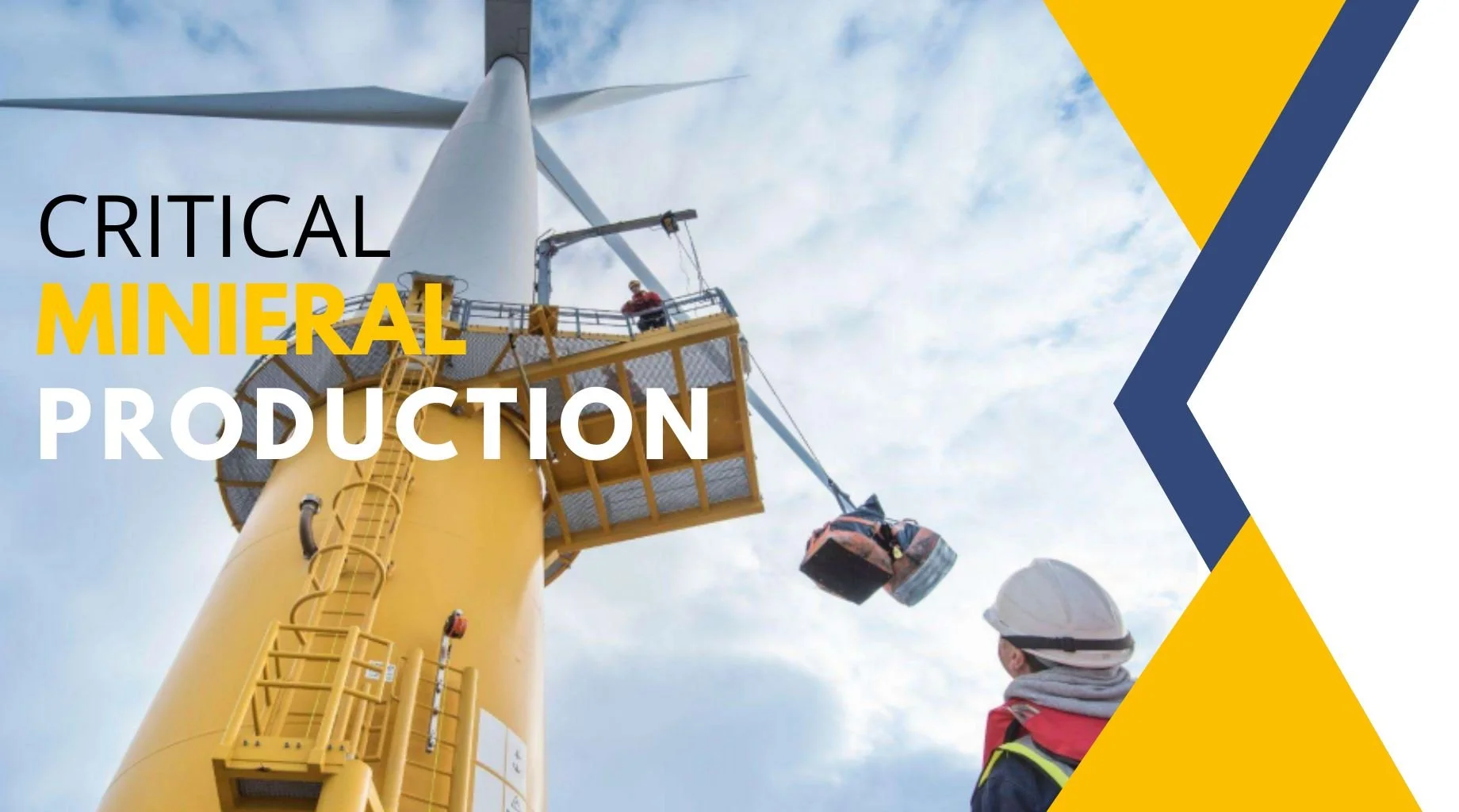
Critical minerals — like aluminum, lithium, and nickel — will underpin our push for net zero emissions. They are an essential part of building electric vehicles, solar panels, wind turbines, and many everyday products.
Canada is positioned as a leader in mining both in terms of innovation and access to resources. As demand is set to dramatically increase, the report prompts that Canada needs to act quickly and decisively to address barriers standing in the way of capitalizing on this opportunity. Our county has the potential to increase mining, production and processing of minerals to meet global demand.
The CCC’s Critical Minerals Council is made up of members representing upstream and downstream corporations, academic institutions, and Indigenous associations.
The report notes the foundation for any growth in critical mineral supply chains in Canada is a commitment to reconciliation with Indigenous peoples, which includes meaningful and early engagement with Indigenous governments and organizations from project conception to development and oversight.
The report contains 14 recommendations, which include:
Incentivize consumers to recycle end-of-life products with critical mineral content
Increase the scale and awareness of exploration grants
Accelerate clean energy projects
Provide targeted infrastructure investment
• Support focused research and development
Read the full list of recommendations in the report: Enhancing Domestic Critical Mineral Supply Chains.
There are valid criticisms of the mining industry, including its impact on climate change. However, demand is increasing. As a nation, we need to work with Indigenous and climate stakeholders to be leaders in environmentally and socially responsible mining practices.
Producing critical minerals domestically allows the industry to provide products for global demand under the environmental, labour, and economic scrutiny we set up, rather than relying on producers like China.
Increasing our recycling capacity and opportunities will play a big role in moving forward, but our move to net-zero emissions and global demand for electronics will require a significant amount of mining.
According to the report, electric vehicles require a far greater quantity and breadth of critical minerals than conventional fossil fuel-burning vehicles. According to the International Energy Authority, it takes about 200 kg of critical minerals to produce a typical electric vehicle. These include lithium, nickel, cobalt, graphite, rare earth elements, copper, and manganese. China currently dominates the lithium-ion battery market, producing about 75 per cent of global anode and cathode production.
Alternative energy productions also require large amounts of critical minerals. Solar panels require a large array to produce absorbent and conduction layers and module frames. Wind turbines require large amounts of copper, rare earth elements, and aluminum for cables, electrical components, coils and permanent magnets.
Our government recently introduced the Canadian Critical Minerals Strategy, which largely aligns with the report from the CCC. The future of our plans to aggressively reduce our greenhouse gas emissions and meet the targets we have set relies on our government working with industry to responsibly and sustainably increase our mining and improve our critical mineral supply chain to become global leaders in this sector.
Content provided by the Peterborough and the Kawarthas Chamber of Commerce.
Engage with us on social media on Twitter, Instagram, Facebook and Tiktok. Write to us at tips@ptbocanada.com. Sign up for PTBOBuzz newsletter here.
Voice of Business: Investing in Workforce Resources
/The single biggest hurdle for many businesses is rebuilding their workforce, especially in service sectors like tourism, retail, food service and hospitality.

Rebuilding our local economy will take years and a series of calculated investments from the private sector. According to the Canadian Chamber of Commerce Canadian Survey on Business Conditions Report, Q3 2022, 39 per cent of respondents identified recruiting skilled employees as an obstacle to business over the next three months, 37 per cent listed a shortage of labour force and 31 per cent identified retaining skilled employees.
Access to thorough, accurate and no-cost labour information and expertise will help businesses adapt, influencing our economic growth.
Our local Workforce Planning Boards are an indispensable partner in rebuilding our workforce. Locally, the Workforce Development Board has been providing workforce resources for 26 years. They bring direct experience in identifying and addressing labour market and workforce development trends, opportunities and priorities within their catchment areas. Local businesses regularly use resources like the Local Jobs Hub and Labour Market Information Help Desk. The annual Local Labour Market Planning Report provides crucial summaries of key data and qualitative feedback gathered through consultation and collaboration with industry, businesses, training and employment service providers.
Right now, businesses are looking for data and expert advice on providing competitive compensation, investing in career ladders to retain staff, and labour market information regarding planned growth — all of which is available for free from the Workforce Development Board.
Our local Workforce Development Board is one of a number of Workforce Planning Boards across Ontario — all of which are facing the same challenges. In order to provide local labour market information, service coordination and public education, Workforce Planning Boards need more sustainable funding. Operating on one-year contracts on budgets that have decreased over the years has made it difficult to recruit and retain talent to provide these services.
Together with Chambers of Commerce and other business-focused organizations, we issued a letter of support to Monte McNaughton, Minister of Labour, Immigration, Training and Skills Development requesting:
An increase in funding for each Workforce Planning Board by a minimum of $120,000 per fiscal year
An increase in the length of funding agreements with Workforce Planning Boards to three years
Additionally, the Peterborough and the Kawarthas Chamber of Commerce will be submitting a policy resolution on this subject to the Ontario Chamber of Commerce to potentially become part of their advocacy efforts.
Workforce challenges are one of the biggest barriers to economic growth in Ontario. It is essential that businesses, non-profits and charities have access to as many workforce resources and tools as possible. After years of funding cuts and precarious one-year funding agreements, now is the time to re-invest in our Workforce Planning Boards with increased funding and three-year contracts.
Content provided by the Peterborough and the Kawarthas Chamber of Commerce.
Engage with us on social media on Twitter, Instagram, Facebook and Tiktok. Write to us at tips@ptbocanada.com. Sign up for PTBOBuzz newsletter here.
Voice of Business: Supporting Economic Growth In Uncertain Times
/Heading into a new year with new challenges, it’s a good opportunity to reflect on this last year and see where we can go from here.
The Ontario Chamber of Commerce (OCC) released its own report on this topic, titled Supporting Economic Growth in Uncertain Times.
What have we learned?
A predictable and stable policy environment underpins business confidence, prosperity and economic growth. This includes economic strategy that raises up those sectors and regions that didn’t fair so well.
We’ve learned that we need a more resilient workforce that is inclusive of everyone and all abilities. This includes addressing backlogs and processing delays in immigration that have resulted in a wait list of more than 2.4 million applications.
Recent years highlighted decades of underinvestment in strategically important areas, including healthcare and infrastructure.
What can the government do now?
Government is the architect of the ‘industrial commons,’ that ecosystem of public goods in which citizens, communities, and businesses can thrive. We need a long-term strategy to invest in common components that are key determinants of growth, including health care, education and training, R&D and innovation, and infrastructure (particularly digital and climate-resilient infrastructure).
At the same time, the government must protect its investments by reducing the barriers to growth – outdated legislation, policy and regulation, an inefficient and overly complex tax system, and obstacles to interprovincial trade and labour mobility.
Economic growth should involve clear consultation and two-way communication between government and the private sector. It should not be up to industry to push the government into the future rather, both should be equally invested and united in the pursuit of growth and prosperity.
Mainly, the government needs to act in ways that are predictable, accountable, strategic, measurable, outcomes-focused and coordinated.
The OCC has identified critical areas that must inform the government’s strategy for economic growth, including:
Develop policies that support small businesses and Ontario’s entrepreneurial spirit, including enhancing access to capital, developing and scaling training for digital literacy skills, and investing in reliable broadband connectivity.
Be bold on interprovincial trade and enhance labour mobility between provinces.
Modernize regulation that supports recovery efforts, including creating an independent panel to regularly run an evidence-based evaluation of outcomes and unintended consequences of a new regulation.
Foster an inclusive workforce that leverages Ontario’s diversity and increases our immigration intake. Our government must prioritize economic reconciliation by supporting Indigenous partnerships, procurement, education, employment and entrepreneurship.
Invest in growth-enabling infrastructure, from roads to housing, that is climate resilient, energy efficient, and informed by smart planning principles to ensure population and economic growth can be supported for decades to come.
Prioritize innovation through procurement and policy action on technology transfer and adoption, commercialization, and capitalization. The government should encourage data-driven innovation while protecting against potential risks and support a Canadian intellectual property strategy.