PTBOSpotlight: Griffin’s Greenhouses

Welcome to PTBOSpotlight! Every Friday, this segment showcases a business or organization in Peterborough and the Kawarthas. You will have the opportunity to learn more about the people behind the organization and the work they do for our community.

This week, we are featuring Griffin’s Greenhouses. Started in 1976 by Ann and Jack Griffin, the business began as a seasonal greenhouse at their home.

Located at 3026 Lakefield Rd. in Selwyn, the business has spanned three generations working at the greenhouse, serving Peterborough and the Kawarthas.

“We are a retail garden centre specializing in annuals, perennials and container gardening. We grow 75 per cent of the product we sell, sourcing the rest from Ontario growers,” said Vikki Whitney, Griffin’s Greenhouse owner. “We offer great advice from many, many years of accumulated experience.  Everyone on staff is a gardener themselves so they have great personal experiences to share and do freely with all who visit.  Our award-winning display garden is free to wander and offers inspiration and a place to sit, relax and enjoy the natural beauty.”

Photo courtesy of Griffin’s Greenhouses.

While Ann primarily worked on the business, her children, Vikki and Kyle, with other family members, helped out as needed. In the early days, her husband, Jack, also assisted on weekends.

“Our mom, Ann, started the business as a way to stay at home with the kids and offer a little extra income to the family,” explained Whitney. “Her parents, immigrants from the Netherlands, owned ‘Parkhill Nurseries’ a garden centre in Peterborough so Ann also grew up in ‘the biz.’”

Photo courtesy of Griffin’s Greenhouses.

As demand grew, Jack retired from sporting goods sales and began working in their greenhouse business with a few hired hands. This expanded the season to include Fall plant offerings and Winter décor.

As the business grew, more family members came in to help.

“In 2001, after eight years of teaching secondary school in Belleville, I returned back to the area with my husband and very young children and began managing the expanding business,” said Whitney. “I added in seasonal workshops, informative seminars and increased the staff over the years. Kyle left his job as a local photo journalist and became the greenhouse manager, overseeing all of the aspects of growing the plants.”

Robin, Kyle’s wife, joined in 2020 to manage the Barn Store and showcase her merchandising skills, while Darryl, Vikki’s husband, became our Office Manager after he retired from his education career. Four more grandchildren, Ben, Olivia, Jake and Mitchell, help out during the school break.

This year, Griffin’s Greenhouses is celebrating its 49th year in business. Whitney says that the business’s customer service and community involvement helped contribute to their success.

“Our personal connection to our community is very important to us and is valued by our customer base. We share our knowledge freely, deliver product to individual homes (when needed) and usually, tour their garden when there,” said Whitney. “We donate to important causes in our community, employ local staff, offer informative workshops and seminars and speak at events locally and throughout the province.”

Photo courtesy of Griffin’s Greenhouses.

To learn more about Griffin’s Greenhouses, find them online:

Website:
griffinsgreenhouses.com
Instagram:
@griffinsgreenhouses
Facebook: Griffin’s Greenhouses

Engage with us on social media on Twitter, Instagram, Facebook, Tiktok, Youtube and LinkedIn. Write to us at tips@ptbocanada.com. Sign up for our newsletter here.

PTBOSpotlight: Restwell Upholstery

Welcome to PTBOSpolight! Every Friday, this segment showcases a business or organization in Peterborough and the Kawarthas. You will have the opportunity to learn more about the people behind the organization and the work they do for our community.

This week, we are featuring Restwell Upholstery. A community staple for 80 years, founded in 1945 by the Petlz brothers, Bill, Bob and Ron.

Mentored by their father, Harold, each brother brought their strengths - bookkeeping, sales, sewing and upholstery. They began at their original location on Simcoe Street but as demand increased, the shop moved to what was then a quiet dirt road in Downer's Corners. Eventually, they expanded to a two-story facility and a team of 15 by the early 1990s.

The business was purchased by Kerri and Randy Rogers in 2008 and has been run by them for 17 years. Located at 494 The Parkway, Restwell is a custom upholstery business with many services under one roof including residential furniture, antiques, commercial seating, recreational items, window treatments, fabric, vinyl, leather, foam and DIY supplies.

“We have continued the core principles of the Peltz family of expert service, quality and selection since we took over in 2008,” explained Kerri. “We still use many of the original upholstery and fabric supply companies that they utilized and have added even more with 25 companies from around the world at our fingertips.”

In 2013, moved from the corner of Lansdowne Street and Ashburnham Road to a larger space on The Parkway. The move allowed for more space, additional staff, and extra space to keep up with demand and expand services.

“We are proud of our team that works very hard every day using their hands on skills to bring you the best result, comfort and style,” said Kerri. “We believe our business is special because we are small enough to give personal service and large enough to have multiple skilled staff to accommodate larger, challenging items and problem solving and communicating effectively.”

They work with durable, high-quality materials, offer expert advice and treat each project with the same care we’d give their furniture. Whether you’re working on a family heirloom or a custom commercial space, you can expect exceptional results.

“A few of my favourite parts of my job are seeing the total transformations - from the before to the after - on some pieces are quite dramatic,” explained Kerri. “Also, keeping family heirloom pieces living their next life is quite fulfilling. I also love seeing the new material samples when they come in and finding the perfect fabric for a customer's piece.”

To learn more about Restwell Upholstery, find them online:

Website: www.restwellupholstery.ca
Instagram:
@restwellupholstery
Facebook: Restwell Upholstering Co. Inc.
Threads:
@restwellupholstery

Engage with us on social media on Twitter, Instagram, Facebook, Tiktok, Youtube and LinkedIn. Write to us at tips@ptbocanada.com. Sign up for our newsletter here.

Voice of Business: The Future Is Built Here: Why Local Manufacturing Matters and Why Youth Should Be Paying Attention

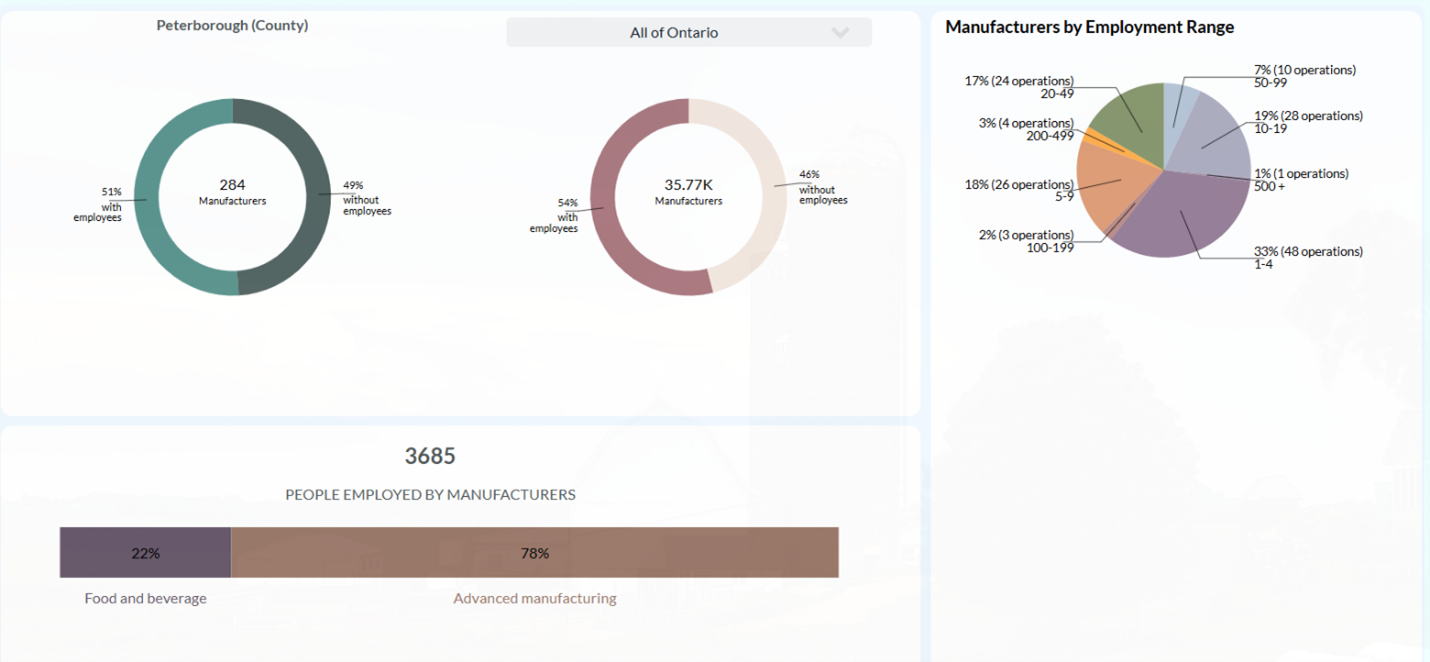
In Peterborough and the Kawarthas, manufacturing is more than just an industry—it’s a cornerstone of our economy, a driver of innovation, and a powerful engine for community growth. And yet, many still think of manufacturing as it was decades ago: repetitive, low-tech, and physically demanding.

That image couldn’t be further from the truth.

Today’s manufacturing is modern, high-tech, clean, and creative—and it needs a new generation of workers to thrive.

A Vital Part of Our Local Economy

Manufacturing has deep roots in our region. From historic companies like General Electric, which helped power Canada’s early electrification, to modern innovators in cleantech, aerospace, and food production, manufacturers have always been builders—not just of products, but of communities.

Local manufacturers:

  • Provide hundreds of stable, well-paying jobs

  • Drive investment in infrastructure and innovation

  • Contribute to sustainable development and clean technology

When we support manufacturing, we support a resilient, self-reliant local economy.

A New Generation of Careers

Today’s manufacturing is driven by automation, digital tools, sustainability, and innovation. Career paths in this sector are more diverse and exciting than ever before.

  • Robotics & automation

  • Engineering & CAD design

  • CNC machining & precision fabrication

  • Sustainable product development

  • Supply chain & logistics

  • Quality assurance and safety

These roles aren’t just in-demand—they’re also high-paying, future-proof, and often come with opportunities for on-the-job learning or apprenticeships.

It’s time to bust the myths and show young people that manufacturing is more than a job—it’s a pathway to building something lasting.

Building the Future—Together

Organizations like the Kawartha Manufacturers Association (KMA) a local association, offers personalized support and attention to each member. We understand the local manufacturing landscape and provide targeted networking opportunities that foster meaningful connections.

  • Advocate for local manufacturers

  • Create networking and learning opportunities

  • Promote careers in the skilled trades and manufacturing to youth

  • Support each other

Final Word

Manufacturing isn’t just about making things—it’s about shaping communities, launching careers, and building a better future. In Peterborough and the Kawarthas, we have the tools, the talent, and the history.

Now we need the next generation to step up and help shape what comes next.

Guest Column from Sherry Hill, Secretary of Kawartha Manufacturers Association and CFO at Peterboro Matboards Inc.

Content provided by the Peterborough and the Kawarthas Chamber of Commerce.

Engage with us on social media on Twitter, Instagram, Facebook and Tiktok. Write to us at tips@ptbocanada.com. Sign up for PTBOBuzz newsletter here.

Voice of Business: Government In Action

On this week’s Voice of Business, we’re taking a closer look at how the Government of Ontario has responded to the growing economic pressure caused by U.S.-imposed tariffs and international uncertainty.

While these measures won’t solve all challenges overnight, and many businesses are still struggling, Ontario’s action represent significant steps in addressing the stress and pressures facing various industries.

It often takes a crisis for us to evolve, and this trade war forced that evolution to happen sooner than expected.

Just last month, Ontario led the way in removing several interprovincial trade barriers, a long-standing issue that has held back economic efficiency and domestic trade. By doing so, the province opened new pathways for goods, services, and talent to flow more freely across the country, a move that reduces our overreliance on the U.S. market and strengthens internal Canadian trade.

Ontario has also taken further action on multiple fronts to support local businesses and future-proof our economy.

One key step is a $750 million investment in Science, Technology, Engineering, and Mathematics (STEM) education across post-secondary institutions. This funding will support up to 20,500 new student seats per year, helping Ontario build a future-ready workforce in critical industries like advanced manufacturing, clean tech, and data science. As global demand rises for tech and engineering talent, this investment will help keep Ontario competitive.

The province is also addressing a long-standing challenge around innovation ownership. A $3.39 million investment will help Ontario’s colleges and universities build stronger intellectual property (IP) capacity. This means research breakthroughs developed here are more likely to stay in the province, creating homegrown companies and jobs. It also protects Ontario from the common practice of IP being owned by foreign corporations through research partnerships, ensuring that the economic value of innovation benefits Ontarians first.

To alleviate immediate financial pressure, Ontario has announced $11 billion in tariff relief and cost-saving measures. This includes $9 billion in suspended interest and penalties on various provincial taxes, including the Employer Health Tax and levies on insurance, gas, alcohol, and tobacco. In addition, $2 billion in WSIB rebates are being returned to businesses to help offset operating costs. Together, these moves will allow more businesses to retain staff, invest in operations, and weather economic uncertainty.

The province is also expanding the Skills Development Fund by $1 billion over three years, ringing the fund’s total to $2.5 billion. This investment will help retrain and upskill Ontario workers, especially those affected by layoffs tied to tariff pressures. Whether transitioning into trades, healthcare, or other growing sectors, workers will be supported in securing good-paying jobs with long-term potential.

These investments, from education and innovation to cost relief and workforce development, represent a strategic shift. Ontario is building a future-proofing our economy if a trade war does reappear in the future. While challenges remain, these efforts lay the groundwork for long-term prosperity, job growth, and economic resilience.

For businesses, these measures open new opportunities to access skilled talent, manage costs, and stay competitive. For workers, they offer greater stability and upward mobility during uncertain times. At a broader level, Ontario’s investment in intellectual property is a strategic step toward addressing Canada’s productivity crisis, helping to ensure that innovations developed here stay here, fueling domestic growth and job creation. While no policy can solve every challenge overnight, these initiatives target critical areas in need of support. They provide relief for vulnerable industries like auto and steel, while also empowering post-secondary institutions to play a central role in developing a resilient, future-ready workforce to meet the demands of tomorrow’s economy and keep high-quality jobs in Ontario.

Content provided by the Peterborough and the Kawarthas Chamber of Commerce.

Engage with us on social media on Twitter, Instagram, Facebook and Tiktok. Write to us at tips@ptbocanada.com. Sign up for PTBOBuzz newsletter here.

Voice of Business: Ontario Breaks Barriers to Boost Interprovincial Trade

There’s some exciting news coming out of Ontario this month, especially for businesses.

After months of dealing with tariffs, uncertainty, and all the stress that comes with not knowing what the future holds for international trade, the Ontario government has stepped up. They’ve introduced a new legislative package called the Protect Ontario Through Free Trade Within Canada Act, in creating fewer barriers, more opportunities, and a much easier time moving products, services, and skilled workers between provinces.

Local businesses, along with businesses across the country, have been calling for this kind of action for some time. When uncertainty plagues international markets, it only makes sense to strengthen trade opportunities closer to home. These changes could open up new ways for businesses to grow across provincial borders and tap into markets they may not have previously considered.

Let’s break down the new legislation and why it matters for Ontario’s economic future: First, Ontario has signed new economic cooperation agreements with Nova Scotia and New Brunswick to lead the way in breaking down interprovincial trade barriers. This proactive step will simplify and streamline regulations, ensuring that any good, service, or registered worker approved for sale, use, or work in one of the participating provinces (or by the federal government) will also be recognized as approved for sale, use, or work in Ontario. In practical terms, this means regulators here will now be required to recognize goods, services, and licensed workers from those other provinces. If you're running a business or working as a professional, it should now be much easier to expand your reach without getting buried in paperwork simply because you're crossing a provincial line. Second, Ontario is scrapping its 23 "Party Specific Exceptions" (PSEs) under the Canadian Free Trade Agreement. These exceptions had dictated how businesses could operate, compete, and sell within Ontario, often creating extra hurdles for out-of-province companies. By removing these PSEs, Ontario is making it easier for businesses from other provinces to set up and operate here. This move not only benefits Ontario consumers and businesses, but it could also set a powerful example for other provinces to follow, encouraging a reduction of internal trade barriers and promoting free trade across Canada.

Third, Ontario is speeding up the certification process for workers. The Province will now have just 30 days to make a decision on whether a worker’s credentials are recognized. This is a game-changer for key sectors struggling with labour shortages, such as healthcare

and the skilled trades. By cutting down wait times, Ontario will make it much easier for qualified professionals to get to work sooner.

In addition to these changes, the Province is also opening up direct-to-consumer alcohol sales across provincial borders. This move allows local wineries and breweries to expand their customer base beyond Ontario, selling directly to consumers across the country. At the same time, Ontarians will benefit from greater access to products from producers in other provinces, expanding consumer choice and bringing a more connected national marketplace.

Finally, Ontario is taking steps to make it easier for health professionals to get to work. Audiologists, dentists, physiotherapists, pharmacists among others will now be able to start practicing sooner. Even American-licensed nurses and doctors will have a smoother, faster path to working in Ontario. These changes are critical for communities across the province that address the urgent for more healthcare professionals and services.

While the current global trade tensions continue to have an impact both here and across the country, these new measures by the Province present a significant step in the right direction. Although they will not solve every challenge businesses are facing, strengthening domestic trade creates new opportunities right here at home and brings a little more certainty at a time when it is needed most.

Content provided by the Peterborough and the Kawarthas Chamber of Commerce.

Engage with us on social media on Twitter, Instagram, Facebook and Tiktok. Write to us at tips@ptbocanada.com. Sign up for PTBOBuzz newsletter here.

Voice of Business: Investing in Ontario’s Future: Why Sustainable Investment Matters

Welcome back to this week's Voice of Business. Today, we’ll be discussing the future of post-secondary education and what is needed to ensure its sustainability, particularly as Canada faces increasing demand for skilled workers and the need to enhance productivity.

As you know, Canada’s productivity has been lagging for years—this is not a new issue. There is a direct correlation between productivity, the quality of our post-secondary education system, and workforce development. This week, we’ll examine the impact of post-secondary investment and the advocacy efforts that have been undertaken on this issue.

Last month, the Ontario Chamber of Commerce(OCC), and the Council of Ontario Colleges and Universities, released a letter urging the provincial government to invest in post-secondary education. The provincial government has frozen funding for the sector, leading institutions to rely heavily on international students for revenue. Without critical funding, many post-secondary institutions have been forced to cut programs vital to Ontario’s economy. This has dangerous trickle-down effects on workforce development, especially as we strive for self-sufficiency amid a hostile trade environment. If we want to position ourselves for success, we need targeted investments that contribute to and build our economy. The letter highlights the key link between strategic investment in AI and technology and the need to spur innovation in post-secondary institutions home to Ontario’s research and development. Investing in post-secondary education not only drives innovation but also strengthens our workforce and economy. If the government is investing in key growth sectors, we must ensure we have the talent to support these investments.

How did this problem arise and worsen? A combination of underfunding and a tuition freeze contributed to the crisis. In 2019, Premier Doug Ford mandated a 10 per cent tuition cut for colleges and universities. With domestic tuition frozen at this reduced rate, post-secondary institutions had to find alternative revenue sources to offset the financial shortfall. By 2024, the federal government further strained the sector by capping international student permits by 35 per cent to address housing market pressures, particularly in areas with low rental vacancy rates. As a result, post-secondary institutions began reporting significant revenue shortfalls. Adding to the crisis, another 10 per cent funding cut was introduced this year. Consequently, 24 of Ontario’s colleges are projecting a billion-dollar deficit by the 2026-27 school year, forcing many institutions to implement program suspensions and layoffs. Locally, Fleming College has suspended eight more programs, in addition to the 29 programs cut last year. Another notable college is Seneca Polytechnic which was forced to close its Markham campus due to declining international student enrolment.

Universities may need to downsize to remain financially viable. Although the Ontario government has allocated $1.3 billion to post-secondary education, the Ontario Council of Colleges and Universities reports that this does not account for the $2.5 billion in ongoing base funding recommended by an expert panel commissioned to assess the sector’s financial health. In short, current funding levels are not sustainable.

The OCC and the Council of Ontario Universities and Colleges are advocating for a new approach to post-secondary funding, including:

  • Increasing base operating revenues

  • Fully funding enrolment expansion

  • Enhancing research funding

  • Strengthening partnerships between government, industry, and academia

Your local Chamber of Commerce, along with other Chambers across the province, has signed onto this advocacy effort. As a Chamber, we recognize the critical role that education plays in equipping our business community with top talent. Universities and colleges are essential to providing graduates with the skills needed to drive our province’s and country’s prosperity. Given the federal government’s continued cap on international student permits, the current funding model is unsustainable, and urgent action is required to ensure the long-term viability of post-secondary education in Ontario.

Content provided by the Peterborough and the Kawarthas Chamber of Commerce.

Engage with us on social media on Twitter, Instagram, Facebook and Tiktok. Write to us at tips@ptbocanada.com. Sign up for PTBOBuzz newsletter here.

Voice of Business: Expanding Canada’s Trade in a Shifting Global Landscape

This week in Voice of Business, we are diving into trade expansion and the need to diversify Canada’s trade amid an ongoing tariff war.

Now, more than ever, it is crucial to explore new trade partners. With internal trade barriers coming down and more reductions expected, Canadian businesses are looking for ways to expand beyond our traditional reliance on the United States.

Locally, the reality is that the U.S. remains Ontario’s largest trading partner, accounting for over 81% of our exports and supplying 52% of our imports. Given this deep economic relationship, shifting trade beyond North America is no simple task. It involves numerous hurdles, including regulatory challenges, financial risks, costly investments, and market uncertainty. In this article, we explore the key considerations for expanding trade and the role government can play in supporting businesses as they navigate global markets.

The first step in diversifying Canada’s trade is providing businesses with the resources and opportunities to branch out. Trade missions are an effective way to connect Canadian businesses with international markets, helping them reach a global audience. These missions facilitate networking with senior officials and key industry players, creating opportunities to diversify exports and establish a presence in foreign markets. Canada must commit to supporting key industries impacted by tariffs to mitigate potential consequences if another trade war arises.

One upcoming opportunity is the Team Canada Trade Mission to Thailand and Cambodia at the end of May. Click here to find out more about how this trade mission could benefit your business.

Trade agreements are another powerful tool for businesses exploring international markets. Canada currently has 16 free trade agreements (FTAs), with Ecuador recently initiating discussions for a new agreement. FTAs help lower trade barriers, streamline regulations, and create easier pathways for businesses to expand. While moving operations or sales to another country may not fully offset the costs of U.S. tariffs, establishing a presence in alternative markets can help mitigate future trade risks.

Despite the benefits, expanding into new markets comes with challenges. Businesses must navigate language barriers, cultural differences, and varying regulatory frameworks. Researching international markets and understanding cultural norms are critical steps in ensuring a product or service aligns with local consumer expectations.

Small and medium-sized enterprises (SMEs) face additional obstacles, such as high shipping costs, fluctuating foreign exchange rates, and complex compliance requirements.

Unlike large corporations, SMEs may lack the resources to absorb these costs, making international expansion a more daunting endeavor.

While businesses must take the lead in establishing themselves in new markets, there are valuable resources available to ease the transition. The Trade Commissioner Service (TCS) provides support in over 160 cities worldwide, helping businesses navigate foreign markets and connect with global partners.

While expanding internationally cannot fully replace Canada’s deep trade ties with the U.S., it is an important strategy for reducing long-term risks. By leveraging government support, trade agreements, and market intelligence, Canadian businesses can build resilience and unlock new growth opportunities.

The time to act is now—Canadian businesses must look beyond our southern neighbor to secure a more stable and diverse economic future.

Content provided by the Peterborough and the Kawarthas Chamber of Commerce.

Engage with us on social media on Twitter, Instagram, Facebook and Tiktok. Write to us at tips@ptbocanada.com. Sign up for PTBOBuzz newsletter here.

Voice of Business: Everything Tariffs: Local Panel Insights, Federal Support and Economic Impact

This week on Voice of Business, we are discussing the impact of tariffs and what has happened since their implementation.

Tariffs came into effect on March 4, and we recently hosted a well-rounded panel with industry experts to examine their effects. This week, we will explore how the Canadian government has responded and what it means for businesses.

March has been a volatile and concerning month for our members and local businesses. As of March 4, at 12:01 a.m., U.S. tariffs took effect due to Canada’s perceived inaction on Fentanyl-related concerns. In response, the Canadian government responded with counter-tariffs on $30 billion worth of goods. If U.S. tariffs remain in place, total Canadian countermeasures could increase to $125 billion, totalling $155 million in tariffs on U.S. imports. The affected products such as electric vehicles, fruits, vegetables, beef, pork, dairy, electronics, steel, aluminum, trucks, and buses. Currently, the list of affected goods includes orange juice, peanut butter, wine, spirits, beer, coffee, appliances, apparel, footwear, motorcycles, cosmetics, and certain pulp and paper products. On March 6th, the U.S. announced that CUSMA-related products, including auto parts, would be exempt from tariffs until April 2nd. Canadian officials later confirmed that approximately 40per cent of Canadian exports to the U.S. would be exempt and that Canada would not proceed with the second wave of $125 billion in tariffs until April 2nd. Despite Canada appointing a Fentanyl Czar and increasing border security measures, these efforts have not been sufficient to prevent U.S. tariffs. With $3.6 billion in goods and services crossing the border daily, these tariffs will have a substantial impact on jobs, industries, and local businesses. The effects are already being felt. Businesses exporting products to the U.S. are experiencing financial strain, with some anticipating layoffs and price increases to offset rising costs. Supply chain disruptions are also expected, as importers of affected goods will face higher prices. Consumers will bear the burden through increased costs at checkout. The Canadian Chamber of Commerce (CCC) has been actively advocating for the removal of U.S. tariffs, estimating that their economic impact on every Canadian will be approximately $1,900. Canada remains the number one trading partner for 34 U.S. states, highlighting the deeply integrated nature of the supply chain. In Ontario alone, nearly one million Canadian jobs depend on Ontario’s U.S. exports, and 19,927 companies export to the U.S. These tariffs will create logistical and financial challenges, particularly for industries such as homebuilding, which rely on American products and will be forced to pass price increases onto consumers. Given the deeply integrated trade relationship between Canada and the U.S., supporting millions of jobs in both countries, it is clear that continued tariffs would cause significant economic damage.

Despite the challenges, there is some hope. Last week, Community Futures and the local Chamber of Commerce hosted a Tariff Panel discussion featuring industry experts.

Some Key takeaways from the panel included:

  • the importance of businesses connecting with provincial and regional Chambers of Commerce to explore new markets.

  • Panelists emphasized the urgent need for interprovincial trade reform to increase cross-border trade within Canada. Businesses were encouraged to participate in global trade missions with the government to diversify export markets.

  • Expanding port infrastructure was identified as a crucial step to improving trade efficiency.

  • Additionally, the panel highlighted that the U.S. may underestimate Canada’s leverage, particularly in sectors like agriculture, where Canada produces 90 per cent of the world’s potash, a critical resource for American farmers.

Although the trade war is beyond our control, recognizing these opportunities provides a sense of optimism. Canada is more unified than ever in its approach to economic resilience. Municipal governments are taking action, with both Peterborough County and the City of Peterborough committing to a “Made in Canada” procurement strategy to ensure local spending benefits local businesses. The Canadian government has also introduced several measures to support businesses affected by tariffs:

  • The Trade Impact Program, launched through Export Development Canada, will deploy $5 billion over two years to help exporters reach new markets, navigate economic challenges, and address issues such as currency fluctuations and cash flow shortages.

  • Additionally, $500 million in favourable loans will be available through the Business Development Bank of Canada to support impacted businesses and their supply chains, along with advisory services on financial management and market diversification.

  • Providing $1 billion in new financing through Farm Credit Canada to assist the agriculture and food industry with cash flow challenges, helping businesses adapt to changing market conditions. If your business is struggling with these challenges, please visit our Tariff Resources page for contact points and assistance. The situation is evolving rapidly, and while the future

remains uncertain, it is crucial that the Canadian government continues to develop strategies to support businesses through this difficult time.

Content provided by the Peterborough and the Kawarthas Chamber of Commerce.

Engage with us on social media on Twitter, Instagram, Facebook and Tiktok. Write to us at tips@ptbocanada.com. Sign up for PTBOBuzz newsletter here.

Voice of Business: What a High-Speed Train Means for Peterborough’s Economy and Tourism

Peterborough is finally getting a high-speed passenger rail service.

This newly announced line will run between Toronto and Quebec City, with Prime Minister Trudeau confirming the project last week. The fully electric train will connect Toronto, Peterborough, Ottawa, Laval, Montreal, Trois-Rivières, and Quebec City, reaching speeds of up to 300 km/h.

The federal government has committed $3.9 billion over the next six years to support system development, including laying approximately 1,000 km of new tracks. This week on Voice of Business, we explore why this rail project matters, what businesses need to know, and what to expect next.

This rail line will serve a region of 18 million people with an economy worth over $850 billion. Once completed, it will reduce travel time between Toronto and Montreal to just three hours, positioning Peterborough as a prime hub for intercity and interprovincial trade. This project aligns with the federal government's commitment to reducing interprovincial trade barriers, opening new opportunities for local businesses to access broader markets.

Tourism, a $300 million industry in Peterborough, is also expected to benefit. Many international visitors rely on public transit, and a high-speed rail link will make Peterborough a more accessible and attractive destination. The Chamber of Commerce has been a strong advocate for this rail initiative.

“Ensuring Peterborough is a stop on the high-speed rail line has been a priority for the Chamber, as this is a key way to connect our community to the rest of the province,” said Gail Moorhouse, Interim President and CEO of the Peterborough and the Kawarthas Chamber of Commerce.

“Peterborough is an incredible place to work, live, and visit. We look forward to the train connecting our community and businesses to the province,” adds Vice President Joel Wiebe.

The Chamber has been deeply involved in this effort, starting as a founding member of the grassroots Shining Waters Railway organization. Over the years, it has worked closely with VIA Rail, VIA HFR, and now Alto to develop the business case for the rail line. "Having Peterborough as a major stop on this rail project is a win for the tireless advocacy work of the Chamber," says Wiebe.

The economic benefits of this project are substantial. The high-speed train will cut travel time between Toronto and Montreal in half, from six hours to three, making transportation more accessible and positioning Peterborough as a key destination. The increased connectivity is expected to boost tourism and create a spillover effect that benefits local businesses by attracting more visitors to the community. A study from the C.D. Howe Institute estimates the economic impact could range between $11 billion and $27 billion over a 60-year period (2039–2098), depending on whether the train operates at conventional or high-speed levels. While the project remains in the initial design phase, Peterborough’s position as a tourist destination with over three million annual visitors makes it well-suited to capitalize on this opportunity. Events like MusicFest, local sports teams, lakes, hotels, the Canadian Canoe Museum, and Trent University already draw significant traffic, and a passenger train will further increase accessibility.

With the train potentially cutting travel time significantly from Montreal to Peterborough, students, tourists, and business professionals will no longer be restricted to car travel, which currently takes nearly three hours.

It is worth noting that similar passenger rail proposals have been discussed in the past but never materialized. However, with this renewed commitment and funding, there is hope that Peterborough will finally become a key destination for high-speed rail. If realized, this project could transform the region, making Peterborough not just a stop on the map but a hub for travel, tourism, and economic growth.

Content provided by the Peterborough and the Kawarthas Chamber of Commerce.

Engage with us on social media on Twitter, Instagram, Facebook and Tiktok. Write to us at tips@ptbocanada.com. Sign up for PTBOBuzz newsletter here.

Voice of Business: Reconsidering Interprovincial Trade Barriers

The temporary implementation of U.S. tariffs by President Donald Trump, followed by a pause until March 4, has reignited discussions about improving domestic trade.

In response, the Ontario Chamber of Commerce, along with many other provincial chambers, has renewed its call to remove interprovincial trade barriers.

With the U.S. being Canada’s largest trading partner and thousands of Canadian jobs relying on the American economy, it is crucial to look inward and mitigate potential risks associated with a trade war. The pause in tariffs has forced Canada to rethink its trade strategy, leading to efforts to strengthen relationships with European and other global partners. Amidst these shifts, calls to eliminate interprovincial trade barriers have gained momentum, as doing so could add an estimated $200 billion to annual GDP.

The debate over interprovincial trade barriers has persisted for decades, but recent U.S. trade policies have intensified the urgency. While removing these barriers may not replace Canada’s trade relationship with the U.S., experts argue that it is a crucial step toward economic resilience. This edition of Voice of Business will examine the impact of interprovincial trade barriers, current restrictions between provinces, and the future of interprovincial trade and its benefits for businesses.

Interprovincial trade barriers create inefficiencies in multiple industries, including product sales, trucking regulations, and labour mobility (licensing and certification requirements). One of the most well-known examples is alcohol sales. Each province has its own regulations for selling alcohol, making it difficult for businesses to operate across borders. These barriers increase compliance costs and reduce business opportunities.

For instance, in Quebec, only the provincial alcohol corporation, Société des Alcools du Québec (SAQ), has the legal authority to import alcohol. Even individuals bringing alcohol into Quebec must file an online declaration form, regardless of whether the alcohol is a gift or personal purchase. This creates significant hurdles for Ontario businesses trying to expand into Quebec.

Another major barrier is trucking regulations. Different provinces impose varying restrictions on truck weights and loads, limiting the ability of businesses to transport goods efficiently. For example, Nova Scotia enforces strict weight limits, restricting certain types of cargo from entering the province. Additionally, direct-to-consumer shipping alcohol is restricted in several provinces, further complicating interprovincial commerce. While these regulations are often intended to protect local businesses, they ultimately hinder economic growth and business expansion.

The federal government has acknowledged these challenges and has expressed its commitment to addressing them. However, because trade regulations fall under provincial jurisdiction, the responsibility lies with the provinces to harmonize rules and ease restrictions. Some progress has been made. In 2017, the federal, provincial, and territorial governments signed the Canadian Free Trade Agreement (CFTA), committing to reducing trade barriers. In early 2024, agreements were approved for 17 of the 30 restricted sectors, but key barriers remain. Provinces have taken independent steps, such as Alberta and British Columbia reducing alcohol trade restrictions and the Atlantic Growth Strategy (launched in 2016) harmonizing licensing requirements for skilled trades.

With new U.S. tariffs on steel and aluminum already in place and more expected in early March, Canada must act quickly to support businesses. By removing interprovincial trade barriers, businesses can offset some of the negative effects of external trade restrictions and strengthen the domestic economy. Minister of Transport, Anita Anand has suggested that trade barriers could be eliminated within a month if provinces collaborate. However, achieving meaningful progress requires a coordinated effort to streamline trade regulations, standardize trucking policies, and improve labour mobility.

By fostering a truly open domestic market, Canada can better support its businesses and ensure long-term economic growth—regardless of external pressures.

Content provided by the Peterborough and the Kawarthas Chamber of Commerce.

Engage with us on social media on Twitter, Instagram, Facebook and Tiktok. Write to us at tips@ptbocanada.com. Sign up for PTBOBuzz newsletter here.