
A Dangerous Game of Power, Desire and Mystery Is Coming to Peterborough

By Scott Arnold

There are some theatre productions you watch, applaud and leave behind. Then there are productions that follow you out the door, into the car and home with you, refusing to let go. Lisa Dixon is counting on Venus in Fur being the latter.
There are some theatre productions you watch, applaud and leave behind. Then there are productions that follow you out the door, into the car and home with you, refusing to let go. Lisa Dixon is counting on Venus in Fur being the latter.

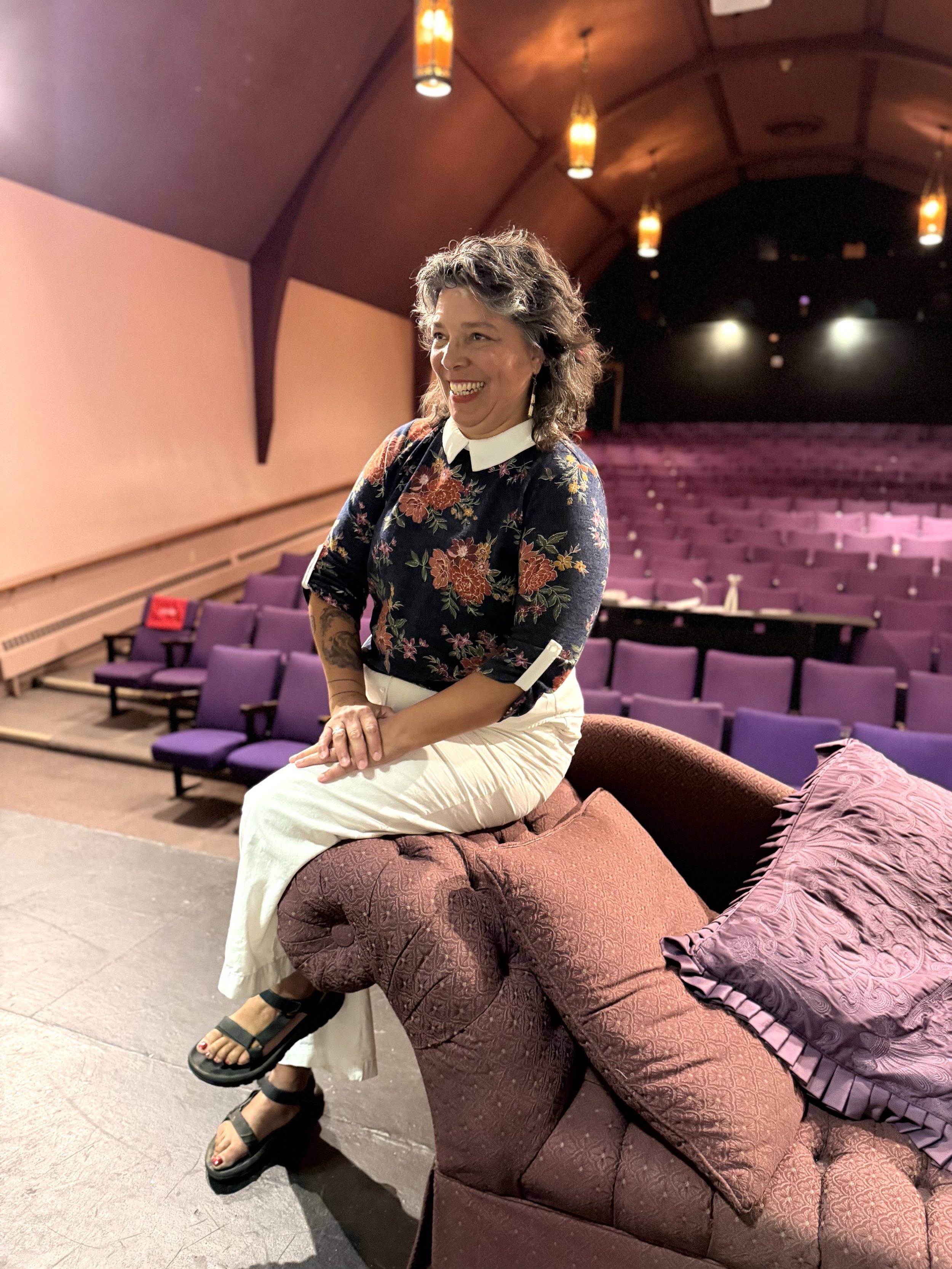
Lisa Dixon is bringing her vision for David Ives’ Venus in Fur to the Peterborough Theatre Guild stage, promising audiences a production filled with mystery, tension and unexpected turns when it opens September 18th. (Photo by Scott Arnold)


On September 18th, the lights will come up at the Peterborough Theatre Guild on Rogers Street, and two actors will take the stage for a 90-minute performance that director Lisa Dixon describes as “a train wreck of a production.”

And she means that in the best possible way.

“You just don't see it coming,” Dixon says.

Based on David Ives’ acclaimed play, Venus in Fur begins simply enough. An actress arrives unexpectedly to audition for a director working on a new adaptation of a classic novel. But as the audition and rehearsal unfold, the lines between actor and character begin to blur, and the balance of power between the two shifts in increasingly unexpected ways.

It is part psychological thriller, part dark comedy and part theatrical puzzle. It is also, according to Dixon, “so hot, so sexy,” while carrying an unmistakable sense of danger.

And she is determined not to give too much away.

“I can't say about 90% of it,” she says.

That is not a complaint. It is part of the fun.

With only two performers carrying the entire production, every glance, every movement and every exchange matters. Carissa Kaye and John Austin were exactly the pair Dixon was looking for, and their chemistry was apparent almost immediately.

“When they auditioned, it was a no-brainer,” she says.

Dixon put the two together to see whether they would work as a pair.

“Bam. It was electrifying.”

That chemistry has only intensified through rehearsals.

The production involves intimacy, physical danger and moments that demand a tremendous amount of trust between the performers. A knife and a gun are part of the production, while intimacy and fight direction is being handled by Mercedes Davy of The Gentle Blade Fight/Intimacy Direction.

Rather than shying away from the vulnerability the material demands, Dixon says Kaye and Austin have embraced it.

“They come ready. They're really hungry.”

That has made the director's job considerably easier.

“I am in really good shape,” she says with a laugh.

But while there may be only two people on stage, Venus in Fur is anything but a two-person effort.

Behind those performers is a creative team bringing Dixon's vision to life, including producer Kym Hyde, stage manager Marilyn Robinson, assistant stage manager Taya McKeen, sound designer and composer Beau Dixon, set designer Erin Brownson, costume designer Jayne Martin, hair and makeup designer Shelley Moody, and lighting designer Don White.

The result is a production that Dixon says has already become electrifying, even with weeks of rehearsal still ahead.

And then there is the set.

It is not supposed to be beautiful.

It is supposed to be unsettling.

The action takes place in a dark, dingy basement, reflecting the world of the play and the psychological atmosphere Dixon wants to create.

“It's gross,” she says. “It's a basement.”

Lighting and sound will add another layer to that atmosphere, with thunder, lightning, darkness and sudden changes in light helping create what Dixon describes as a psychological-thriller feeling.

Much of that work is being done by people Dixon knows extremely well.

Her brother, Beau Dixon, is the production's sound designer and composer, continuing a creative partnership that goes back much further than this particular production.

In fact, theatre has been part of the Dixon family for as long as Lisa can remember.

She recalls being children and putting makeup on her brothers, dressing them in hats and dresses and reenacting musicals and plays.

“We were doing theatre since we could walk, since we could sing and talk.”

Working with Beau professionally now is a continuation of that lifelong collaboration.

“He is a professional,” Dixon says. “He gets it.”

What she particularly appreciates is the balance between his expertise and her vision. He brings his professional experience to the process while respecting what she wants the audience to see, hear and feel.

That collaborative spirit extends throughout the production.

Dixon says directing means having a vision and ultimately having the final say, but it also means being willing to listen, experiment and give people an opportunity.

One example is set designer Erin Brownson, who is just 23 years old and lives in Toronto. Dixon has known her since she was born and knew she had experience designing sets through theatre school.

So Dixon gave her a chance.

The result, she says, is an amazing set.

Brownson's father is also the head builder, bringing his own expertise to turning the design into reality.

That combination of experience, new ideas and trust is something Dixon believes is essential to community theatre.

“You have to be very careful and you have to be very open to new ideas,” she says.

Sometimes there are disagreements. Sometimes people have to pivot. But ultimately, she says, the goal is the same.

“It is always the creative process and the drive to make it right despite anything else.”

That spirit is one of the reasons Dixon believes Peterborough's arts community punches so far above its weight.

She points to organizations and venues including Fourth Line Theatre, Public Energy, Peterborough New Dance, the Peterborough Theatre Guild, Black Box Theatre and Theatre on King.

There is a richness of storytelling here, she says, and perhaps something in the water that makes people want to create.

Dixon knows that firsthand.

A chef by trade, she moved to Peterborough to open Black Honey and says she was immediately impressed by the city's food scene and the number of independent restaurant owners creating something of their own.

She sees that same spirit in the arts.

“Everyone's so rich with concept of storytelling and then making it come to life, which is the hard part.”

Having an idea is one thing.

Making it happen is another.

Making it good enough that people will pay to experience it is something else entirely.

And for Dixon, that final step is what makes live theatre so special.

“You can do that if you live in another city, but while you're in Peterborough, go see the arts.”

For her, Venus in Fur is another chance to do exactly that.

Dixon first encountered the play when Bea Quarrie presented it as a stage read at the Theatre Guild last year. The Guild stages five reads a year, giving actors, directors and audiences a chance to experience material that may be different from the organization's usual productions and see how it works.

The reading stayed with Dixon.

She had directed 291 at the Theatre Guild the previous year and wanted to take on something different.

But she wondered whether Venus in Fur might be too provocative for a Peterborough audience.

She was wrong.

“I thought the Theatre Guild would say, it's a little too spicy for the Peterborough crowd,” she says.

Instead, they gave her the opportunity.

“This is going to blow you away,” Dixon says.

And she is clearly thrilled to be the one bringing it to the stage.

There is still work to do before opening night. Rehearsals have been underway for about three months, generally twice a week, with everyone involved balancing the production with their other jobs and commitments.

But Dixon has resisted adding a third rehearsal each week.

Her actors are simply that prepared.

Now she is looking ahead to September 18th and the moment when months of work become something shared with an audience.

She compares it to preparing a meal for a large group. As a chef, she knows that the final product may have one person's name attached to it, but it takes many people to make it happen.

The same is true here.

“It’s so many other people involved.”

And she is looking forward to the feeling that comes just before the curtain rises, when everyone involved knows there is no turning back.

“That gut feeling,” she says. “You kind of feel scared and it's fluttery.”

Then comes the audience.

Dixon does not simply want people to enjoy the show. She wants it to get inside their heads.

She wants the laughter.

She wants the horror.

She wants the shock.

And, most importantly, she wants the questions that come afterward.

“I'm so looking forward to people getting up when the show is done and thinking what's going on in their heads,” she says.

Because Venus in Fur is designed to linger.

“Two or three days later, you'll get people saying, ‘Wow, I can't stop thinking about it.’”

That, to Dixon, is theatre at its most powerful.

The play may be built around two people locked in a struggle for power, but she believes its themes reach far beyond the stage.

“It's a classical story about two people in a power struggle and we're always facing that.”

She hopes audiences will recognize something of themselves in it, perhaps finding a situation in their own lives that makes them think, question or confront something they have yet to come to terms with.

And then, somehow, come away from it with a sense of joy.

That is a lot to ask from 90 minutes of theatre.

But Dixon clearly believes Venus in Fur can deliver.

She has the actors. She has the creative team. She has the vision. And she has a play that she is deliberately keeping just mysterious enough to make audiences wonder what, exactly, they are walking into.

One thing is certain: whatever happens when Carissa Kaye and John Austin step onto that stage, Dixon does not want to tell you everything beforehand.

She wants you to experience it.

She wants you to be surprised.

And she wants you to still be talking about it after the lights come up.

If Dixon gets her wish, however, the real payoff will come long after the tickets are scanned, the applause fades and audiences head for home.

They will still be thinking about what they just saw.

And perhaps wondering what, exactly, happened in that basement.


Scott Arnold
is a Journalist and Content Creator at PTBOCanada Media Inc

Engage with us on social media on Twitter, Instagram, Facebook, Threads, Tiktok, Youtube and LinkedIn. Write to us at tips@ptbocanada.com. Sign up for our newsletter here.