
First Local Case of Measles In Region Says Peterborough Public Health
/Peterborough Public Health (PPH) has reported the first case of locally acquired measles within the region in over a decade, as announced on Tuesday.

Photo by David Tuan Bui.
The resident is an adult who has been fully vaccinated (which PPH considers a ‘breakthrough case’), with the source exposure unknown. Although rare, breakthrough cases can occur; they cause much milder symptoms than those in unvaccinated individuals according to PPH.
They continue to state that a series of outbreaks have been affecting regions throughout Ontario over the last few months, with neighbouring Health Units reporting cases. Still, the disease had not been identified within Peterborough until now. PPH has launched investigations to determine potential exposure locations and affected individuals.
PPH has identified the following known exposure locations (in following graphic):
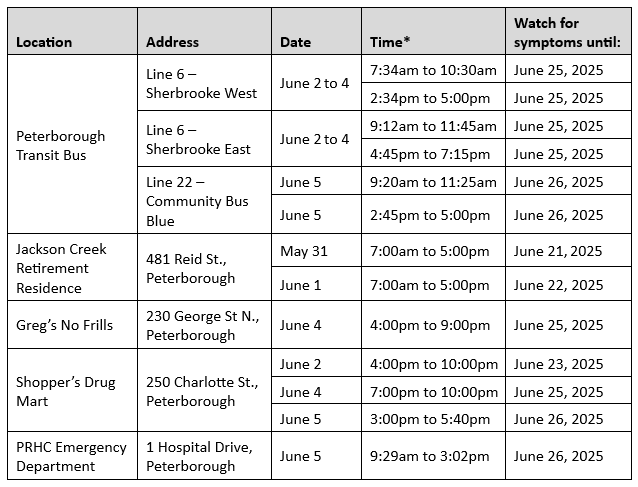
Photo courtesy of Peterborough Public Health.
If you believe you have been exposed at any of the dates and locations above:
Check your vaccination record. Confirm that household members have received two (2) doses of the measles vaccination (MMR or MMRV). If you have 2 doses of measles vaccine, you are not considered susceptible.
If you do not have two doses or are unsure, notify Peterborough Public Health. Please call 705-743-1000.
Consider vulnerability and need for post-exposure care. If you were exposed AND are immunocompromised, unvaccinated, or pregnant, contact PPH at 705-743-1000 to assess eligibility and need for post-exposure care.
Monitor for symptoms. Stay home if you develop any symptoms. Contact PPH (705-743-1000) and notify them that you may have measles. Always phone any clinic, emergency department, or health care setting before attending if you have been exposed or are experiencing symptoms.
Measles is airborne and one of the most contagious viral diseases in the world according to PPH.
Symptoms begin seven to 21 days after infection and may include:
High fever (38.8°C or 101°F, or higher)
Cough
Runny nose
Drowsiness
Irritability
Red, watery eyes
Small white spots on the inside of the mouth and throat
Red, blotchy rash (3-7 days after symptoms start), spreading across the body
Although most people who contract measles recover without treatment, it can be severe for those who are immunocompromised including infants, pregnant women and those with existing medical conditions. Possible complications can include ear infections, pneumonia, brain swelling and death.
“These cases are usually milder, less likely to require hospitalization, and occur in people who have close contact with a case over a longer period of time,” said Dr. Natalie Bocking, PPH Deputy Medical Officer of Health.
She adds that the vast majority of measles cases in the current provincial outbreak are in unvaccinated individuals – over 94 per cent.
While the current risk to the public is low, PPH is reminding residents of the importance of staying up to date with their vaccinations.
“Measles vaccination really is the most effective tool we have to prevent measles cases and outbreaks,” said Dr. Thomas Piggott, PPH Medical Officer of Health and Chief Executive Officer. “A full series will provide you with about 97 per cent protection.”
Residents are encouraged to check their vaccination status and contact their healthcare provider if they are not up to date. Individuals without a healthcare provider can book an appointment at PPH’s Routine Immunization Clinic by calling 705-743-1000, extension 331.
The PPH recommends that children receive one dose of the MMR vaccine at the age of one year. Then a second dose (of MMRV vaccine) between four and six years old – ideally before entry to school. Generally, adults born before 1970 are considered immune to measles. Adults born in or after 1970 should have at least 1 dose of the MMR vaccine.
The following adults are eligible to receive a second dose for additional protection:
Health care workers
Post secondary students
Travellers to areas where disease is of concern
Other adults, based on health care provider’s clinical judgement