Peterborough Blogs
Healthy Kids Community Challenge Kicks Off with Mayor-Warden Basketball Showdown
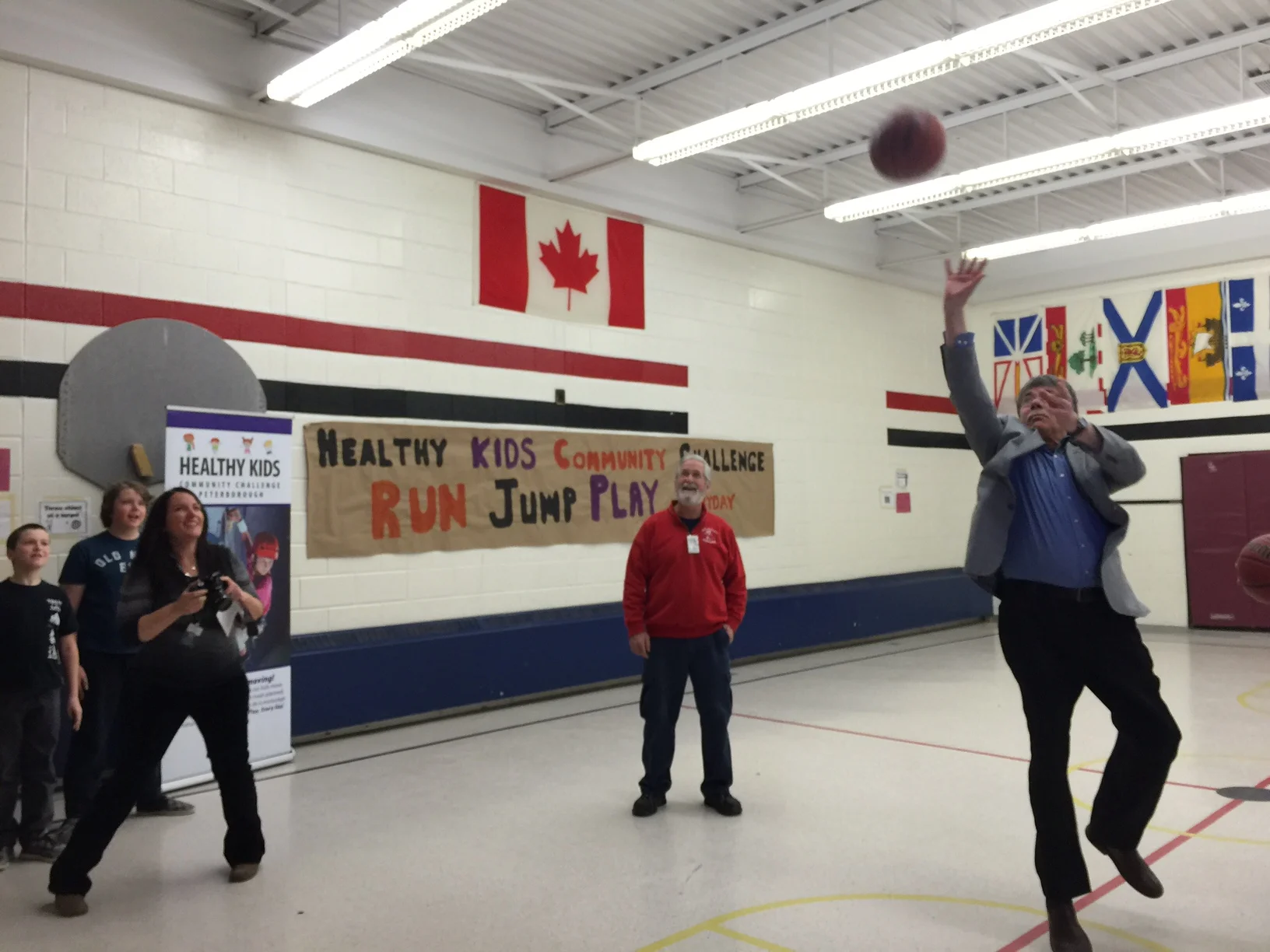
/Mayor Daryl Bennett and Warden J. Murray Jones squared off on the basketball court of Highland Heights Public School on Thursday morning (February 10th) for a friendly “shoot-off” to officially launch the Healthy Kids Community Challenge for the Peterborough area.
Steph Curry, er, Warden J. Murray Jones with the shot
“We all have a role to play in this community challenge," says Mayor Bennett. "While the program is aimed at the children in our communities, we can all be more active to serve as examples to young people and to encourage them to be more active. That’s why I’m excited to be out here, having fun on the basketball court with these students today. Even a few minutes of play every day can make a big difference over the long term.”
County Warden J. Murray Jones adds: “Children don’t need to be involved in organized, structured activities to be active. It can be as simple as getting outside and riding a bike or playing a game of road hockey with neighbouring kids. Making it fun will encourage kids to take part.”
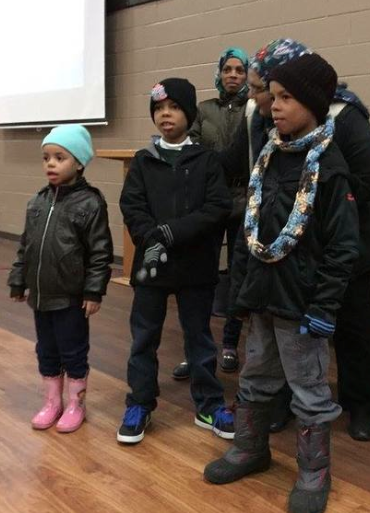
Mayor Bennett (far left) and Warden Jones (far right) pictured with Highland Heights students
Peterborough is one of 45 communities in Ontario participating in the Healthy Kids Community Challenge.
From now until June 2016, Healthy Kids Community Challenge funding will help support a variety of activities in our community to get kids and families moving more. Children will benefit from more than 20 initiatives planned to date, including:
· free public skating times in various arenas
· free parent and tot skating
· free swimming passes
· facilitating schools to bring students to local arenas to skate
· expansion of the drowning prevention program Swim to Survive
· expansion of the Car-Free School Days program
· development of a mobile cross country ski program
· expansion of a bike skills training program Pedal Power
· hosting a “Peterborough Gets Active Month” in April
To learn more about Healthy Kids Community Challenge activities, click here.
Engage with us on social media on Twitter, Instagram and Facebook. Write to us at tips@ptbocanada.com.
Peterborough Community Trading Cards Introduced To Raise Money For The Warming Room
/Kawartha Local—a company that sells locally produced products—has launched a fun community trading card project to raise money for The Warming Room.
Kawartha Local's Rob Howard explains that the collectable cards of "community heroes" are a tangible way to show a love of community, with after-cost proceeds going to The Warming Room—a safe place where Peterborough’s most vulnerable can spend a winter night when no other options are available.
Mike Judson
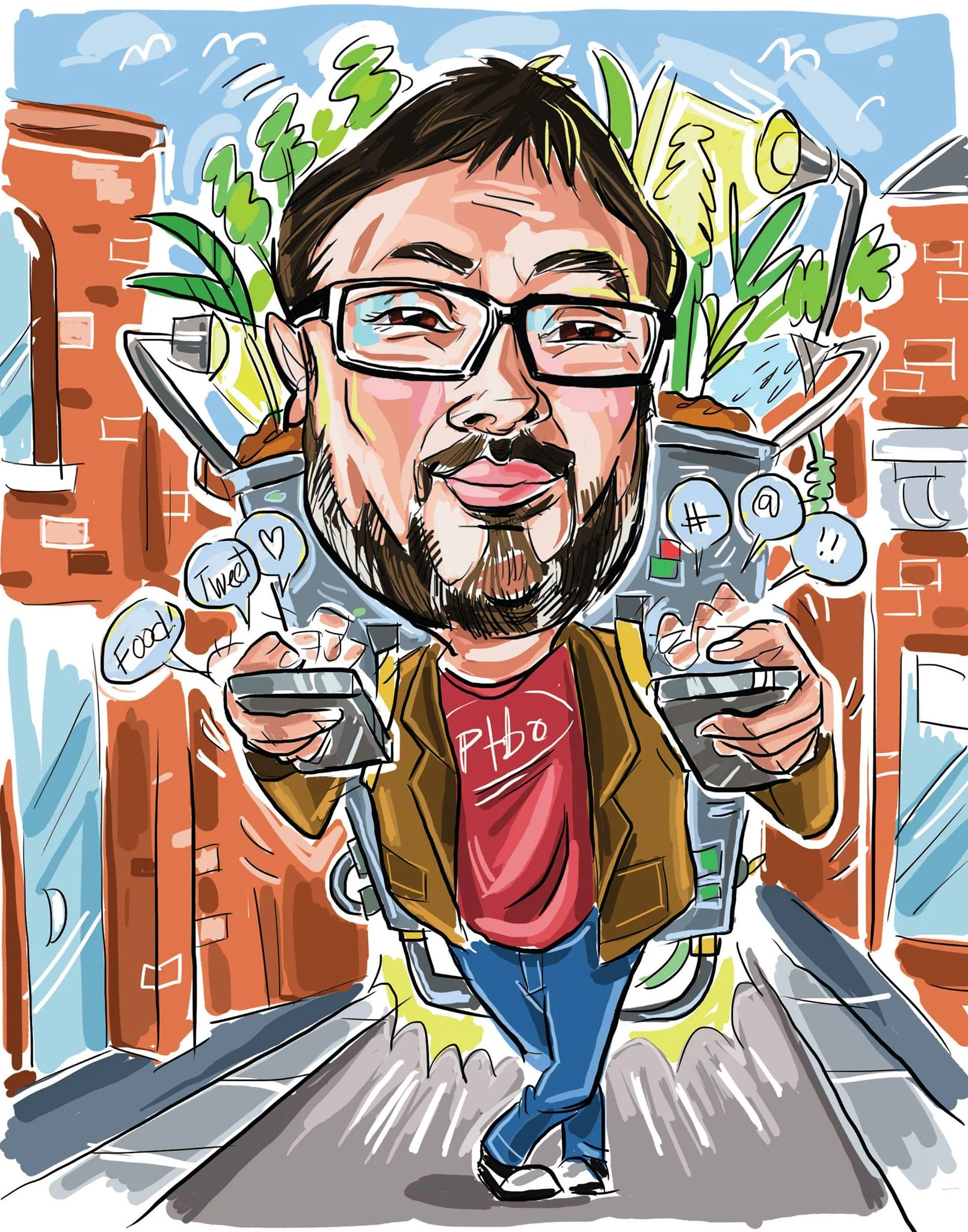
Each card depicts a different local community hero. According to Howard, “they are all people who make a difference every day—and, just as importantly, work to bring out the superhero in others.”
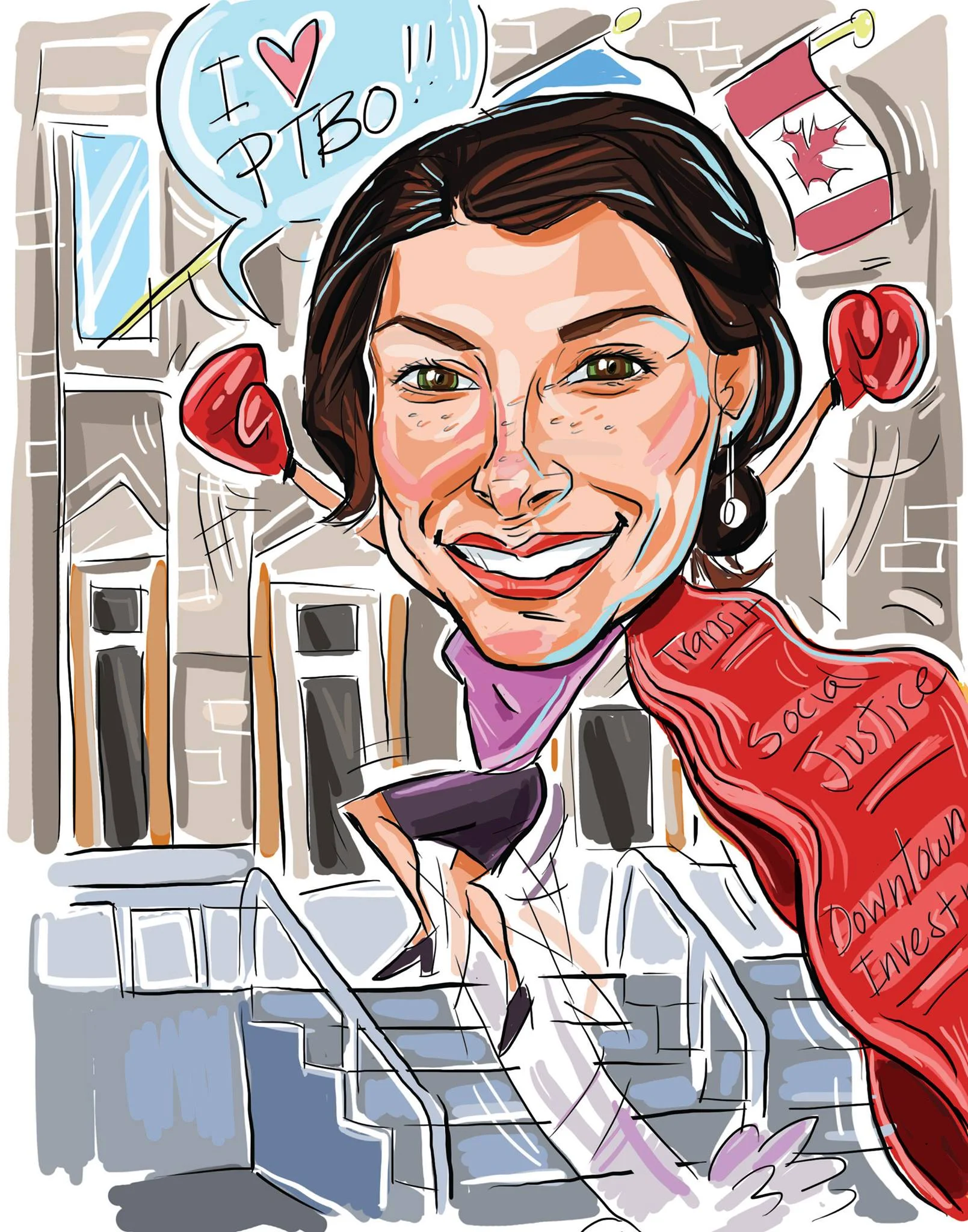
The cards feature caricature illustrations by local artist Jason Wilkins, with graphic design work by Jeff Macklin of Jackson Creek Press. Featured on the cards are MP Maryam Monsef, Mike Judson, Donald Fraser, Diane Therrien, Michelle Ferreri and our PTBOCanada co-founder Neil Morton.
Maryam Monsef
“There are dozens and dozens of people we could recognize this way in Peterborough,” says Howard. “But for this edition, we asked six to participate.”
A reception and project launch is taking place Saturday, February 6th from 4 to 6 pm at Black Honey Coffeehouse, 221 Hunter. Cards will be available for sale with several “superheros” on hand at the event.
Donald Fraser
Cards are sold in packages of 3 for $17.70, and are available online at kawarthalocal.ca, and at Naked Chocolate and Black Honey Coffeehouse on Hunter Street. Collectors can complete their set by trading any “doubles” at Facebook.com/KawarthaLocal or by making contact with other collectors on Twitter with the #PTBOTradingCards hashtag.
Diane Therrien
Howard has plans to do a future edition with different personalities. "If we do another Peterborough Trading Cards edition, it will have a different theme and support a different local charity," he says.
Michelle Ferreri
Neil Morton
Engage with us on social media on Twitter, Instagram and Facebook. Write to us at tips@ptbocanada.com.
Dispatch From Jordan: Peterborough's Michael VanDerHerBerg On What He Learned
/Peterborough's Michael VanDerHerberg—who works at the New Canadians Centre as a Refugee Resettlement Coordinator—has spent the past week in Jordan, an Arab nation on the east bank of the Jordan River that borders Syria, Iraq, Saudia Arabia, Israel and Palestine.
MIchael was there to gain firsthand knowledge of the refugee crisis. Below are photos and a dispatch he wrote for PTBOCanada.com about his time there....
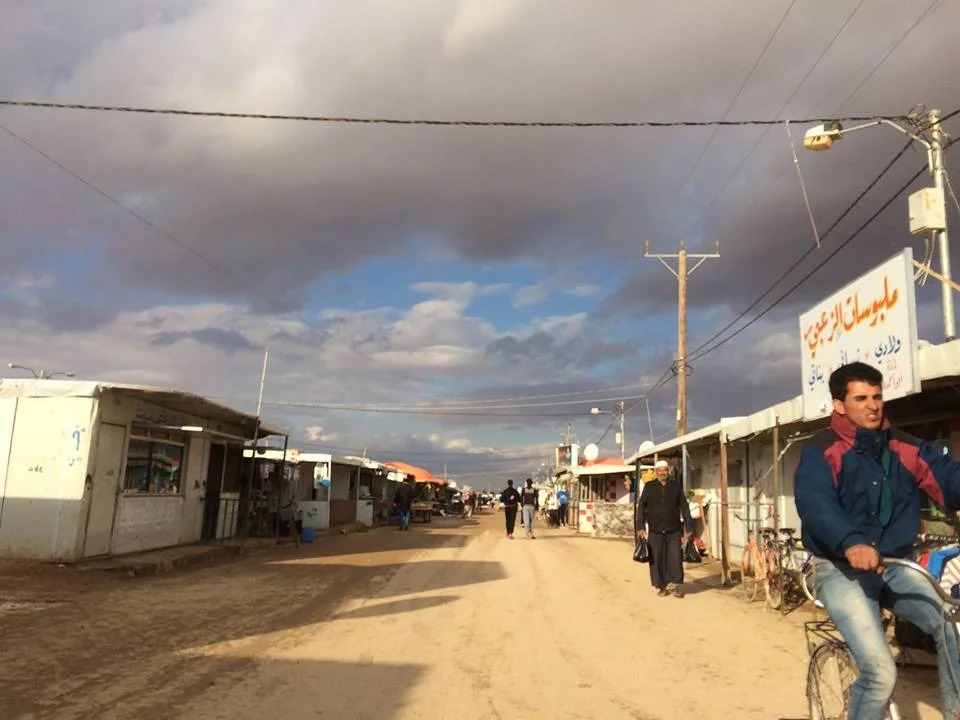
Champs-Élysées, a commercial street at Za'atari Refugee Camp which contains hundreds of small shops such as cellphone stores, dress shops and falafel stands.
WHAT I LEARNED IN JORDAN —By Michael VanDerHerberg
Jordan is a generous host country to Syrian refugees, and seemingly, the last bastion of peace and stability in the Middle East. It was described to me that the nation is walking a fine line, and more like a tightrope a kilometre off the ground.
They have taken in so many refugees over the years including Palestinian, Iraqi, and now Syrian people, but their generosity must be limited by their resources, particularly water. I had an interesting conversation with Yosra Albakkar—a Trent Masters’ graduate—at the Swedish Embassy who indicated gently to me that water can’t be invented. It is a finite resource. And while wealthier nations could possibly afford desalination from the Red Sea or Mediterranean, Jordan is not in that position.
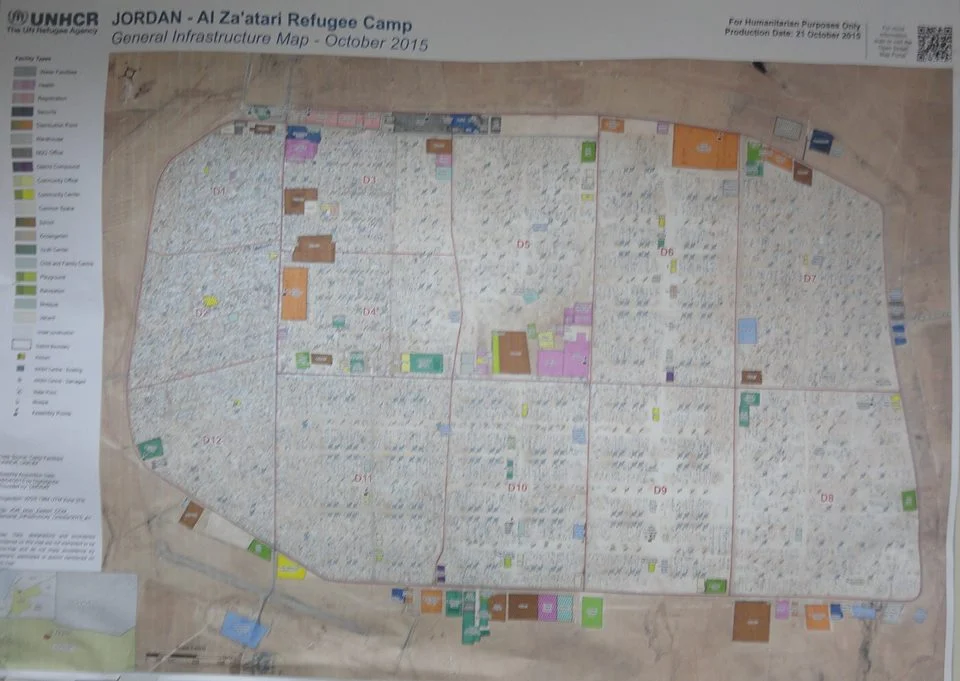
Photo of Za'atari Refugee Camp (Zaatari). Population of the camp is 79,250, about the population of Peterborough
From a Canadian perspective, with our thousands of lakes and rivers, this is hard to fathom. Keep in mind though that Curve Lake First Nation does not have clean drinking water from the tap. While here, Yosra also challenged me that the displacement of peoples in the Middle East was not that dissimilar from our Indian Reserves.
It is good to understand that Jordan has done exceptionally well in keeping their borders relatively secure, even providing transportation from the borders as people flee their homes because of violence and civil unrest.
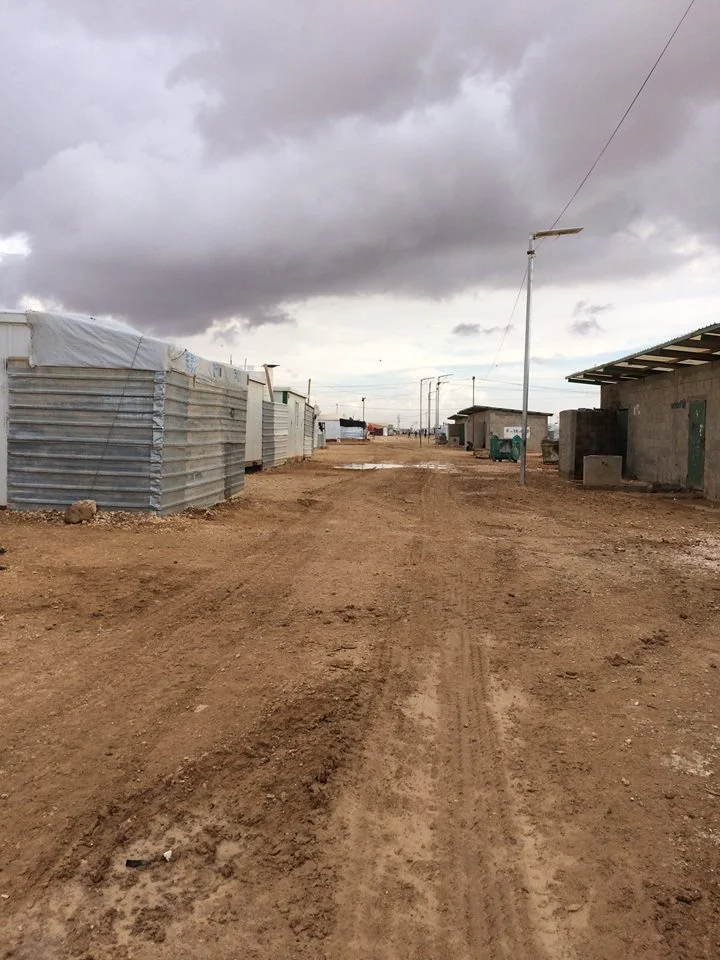
Above left: Some of the caravans within which people live at the refugee camp. Above right: communal bathrooms
I won’t wade into the politics of the Syrian conflict, only to say that it is very complicated and that we receive only certain versions of it. Further adding to the complication were the recent executions in Saudi Arabia and the subsequent riots at the Saudi embassy in Iran. There are layers upon layers of history behind those two actions. It seems like it never stops and there is a significant sense of unrest in people who are peacefully attempting to live out their daily lives. “I don’t feel at peace, no, I don’t at all,” was a shocking quote from someone who has made every attempt at living at peace here.
There are simple people living good lives who are being wrapped up into conflict that they don’t wish for at all. When it becomes too dangerous for their families, they flee to Jordan, to Lebanon, to Turkey, to Greece, and even beyond farther into Europe. If they have money, which many of them do, they can go further. If not, they can only make it so far.
Many reside in refugee camps in Jordan but the majority do not. Of the roughly 650,000 Syrian refugees in Jordan, only 15 percent live in camps like Zaatari where I visited.
Many would love the chance to be resettled to come to Canada, while many are willing to wait it out to return home. This is understandable, they are Syrian. Syria is their home. How would you respond if this happened to you? The conflict in Syria will likely not end quickly, some say not in the next five years, some say not in the next ten.
For those in the Zaatari, there are varying degrees of hope and hopelessness when waiting for peace, or at least stability, to return. While at Zaatari, home to roughly 79,250 people, I conversed at length with two men. One was quite hesitant about coming to Canada and the other was ready to move tomorrow. Among other reasons, the second was ready to move because his brother-in-law had just left that morning to be resettled in Canada with his family.
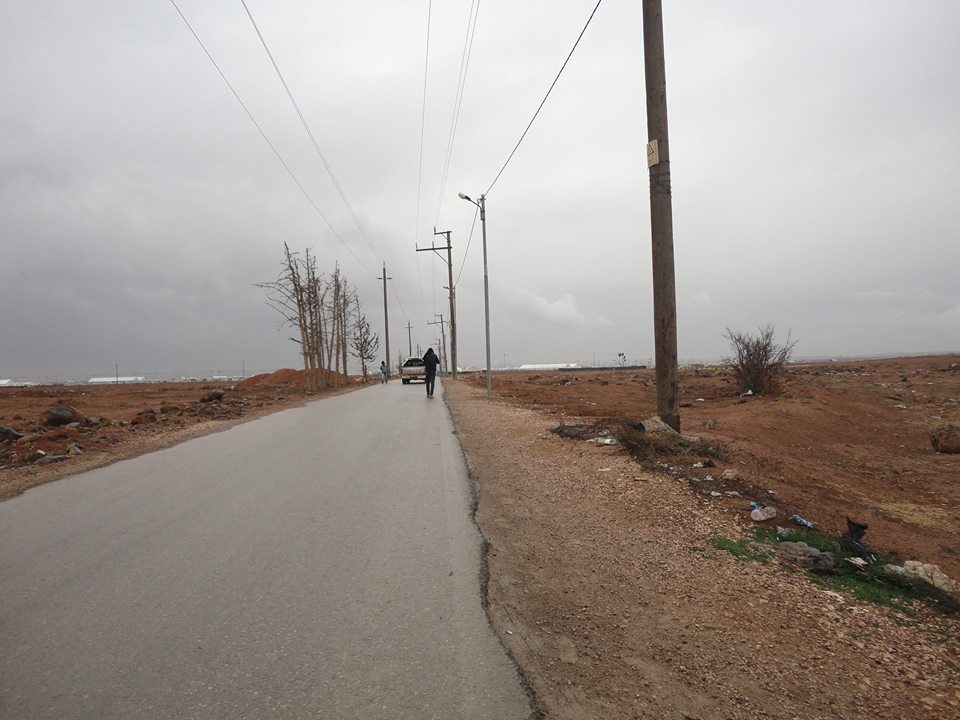
The walk from the main road towards the Za'atari refugee camp in Al Mafraq, Jordan.
Through discussions at the Canadian Council for Refugees conference I attended in November, and reaffirmed through my travels I here, I would offer that family reunification for Syrian refugees is likely the best method to healthy integration for a few reasons:
· Family in Canada can explain to those away what life is like here in a cultural context that is familiar to them
· It is generally what both families long for; those left behind are waiting to be called and those in Canada can feel guilty and fearful for their families left behind
· It promotes a community connection where the likelihood of Syrian families staying and building lives up in Peterborough, or other communities, is strengthened
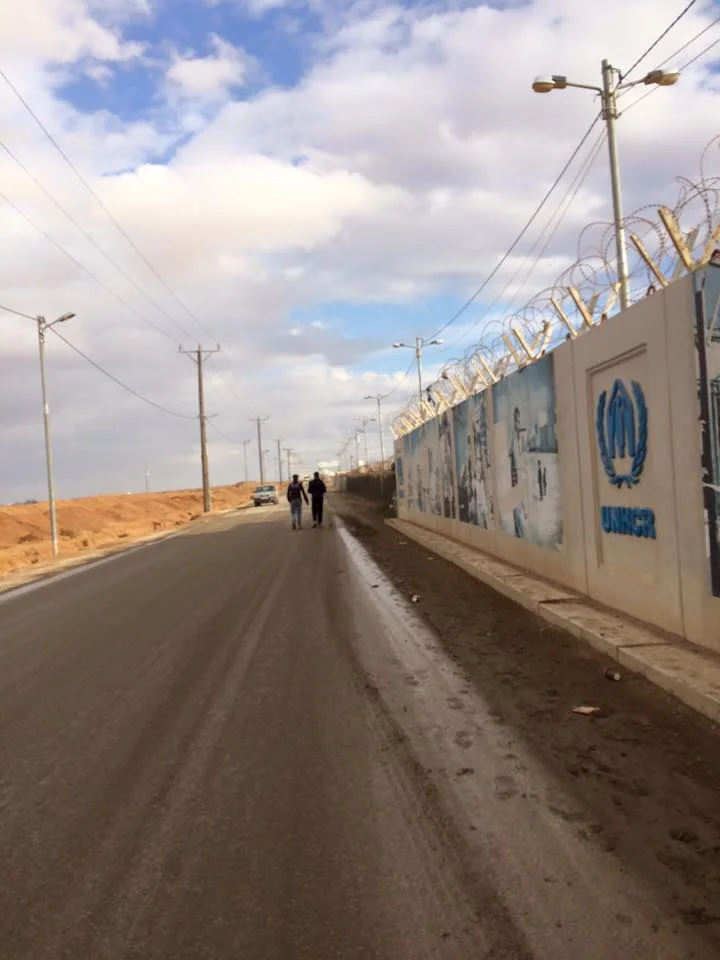
Outside Zaatari refugee camp
My encouragement to the Peterborough community is to get involved in sponsorship, and if you are starting now, then to connect with a sponsoring group that already has family in Peterborough to see if they have extended family interested in coming as well. The other is to learn, to have conversations with Syrian refugees that have already arrived, and to resist the temptation to boil complex problems down into simple rhetoric. Like Jordan, Peterborough can be a generous and welcoming community.
If you are interested in giving financially, may I suggest you look up the following: New Canadians Centre Peterborough, Lifeline Syria, Medair, UNHCR, and one of the many sponsoring groups that are forming and raising money to settle a Syrian family for their first year here in Canada.
I am looking forward to my return to @Ptbo_Canada / #Ptbo / Peterborough, my home.
---------------