In 1918, three Canadian nurses found themselves caring for wounded soldiers in Étaples, France, during the final year of the First World War. Far from home and surrounded by the devastating realities of war, they relied on one another for companionship, laughter and the strength to carry on.
More than a century later, their story is coming to life on the Peterborough Theatre Guild stage in Bluebirds, a Canadian drama by award-winning playwright Vern Thiessen that explores the lives of women whose experiences have too often been overlooked in the history of war.
For director Bea Quarrie, however, the production is about much more than looking back at history.
“We haven’t learned anything,” she says, reflecting on the circumstances in which she first brought the play forward for consideration a year ago, when hospitals were being bombed in Gaza.
That connection between the past and the present is central to what Quarrie hopes audiences take away from the production, which runs October 30th to November 14th.
“It's about their vibrancy. They were alive. They wanted to keep on living and they wanted to survive these difficulties by overcoming them.”
Rather than presenting a story defined only by the suffering of war, Quarrie wants audiences to see three women determined to hold on to life, finding meaning in their relationships and the small moments that give them something to look forward to.
“It's about survival. It's about the joy of living,” she says.
“And so every single character, there are three women, fights for that ability to enjoy what's provided to them in life.”
A Story About Finding Joy in the Face of War
Set in Étaples, France, Bluebirds follows Christy, Maggie and Bab as they navigate the demands of nursing during wartime while confronting their own hopes, relationships and uncertainties about the future.
Maggie longs for the life and love she left behind. Christy wrestles with the expectations of her marriage and her own sense of self, while Bab searches for connection and a future that feels just out of reach.
Through conversations, letters home and the bonds they form with one another, their lives emerge beyond the uniforms they wear and the work they do.
For Quarrie, those relationships are as important as the historical circumstances surrounding them.
“The little things mean a lot, their camaraderie, their letters,” she says.
The women are far from home, navigating unfamiliar surroundings and the emotional weight of their work. Yet they continue to find reasons to laugh, to connect and to imagine a life beyond the war.
Quarrie describes the production as a tribute to the women who served in the armed forces during the First World War, as well as to Canada's commitment to the wider world.
She hopes audiences leave talking about the women's lives and the values the play presents, with the hope that those conversations might contribute to preventing similar tragedies in the future.
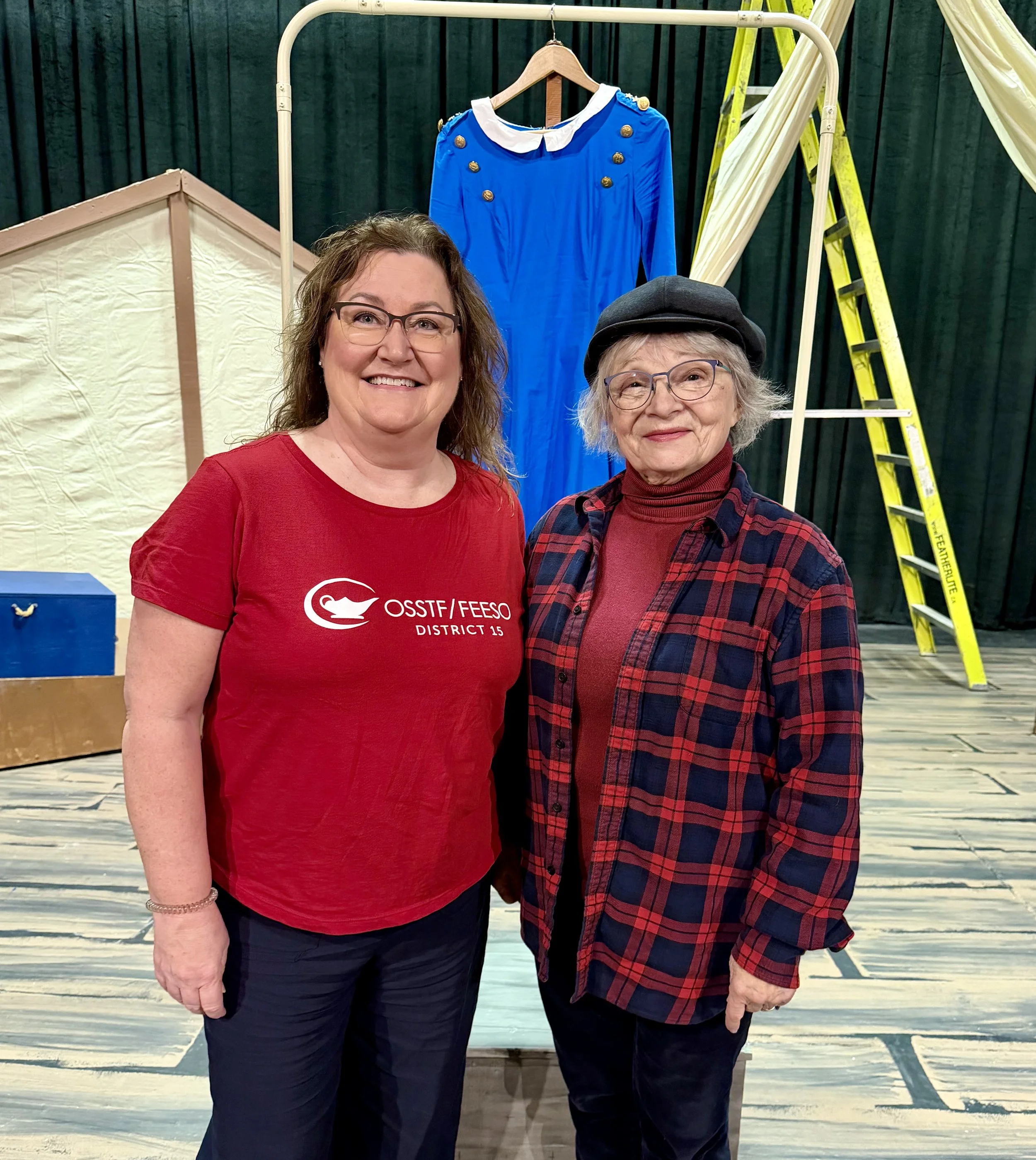
The title itself comes from the blue uniforms worn by Canadian nurses, whose appearance earned them the nickname “bluebirds.”
Their contribution extended beyond providing care to wounded soldiers. The play also explores a period of change for women, including the expansion of voting rights and advances in medical practices, such as direct blood transfusions, that nurses helped put to use under extraordinary conditions.
For Quarrie, the women were not simply witnesses to history. They were resourceful, determined people finding ways to do their work in circumstances few could imagine.
Why This Story Is Personal for the Director
The emotional connection Quarrie has developed with Bluebirds goes beyond her work as a director.
A first-generation political refugee, she crossed minefields with her parents to escape their home country and reach Austria.
Reading and working through the script has brought some of those experiences back to the surface.
“It conjures up a lot of those horrific emotions of trying to survive in a world where you're not really seen to be wanted,” she says.
The process has brought both distress and a sense of fulfilment, giving her an opportunity to reflect on her own experiences through the lives of people who faced similarly difficult, and sometimes even more difficult, circumstances.
“It's caused me a tremendous amount of duress in some ways, but tremendous amount of gratification too,” she says.
“I can try to make sense of my world as a result of seeing how other people have made sense of their world.”
It is a deeply personal connection, but Quarrie is not interested in telling audiences what to think or turning the production into a lecture.
Instead, she hopes the play will stay with people after they leave the theatre, prompting them to reflect on their own understanding of the world and how they respond to the suffering of others.
“If you go to see a play that pokes at you and wants you to come up with some ideas about the world, how do you respond to those ideas?” she asks.
For Quarrie, part of the answer lies in the possibility of finding joy and hope even when the world feels difficult to understand.
“It's a way of looking at the philosophy of how to survive,” she says, “how to stay alive in this world intact and still carry some joy and some effervescence and some wanting to see the future unfold.”
It is a striking way to approach a play set during one of history's most devastating conflicts, and one that helps explain why Bluebirds remains relevant today.