Truth Has to Come First: Peterborough Raises Every Child Matters Flag on National Day for Truth and Reconciliation

By Scott Arnold

Peterborough raised the Every Child Matters flag on Wednesday, September 30th, as local leaders called on the community to remember the children who never came home from residential schools and recognize that reconciliation cannot be limited to one day each year.

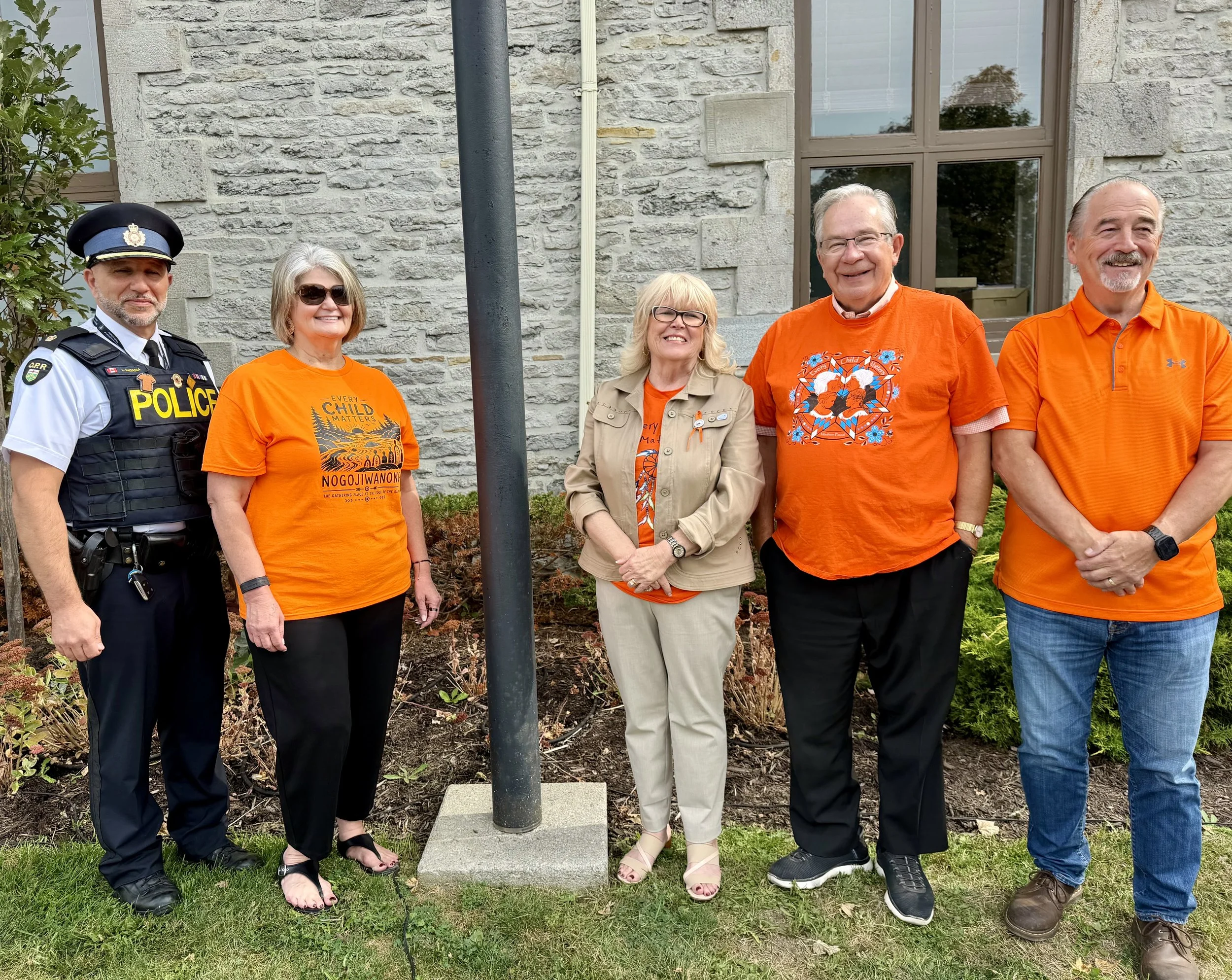
Peterborough County OPP Detachment Commander Chris Galeazza, Hiawatha First Nation Chief Laurie Carr, Peterborough County Warden Bonnie Clark, Peterborough Mayor Jeff Leal and Selwyn Township Mayor Ron Black gather at the Peterborough County Courthouse on September 30th for the raising of the Every Child Matters flag on National Day for Truth and Reconciliation.

There was a heaviness to the ceremony at the Peterborough County Courthouse.

September 30th is the National Day for Truth and Reconciliation, a day to honour residential school Survivors, the children who never returned home, their families and communities, while recognizing the ongoing impacts of the residential school system.

But as the Every Child Matters flag was raised Wednesday afternoon, the message from those gathered was clear: this is not a celebration.

It is a day to remember.

And, perhaps most importantly, it is a day to listen.

Chief Laurie Carr of Hiawatha First Nation told those gathered that before the children taken to residential schools were numbers or names in government records, they were children.

“They were someone's son, someone's daughter, someone's grandchild, someone's brother or sister,” Carr said. “They were loved.”

“They had families, languages, cultures, dreams, and futures that should never have been taken from them.”

Carr said she carries a responsibility as a mother, grandmother, auntie, cousin and Chief to honour those children, stand with Survivors and stand with the families and communities that continue to carry the pain of those losses.

But she also stressed that reconciliation is a responsibility shared by everyone.

“It begins with the truth,” she said. “And the truth is painful. The truth is ugly.”

Canada's residential school system was part of a colonial policy of assimilation that removed Indigenous children from their families and communities and sought to separate them from their languages, cultures and identities. The federal government recognizes that the effects of that system continue to be felt today.

For Peterborough County Warden Bonnie Clark, that truth is difficult to comprehend.

In an interview following the ceremony, Clark became emotional while talking about the children who were taken from their homes.

“If any of us as parents had our children removed and never seen them again, how could you not just be changed?” she said.

“It's just about sharing that history and I just cannot fathom how taking a child away from their home, their family, it's just unimaginable.”

Clark said the annual flag raising has become about more than a ceremony.

Since she became Warden, the County has invited the Mayor, the Chiefs of the area's two First Nations communities and the OPP detachment commander to take part.

“To me, it's about establishing relationships,” Clark said. “We can't change the past, but we have to acknowledge that and move forward.”

She said the growing attendance at these events is encouraging because it reflects a greater recognition of what happened to Indigenous peoples.

“You have to know the truth,” Clark said. “And certainly I would say you have to know the truth and you have to own it.”

'The Truth Is Harder'

That idea of truth was also at the centre of Inspector Chris Galeazza's remarks.

The Peterborough County OPP Detachment Commander spoke about an observation made following a National Day for Truth and Reconciliation event he co-hosted in Hiawatha last year.

The feedback was that there had been a lot of discussion about reconciliation, but not enough about truth.

Galeazza said he has reflected on that ever since.

“One of the conclusions that I arrived at is that reconciliation is an easier conversation,” he said. “It allows us to talk about partnerships, relationships and where we want to go.”

“The truth is harder.”

Galeazza said truth requires people to honestly consider where they are and where they have been, acknowledging that his own perspective as a settler and someone with privilege can affect what he sees.

He pointed to the continuing overrepresentation of Indigenous people in Canada's criminal justice system as an example of why the Truth and Reconciliation Commission's findings cannot simply be treated as history.

Galeazza noted that Government of Canada data shows Indigenous people make up about 5 per cent of Canada's population, yet represented approximately 33 per cent of those in federal custody. He also noted that Indigenous women account for about half of all federally incarcerated women.

“These are not just statistics,” he said. “They are reminders that the findings of the Truth and Reconciliation Commission are not confined to history books. They continue to be reflected in the experiences of Indigenous peoples today.”

He also shared a personal experience involving an institutional failure that affected his own family, while making clear that he was not comparing his family's experience to the profound harms experienced by Indigenous peoples through residential schools.

What the experience taught him, he said, was that institutions can fail the people they are supposed to serve and that when those failures go unacknowledged, the harm can continue.

“Truth requires us to acknowledge those realities, even when they are uncomfortable,” Galeazza said.

He described his commitment moving forward as being willing to remain uncomfortable in the search for truth and to continue being an ally.

“Reconciliation is not a destination where we can simply choose to arrive at,” he said. “It begins with the truth. It begins with listening.”

'Every Opportunity I Speak With Chief Carr, I Learn Something New'

For Mayor Jeff Leal, Wednesday's ceremony carried an added significance.

Leal has announced that he will not seek re-election, meaning this was his final National Day for Truth and Reconciliation ceremony in his public capacity as Mayor.

He reflected on the opportunity he has had over the years to share a platform with Chief Carr and Warden Clark.

He also pointed to a permanent memorial of shoes at Peterborough City Hall, created during his time as Mayor with the City's Indigenous advisor Shelley Knott.

The memorial is intended to provide a daily reminder of the children who never came home.

During his remarks, Leal also spoke about a story shared earlier Wednesday at the Healthy Planet Arena about a residential school Survivor who became known simply as “Number 47.”

“Arrived at a residential school. Stripped of their identity. Stripped of their culture. Stripped of their language. And just became sort of a nonentity” Leal said.

“Just virtually became Number 47.”

In an interview with PTBOCanada, Leal said Canadians need to hear stories like that.

“We won't come to grips with a very dark part of Canadian history unless we hear those stories, unless we comprehend those stories, to make sure that this kind of thing never, ever happens again,” he said.

Leal said he has been a friend of Chief Carr for many years and that every opportunity to share a podium with her has been an opportunity to learn.

“Every opportunity I hear Chief Carr speak, I learn something new,” he said.

'It Has to Go Year Round'

Carr said she sees the growth of National Day for Truth and Reconciliation events across the country and, particularly, here in the Peterborough area.

She said the local community has increasingly seen municipalities and organizations create opportunities for Indigenous voices to be heard and for people to learn.

But she stressed that the work cannot stop when September 30th ends.

“It's talk about it, learn about it,” Carr said in her interview with PTBOCanada. “There's some amazing books out there. Read about the history.”

She encouraged people to share what they learn with their children, families and friends, wear orange and connect with First Nations communities to find ways to support future events and reconciliation work.

“It's important to send those good messages and the truth,” Carr said. “The truth is always important to share for people to learn.”

She also spoke about the emotions that come with a day like this.

Her mornings begin with prayer and thought, she said, along with gratitude that her community remains strong and resilient and is relearning its culture and language.

But there is sadness too.

“And sometimes there is that anger that comes,” Carr said. “It's like, why is this still happening? It's 2026. Why do we still have to have that reality face us?”

Carr said the answer cannot simply be another ceremony next year.

“Reconciliation cannot be something we speak about once a year,” she told those gathered.

“It must be something we live in schools, workplaces, health care systems, institutions and in our communities.”

Because, she said, reconciliation requires more than words.

“It requires action.”

Every Child Matters

As the Every Child Matters flag was raised outside the County Courthouse, the ceremony brought together municipal leaders, Indigenous leadership, police and members of the community.

Warden Clark said the County's commitment is about continuing to build relationships and trust.

Carr said it is about continuing to tell the truth, listening to Survivors and standing against racism and hate.

Leal said it is about remembering.

And Galeazza said it is about being willing to listen even when the truth is uncomfortable.

The National Day for Truth and Reconciliation was established following the Truth and Reconciliation Commission's Call to Action 80 and was first observed nationally in 2021. September 30th also coincides with Orange Shirt Day, an Indigenous-led initiative focused on the ongoing impacts of residential schools and the message that Every Child Matters.

But the words spoken in Peterborough on Wednesday made clear that the meaning of the day extends far beyond a flag, an orange shirt or a date on the calendar.

It is about the children who were taken.

The families who lost them.

The Survivors who continue to carry what happened.

The cultures, languages and identities that were attacked.

And the responsibility of everyone else to listen, learn and act.

As Carr said at the end of her remarks:

“We will remember, we will honour, we will speak truth, we will continue forward together, and we will stand together against hate and racism because every child matters.”


Scott Arnold
is a Journalist and Content Creator at PTBOCanada Media Inc

Engage with us on social media on Twitter, Instagram, Facebook, Threads, Tiktok, Youtube and LinkedIn. Write to us at tips@ptbocanada.com. Sign up for our newsletter here.

A 30-Year Dream Becomes Reality with Hiawatha’s Rice Lake Elders Lodge

By Scott Arnold

What began as a dream carried by Hiawatha elders for more than three decades is now a beautiful new home for the community’s older citizens, with 12 lakefront apartments, a community building and a future built around dignity, independence and connection.

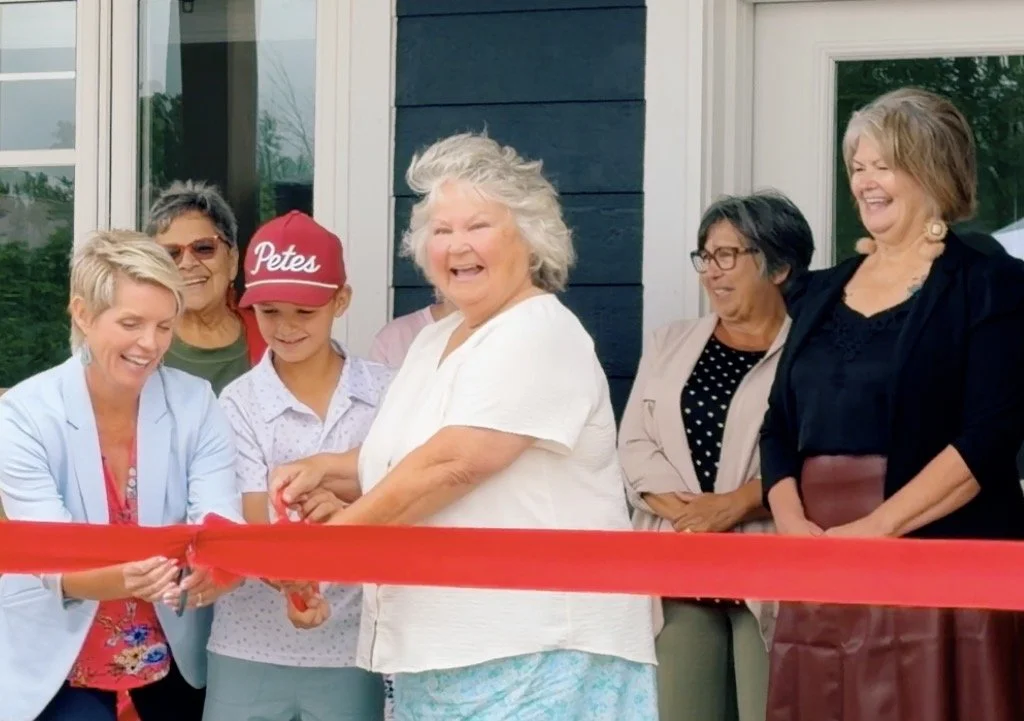
The ribbon was officially cut at Hiawatha First Nation’s Rice Lake Elders Lodge, marking the opening of the community’s largest housing project in its history. (Photo by Scott Arnold)

The ribbon was officially cut at Hiawatha First Nation’s Rice Lake Elders Lodge, marking the opening of the community’s largest housing project in its history. (Photo by Scott Arnold)

There was a lot to celebrate at Hiawatha First Nation as a ribbon was cut to officially open the Rice Lake Elders Lodge, but the significance of the day went far beyond the project itself.

For more than 30 years, Hiawatha elders had carried a vision of having a place of their own, somewhere they could live comfortably and independently while remaining close to family, friends, community and the land that has always been central to Hiawatha.

Now, that vision is standing on the shores of Rice Lake.

The Rice Lake Elders Lodge is the largest housing project in the history of Hiawatha First Nation, transforming a property that was once home to a tent and trailer park with approximately 90 trailers into 12 purpose-built lakefront homes for Hiawatha citizens aged 60 and older.

The new residents will begin moving into their homes on September 1st.

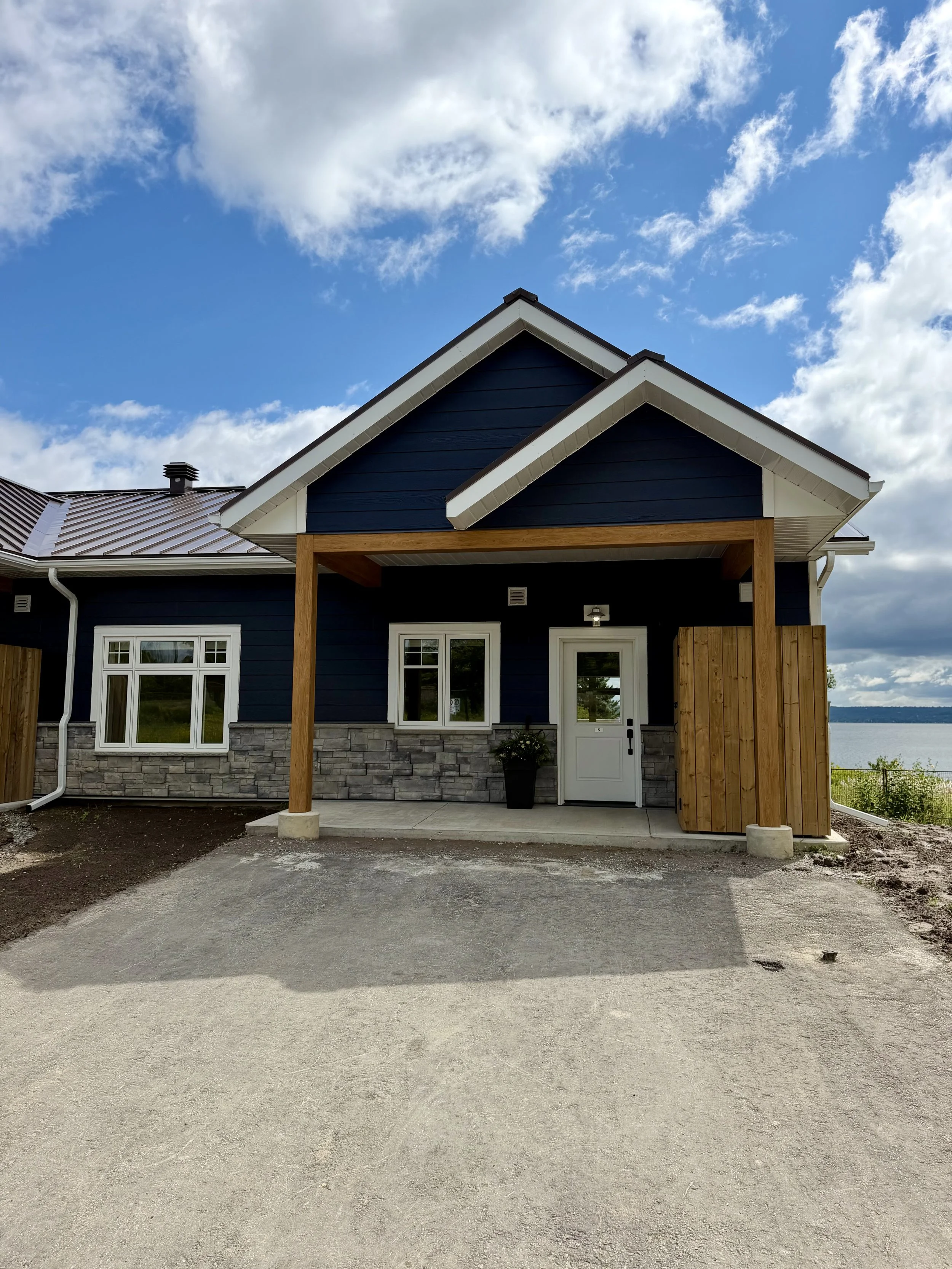
The new homes give Hiawatha elders the opportunity to enjoy lakefront living while remaining connected to their families, friends and community. (Photo by Scott Arnold)

The new homes give Hiawatha elders the opportunity to enjoy lakefront living while remaining connected to their families, friends and community. (Photo by Scott Arnold)

The ceremony opened in a good way with Hiawatha citizen and Cultural Coordinator Jill Stevens offering a prayer, followed by an honour song. Stevens spoke about the importance of elders within the community and the responsibility to ensure they are comfortable, respected and cared for as they move through their later years.

That theme carried throughout the ceremony.

Chief Laurie Carr described the project as the realization of a vision carried by elders for more than 30 years, emphasizing that the new lodge is about far more than walls, rooms and a roof.

“Our elders are the heart of our community,” Carr said.

She spoke about the knowledge, teachings, traditions and memories carried by Hiawatha’s elders and the role they play in connecting generations to their ancestors, families, land and identity.

The lodge, she said, creates a place where elders can gather, share stories, welcome family, enjoy a cup of tea and simply be surrounded by their community.

It also creates an opportunity for younger generations to spend time with elders, listen to their stories and learn teachings that cannot simply be found in a book.

“Knowledge is passed from one generation to the next,” Carr said. “That is how we keep our culture strong. That is how we keep our stories alive.”

That intergenerational connection is at the heart of what Hiawatha hopes the lodge will become.

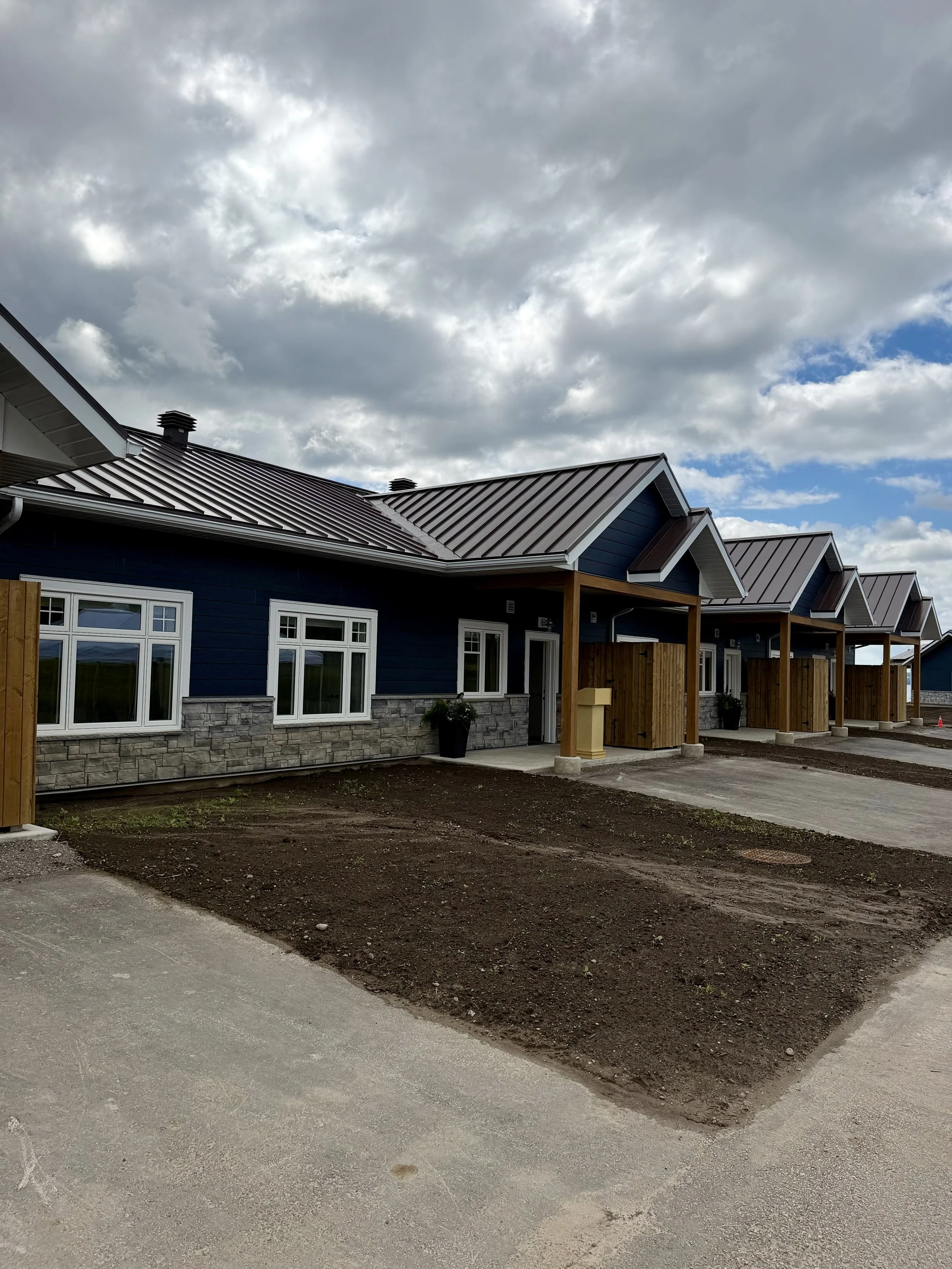
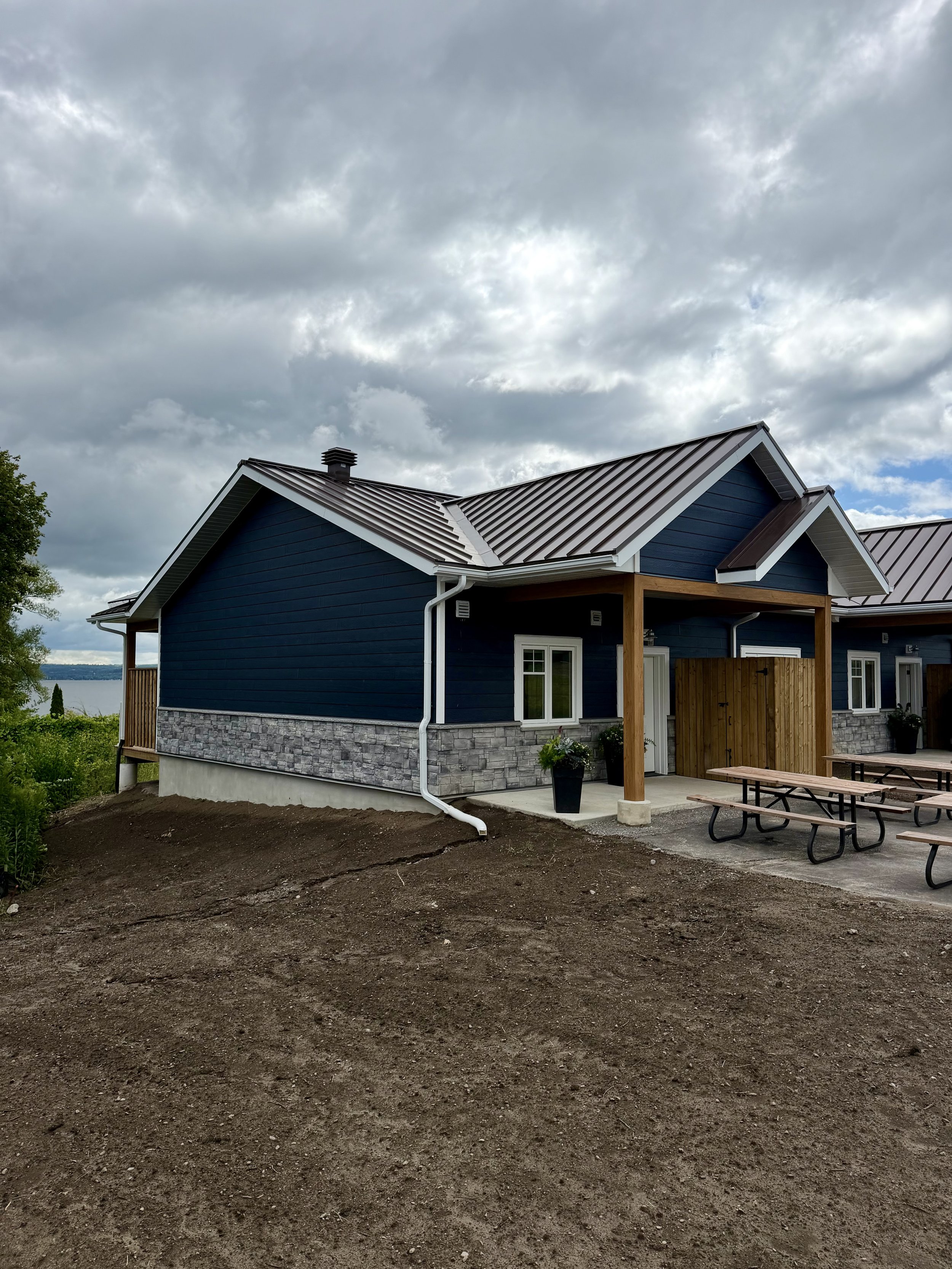
The Rice Lake Elders Lodge features 12 lakefront apartments, each approximately 1,000 square feet with two bedrooms and designed for independent living. (Photo by Scott Arnold)

A Project Years in the Making

The journey toward the lodge began taking shape in 2018, when a seniors housing committee made up of community members, Housing Manager Lisa Cowie and then-Councillor Jeff Loucks began working on what the community wanted the project to become.

They discussed concepts, floor plans, the number of bedrooms and the amount of space required, while gathering input from citizens along the way.

The project was transferred to Hiawatha’s Capital and Infrastructure department in December 2022, when Director of Capital and Infrastructure Hayley Vogler and her team took on the work of turning the concept into reality.

That meant years of design work, funding applications, environmental assessments, archaeological investigations, budgets, approvals, revisions and construction.

It also meant navigating plenty of challenges.

“This was not a smooth ride,” Vogler told those gathered for the ceremony.

There were plenty of hoops to jump through, she said, but the team kept working together and kept moving forward.

The result is a project that combines housing, community space, sustainability and a remarkable connection to Rice Lake.

The Capital and Infrastructure department is responsible for Hiawatha’s major capital projects, from their initial planning through completion.

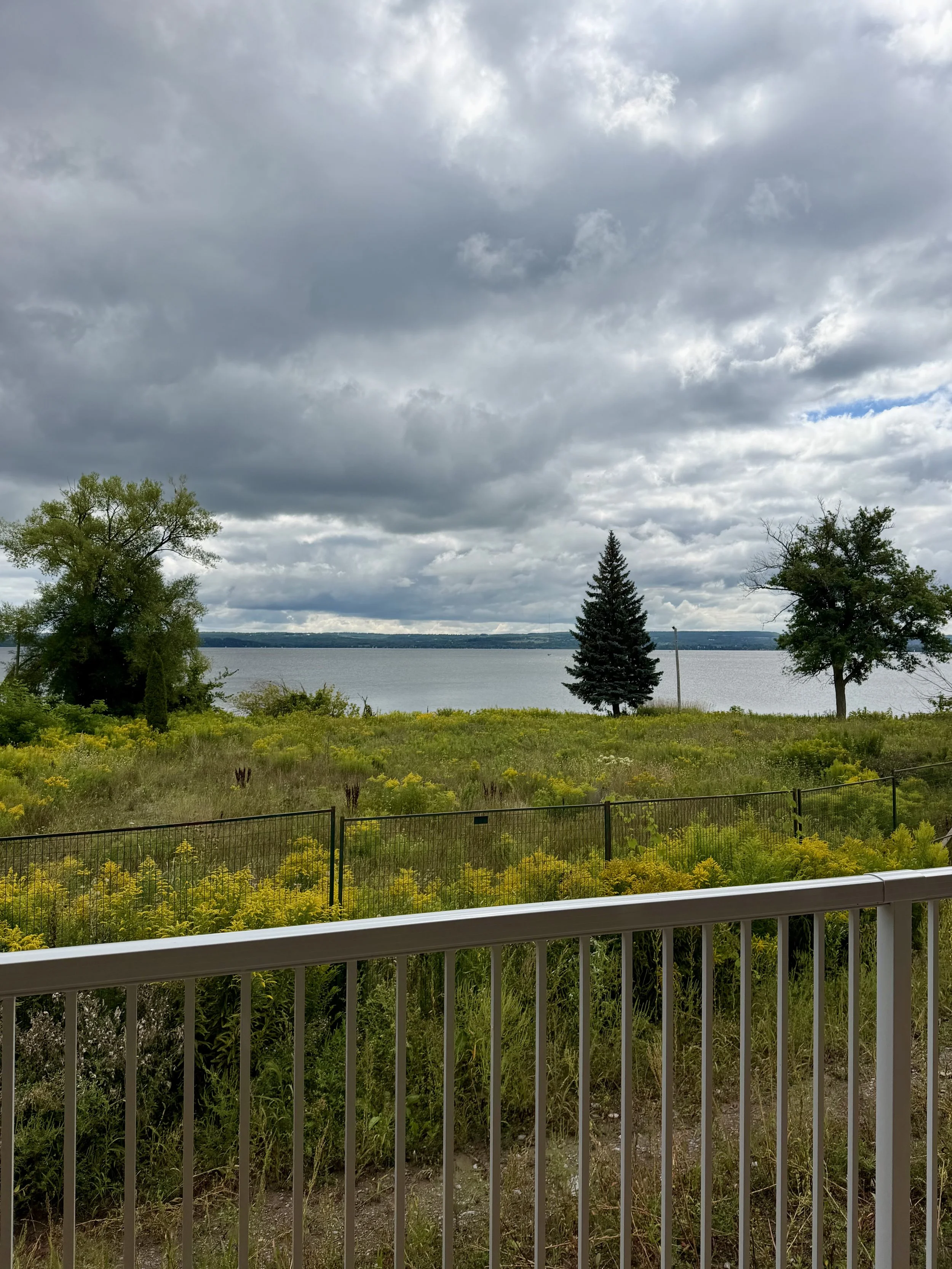
With Rice Lake just outside their doors, the new residents of the Elders Lodge will have a beautiful setting to enjoy for years to come. (Photo by Scott Arnold)

12 Homes on Rice Lake

The heart of the project is the 12 apartments, each approximately 1,000 square feet with two bedrooms.

Every unit is accessible, with four designed to be barrier-free, and all are intended for independent living.

But perhaps the most striking feature is the setting.

Each home offers views of Rice Lake, giving Hiawatha elders an opportunity that some have never had before: lakefront living within their own community.

For Vogler, that part of the project is especially meaningful.

She recalled spending time as a child at her grandparents’ cottages on Paudash Street, where her grandmother described her time at the cottage as her “little slice of heaven”.

Now, Vogler said, it is a gift to be able to provide that same kind of experience to Hiawatha citizens.

“It is such a gift to be able to give that same opportunity to our citizens today,” she said.

The importance of that cannot be understated.

Hiawatha First Nation sits along Rice Lake, yet some of the elders moving into the lodge will be experiencing lakefront living for the first time in their lives.

They will wake up with the lake outside their windows, enjoy the view from their homes and remain surrounded by the community they know.

“It’s just such a special and rewarding thing to be able to have housing for them that’s here, that’s lakefront, that’s just beautiful for them to spend the next several years of their life in comfort and in their community,” Vogler said.

The new 1,700-square-foot community building at the Rice Lake Elders Lodge will provide space for meetings, gatherings, events and elders programming. (Photo by Scott Arnold)

More Than Housing

The project goes beyond the 12 apartments.

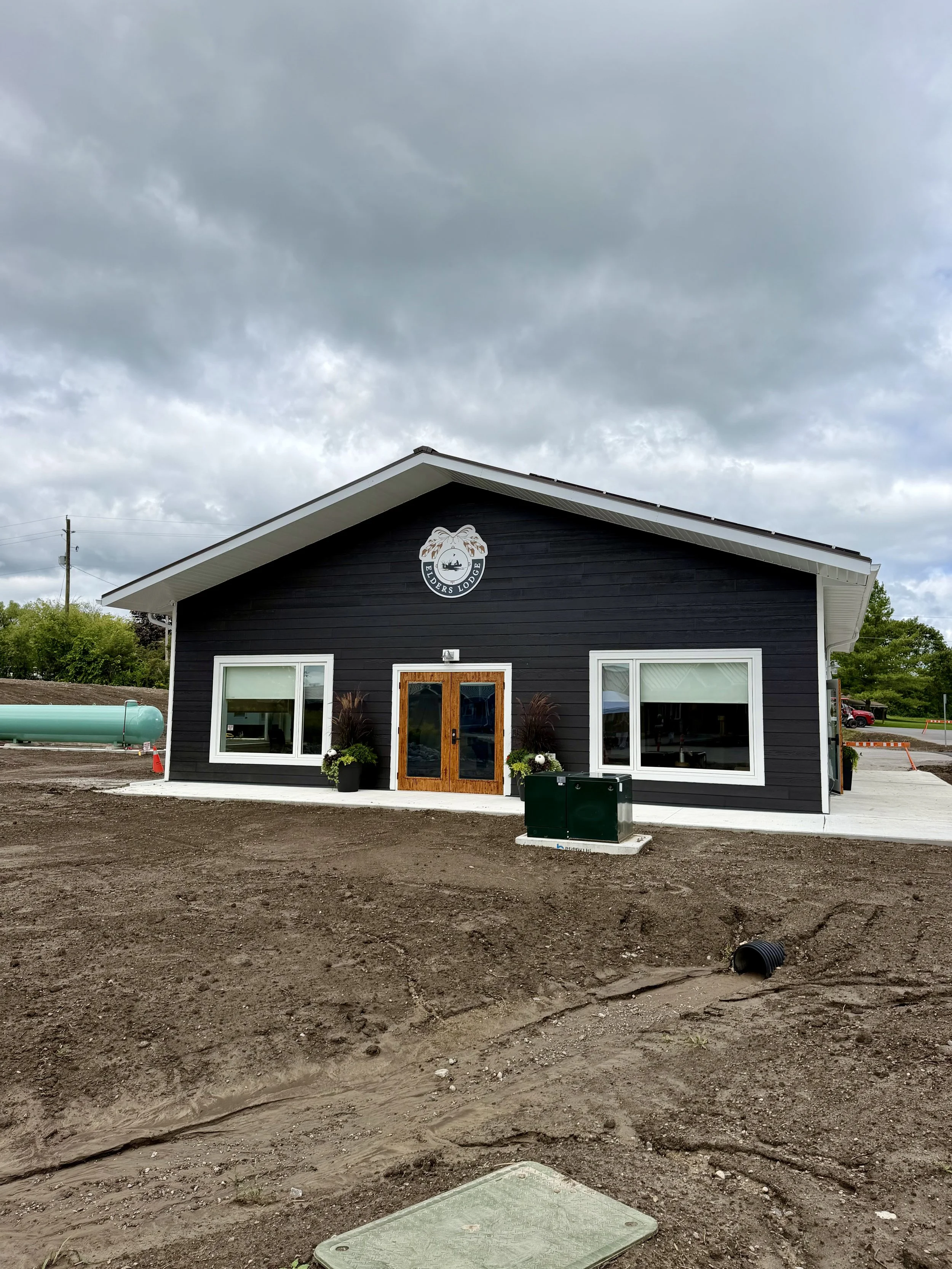
A 1,700-square-foot community building has also been constructed, providing space for meetings, gatherings, events, community activities and elders programming.

It includes a full kitchen and is designed to give residents and the broader community another place to come together.

There is also a 471-square-foot rental suite attached to the community building, giving visiting family, friends and other guests a place to stay within the community rather than having to find accommodation elsewhere.

That makes the development more than a collection of apartments.

It is a place designed to encourage people to gather.

It is a place where meals can be shared, families can visit, friendships can develop and community programming can take place.

And it is a place where elders can remain connected rather than being separated from the community they have helped shape.

The Rice Lake Elders Lodge transformed a property once operated as a tent and trailer park into purpose-built rental housing for Hiawatha elders. (Photo by Scott Arnold)

Building for the Future

One of the project’s biggest accomplishments is something that will not necessarily be visible when residents walk through their front doors.

The Rice Lake Elders Lodge was designed to meet net-zero requirements, making it one of the first projects of its kind for First Nation seniors’ independent living housing in Ontario.

For Hiawatha, it was a significant undertaking.

It was also a major reason the project was able to attract substantial outside funding.

Multiple funding partners came together to support the project, including the Indigenous Leadership Fund through Environment and Climate Change Canada, Indigenous Services Canada, Canada Mortgage and Housing Corporation and the Natural Infrastructure Fund.

In total, the funding secured covered more than 84 per cent of the project’s total cost, leaving Hiawatha responsible for approximately 16 per cent.

Vogler joked that the funding process involved writing applications, waiting, writing more applications and waiting again.

But the effort paid off.

The funding support not only helped make the project possible, it also allowed Hiawatha to offer affordable rents to the elders moving into the new homes.

For a project designed to provide quality housing to Hiawatha citizens, that was an important part of the vision.

The new homes give Hiawatha elders the opportunity to enjoy lakefront living while remaining connected to their families, friends and community. (Photo by Scott Arnold)

Protecting What Lies Beneath

The project also brought an important reminder that the land itself carries history.

Archaeological work conducted during the development uncovered human remains, and two significant archaeological sites were identified within the project boundary.

One is located on either side of the completed development.

Rather than simply pushing ahead, Hiawatha’s project team and archaeological team have been working through the required process to protect those areas and ensure what remains beneath the ground is preserved for generations to come.

Vogler said that work was still underway at the time of the grand opening, with the expectation that it would be completed within the following month if all goes well.

It was another challenge in a project that had already required patience and persistence, but it also underscored the importance of respecting both the ancestors who came before and the generations who will live here in the future.

A Team Effort

There were plenty of people to thank during the ceremony.

Vogler recognized the original seniors housing committee, Chief and Council, Hiawatha staff, consultants, contractors, subtrades and funding partners, along with the many people who worked behind the scenes.

She gave particular recognition to site supervisor Ian Bashford of MVW Construction, thanking him for the time, energy, persistence and care he brought to the project.

Vogler also thanked Julie Thompson, Hiawatha’s Capital and Infrastructure Coordinator, for being alongside her throughout the process.

The project team included 3rd Line Design as architect, MVW Construction as contractor, Phoenix Engineering as the on-site engineer and Colliers Project Leaders as professional project managers.

Vanessa Vachon, a principal with 3rd Line Design, also addressed the crowd, saying it had been a privilege to work with Hiawatha First Nation to create a space where elders could remain connected to their community.

“To the elders who will call this place home, we hope you enjoy your new homes for many years to come,” Vachon said.

For Vogler, the team behind the project was every bit as important as the bricks, windows, walls and infrastructure.

“It's been a lot of work, patience, resilience, a great team, tons of people coming together to make this happen for our seniors,” she said after the ribbon cutting.

And when asked what it was like to finally stand at the podium, look out at the people who had supported the project and realize that the years of work had led to this moment, Vogler did not hesitate.

“It’s a very, very special day,” she said.

Welcome Home

The ribbon cutting itself marked the moment when the years of planning, problem-solving and construction gave way to something much more tangible.

The doors were opened.

People were invited inside to see the finished apartments, the community building and the rental suite.

There was food, an ice cream truck and tables set up for people to sit and celebrate together.

But the most important part of the day was waiting just around the corner.

The new residents.

For them, September 1st will not simply be another date on the calendar.

It will be the day they move into homes designed specifically with their needs in mind, overlooking Rice Lake and surrounded by their community.

The lodge represents an investment in housing, but it also represents something much larger.

It is an investment in Hiawatha’s elders.

It is an investment in independence and dignity.

It is an investment in community.

And it is an investment in keeping the connection between generations strong.

As Chief Carr put it during the ceremony, the new lodge is a place where elders should feel safe, respected, valued and cared for.

A place where stories will be told.

Where families will gather.

Where friendships will grow.

Where young people will learn from those who came before them.

And where the voices and wisdom of Hiawatha’s elders will continue to be part of the community for generations to come.

After more than 30 years of carrying the dream, Hiawatha has finally opened the doors.

The Rice Lake Elders Lodge is ready to welcome its residents home.


Scott Arnold
is a Journalist and Content Creator at PTBOCanada Media Inc

Engage with us on social media on Twitter, Instagram, Facebook, Threads, Tiktok, Youtube and LinkedIn. Write to us at tips@ptbocanada.com. Sign up for our newsletter here.

St. John CES Celebrates Indigenous Culture With Pow Wow

As a way for roughly 300 St. John Catholic Elementary School students to enrich their cultural knowledge, a pow wow was held on their grounds to celebrate Indigenous culture on Friday afternoon.

Several of the school staff and students are Indigenous, the largest population in all Peterborough Catholic schools according to Jen Wright, St. John CES principal.

“That's one of our main priorities at St. John is to support and represent all of our students,” she said. “It's celebrating the culture and community of Indigenous families. It is so special that it's one step towards reconciliation that we can host today.”

“I thought it was important to bring a pow wow here so they can get in touch with their culture and help them more identify with who they are,” said Richelle Weekes of Hiawatha First Nation.

Members of Hiawatha First Nations, Haudenosaunee and Chippewas of Nawash Unceded First Nation came to St. John for the pow wow to celebrate all Nations coming together. An intertribal song was sung to unite everyone together as students and teachers were invited to dance and sing along.

“I'm actually so happy and amazed that so many people have actually shown up to support this,” explained Weekes. “It's so good for our non-Indigenous to see how the Indigenous culture is so that we're aware of all the different cultures out there.”

While it’s not the first pow wow hosted at a Catholic school in Peterborough, Weekes she wants to make this a more regular event throughout the years.

“My goal is to hopefully get a pow wow maybe every year to a different school throughout the board just to keep bringing more awareness and to keep everything open and just help people be proud of who they are,” she said.

Engage with us on social media on Twitter, Instagram, Facebook and Tiktok. Write to us at tips@ptbocanada.com. Sign up for PTBOBuzz newsletter here.