
Trent University Students Showcase New Ideas for the Future of Work at STRIDE Challenge
/After months of preparation and mentorship from business experts at Trent University Durham GTA, three teams earned top honours at the 2026 Business STRIDE Challenge for their innovative approaches to hiring, hybrid work and artificial intelligence.
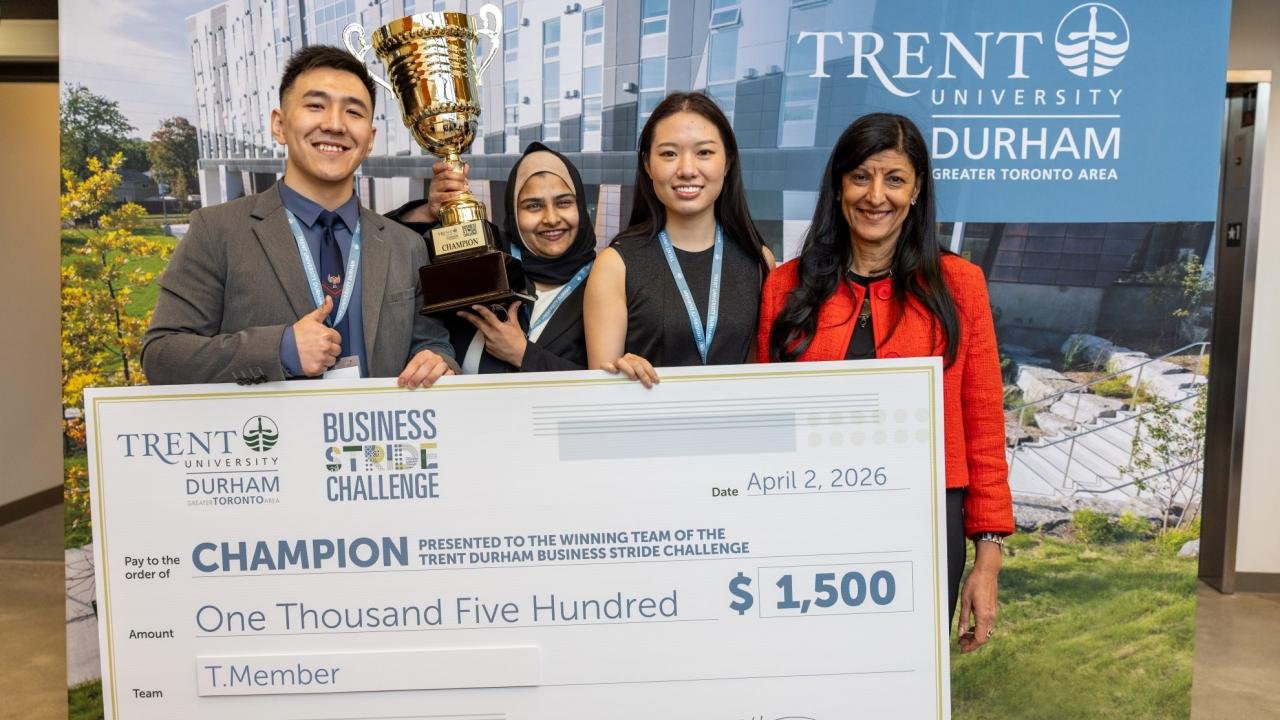
Master of Management students and T.Member champions Zeyu Xie, Sumaya Ahana and Buyang Li celebrate their win with Zabeen Hirji. photo courtesy of trent university.
Hosted at Trent Durham, the first annual STRIDE Challenge showcased student examinations of real workplace challenges and shifts in how organizations recruit, operate and evolve. The competition aimed to create a collective learning opportunity for students to engage with diverse perspectives, explore future pathways and take early actions in responsible leadership.
Thirty students across nine teams competed in three distinct streams. for undergraduate students from the University’s Business Administration program, graduate students in Trent’s Master of Management program and students from local high schools.
“We are so impressed by how all students tackled the issues facing today’s workforce and showed their creativity and skillsets in developing ideas that respond to them in practical ways,” said Dr. Ken Chen, professor in the School of Business at Trent University Durham GTA and STRIDE coordinator. “The competition highlights the impact of applied, real-world learning, an approach emphasized in the Trent School of Business. Working with the students over the past few months, I saw how much they deepened their understanding of academic theory and the working world they will enter.”
STRIDE teams competed for more than $10,000 in prizes, with three winners receiving both a cash prize and a charitable donation credit to give to the organization of their choice. First-place winners in each stream were:
T.Member: Master of Management Stream
Recognized for their proposal for an AI-enabled training system designed to help organizations retain knowledge and address labour shortages. Using a dry cleaning business as a case study, their model captures practical expertise through AI sensor-based technology to support onboarding, improve workplace safety and strengthen long-term skill development across workforce generations.TAEQN: Bachelor of Business Administration Stream
Winning Business Administration team TAEQN designed a structured onboarding model for hybrid workplaces that tailors training and communication to individual employees using cultural dimension surveys. The model supports flexibility while addressing shifting workforce expectations, mentorship and professional development needs and challenges such as employee isolation.Triple Point: High School Stream
High school teams were challenged to rethink how employers hire for entry-level roles based on skills rather than credentials. Team Triple Point (Pickering) developed a multi-stage digital hiring platform that shifts focus from credentials on paper to performance. Combining AI-enabled blind screening with assessments, team exercises and interviews, the model helps employers build a more complete picture of candidates and better match them to roles.