Spotlight: EPIC Ventures Winner Seniors Dreams

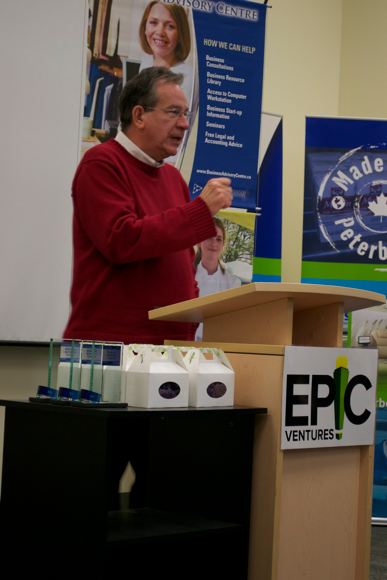
Seniors Dreams was recently chosen as an EPIC Ventures winner through the Greater Peterborough Area Economic Development Corporation. Founder Mark Twyman was honoured to gain this recognition with this award...

Read More

Here's A Letter Sent To Us From A Woman Whose Sisters Could Soon Be Homeless In Peterborough

The letter is unedited. Here it is in its entirety...

Back in December the furnace stopped working in the apartment my 2 sisters rent. One sister has a part time job that she struggles to get hours at, and was recently laid off from the second job she had. The other sister is on assistance as she has a disorder that doesn't allow her to work.

They told the landlord about the furnace and he did not fix the problem. At Christmas time it was 13 degrees in that apartment in the morning on a good day. Due to the landlord not fixing the furnace, they had to spend the little money they had between them for the month on space heaters and bills and did not feel obligated to pay the rent, since the Landlord Tenant Act states the landlord must provide certain vital services and the provisioning for heat is one.


When the hydro bills for December and January came in, as you can imagine, they were large, too large for 2 young struggling girls. They were unable to pay the bills on time, didn't know they could call and make payment arrangements, and the hydro was cut off.


When my younger sister called her assistance worker, she was told they couldn't help her because the bills were in my working sisters name. They gave her a number to call the Housing Resource Centre. So, my working sister called them and had to leave a message. They returned her call later that afternoon and asked her some questions about her situation and her work situation. As soon as she told them how much money she had made in the last 4 weeks, which was around 260.00 they told her she did not make enough money for them to be able to assist her?!?! To out astonishment she was TOO POOR to receive help from the people we were told could help her with emergency funding.


My sisters are in the process of filing a T2 abatement of rent and moving out of that apartment. My working sister was forced to file for assistance, she is not happy about it either. The hydro has been re-connected now and they are leaving.


My concern is, how was she too poor to receive help in her situation? She works and contributes to this community as much as possible. She certainly still has to pay taxes that go towards these community programs right? Never has any run-ins with the law....how? Why?


Why was she literally forced to file for assistance? Left with no other options or people who would help those girls for a month to figure out the situation? It makes me very disappointed in this Community.


She is working hard to find more work and to get out of a bad situation, it would have been nice for the Housing Resource Centre to not turn their backs on her.


Thanks for listening, please help me make people aware of this horrible situation.

*Also, just so you know, Welfare only pays my sick sister 595.00 a month. If you think about that, that is supposed to cover rent/housing, heat/hydro, and food/hygene items for one person each month. Welfare will only allow 368.00 each month for payment towards rent, that leaves 227 a month to pay for heat (enbridge), hydro (PUC) and buy groceries. When the heat and hydro average payments are factored in, she received $2.90 a day to spend on food/hygene. Is it just me or does anyone see a problem here?? Welfare told her she needs to find a more affordable apartment....anyone have an apartment she can rent for less than $200 a month?

—Samantha Payne

Tip us at tips@ptbocanada.com. Follow us on Twitter @Ptbo_Canada or Like us on Facebook

Here's An Email From A Trent Prof Circulating About Proposed Development On Charlotte Street

Letter from  Trent Environmental & Resource Studies Professor Stephen Hill...

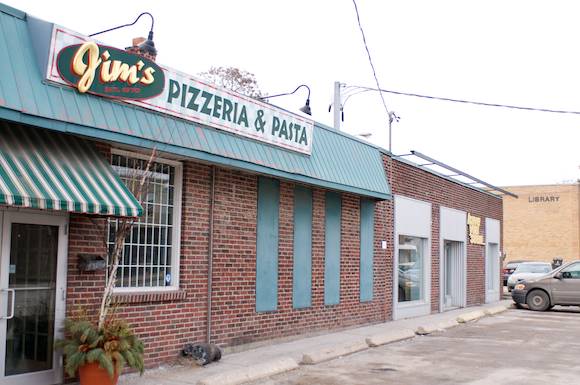
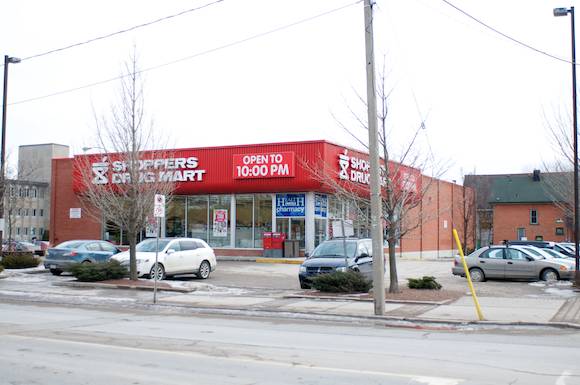
I'm writing about a proposed development in downtown Peterborough. Shoppers Drug Mart is seeking to abandon their existing store at Charlotte & Aylmer and move to a new larger site kitty corner from where they are now. The new site, if approved, will demolish all of the buildings on the north side of Charlotte, between Bethune and Aylmer (from the paint store to Jim's Pizzeria/Have you Seen). The corner of Charlotte and Aylmer will be a 37 car parking lot, with the new Shoppers building occupying the rest of the block (& loading docks fronting on Bethune). In urban design terms, it's an unmitigated disaster to create a building for no other purpose than to fit the brand image of Shoppers Drug Mart.

For those with more time on their hands, I've written up more on the backstory and posted it to this blog site: SaveCharlotteStreet.blogspot.com.  I'd welcome comments or additional information if you have any.
The whole idea of destroying a vibrant street to build this seems beyond comprehension. Regardless, some city councillors think it's a good idea. I am fairly confident that a concerted effort by a group of citizens can help change their minds (go Margaret Mead!), to ensure the development either doesn't happen or happens in a manner that will result in a building of enduring value. 

If you'd like to do something, please spread the word and take the time to write or call your Councillor, the Mayor and/or the City's Director of Planning. Their contact information is available by clicking here. There also needs to be people willing to speak articulately against this at the Planning Committee when this development is being considered.  


[Save Charlotte Street Blog]

[Photos by PtboCanada's Evan Holt]

Tip us at tips@ptbocanada.com. Follow us on Twitter @Ptbo_Canada or Like us on Facebook

WestJet Could Be Coming To Peterborough In 2013

WestJet employees have voted overwhelmingly to endorse the company's plans to launch a regional airline subsidiary starting in 2013 with smaller planes to be added to the fleet, according to this CBC story. And Peterborough is mentioned as one of the possible new destinations to be added in this CBC TV report...

[via David Feeley]

Tip us at tips@ptbocanada.com. Follow us on Twitter @Ptbo_Canada or Like us on Facebook.

A Creative Cocktail Happens This Tuesday Evening At Market Hall

This Tuesday (February 7th), Market Hall (140 Charlotte Street) will be the venue for the latest Creative Cocktail. From 6:30 p.m. to 9:30 p.m., you will have the opportunity to meet, network and collaborate with professionals from local businesses. If you would like to attend or for more info, contact Chantelle Held by email, call 705.743.0777 ext. 2132 or RSVP via Twitter or Facebook.


[Contributed by PtboCanada's Julie Morris]

Tip us at tips@ptbocanada.com. Follow us on Twitter @Ptbo_Canada or Like us on Facebook

GPA EDC Honours 2011 EPIC Ventures Winners

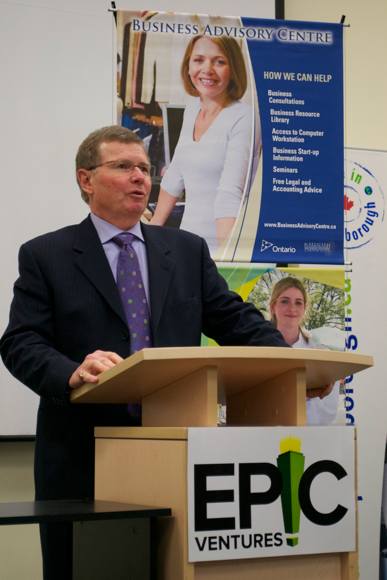
GPA EDC Board Chair - Tom Sayer MPP Jeff Leal with encouraging words for small businesses

Yesterday at the Greater Peterborough Area Economic Development Corporation (210 Wolfe Street), the 2011 EPIC Ventures Winners were recognized for their contributions to Peterborough and area.  

Read More

The Phillips Report: Peterborough’s Unemployment Rollercoaster

The recent unemployment statistic for the Peterborough area was welcomed news.  The area’s unemployment rates for December had dropped to 7.3%—the lowest level in 27 months. As is typical of the public reaction to such good news, there is little discussion of it. It is like it was meant to be.

When the news of a much higher rate of unemployment in the area hit the streets, it was difficult not to end up in a discussion with someone—anyone—about who was to blame for it. Now that there is good news, no one has been asking who should get the credit. So goes Canadian culture.

In the end, punishment or reward is not the real issue.  The real issue is how to maintain a low level of unemployment. History, however, has some lessons that can help us deal with unemployment—if we’re willing to learn from its lessons.

The general, historical pattern of unemployment in this area is that the unemployment rate falls between May and November each year. The bad news is that it rises between November and May. That means that in the Spring, we will likely be getting news that unemployment is up again. 

An indicator of the health of the local economy will be, in part, the degree to which unemployment increases between now and May. If it goes back to a level over 10%, as it was in 2010, the economy will, once again, not be doing well. Any level under 10%, the news is good—in relative terms.

The volatility of unemployment is a problem in itself. If there were ways for us to creatively develop what economists call "countercyclical" activities that would reduce the swings in unemployment over a year, the stability that would come with it could, in itself, promote economic growth.

It seems rather obvious that the May-to-November decrease and November-to-May increase pattern has systemic roots. That is, there is something about economic activity in the area, as a whole, that leads to these results. The seasonality of a lot of activities related to the weather—from construction to tourism—clearly has an impact. 

However, with dismally poor performance in productivity across Canada—including our area—there must be something we can do to treat the historical pattern as an opportunity to provide a meaningful experience for the larger group of unemployed in the November-to-May period. This would have the potential to improve their productivity and future employment prospects.

There are a number of activities that could be developed to address the lethargy of the November-to-May phenomena. To address how to do this, however, requires that we consider activities that are non-traditional, in one degree or another. 

For instance, providing incentives for businesses and other organizations to offer employment opportunities— even if they were in short-term contracts that could possibly lead to full-time employment—could contribute positively to the Winter/Spring malaise. This could be addressed by any, or all, levels of government, and perhaps even by private- and public-sector organizations in their planning of activities over a year.

There could be, with some creative program timing and content, education and training opportunities offered locally that would cater to those who most often experience unemployment during this period. This kind of programming could improve their prospects for future, long-term employment, make them more productive when they are employed, and could be taken as credit toward recognized certificates, diplomas, or degrees.  This would require some non-traditional scheduling, programming, and methods for delivering educational and training opportunities that fit the realities of the local unemployment cycle.

I am not aware of there being concerted effort—across all sectors—to address economic realities of the employment cycle in the area. However, with a collective willingness—socially, politically, and organizationally—we can address this issue and turn the unemployment rollercoaster into a smoother, more pleasant ride.

[Contributed by PtboCanada's Tom Phillips Ph. D. Phillips is Economist & Sustainability Director - Greater Ptbo Innovation Cluster.]

Tip us at tips@ptbocanada.com. Follow us on Twitter @Ptbo_Canada or Like us on Facebook.

"Foxfire" Film Shooting In Peterborough

[Chex Newswatch]

Tip us at tips@ptbocanada.com. Follow us on Twitter @Ptbo_Canada or Like us on Facebook.

Spotlight: EPIC Ventures Winner Jo Anne’s Place Health Foods

Jo Anne’s Place Health Foods was a GPA EDC EPIC Ventures Winner, and its Senior Manager Paul Hudson was pleasantly surprised with being rewarded it...

Read More

A Primer On The History Of Economics In Peterborough (And What's Driving It Now)

At this time of year, we often reflect on where we've been and look to where we may go. In economic terms where we have been is a lot clearer than where we might go.  However, taking a longer term view there are some hints about where we could go, if we chose to go there.

Peterborough, in general terms, has seen two quite different economic eras—an era when natural resources and agriculture dominated—the nineteenth and early twentieth centuries, and a manufacturing era that was at its peak in the middle of the last century. Between these two eras was a period of transformation. In this period new ways of doing business began to emerge, new roles for government became clearer, even the roles within families and families themselves changed to take advantage of the new opportunities of the manufacturing era.

For the sake of perspective, if we were to think of the age of transformation being five years before the beginning of WWI (1909) and five years after the end of WWII (1950), we can see an era of enormous development technologically that was accompanied by unprecedented changes in social roles. In the forty-one years from 1909 to 1950, Peterborough was transformed. In that transformation, the fundamental functioning of the Peterborough economy changed. In effect, the two eras are two very different economies with very different economic relationships.

As much as many mainstream economists—the ones who led us into the current economic mess—would like us to believe that the fundamentals of economies are not subject to history, politics, or culture, the reality is they are. Separating fact from myth reveals very different economic characteristics in different technological and socioeconomic eras—not common underlying behaviours. What can we learn from this?

It has been forty-one years since what could be considered the beginning of the end of the era dominated by manufacturing. 1971 was just prior to the OPEC oil crisis that signalled the beginning of a long struggle with inflation that was combined with high rates of unemployment, and difficult economic times. Peterborough was not immune to this economic disease, and for those who went through it, it was clear that things would never be the way they were no matter how much we wished they could be. Like it or not, another era of transformation began in the early 1970s and we continue to find ourselves in it today.

In the tranformation, old ways of doing many things were left behind—technologically and socially—and new, creative opportunities were pursued. Change was embraced rather than seen as a threat. Of course, in an era of transformation that included two World Wars separated by the Great Depression is a very different circumstance than we face today. 

The lesson from history—not from economics—is that the foundations of economic growth in the past are not sufficient to support the prosperity we are capable of in the future. The longer it takes for us to figure out how to build the new foundation, the more difficult the transition will be. It is time to get on with creative change in the way we do things right here in Peterborough.

Thankfully, we have within the community what it takes to move forward. To support the transition, we have a large creative class that will provide news ways to get things done. This class according to Richard Florida’s work, and a recent description of it by Dan Taylor, CEO of the Greater Peterborough Area Economic Development Corporation and the Greater Peterborough Innovation Cluster, show that not only does the creative class drive innovation, it is also an economic driver onto itself. 

Thirty percent of the population belongs to the creative class. Those in the creative class earn significantly more than average and possess seventy percent of total disposable income. In a time of transformation the creative class is where the jobs are, and the results of their work will bring more jobs across the whole community.

All indications are that we have all the pieces in place that can lead to a new era of prosperity here in Peterborough. We have a creative class that can lead innovation. We have the resources—people, money, and technologies—necessary to move forward. The question is: Do we have the will to embrace new ways of doing business, new roles for government, new approaches to education, etc., so that we can use the resources we have at hand to their best advantage? How can we combine and integrate what we do have in creative, productive ways.

Rest assured that if we cling to the ways of an older era, communities less well blessed with resources will embrace new, productive ways. Their success will make ours that much longer and more difficult to achieve. This could be the time for us to take the leap—including a leap of faith—into a new era of creativity, opportunity, and prosperity.

------------------

Contributed by PtboCanada's Tom Phillips Ph. D. Phillips is Economist & Sustainability Director - Greater Ptbo Innovation Cluster.

Tip us at tips@ptbocanada.com. Follow us on Twitter @Ptbo_Canada.