PRHC Emergency RN Jennifer Massimo On Her Experience Working On The Frontlines & The Impact On Family

In the second of a PTBOCanada series on the experiences of frontline healthcare workers in Peterborough produced by Mary Zita Payne, Emergency RN Jennifer Massimo gives us a firsthand look on what it’s like being on the frontlines during the pandemic. Here is her experience in her own words…

I have been an emergency nurse since I graduated in 2009. When I was a new grad, I had anxiety before going in for my shifts, because I never knew what I would be walking into. With the years of experience, I gained confidence and lost the pre-shift butterflies. I enjoyed my work despite the chaos that always came with each shift. I loved it.

Although each shift is different, it still feels like it’s the same. A controlled chaos, working through each complaint and concern, working with the most amazing colleagues to save lives, change lives, and provide comfort to people in their last moments. Though I love my patients, easily my favourite part of the job are my colleagues.

There are no humans quite like them. These men and women are energetic, sarcastic, knowledgeable, and hilarious. They truly are my work family. So while my shifts are exhausting, stressful and busy, I have always been proud to say I’m an ER nurse. 
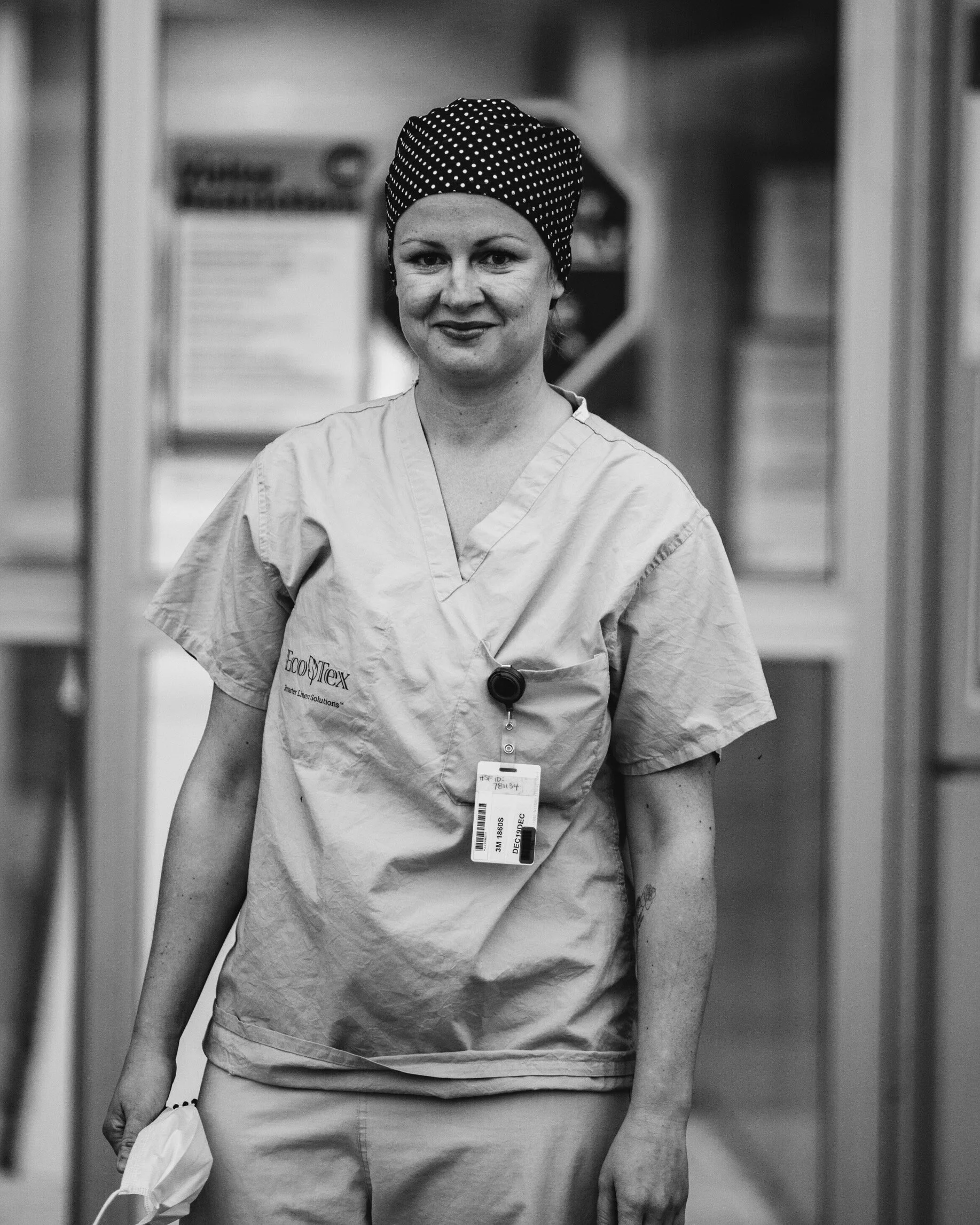
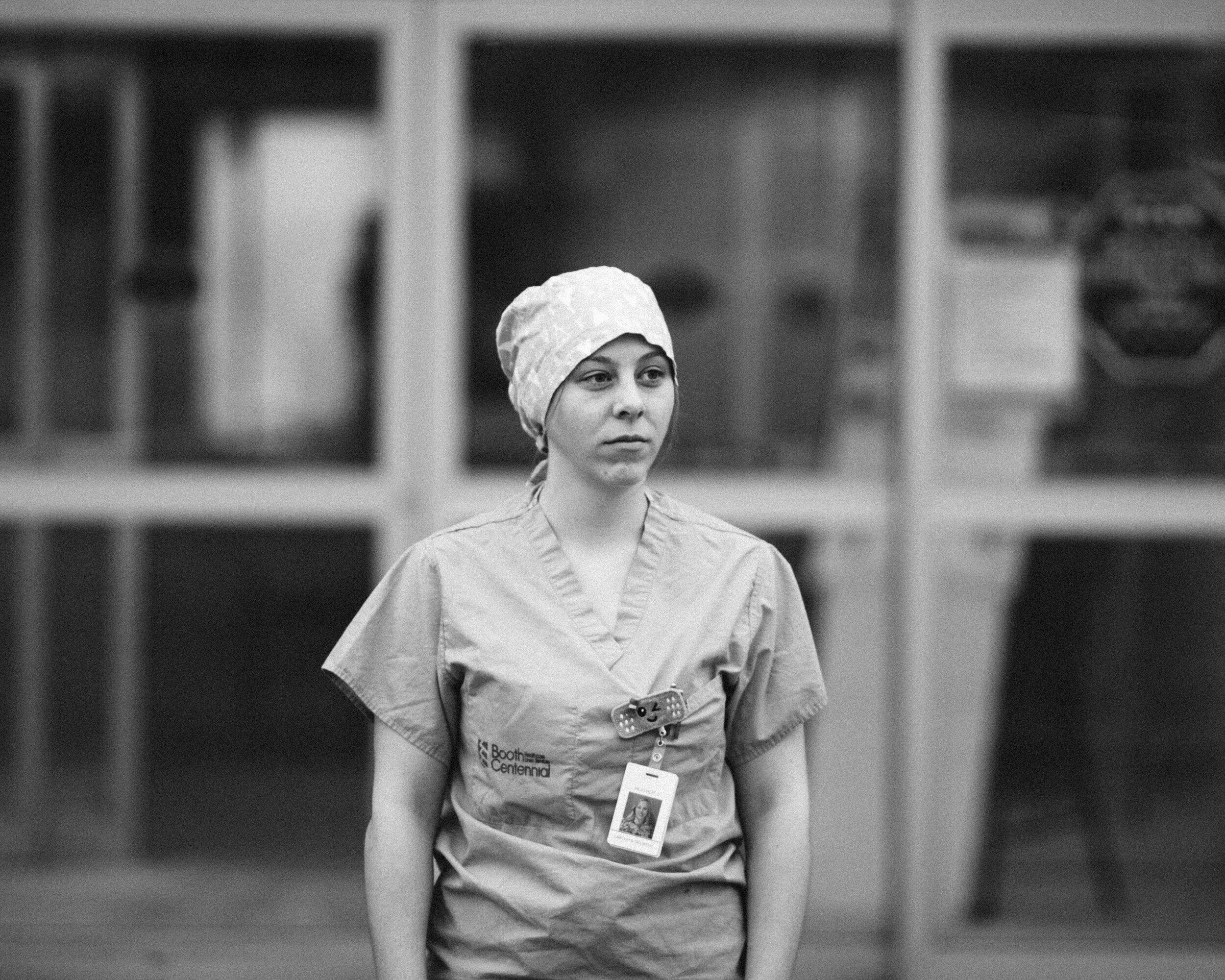
Jennifer Massimo (photographed at PRHC by Mary Zita Payne)

Something changed in the past couple months though. This Goliath virus started. It changed everything as we know it, and everything as I know it. I am back to feeling nervous to go in for my shifts, not knowing what I’ll be walking in to. I’m scared that I might miss one atypical COVID presentation, and could potentially expose a colleague to a covid positive individual.

Although we watch each other remove our personal protective equipment, I’m scared I will accidentally contaminate myself while removing it. What if my face shield was sitting too high? What if I didn’t have a good seal on my N95? I worry about my family. I’m scared that I will be an asymptomatic carrier, and expose my family to the illness. I’m worried that I’m already putting my family at risk by coming home after shifts.
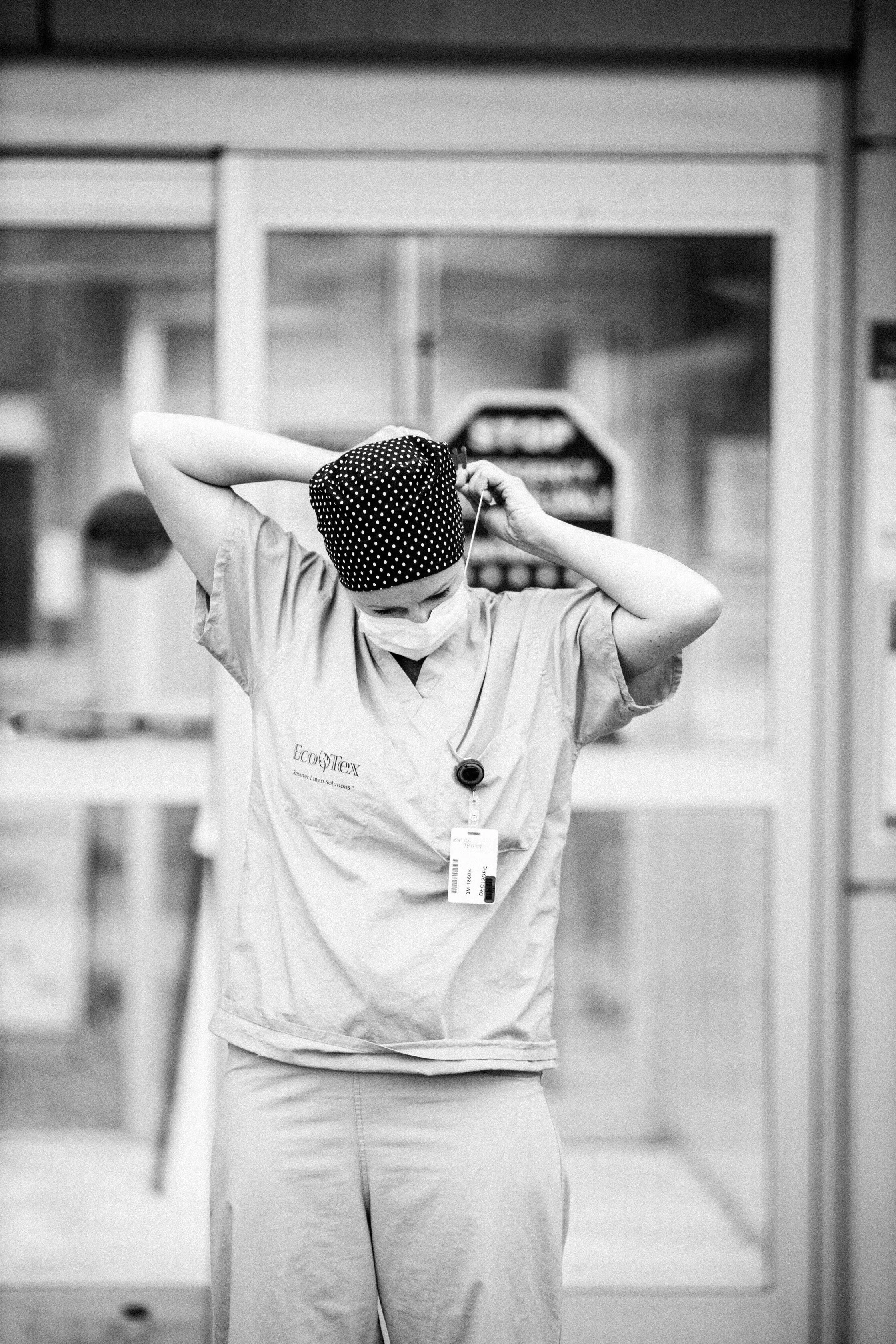
Photographed at PRHC by Mary Zita Payne

We’ve prepared a separate living space in our basement in case I come home after a particularly bad shift and worry that I’ve been exposed. This worries me too, because with my children aged 3 and almost 2, what if me living away from them causes emotional trauma? I feel guilty and selfish that I haven’t moved to the basement yet, but I also worry about the emotional trauma I will have if I leave them too soon.

Each time I go in, I’m scared it will be the time that I know I have to live separately from my family. Even when I’m at home, I try to enjoy my family so much but I have a hard time engaging because I’m so worried about when I will have to go back to work, and potentially leave my family.
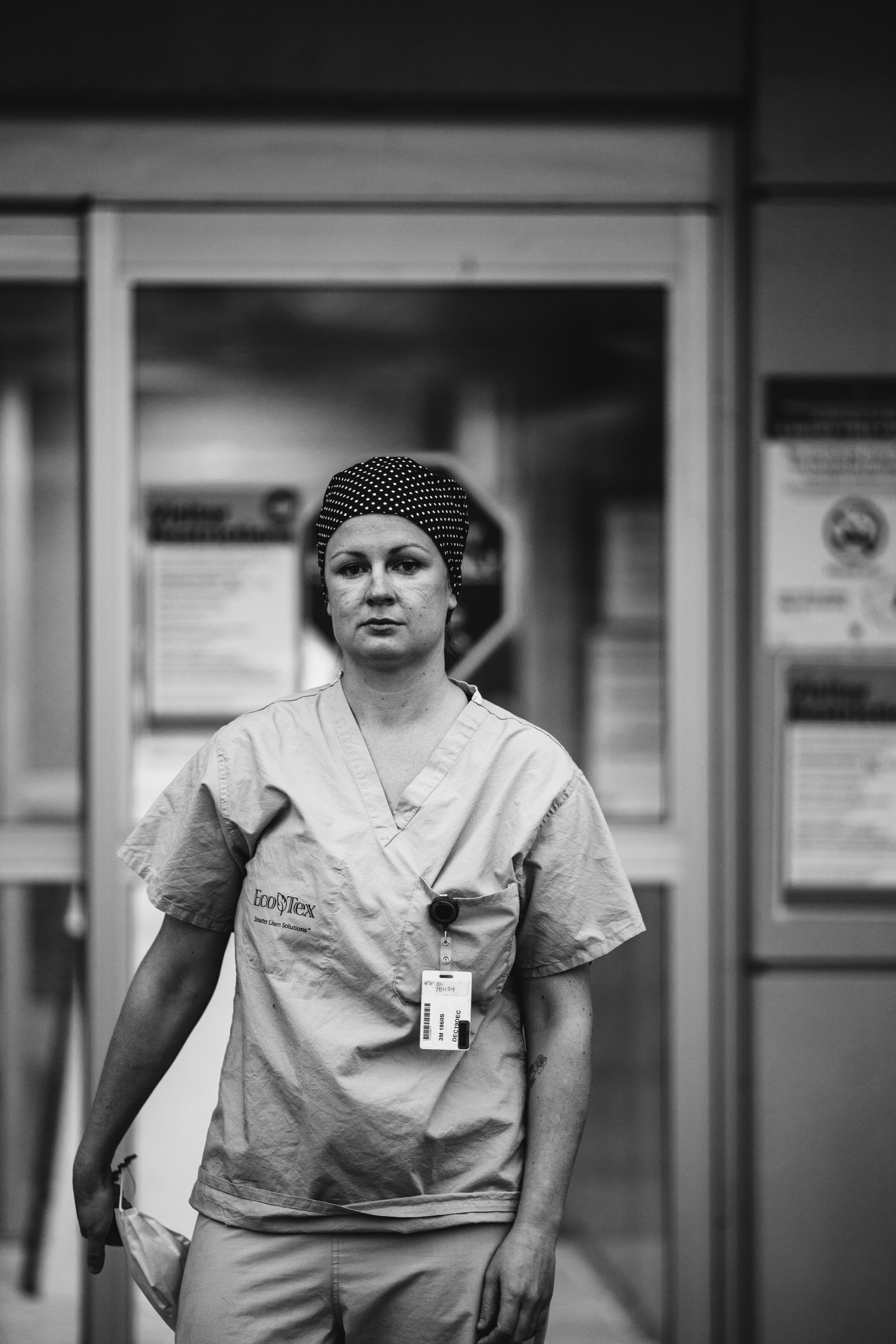
Photographed at PRHC by Mary Zita Payne
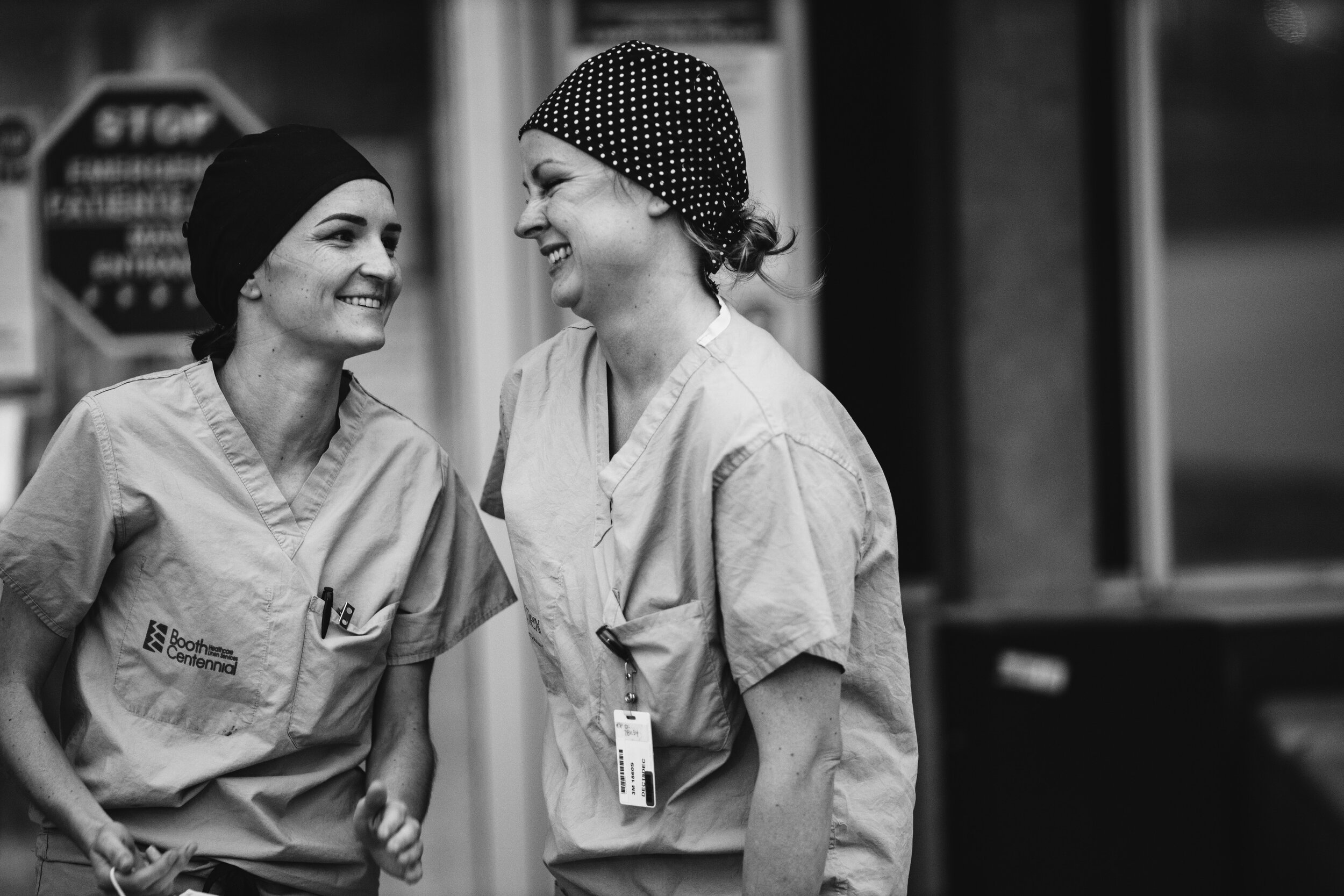
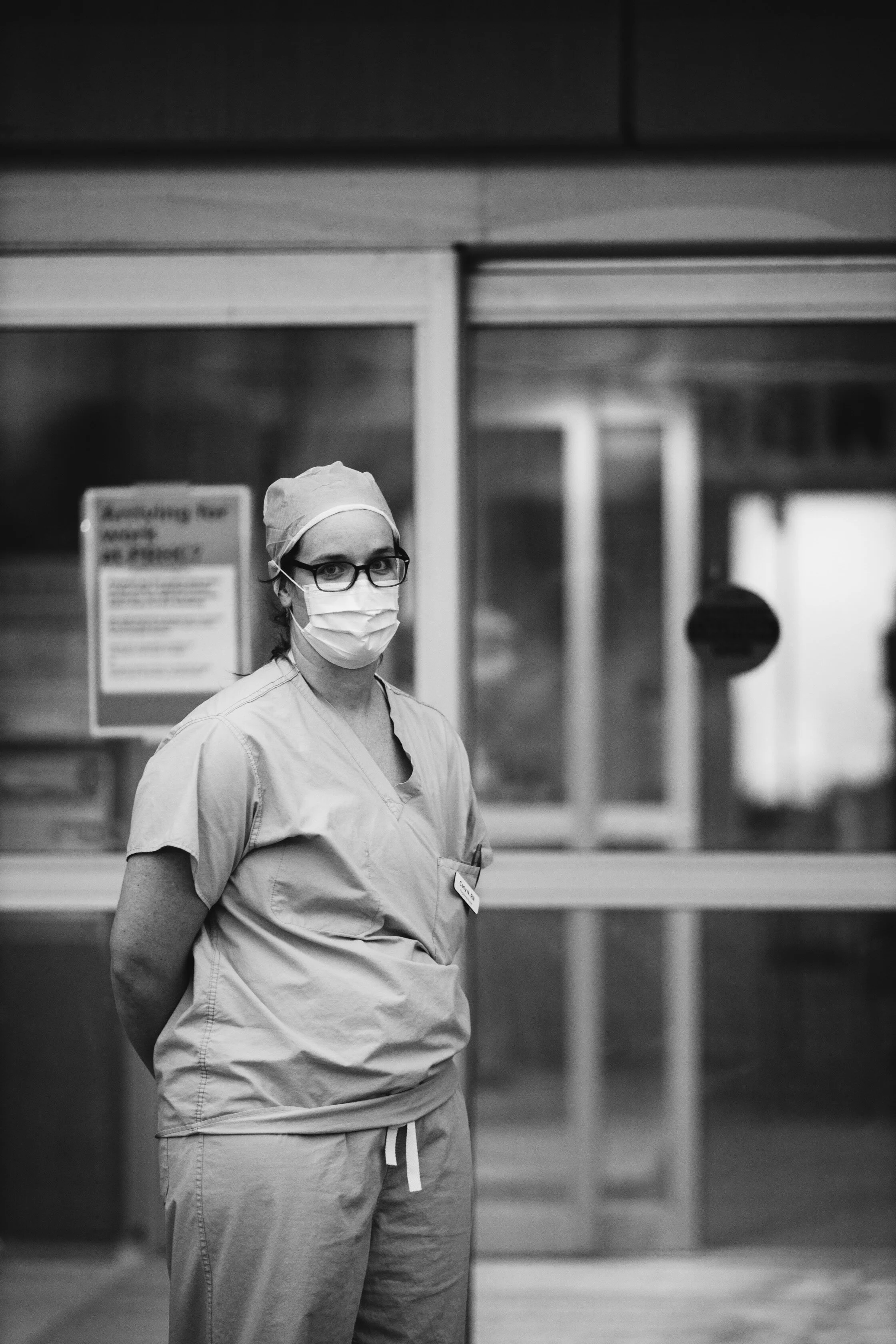
I hate admitting this, but I’m scared to go into patient rooms. I’m not scared of the person, I’m scared of the virus. I’ve always been one for physical touch. I hold my patients hands, listen to their every concern, hug family members, give high fives to my paediatric patients, and am by their side through their biggest crises. I have always been right beside them, giving my everything.

COVID has changed this.

I’m scared to be exposed to them, because I’m scared that I will end up bringing this home to my family. I’m scared for my patients. They don’t want to be in this situation just as much as we don’t want to be. COVID has changed the nurse and patient relationship. Families are restricted in their visiting, and it puts a toll on patients, nurses and doctors alike.

While I’m terrified of this virus, there are also some positive things that are undeniable. I love my work family. Although I am anxious before each shift, I also want to be there to provide physical and moral support. More than ever, I want to be with them and take this thing on as a team. I’ve always known we have an incredible team, but the leadership and camaraderie is amazing. Taking care of patients with suspected COVID takes a lot of man power, and I am so proud of everyone for stepping up and being there for one another. 

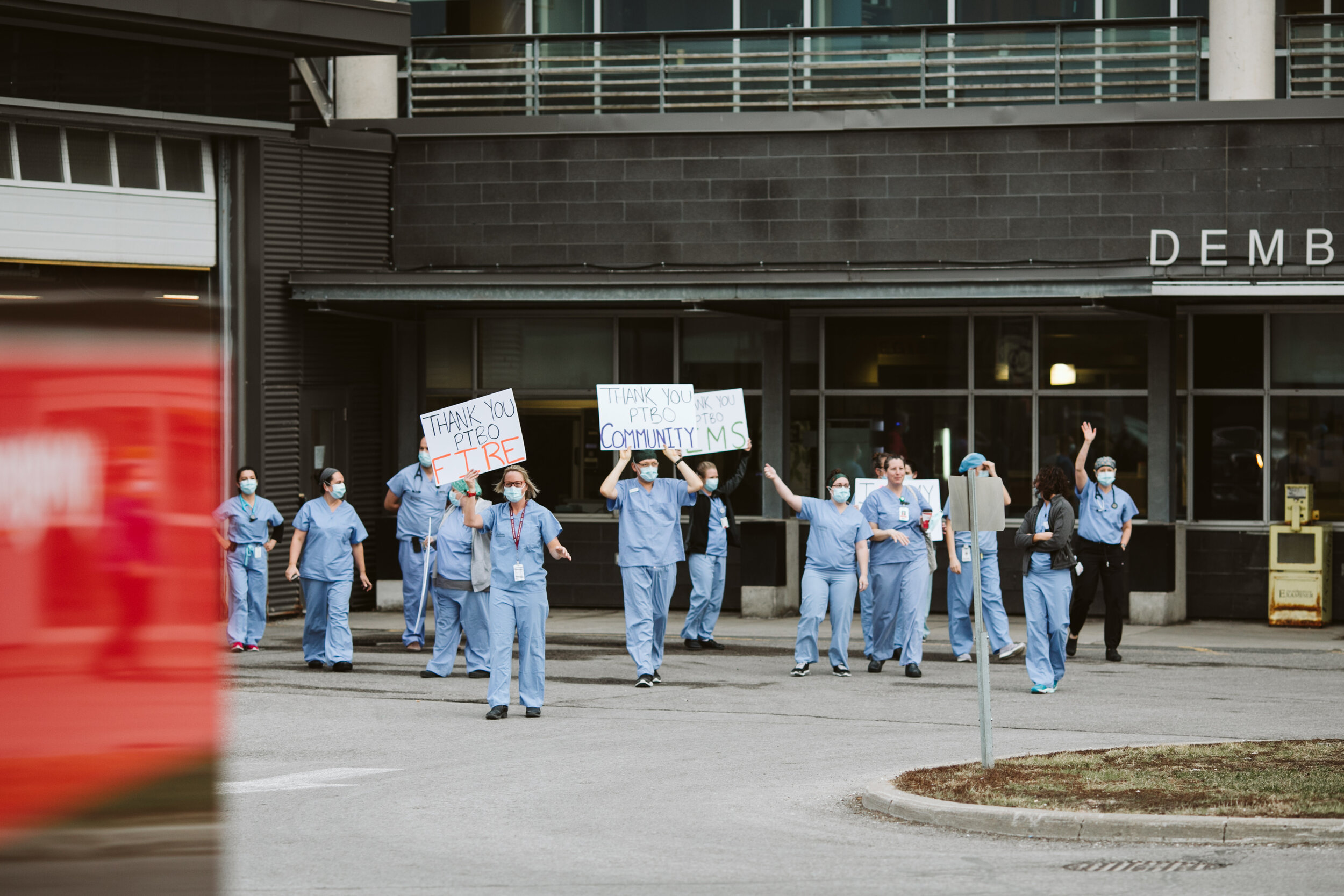
This is sense of connection and support goes beyond the ER. More than ever, I feel that our community and the world are pulling together to battle. Nurses and doctors are working outside of their comfort zones to provide their skills wherever needed. Outside our doors, our other front line staff paraded their fire trucks, ambulances and police cars with lights and sirens to thank hospital staff at shift change.

Members of the community are stepping up to provide whatever PPE they have, and even making masks for people that enter the hospital. People are staying home, to stop the spread of COVID-19. It feels like the world is pulling together to combat this thing head on. 

So while I’m nervous about what the future holds, and nervous about decisions for my family, I’m also so proud and thankful for everyone and their support, in whatever way they can give it, during this time. We are truly all in this together. So while I feel my job is very challenging right now, I’m thankful that I can provide support to my community in the best way I know how. And at the end of the day, I will always be proud to say I’m an ER nurse.

—Jennifer Massimo, Emergency RN

(Mary Zita Payne, who is producing this series—you can read the first installment here—has been documenting frontline healthcare workers on the frontlines on her personal blog.)

Engage with us on social media on Twitter, Instagram and Facebook. Write to us at tips@ptbocanada.com. Sign up for PTBOBuzz newsletter here.

PRHC Emergency RN Carly Neadow On What It's Like Working On The Frontlines & The Impact On Family

In the first of a PTBOCanada series on the experiences of frontline healthcare workers produced by Mary Zita Payne, Emergency RN Carly Neadow gives us a firsthand look on what it’s like being on the frontlines during the pandemic. Here is her experience in her own words…

I started nursing in 2007, 13 years ago, being proud of my career choice and so excited to start my nursing journey. When you become a nurse, it becomes a part of who you are. It is not “just a job”, it becomes part of how you define yourself.

We commit to the job and our patients and are taught to advocate for our patients, putting their needs first. I never dreamt that one day I would have to worry about my career putting my family at risk. There are always risks in any job, but this virus (COVID-19) has brought so many new unknowns with it.

The entire world is in unchartered waters, and the frontline of healthcare is no different. I am so lucky to have the amazing support in my life, from my husband and children, parents, neighbours and friends, and my amazing sister and coworkers who are all battling these frontlines with me. Without them, I don’t know how I would be coping.

The hardest part about working through this is the unknown. 

Carly Neadow (photographed at PRHC by Mary Zita Payne)

We do not know when/if/how hard this virus will affect our community/hospital/healthcare system. We do not know who it will affect: our parents, spouses, children, co-workers, or ourselves. A very respected colleague of mine described it as: “This must be how soldiers feel waiting to go into battle.”

The angst of waiting creates this ball in the pit of your stomach. Everyday I leave for work I worry that I may bring this home to my family. Everyday, I struggle with the battle of whether I should temporarily move out to keep my family safe, but what would that do to my children? They are 16 months and two and a half years old. They would not understand why mommy is not at home, and how long do I have to leave them for? We have no idea how long this will last. How do I just leave my husband to care for our children for an indefinite amount of time?

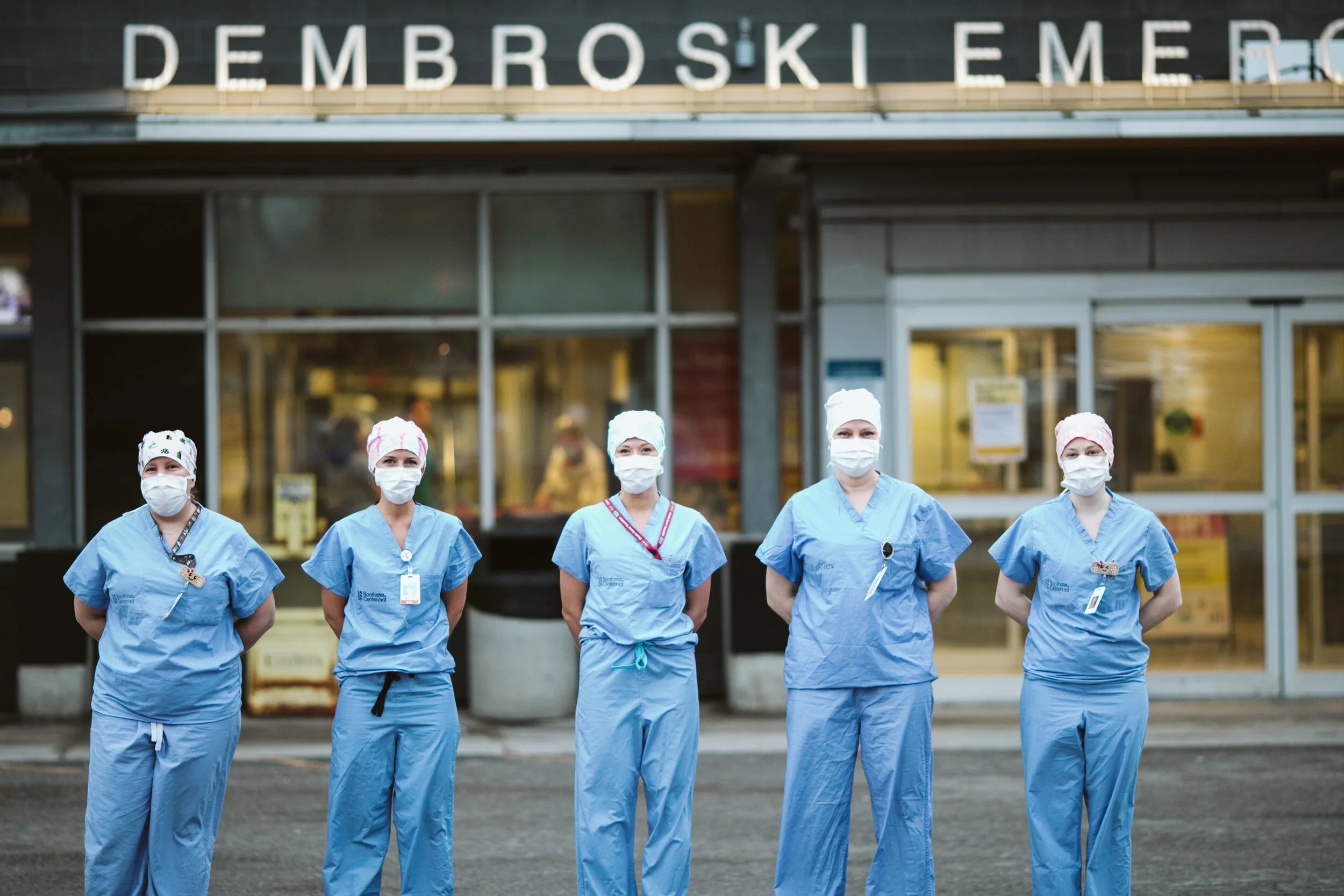
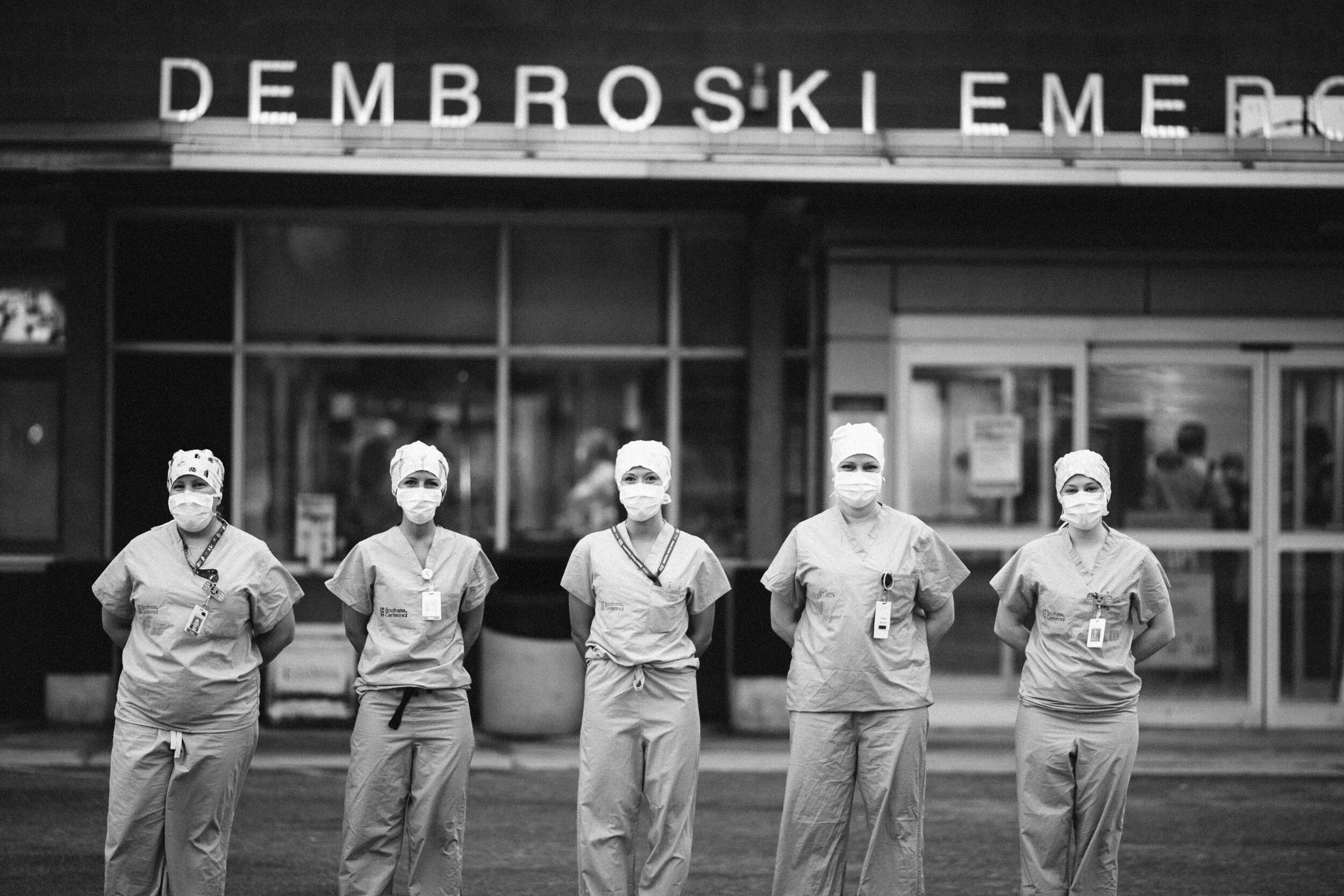
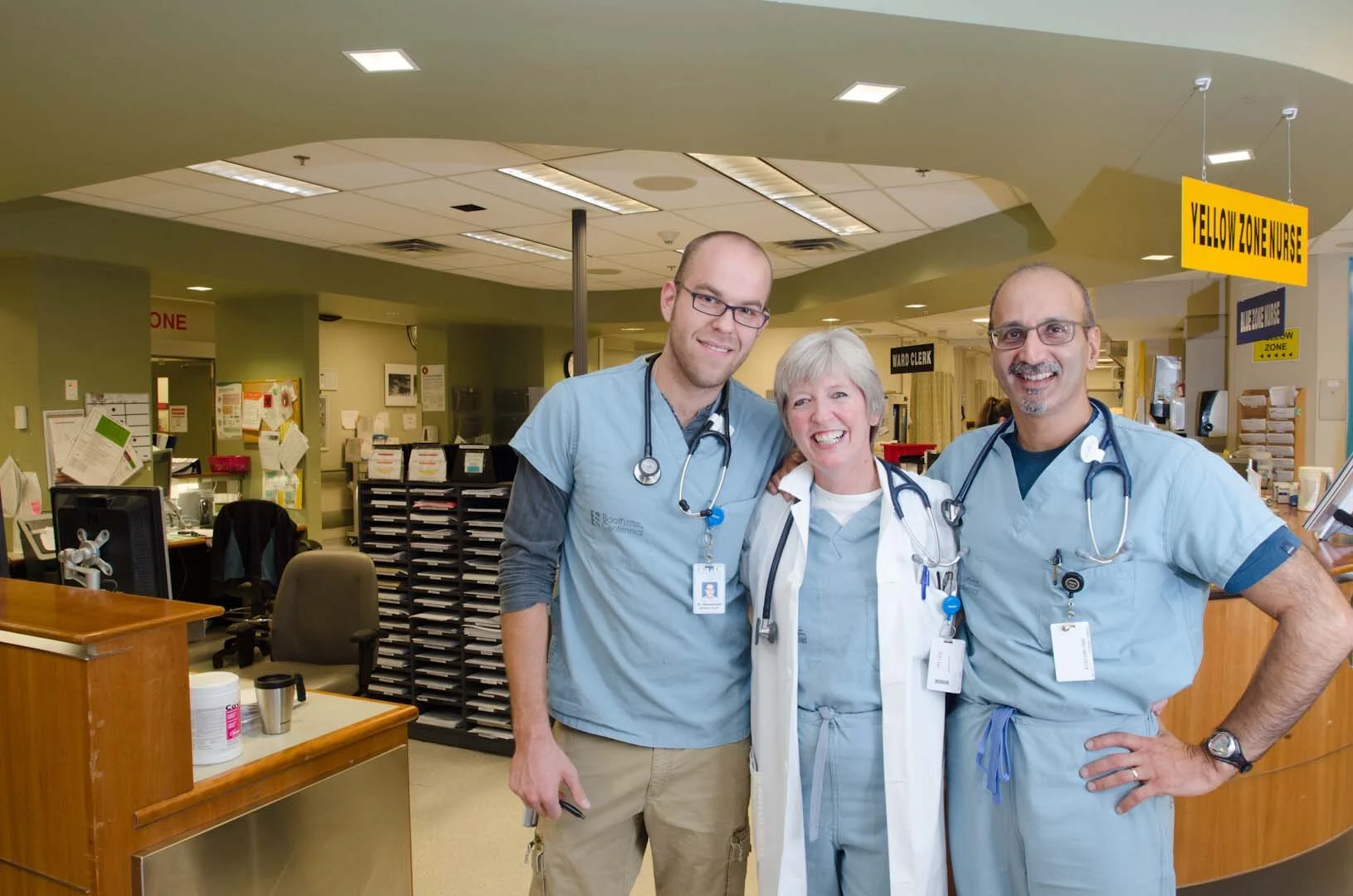
Carly (second from left) with fellow nurses (photographed at PRHC by Mary Zita Payne)

So I choose to stay home for my children and my husband, and myself, for our mental and emotional health, and bare the burden of the chance that I may bring this home to them—despite stripping at the door and tedious hand hygiene regimens each time I come home.

Some co-workers have chosen to move out, which is also hard on so many levels. The hardest part about this is that there is no clear answer on what is the right thing to do. We all have to make the decision that we can live with, and support each other through it so that we can still perform our duties at work and be there for our patients.

We do not know who this will effect, how hard it will hit our community, or how long this will go on for. What we do know is how to slow it down and everytime we see people not complying to government/healthcare requests and regulations of self isolation and physical distancing, it breaks us a little bit more.

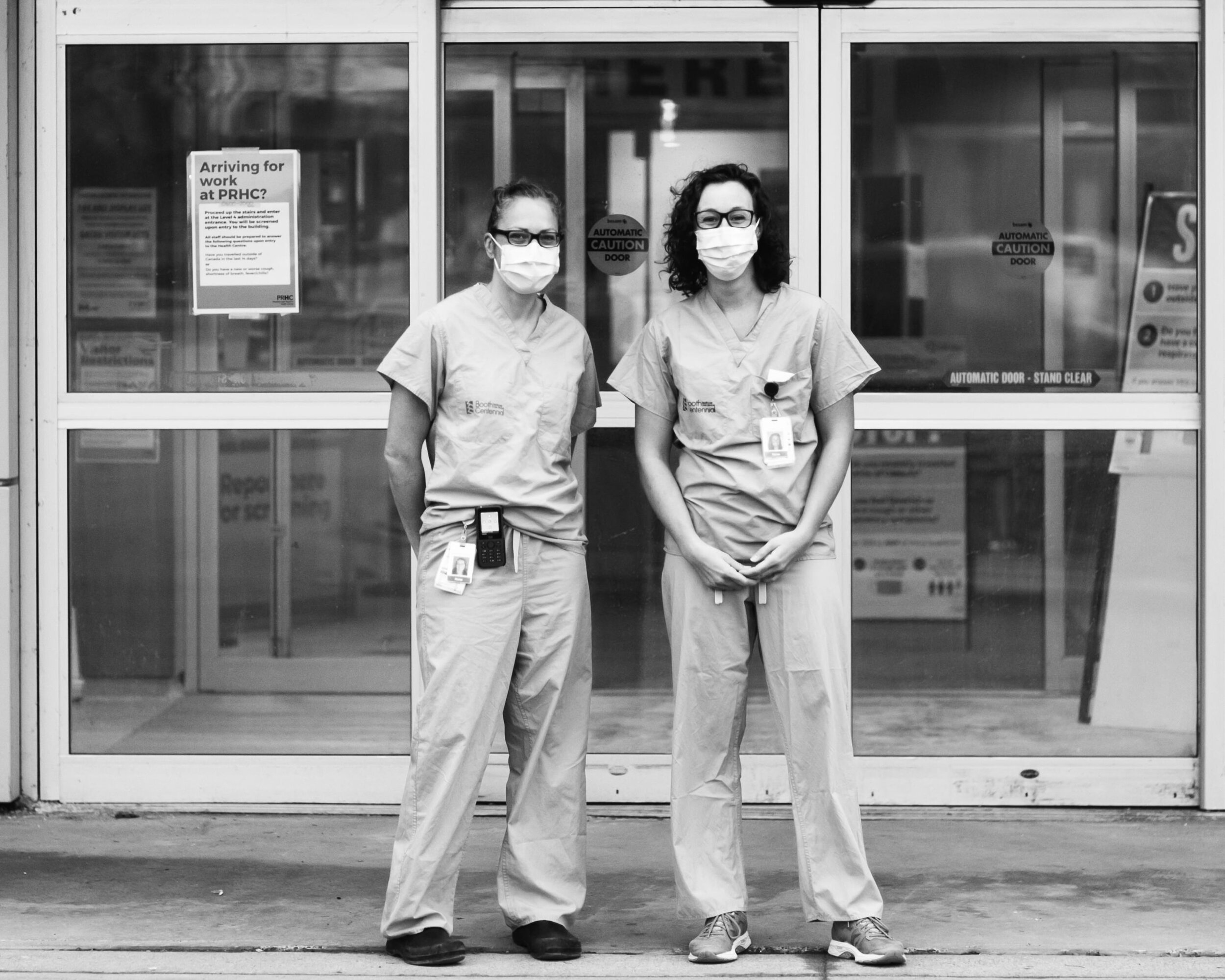
Photographed at PRHC by Mary Zita Payne

The bottom line is this: the front line of this battle are filled with emotions and feelings from both extremes, and we feel them all from our hearts. We feel scared and anxious of what is to come and when/how hard it will hit.

We feel love and support from our families, community and fellow front line workers, through messages of support and thanks and parades

We feel anger and resentment when people think and act like they are above the rules and regulations, or stronger than the virus, who are making this all harder for everyone. Let me reassure you that this virus does not discriminate: It hits all ages, all fitness levels, so please listen when healthcare leaders ask you to stay home.

We feel sadness and heartbreak everytime we leave our families for another shift, not knowing what is in store for that day. We feel exhausted from our long shifts wearing constant PPE, and the constant battle in our heads of what is best for our families.

We feel proud and honoured that we are the ones who are there to help these patients when their families are not allowed at their bedside, due to tightening visitor rules.

We feel all of these emotions on a daily basis and are trying to do the best we can to get through this all together. So please everyone, do your part to flatten the curve and kick this virus where it hurts. Please stay at home so we can continue to be there for you when you need us!

A huge thank you to everyone out there doing your part, staying home and supporting your frontline workers. Let's be kind to one another during these difficult times, so we can all come out healthy and happy on the other side!

—Carly Neadow, Emergency RN

(Mary Zita Payne, who is producing this series, has been documenting frontline healthcare workers on the frontlines on her personal blog.)

Engage with us on social media on Twitter, Instagram and Facebook. Write to us at tips@ptbocanada.com. Sign up for PTBOBuzz newsletter here.

Powerful Pictures Of Frontline Healthcare Workers At PRHC By A Mother Whose Daughter Was Treated There For Cancer

Ennismore’s Mary Zita Payne has such enormous gratitude for this community and particular the frontline workers at PRHC.
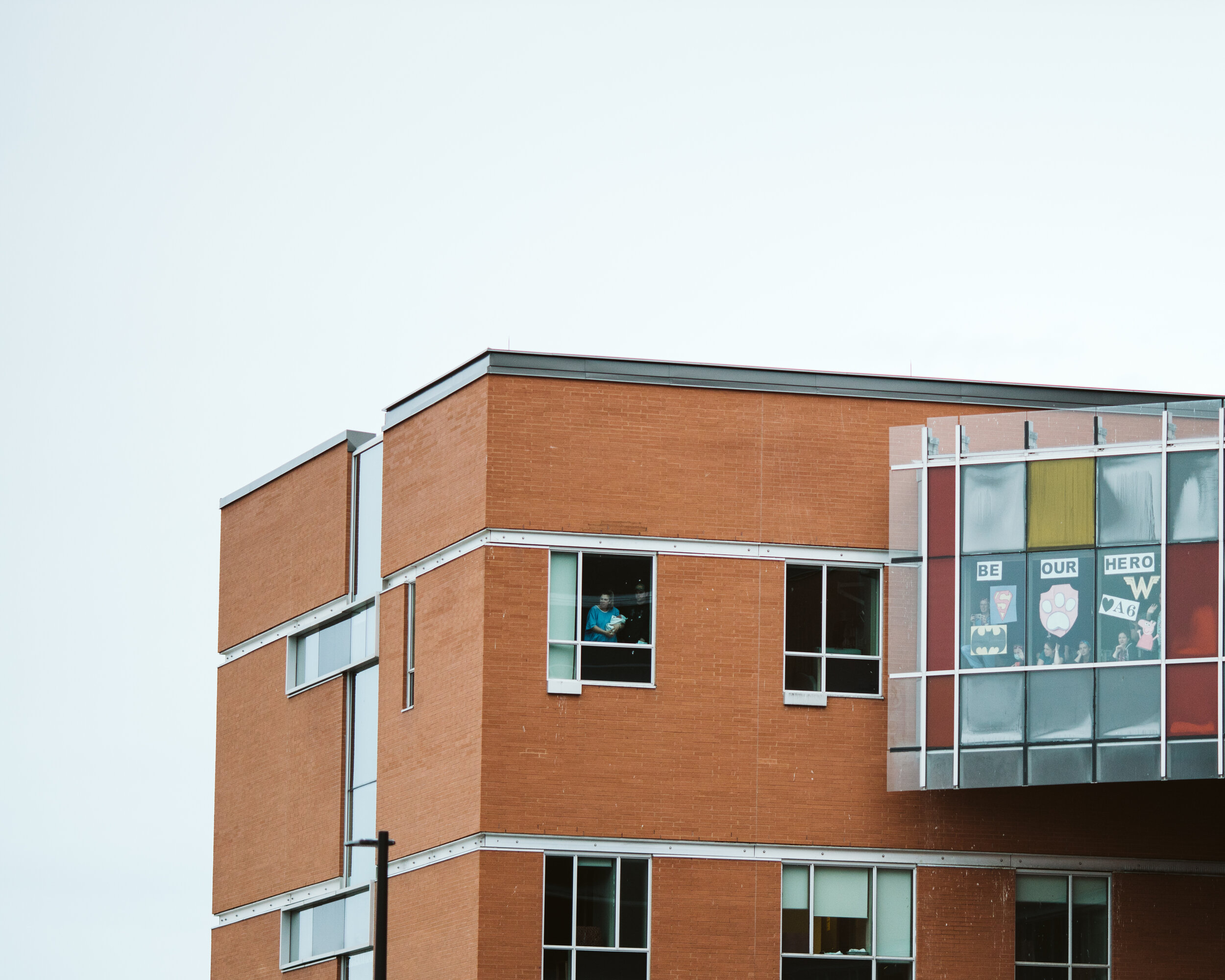
See, her daughter Eliza, at age 3, was diagnosed with cancer. Young Eliza went through two and a half years of treatment for leukaemia, much of it at PRHC. “We were blessed her treatment plan had amazing success rates, and little likelihood of relapse,” Mary tells PTBOCanada. “She came out of on top, heathlier and happier then ever."

“Throughout those days as dark and sometimes lonely as they could feel, there was so much love, so many impactful moments from humans and our community that shined so much beauty in our lives,” Mary adds. “Our community rallied around us in an incredibly fierce way—they had a set up a GoFundMe page (which went beyond our wildest dreams), they sent cards and gifts, they donated blood, they sent beautiful messages.”

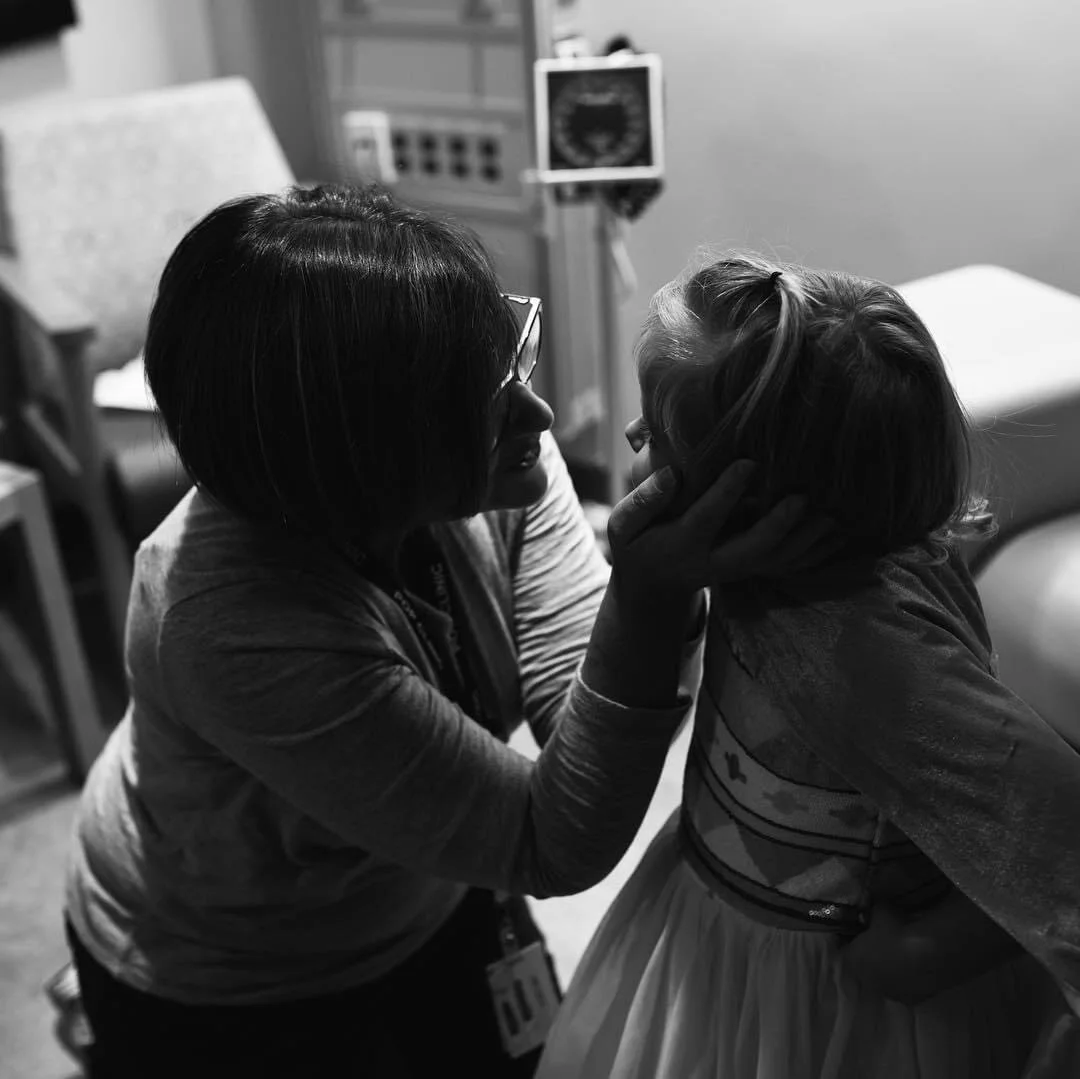
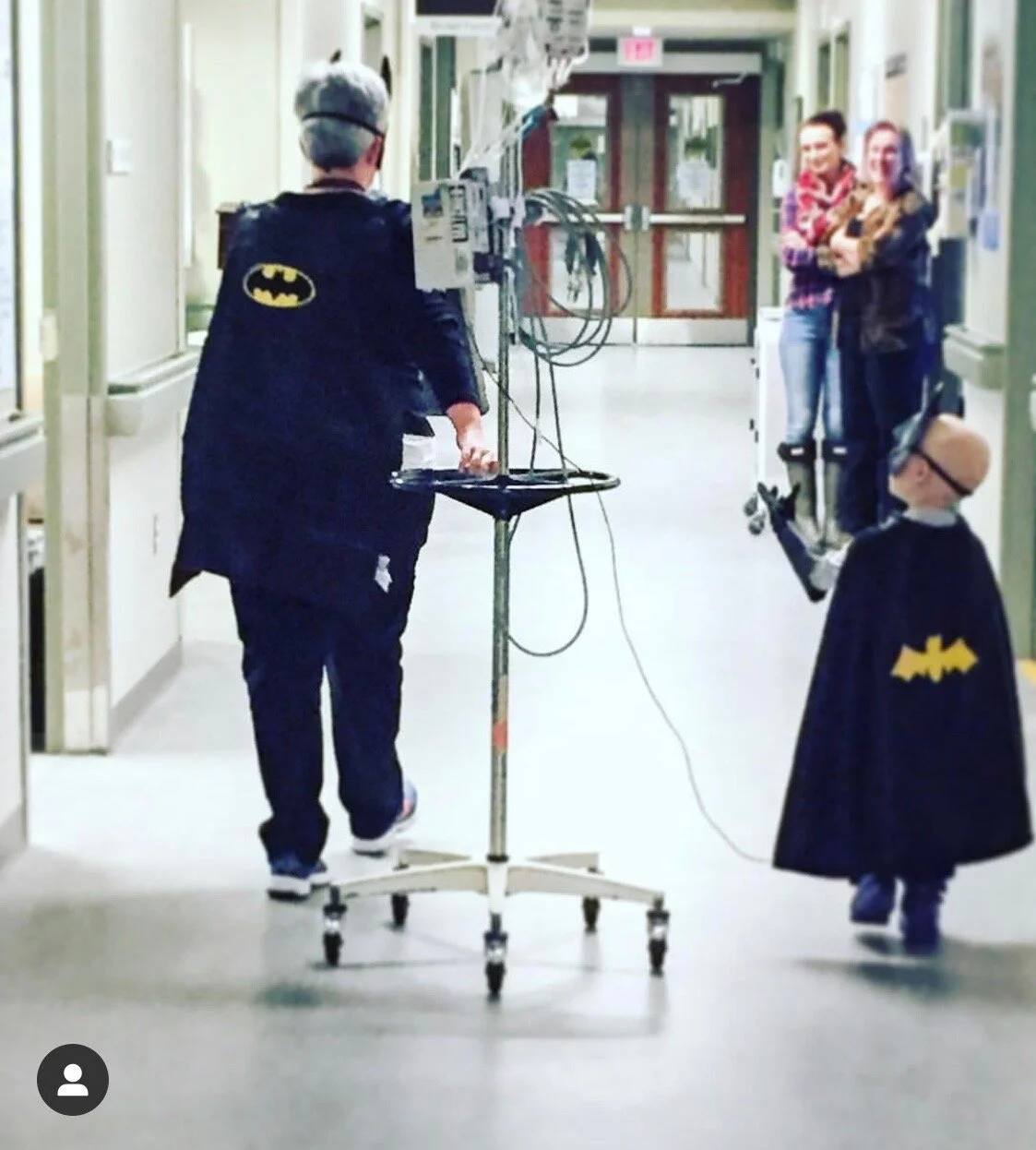
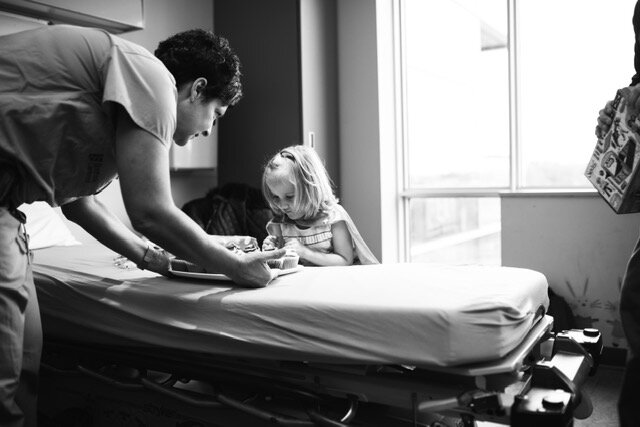
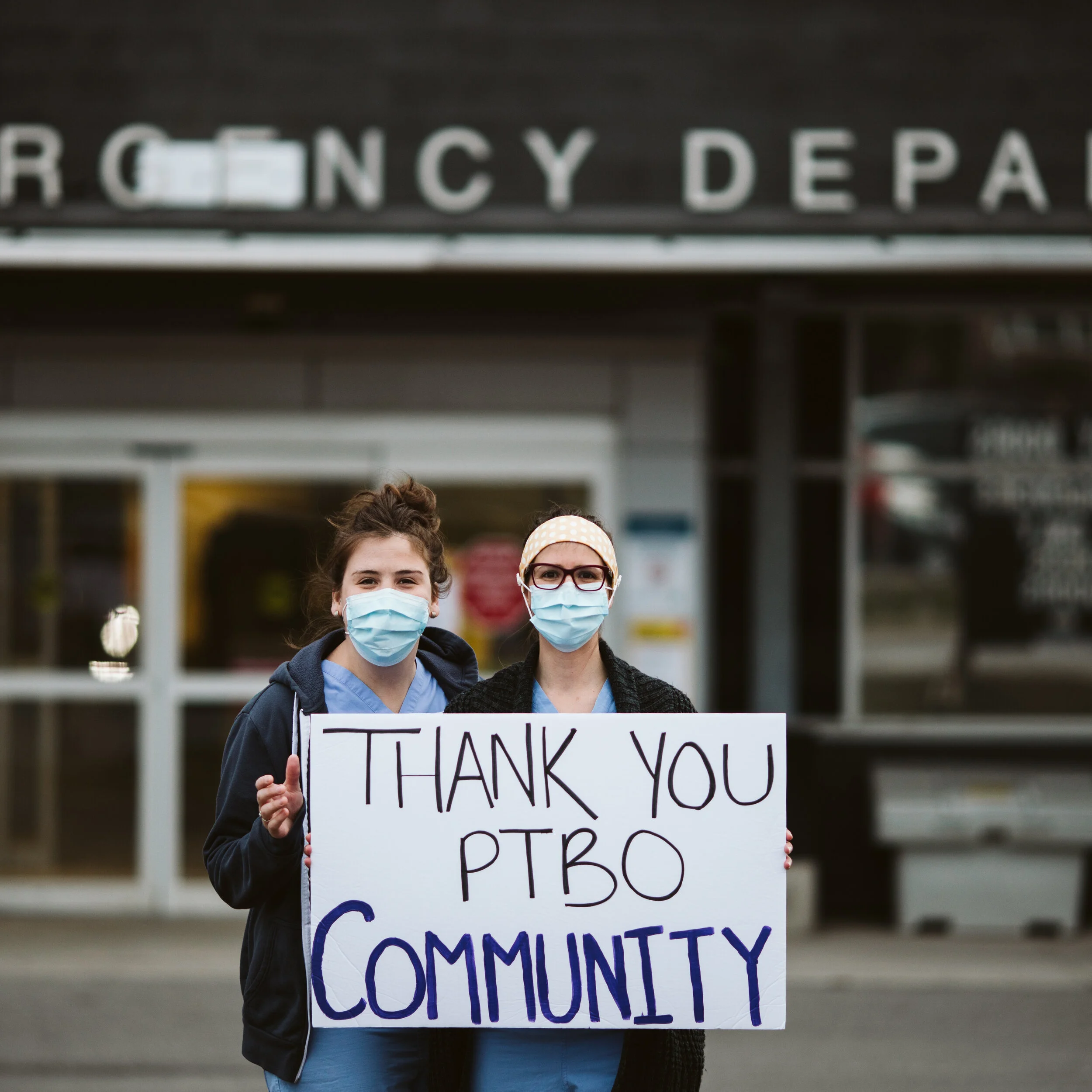
But the real heroes were the doctors and nurses who were there for Eliza and her family day in and day out. And for that, Mary is eternally grateful. During Eliza’s treatment there, Mary started really understanding the power of an image, of capturing moments (like the photos above).

“Photographing these nurses and community supporters was a way to thank them for the support—a way to make sense of it all and share with Eliza when she got older. My camera became a means of sharing my gratitude to my loved ones and the universe.”

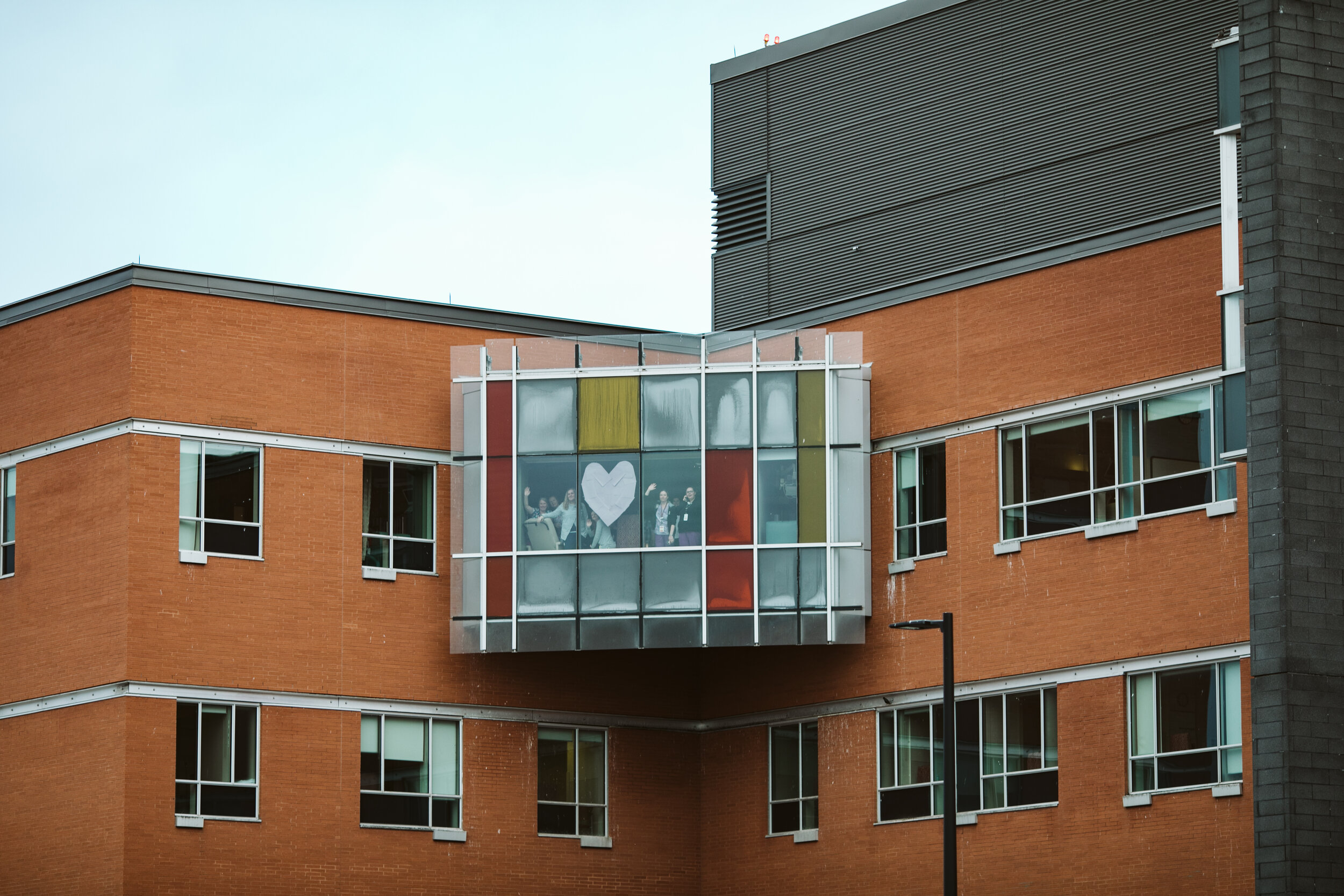
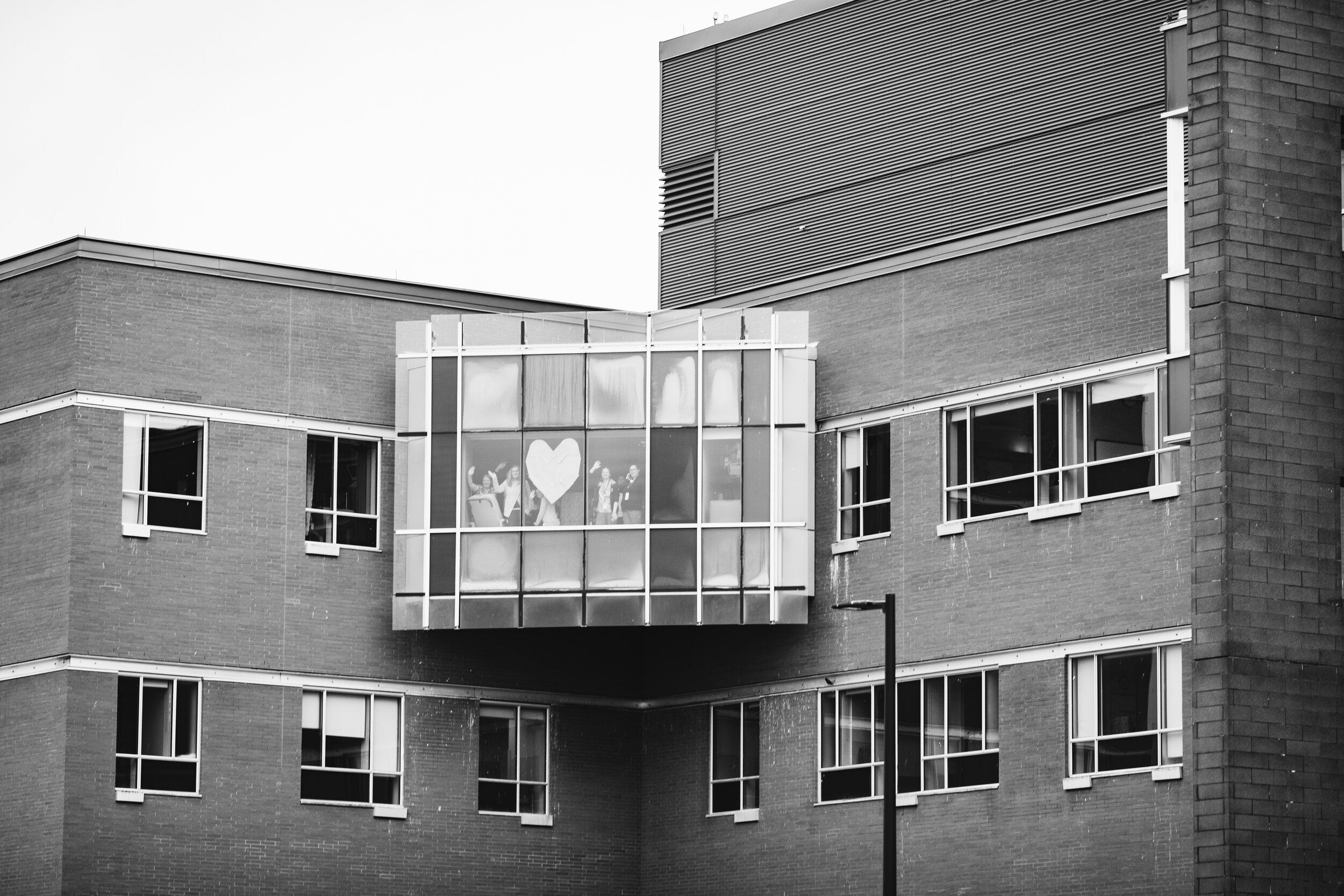
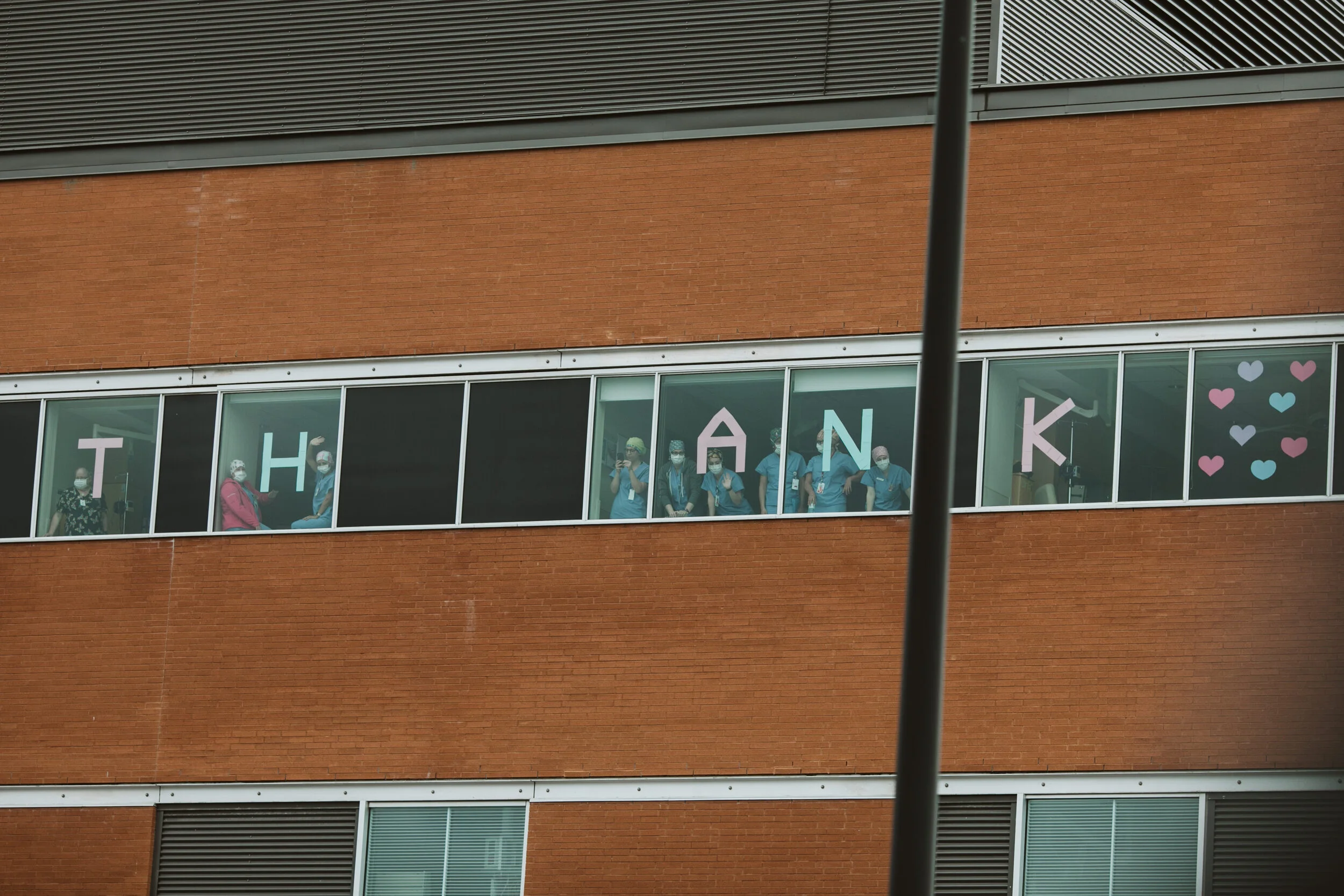
Fast forward to today: To the crisis. To the pandemic. To our heroes, the healthcare workers at PRHC who are fighting a war against a virus, saving many lives, and in doing so putting themselves right in harm’s way on the battlefield. And back to Mary, who has turned her camera on them once again to give them a voice so to speak—to thank them for their awesome support, and for taking such amazing care of all of us. 

“I have been taking photos of them at the ‘parades’ honouring them, when I visit my grandma’s nursing homes and when I head into town for some essentials,” says Mary, who has been doing so while abiding by the physical distancing guidelines set forth, keeping well back.

“I see our nurses, many of whom we came to call our family and beloved friends, are being thrown into a war against a horrible disease, a disease that puts them at risk as well as their loved ones,” Mary tells PTBOCanada.

“It only seemed fitting to pull my camera out again and find a way to thank them,” Mary says of documenting this on her blog.

“By directing the camera right onto them during this crisis, I wanted to make sure they know how incredibly beautiful and strong they are for doing so. I wanted to help remind them on their bad days that their communities have so much love, respect and appreciation.”

Mary’s hope in documenting the frontline heroes at PHRC?

“That it inspires our community to keep the focus on keeping those in the ‘trenches’ safe, and how much we have to be grateful for. Grateful for a healthcare system and people within in it that will do everything they can to keep us safe and healthy.”

It only seems fitting somehow that we should finish this post here, with a picture of a now healthy and happy Eliza, who just turned 7, waving to the very healthcare workers at PRHC who helped save her life.

Eliza

View more of Mary’s photos of our heroes on her blog. (PRHC is need of the following supplies if you think you can help with their PPE drive.)

Engage with us on social media on Twitter, Instagram and Facebook. Write to us at tips@ptbocanada.com. Sign up for PTBOBuzz newsletter here.

A PRHC Manager With Interest In Technology Uses 3D Printer To Make Face Shields For Colleagues

During this Covid-19 crisis, there is incredible creative ingenuity happening to do deal with urgent shortages in supplies heroic front-line workers require to stay safe.

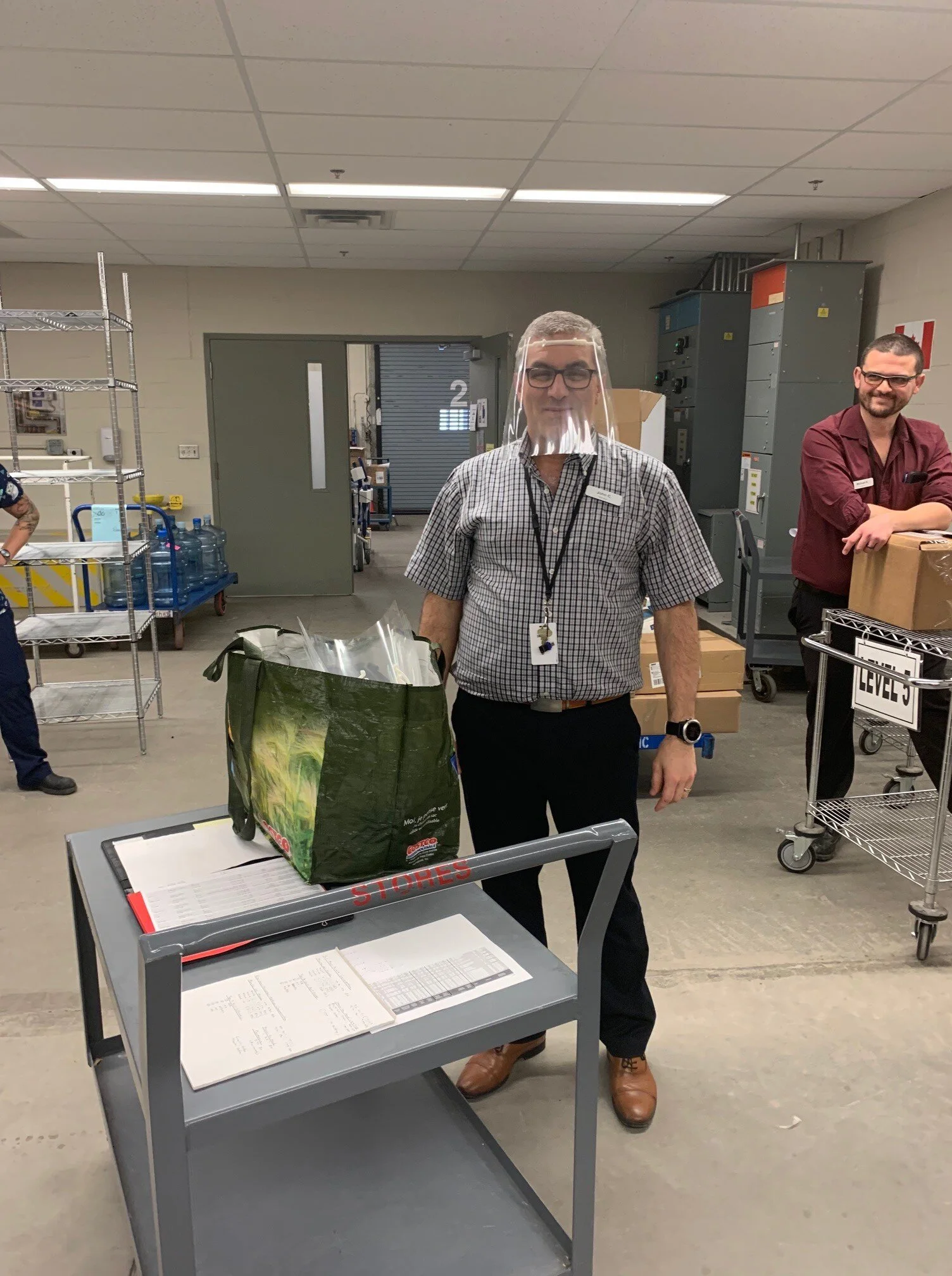
The latest amazing example is John Corso. John is a manager at Peterborough Regional Health Centre who happens to have a personal interest in all things technology. So using a 3D printer, he was able to make face shields, and donated them to PRHC to help his colleagues stay safe during the pandemic.

Photo of John Corso courtesy PRHC

John is just another example of all the local individuals and businesses coming together in this crisis to step up and help save lives.

PRHC is need of the
following supplies if you think you can help with their PPE drive.

Engage with us on social media on Twitter, Instagram and Facebook. Write to us at tips@ptbocanada.com. Sign up for PTBOBuzz newsletter here.

Peterborough Public Health Reports First COVID-19 Case In Long-Term Care Home

On Thursday (March 26th), Peterborough Public Health reported the first case of COVID-19 in a local long-term care home.

One resident has tested positive, while two others have respiratory symptoms. Both of these have tested negative. All three are residents of St. Joseph’s at Fleming in Peterborough and are in isolation at the facility. One staff member who also had symptoms and was referred to community paramedics for in-home testing last evening where they will remain in self-isolation.

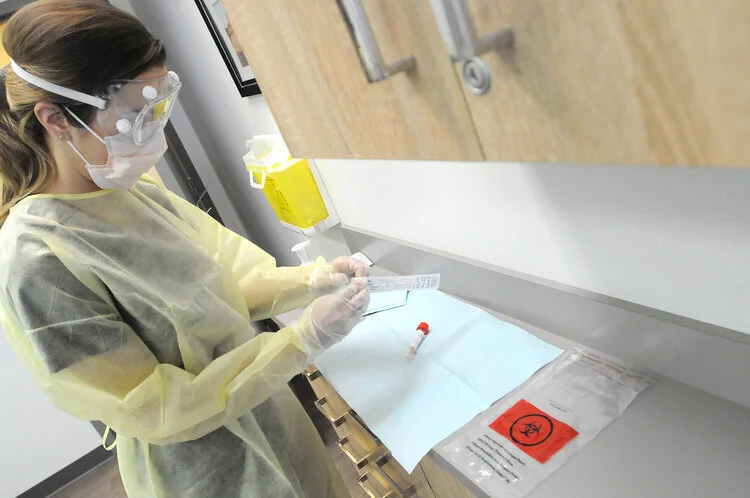
Public Health Nurse Simone Jackson wearing PPE (personal protective equipment) as she prepares to open a swab to test a patient in our clinic for COVID-19. (Photo courtesy Peterborough Public Health)

Peterborough Public Health is investigating to determine if there is an epidemiological link to travel or other known COVID-19 cases.

“We know St. Joseph’s at Fleming is taking the right measures to keep residents as safe as possible from the spread of this infection,” says Dr. Rosana Salvaterra, Medical Officer of Health. “Older adults are more at risk to severe illness caused by COVID-19 so this serves as a strong reminder that we all have a role to play in protecting our most vulnerable residents.”

Visitation to the facility has been restricted since March 14th based on the direction of Ontario’s Chief Medical Officer of Health.

Engage with us on social media on Twitter, Instagram and Facebook. Write to us at tips@ptbocanada.com. Sign up for PTBOBuzz newsletter here.

Cavan FC Players Are Keeping The Ball Moving In Awesome Way To Stay United During Social Distancing

Liz Shaughnessy, who coaches in the Cavan FC league near Peterborough, got to thinking there must be a great way to galvanize all the Cavan FC players in this COVID-19 social distancing phase.

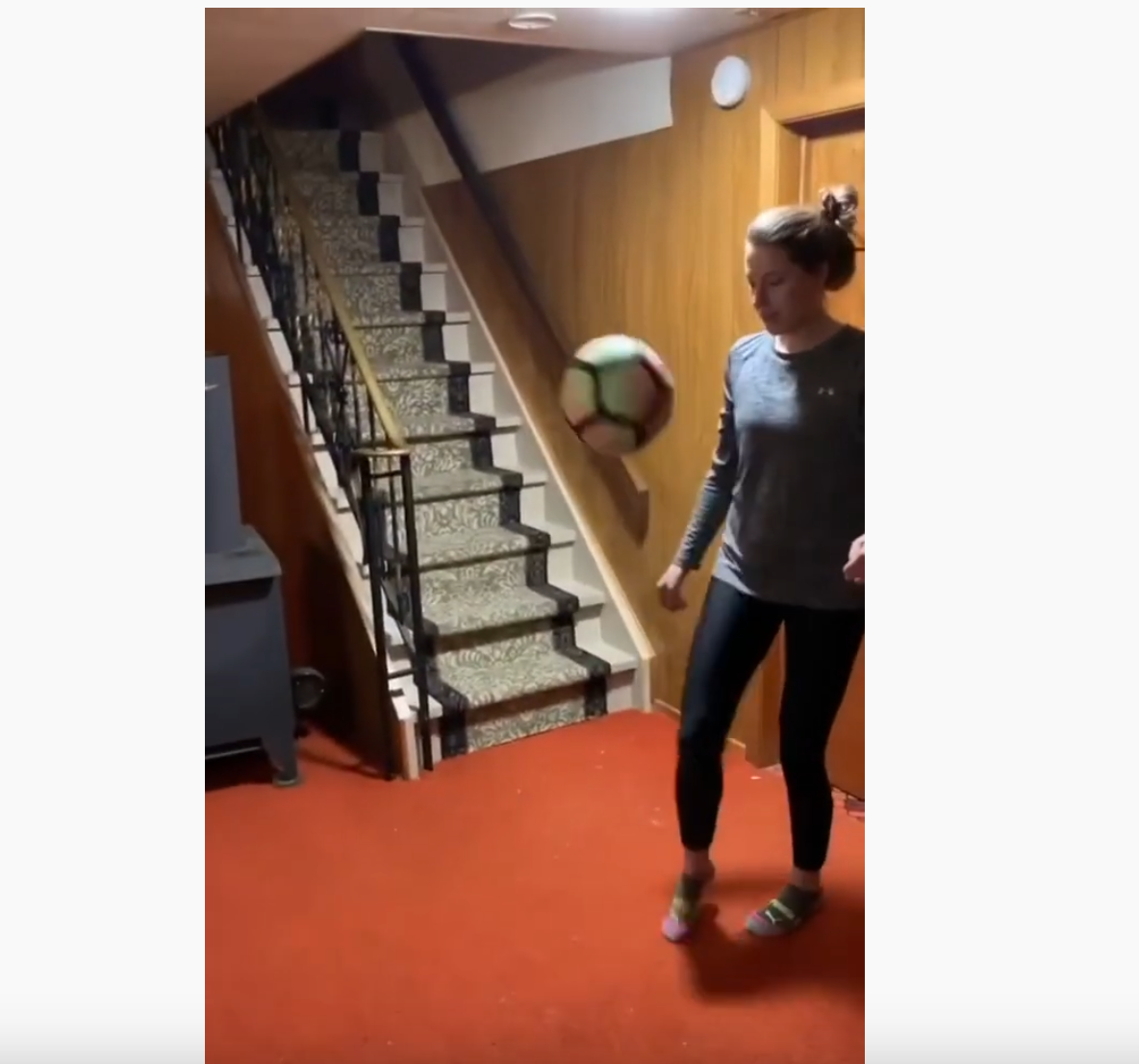
So to lift their spirits—and in lieu of doing laps—she put out a call to send her videos of how they were keeping the ball moving as a Keep The Ball Moving Challenge.

Coach Liz

“I expected a few video submissions to be sent to me but not the one hundred and fifty plus I received,” Coach Liz tells PTBOCanada.

“What I was reminded of is that your sports teams are part of your family and we are all missing each other right now in this normally busy pre-season!”

Coach Liz says the video submissions weren’t just from the soccer players. “We had some moms, dads, siblings of players—even a dog—get in on the action. And several of our men and women’s team players participated as well.”

We love this video so much—try not to smile as you watch it.

Watch it on YouTube below and share on Facebook…

When Coach Liz put out a call to all Cavan FC players to keep the ball moving she thought this was a fun way to unite our club but wasn't expecting over 150 ...

You can also watch it on Instagram here…

Engage with us on social media on Twitter, Instagram and Facebook. Write to us at tips@ptbocanada.com. Sign up for PTBOBuzz newsletter here.

How Community Can Support Patients & Frontline Healthcare Workers During COVID‐19 Crisis

The PRHC Foundation has announced that effective immediately, anyone wishing to support Peterborough Regional Health Centre (PRHC) patients, frontline healthcare workers and staff during the COVID‐19 crisis can now do so with a dedicated donation.

PRHC Foundation President & CEO Lesley Heighway says that the COVID‐19 crisis will bring unprecedented challenges to PRHC. “Your hospital needs you now more than ever,” says Heighway. “We must ensure our frontline healthcare professionals and staff have the tools, technology and supports they need to care for their sickest patients—and themselves—during this difficult time.”

Photo via PRHC Foundation

With key needs ranging from lifesaving equipment and technology, to supports for patients and frontline healthcare workers and staff, critical funds are required now to ensure PRHC can respond quickly to their fast‐evolving needs as the impact of this virus is felt.

“PRHC’s expert healthcare professionals, staff and leaders are on the frontline of this crisis and they’re mobilizing,” adds Heighway. “They’re ramping up to ensure the right resources are in place, getting ready to take care of us and the people we love with the same expertise, compassion and dedication they demonstrate every day.”

“In the same way that PRHC’s teams are mobilizing to support you, we’re mobilizing now so we can be ready to support them as soon as help is needed,” she adds. “We must act quickly and do whatever we can to lessen the impact on our community, our hospital, its patients, and our frontline healthcare professionals. By making a donation and/or sharing a message of hope and thanks, you’ll be standing behind our frontline healthcare workers as they respond to the challenge ahead, helping to ease their burden.”

For more information or to donate over the phone, call (705) 876‐5000. To donate online, send a Grateful Hearts message, or send a message without a donation, visit prhcfoundation.ca. Donations will also be accepted by mail c/o PRHC Foundation, 1 Hospital Drive, Peterborough, ON, K9J 7C6.

Engage with us on social media on Twitter, Instagram and Facebook. Write to us at tips@ptbocanada.com. Sign up for PTBOBuzz newsletter here.

An Enhanced COVID-19 Assessment System Has Been Launched in Peterborough Area

Local healthcare partners have launched an improved way to assess and test residents for COVID-19 who live in the City and County of Peterborough, and Curve Lake and Hiawatha First Nations.

The new model, developed in partnership by Peterborough Regional Health Centre, Peterborough Paramedics and Peterborough Public Health, now includes in-home assessment and testing for COVID-19 for residents who cannot travel to one of the existing assessment centres in Peterborough, or who should remain self-isolated.

Residents who have recently travelled and have symptoms such as fever, cough or shortness of breath are asked to contact their doctor or nurse practitioner or consult with a nurse at Peterborough Public Health by calling 705-743-1000 or emailing covid19@peterboroughpublichealth.ca.

Peterborough Public Health building

Based on the results of the screening, patients who require further assessment will either be referred to Peterborough Public Health for testing or to Peterborough Paramedics who will dispatch a special unit of paramedics to perform the testing in their home.

“We are very proud that our paramedics can now bring COVID-19 assessment and testing to residents in their homes upon referral by local healthcare providers,” says Randy Mellow, Chief of Peterborough Paramedics. “This new system will improve case detection while serving the needs of patients who are immobile or too sick to leave their homes.”

“I’m pleased that we’re able to activate this approach right as the first local cases are starting to make themselves known,” adds Dr. Rosana Salvaterra, Medical Officer of Health. “I also want to remind people that 80 percent of people ill with COVID-19 can manage with self-care only and that not everyone will be tested.”

Residents who require urgent care, such as breathing difficulties, are asked to seek immediate medical attention by calling 911 or going to the emergency department. Peterborough Regional Health Centre has set up an assessment centre on site to test people for COVID-19 by appointment only.

Those who are concerned about being exposed to COVID-19 are encouraged to take the online self-assessment tool for COVID-19 available at peterboroughpublichealth.ca entitled “Do I Have COVID-19?”

Engage with us on social media on Twitter, Instagram and Facebook. Write to us at tips@ptbocanada.com. Sign up for PTBOBuzz newsletter here.

Peterborough Regional Health Centre (PRHC) Opens COVID-19 Assessment Centre, Will Move To Mobile Unit Soon

To respond to the increasing need for COVID-19 assessment in Peterborough City and County, Peterborough Regional Health Centre (PRHC) has opened a COVID-19 Assessment Centre (the assessment centre will be moved to a mobile unit outside of the main hospital building on Monday, March 23rd).

If you suspect you might have COVID-19:

1. Complete the COVID-19 Self-Assessment on the Ontario.ca/coronavirus page

2. Based on the results of your self-assessment, contact Telehealth Ontario at 1-866-797-0000 or Peterborough Public Health at 705-743-1000 x. 401

3. If your symptoms are severe, call 911 and alert the dispatcher to your travel history and symptoms

HOW THE COVID-19 ASSESSMENT CENTRE AT PRHC WORKS

The Assessment Centre is currently located within a dedicated area inside the hospital’s Emergency Department at 1 Hospital Drive in Peterborough.

Assessments are available by appointment only after following the steps outlined above. Patients should attend the assessment centre only as directed by Peterborough Public Health or Telehealth Ontario. 

Members of the public who come to the Assessment Centre without an appointment will not be seen. 

WHAT TO EXPECT AT PRHC’s COVID-19 ASSESSMENT CENTRE

  • Patients who have had an assessment scheduled by Peterborough Public Health or Telehealth Ontario should present to the entrance of the Emergency Department at least 15 minutes prior to their appointment time and follow the direction provided by the person screening patients and visitors.

  • Patients coming for assessment should clean their hands and apply a face mask as directed when entering the hospital. From there, they will be redirected to the COVID-19 assessment area, where hospital staff will complete the assessment. Testing will be administered according to Ministry of Health guidelines according to the results of the assessment; not all patients who are assessed will be tested for COVID-19.

  • Following their assessment, patients will be directed on next steps, which may include self-monitoring instructions, returning home to self-isolate while waiting for test results, or remaining in the Emergency Department for further assessment.

Engage with us on social media on Twitter, Instagram and Facebook. Write to us at tips@ptbocanada.com. Sign up for PTBOBuzz newsletter here.

Ross Memorial Hospital In Lindsay Just Opened A Drive-Thru COVID-19 Assessment Centre

To respond to the increasing need for COVID-19 assessment in the City of Kawartha Lakes—the first positive case, a woman in her 60s, has been reported in the region—Ross Memorial Hospital opened a COVID-19 Assessment Centre on Sunday morning (March 15th). 

If you suspect you might have COVID-19, do the following before going to the Assessment Centre…

  1. An individual who has recent travel history outside of Canada AND symptoms including fever, cough, and difficulty breathing should, complete the COVID-19 Self-Assessment on the Ontario.ca/coronavirus page.

  2. Contact Telehealth at 1-866-797-0000 or the HKPR District Health Unit (hkpr.on.ca) at 1-866-888-4577 ext. 5020.

  3. If symptoms are severe, please call 911 and alert the dispatcher to your travel history and symptoms. 

HOW THE RMH COVID-19 ASSESSMENT CENTRE WORKS

The RMH COVID-19 Assessment Centre is located at the hospital, 10 Angeline St. North, in Lindsay, within the Ambulance Bay.

It is a “drive-thru” centre, with marked entrance from Angeline St. N. The hours of operation are between 10 a.m. and 10 p.m. daily. At this time, patients seeking assessment at the centre are not required to make an appointment. Patients should attend the RMH COVID-19 Assessment Centre only on the advice of Telehealth or Public Health.

WHAT TO EXPECT AT THE RMH COVID-19 ASSESSMENT CENTRE

  • Patients must enter by vehicle in the marked entrance from Angeline St. N and follow direction from staff or security to enter “Lane 2” (Lane 1 is reserved for Ambulances).

  • Remain in vehicle at all times, unless instructed to exit the vehicle by staff.

  • An assessment will be completed by clinical staff, with patients remaining in vehicle.

The RMH COVID-19 Assessment Centre will assess and direct patients on next steps. For more info on the drive thru centre, click here.

Engage with us on social media on Twitter, Instagram and Facebook. Write to us at tips@ptbocanada.com. Sign up for PTBOBuzz newsletter here.