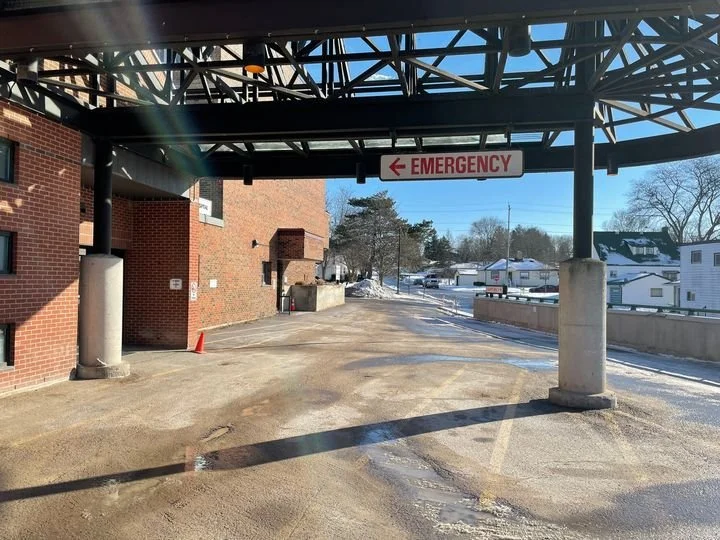
Peterborough Regional Health Centre Welcomes The First Baby Of 2022

Peterborough Regional Health Centre (PRHC) welcomed the first baby of 2022 on Jan. 1.

Photo courtesy of PRHC.

Cruz Elliot Eby was born at 2 a.m. on Saturday and weighed seven pounds, three ounces.

Cruz is welcomed by parents Leanne and Shaun and two older brothers, Anderson and Maxwell.

Mom and Dad expressed thanks to Dr. Dr. Vanek and Sam (RN) for the care they received while at PRHC.

Engage with us on social media on Twitter, Instagram, Facebook and Tiktok. Write to us at tips@ptbocanada.com. Sign up for PTBOBuzz newsletter here.


COVID-19 Numbers In Peterborough For December 31, 2021

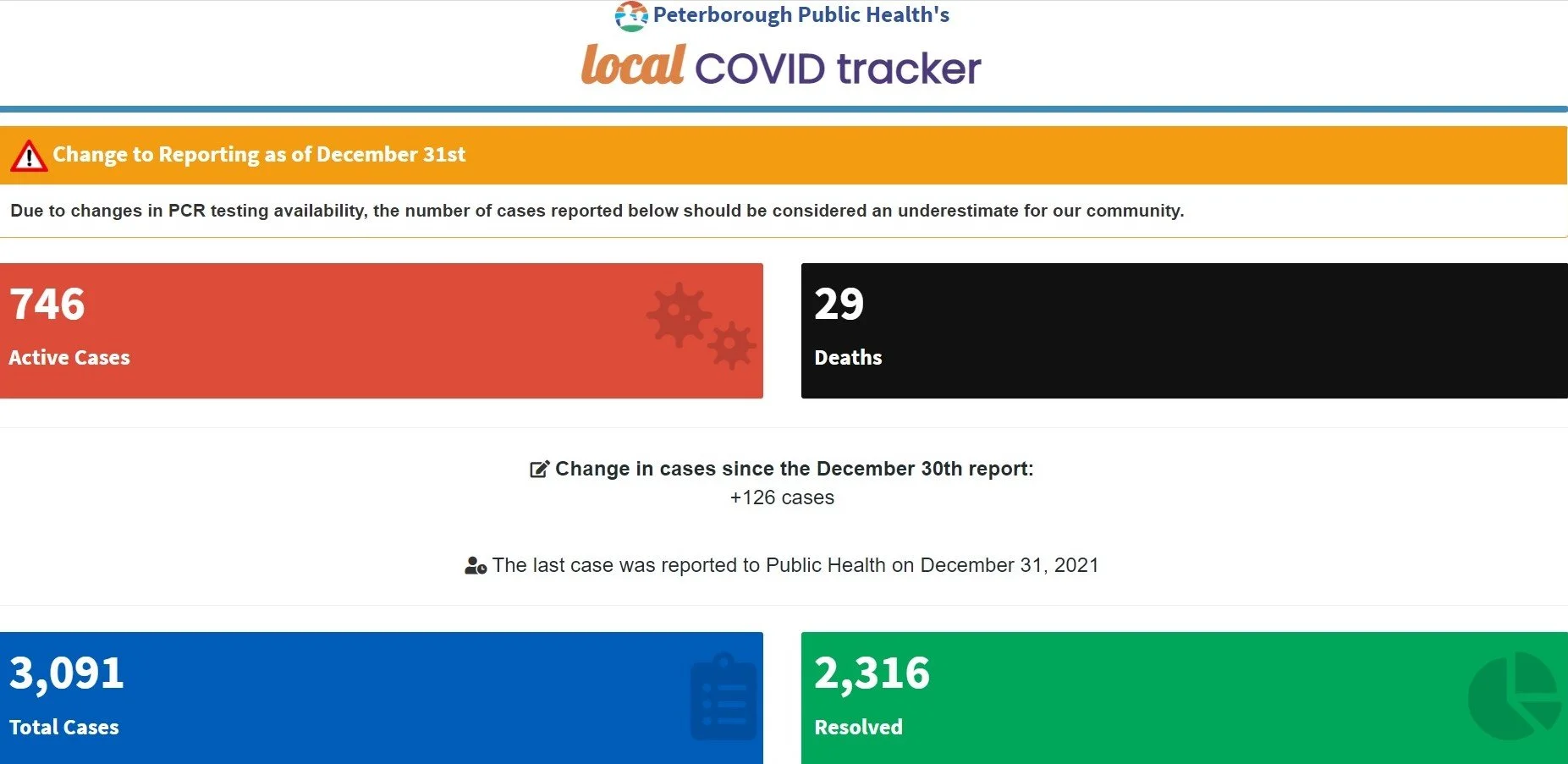
There are currently 746 active cases in Peterborough as of Dec. 31, 2021.

For more information visit: https://localcovidtracker.ca/

Engage with us on social media on Twitter, Instagram, Facebook and Tiktok. Write to us at tips@ptbocanada.com. Sign up for PTBOBuzz newsletter here.


Province Delays School to Jan. 5, Isolation Period Reduced to Five Days and Limited PCR Testing

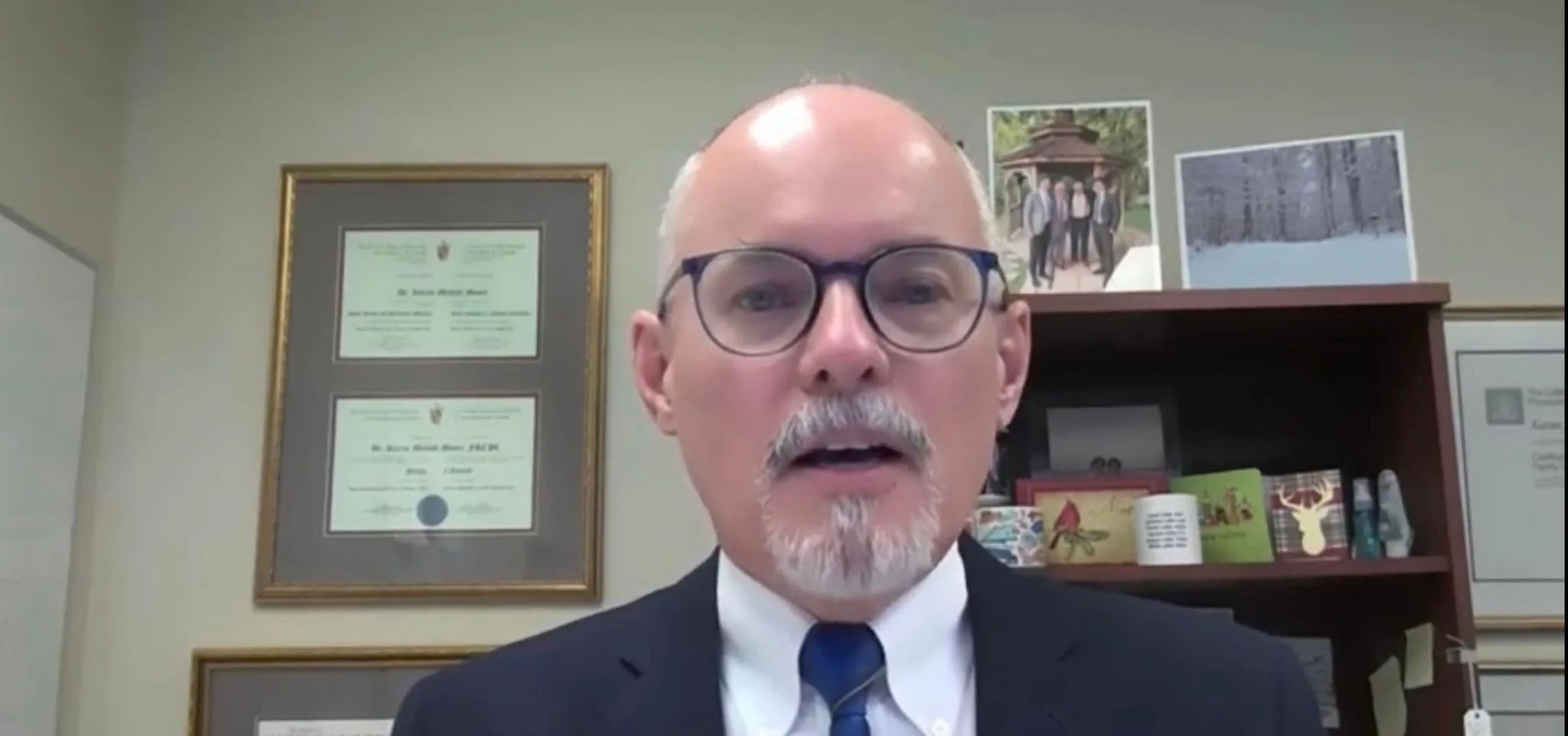
Dr. Kieran Moore, chief medical officer of health and Ontario have updated its COVID-19 testing and isolation guidelines in response to the Omicron variant on Thursday.

Screenshot.

Moore also confirmed that schools will reopen on Jan. 5 for in-person learning.

“This will provide our schools with extra time to begin to put in place additional health and safety measures including deploying additional masking options for students and educators and further improving air ventilation in schools,” he said.

Key changes include the following:

  • Symptomatic testing will be available for high-risk individuals, and individuals who work in high-risk settings.

  • Individuals with symptoms consistent with COVID-19 are presumed positive and they should follow isolation and/or self-monitoring guidelines.

  • Testing for asymptomatic contacts of cases is generally no longer recommended, except for high-risk contacts/individuals that are part of confirmed or suspected outbreaks in high-risk settings, as recommended by public health.

  • Positive rapid antigen tests will no longer require PCR confirmation.

  • Based on the latest scientific evidence, individuals with COVID-19 should isolate for five days if they are fully vaccinated or under the age of 12 and if their symptoms are improving for at least 24 hours.

Eligible Groups for PCR Testing

Effective Friday, PCR testing will only be recommended for individuals if they belong to the following groups:

  • Symptomatic people who fall into one of the following groups:

    • Hospitalized patients

    • Patients in Emergency Departments, at the discretion of the treating clinician

    • Patient-facing health care workers

    • Staff, residents, essential care providers and visitors in hospitals and congregate living settings, including long-term care, retirement homes, First Nation eldercare lodges, group homes, shelters, hospices, temporary foreign worker settings, and correctional institutions

    • Outpatients for whom COVID-19 treatment is being considered

    • Underhoused or homeless

  • People who are from First Nation, Inuit, and Métis communities and individuals travelling into these communities for work

  • Symptomatic elementary and secondary students and education staff who have received a PCR self-collection kit through their school

  • People on admission/transfer to or from the hospital or congregate living setting

  • High-risk contacts and asymptomatic/symptomatic people in the context of confirmed or suspected outbreaks in high-risk settings, including hospitals, long-term care, retirement homes, other congregate living settings and institutions and other settings as directed by the local public health unit

  • Individuals, and one accompanying caregiver, with written prior approval for out-of-country medical services from the General Manager, OHIP

  • Asymptomatic testing in hospital, long-term care, retirement homes and other congregate living settings and Institutions as per provincial guidance and/or Directives

If you have symptoms of COVID-19

Individuals who are vaccinated, as well as children under 12 who have symptoms of COVID-19 will be required to isolate for five days following the onset of symptoms. These individuals can end isolation after five days if their symptoms are improving for at least 24 hours, and all public health and safety measures, such as masking and physical distancing, are followed.

Individuals who are unvaccinated, partially vaccinated or immunocompromised will be required to isolate for 10 days.

If you are someone who works or lives in a high risk-health care setting (i.e., hospitals, long-term care, retirement homes, congregate living settings) you must notify your employer. Individuals who work or live in these settings should not attend work for 10 days from their symptom onset, or from their date of diagnosis.

To ensure sufficient staffing levels, workers in these settings may have the opportunity to return to work early on day seven of their isolation, with a negative PCR test or two negative rapid antigen tests on day six and seven. Speak with your employer or occupational health and safety department for more information.

All household contacts must also isolate for the same duration as the person with symptoms, regardless of their vaccination status. If you have symptoms of COVID-19, you should also consider informing close contacts beyond your household contacts by providing them with the link to Ontario.ca/exposed. Individuals who are eligible for a lab-based PCR test are encouraged to get tested.

If you have concerns about your symptoms, contact your doctor, health care provider or Telehealth for more information and guidance. If you develop severe symptoms requiring medical attention, such as shortness of breath or chest pain, call 911.

If you do not have symptoms of COVID-19 but are feeling unwell, isolate until symptoms have improved for at least 24 hours.

If you’ve been exposed to someone who has tested positive for COVID-19

If you are fully vaccinated and you have no symptoms, and do not live with the positive case, you are advised to:

  • Self-monitor for symptoms for 10 days since you last interacted with the positive case

  • Maintain masking, physical distancing and adherence to all other public health measures if leaving home

  • Do not visit any high-risk settings or individuals who may be at higher risk of illness (e.g., seniors) for 10 days from your last exposure.

If you are not fully vaccinated, or are immunocompromised, you must isolate immediately for 10 days following your last contact. If you live with the positive case, you must isolate for the length of their isolation period.

Individuals who are eligible for testing are encouraged to get tested.

If you live, work, attend, volunteer, or have been admitted in a high-risk health care setting, you must notify your employer and should not visit the high-risk setting for 10 days since your last exposure or symptom onset, or from your date of diagnosis. To ensure sufficient staffing levels, workers in these settings will have the opportunity to return to work early on day seven of their isolation with a negative PCR test, or two negative rapid antigen tests on day six and seven. If you live in a high-risk setting, you should isolate regardless of vaccination status.

If you have COVID-19 based on a positive test result

If you test positive from a PCR, rapid molecular or a rapid antigen test and you are fully vaccinated or under 12 years of age, you must isolate for five days from the positive test result if you have no symptoms or from symptom onset and until their symptoms are improving for 24 hours (or 48 hours if gastrointestinal symptoms).

If you are partially vaccinated, unvaccinated or immunocompromised, you should self-isolate for 10 days from the onset of symptoms, or from the date of your test (whichever came sooner).

In addition, household contacts of individuals who have tested positive must also self-isolate during this time. Individuals must isolate regardless of their vaccination status.

You should also notify your close contacts. A close contact is anyone you were less than two metres away from for at least 15 minutes, or multiple shorter lengths of time, without personal protective equipment in the 48 hours before your symptoms began or your positive test result, whichever came first.

Appropriate Use of Rapid Antigen Testing

Ontario currently has a limited supply of rapid antigen tests that are being prioritized for health care and highest risk settings. This includes rapid antigen test use for “test-to-work” in which asymptomatic staff in these sectors can return to work when they would otherwise be on isolation at home.

Focusing the use of rapid antigen tests for these sectors will help keep hospitals, long-term care and retirement homes and congregate settings operating as safely as possible. As of December 20, a total of 49.6 million rapid antigen tests have been deployed across more than 49,000 sites since the beginning of the pandemic, with the vast majority (approximately 41 million) deployed to these priority sectors.

Rapid antigen testing may be used to confirm if a symptomatic individual has COVID-19, with no requirement for a confirmatory PCR or rapid molecular test.

In addition to Ontario directly procuring additional rapid tests where possible, the province is continuing to urge the federal government to make more rapid tests available to provinces as quickly as possible.

How to Access Supports While Isolating

If you require assistance while isolating, visit COVID-19: Support for people. People can also contact their public health unit for many isolation supports including:

  • Use of isolation facilities;

  • Referral to community supports and agencies;

  • Mental health supports;

  • Courier and delivery support for food and necessities;

  • Additional resources are available to support isolation through the High Priority Communities strategy.

Employers cannot threaten, fire, or penalize an employee in any other way because the employee took or plans on taking job-protected leave due to COVID-19 and doctors notes are not required for employees to use the leave. You can learn more about job-protected leave here.

Engage with us on social media on Twitter, Instagram, Facebook and Tiktok. Write to us at tips@ptbocanada.com. Sign up for PTBOBuzz newsletter here.

COVID-19 Numbers In Peterborough For December 29, 2021

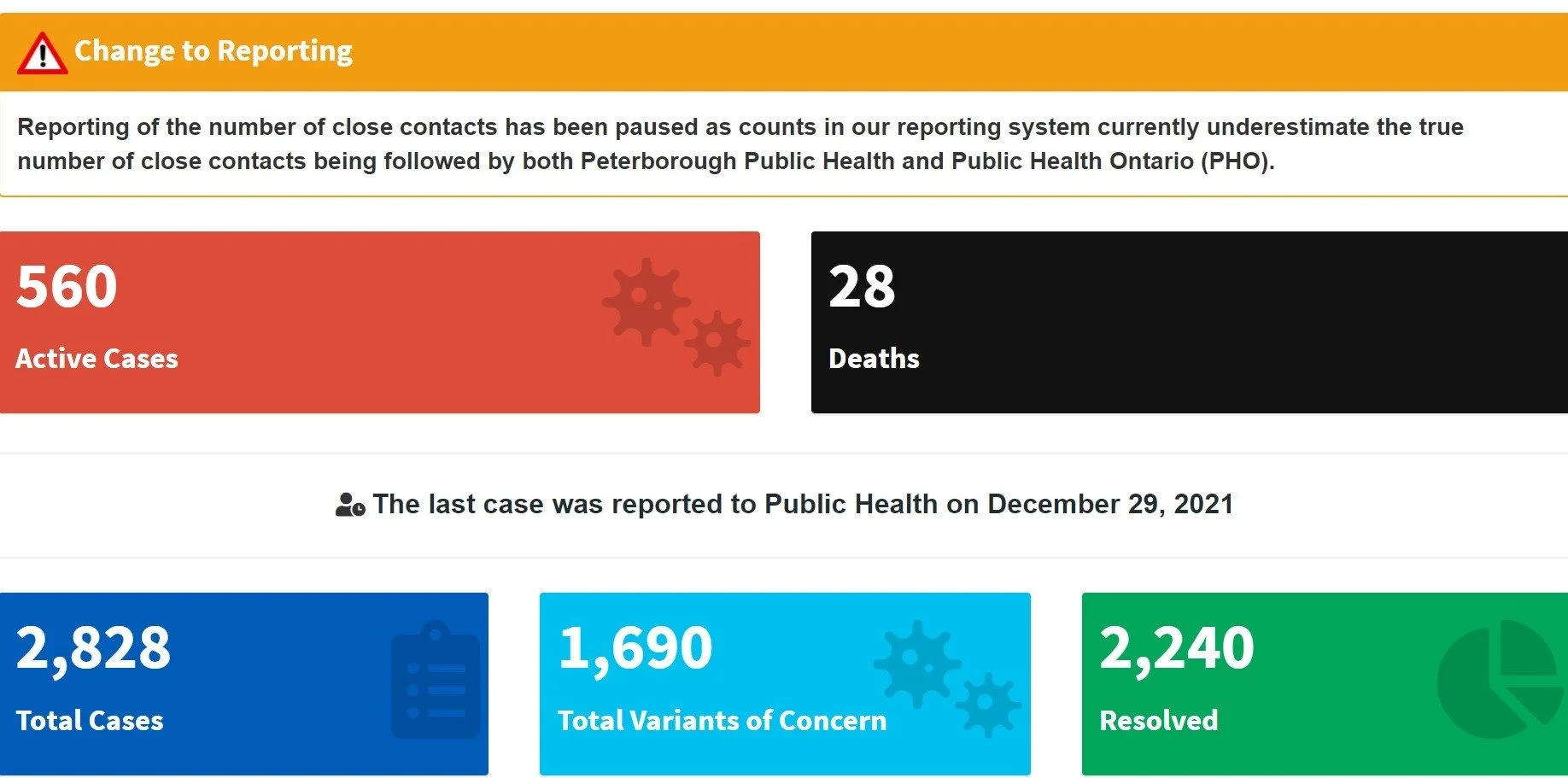
There are currently 560 active cases in Peterborough as of Dec. 29, 2021.

For more information visit: https://localcovidtracker.ca/

Engage with us on social media on Twitter, Instagram, Facebook and Tiktok. Write to us at tips@ptbocanada.com. Sign up for PTBOBuzz newsletter here.


Ontario To Introduce New Measures To Protect Those Living And Working In Long Term Care Homes

In response to the evolving Omicron situation, the Ontario government is taking further actions to protect the health and safety of residents, staff and caregivers in long-term care homes, these new actions will go into effect at 12:01 a.m. on Thursday.

Stock Photo.

“We know that long-term care residents face an increased risk of COVID-19. Given the high community infection rates we’re seeing with the Omicron variant, the time for more action is now,” said Rod Phillips, Minister of Long-Term Care. “In addition to the steps we’ve already taken, these new temporary measures will help keep residents safe and help critical staff remain on the job.”

The government will closely monitor the situation in long-term care homes and continue to adjust measures as necessary to keep residents and staff safe.

Effective on Thursday:

  • Access to long-term care homes by general visitors will be paused. Designated caregivers may continue to enter long-term care homes.

  • Day absences for all residents for social purposes will be paused.

Earlier this month, the government put in place policies in long-term care homes designed to optimize safety for residents and staff, including the requirement that all general visitors need to be fully vaccinated to enter a home.

The province is also requiring all staff caring for a resident with a confirmed or suspected case of COVID-19 to wear a fit-tested, seal-checked N95 respirator. However, the high transmissibility of the Omicron variant will likely mean staff being exposed to or contracting COVID-19 in the community and more outbreaks in long-term care homes.

This means that it is imperative to keep COVID-19 out of homes wherever possible and prevent spread within homes, with the most important objective being the prevention of severe outcomes for residents and staff.

“I understand that these new, temporary measures will impact residents’ ability to have close contact with many of their friends and family members,” said Minister Phillips. “We must remain vigilant against the Omicron variant to protect long-term care residents and staff.”

Engage with us on social media on Twitter, Instagram, Facebook and Tiktok. Write to us at tips@ptbocanada.com. Sign up for PTBOBuzz newsletter here.


Peterborough Regional Health Centre Adds Three Extra Days For COVID-19 Testing Pop-Up Clinic

Three additional days of a COVID-19 testing pop-up clinic by Peterborough Regional Health Centre (PRHC) and Peterborough Public Health (PPH) have been scheduled at St. Peter’s Secondary School announced Tuesday.

PRHC had run the clinic from Dec. 23 to 25 however the demand for COVID-19 testing has been extremely high in the past few weeks due to the Omicron variant.

It continues to spread across Ontario and confirmed cases of COVID-19 in the Peterborough area have increased significantly according to the PRHC.

The details for the pop-up testing location are as follows:

Criteria for testing at this site:

  • You have been identified as a high-risk contact and directed to receive testing by Peterborough Public Health, Public Health Ontario or Provincial Work Force

  • You have COVID-19 symptoms

  • You have received a positive result on a rapid antigen test

Testing services continue to be offered through PRHC’s COVID-19 Assessment Centre however demand continues to be extremely high as stated by PRHC. 

More information about booking a test through the COVID-19 Assessment Centre can be found here:
https://www.prhc.on.ca/about-us/covid-19-novel-coronavirus/getting-tested-for-covid19/

Engage with us on social media on Twitter, Instagram, Facebook and Tiktok. Write to us at tips@ptbocanada.com. Sign up for PTBOBuzz newsletter here.


Peterborough Public Health To Host Walk-In Vaccine Clinics For Anyone 70+

Peterborough Public Health will be hosting a walk-in COVID-19 vaccine clinic at the Healthy Planet Arena on two separate days for anyone 70 or older announced on Monday.

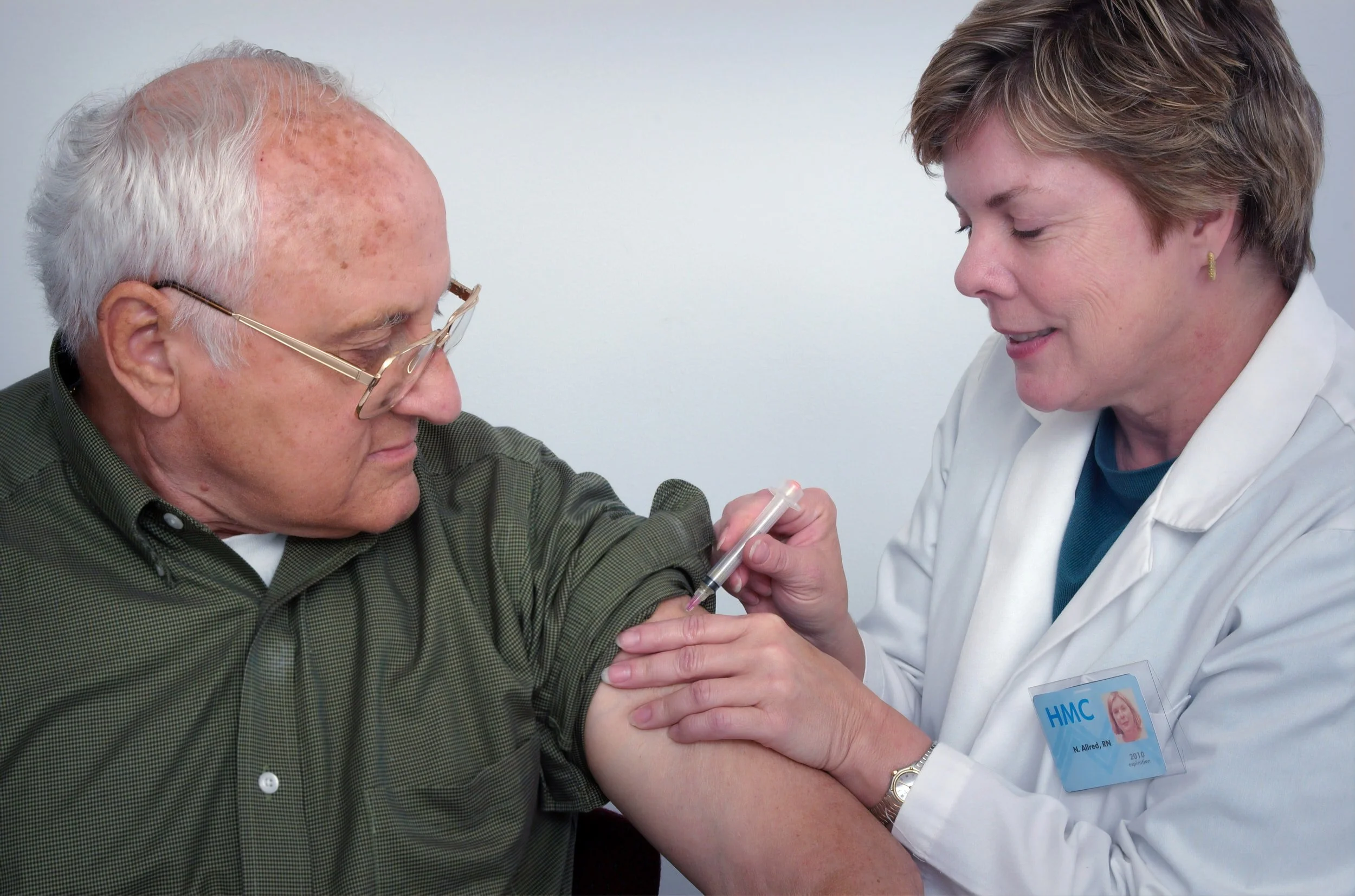
Stock Photo.

Residents over the age of 80 can have their booster dose administered on Thursday. Anyone from the ages 70-79 is eligible for the clinic on Saturday.

“Older adults in our community are at a heightened risk for complications related to a COVID-19 infection compared to the younger population,” said Dr. Thomas Piggott, medical officer of health. “It is very important that we provide these residents with every opportunity to receive a booster dose.”

“These clinics will be accepting walk-ins based on age criteria,” said Dr. Piggot. “However, our other booster dose clinics are still only accepting residents who have booked appointments at this time.”

Residents are encouraged to attend if they do not already have a COVID-19 vaccine appointment booked and have experienced barriers to booking an appointment with the provincial vaccine booking system.

The clinic details are as follows:

Dec. 30 for residents ages 80 years or older. These residents can walk in at a specific time of arrival based on the first letter of their last name.

  • Last Name – A-J – arrive between 1:00 p.m. to 2:00 p.m.

  • Last Name – K-R – arrive between 2:00 p.m. to 3:00 p.m.

  • Last Name – P-Z – arrive between 3:00 p.m. to 4:00 p.m.

Jan. 1 for residents ages 70-79. These residents can walk in at a specific time of arrival based on the first letter of their last name.

  • Last Name – A-J – arrive between 1:00 p.m. to 2:00 p.m.

  • Last Name – K-R – arrive between 2:00 p.m. to 3:00 p.m.

  • Last Name – P-Z – arrive between 3:00 p.m. to 4:00 p.m.

Residents are reminded that they must wait at least 84 days (12 weeks) after their second dose before they are able to receive a booster dose. This guide can assist in determining the earliest date residents can receive their booster dose.

“As we are seeing a shortage in Pfizer COVID-19 vaccines across the province, residents will be receiving the Moderna COVID-19 vaccine at this walk-in clinic,” said Dr. Piggott, “The best third dose is the first one you can get, even if that means changing the mRNA vaccine brand that you previously received. I personally received the Moderna vaccine. It is an excellent vaccine along with the Pfizer vaccine.”

Residents who are not eligible for this clinic can book an appointment for their booster dose using the provincial booking system. Appointments can be booked:

For more information about COVID-19 vaccine eligibility, upcoming vaccine clinics, and booking a vaccine appointment, please visit www.peterboroughpublichealth.ca/vaccineclinics.

Engage with us on social media on Twitter, Instagram, Facebook and Tiktok. Write to us at tips@ptbocanada.com. Sign up for PTBOBuzz newsletter here.

PRHC Temporarily Shifts To More Restrictive Visiting Policy

Peterborough Regional Health Centre will be moving to a more restrictive phase of temporary visiting policy on Dec. 23 as an additional measure to protect the health and safety of everyone at the hospital.

Photo courtesy of PRHC.

Under this phase of the temporary policy, the following key changes will take effect:

  • A limited number of designated essential caregivers will be permitted for specific patient groups only. Designated caregivers must be registered to the patient to come to the hospital.

  • The number of designated caregivers permitted in the patient’s room at one time will be limited to one (1) in most cases.

An essential caregiver or care partner is a person who provides support to an individual with limited capacity, an urgent medical condition, age-related issues, disability or chronic health concerns.

Caregivers may be family, friends or neighbours, and there is no age requirement to provide care. Young caregivers, adult children, spouses and peers can all provide support. These individuals are considered essential when their presence is deemed beneficial to the assessment, diagnosis, and physical and/or mental health care of the patient.

Designated essential caregivers coming to the hospital will continue to be screened at both public entrances and will be required to check in with their name and phone number at the hospital’s main information desk. They will be asked to wear a mask at all times when in the hospital, including in the patient/bed area, and to clean their hands well and frequently while at the hospital.

Visiting hours for designated essential caregivers will continue to be 12:00 p.m. to 8:00 p.m., subject to additional restrictions as detailed on PRHC’s website.

PRHC continues to strongly encourage the use of our Virtual Visiting program to support ongoing family presence while helping to keep our patients, staff and community safe. For more information about booking a visit through this program, read the FAQ document provided here.

This temporary visiting policy will remain in effect until further notice.

Engage with us on social media on Twitter, Instagram, Facebook and Tiktok. Write to us at tips@ptbocanada.com. Sign up for PTBOBuzz newsletter here.


Campbellford Memorial Hospital Emergency Room To Be Closed Christmas Eve

The Emergency Department at Campbellford Memorial Hospital (CMH) will be temporarily closed on Dec. 24 beginning at 5:00 p.m. and re-opening at 7:30 a.m. on Dec. 25, due to staffing issues.

Photo courtesy of CMH.

A contingency plan has been implemented to deal with this temporary closure to ensure the impact to patient care is as minimal as possible. EMS and other emergency services are aware of the temporary closure and during these hours’ ambulances will take patients directly to the closest area hospital that offers emergency medical services.

In reaching this decision, CMH investigated all support options and opportunities available including reaching out to our sub-regional partners who, while incredibly supportive, shared their own health human resource challenges.

“The COVID-19 pandemic has certainly highlighted the implications of the shortage of health human resources throughout the Province,” said Eric Hanna, President and CEO. “CMH is continuously re-evaluating our strategies to recruit and retain members of our team during these challenging times.”

Anyone requiring emergency health care treatment during the closure should call 911.

Anyone requiring urgent health care treatment should go directly to one of the following hospitals:

• Northumberland Hills Hospital, 1000 DePalma Drive, Cobourg

• Quinte Healthcare Corporation - Trenton Memorial Hospital, 242 King Street, Trenton

• Quinte Healthcare Corporation - Belleville General Hospital, 265 Dundas Street East, Belleville

• Peterborough Regional Health Centre, 1 Hospital Drive, Peterborough.

Engage with us on social media on Twitter, Instagram, Facebook and Tiktok. Write to us at tips@ptbocanada.com. Sign up for PTBOBuzz newsletter here.


CMHA HKPR Receives Combined $60K Donation From Two Local Organizations

The Canadian Mental Health Association, Haliburton, Kawartha, Pine Ridge branch (CMHAHKPR) received a $50,000 donation from the Kinsmen Club of Peterborough, and a $10,000 grant from the Peterborough Police Services Board Auction Fund.

Photo courtesy of CMHAHKPR

The donations, both received on Monday, will support the new Mobile Mental Health and Addictions Clinic being launched in 2022.

“We thank the Kinsmen Club of Peterborough for their generous donation which will support our new Mobile Mental Health and Addictions Clinic,” said Mark Graham, Chief Executive Officer, CMHA HKPR. “The new clinic will bring specialized mobile mental health and addictions care to underserviced and under-resourced communities.”

The clinic will operate within a custom-built retrofitted bus, travelling to communities across the Four Counties. With a multidisciplinary team and collaboration from community partners, it will provide individuals with a variety of services together under one roof, including mental health and addictions services, psychiatric support and follow-up, sexual health and addictions education and support, and basic primary care and health screening for vulnerable populations.

Photo courtesy of CMHAHKPR.

“We’re pleased to have been selected by the Peterborough Police Services Board as a recipient of the Auction Fund Grant, which will support our new Mobile Mental Health and Addictions Clinic,” said Graham. “The launch of this program is a monumental step in bringing specialized mobile mental health and addictions care to underserviced and under-resourced communities.”

“The Peterborough Police Services Board is pleased to support the Canadian Mental Health Association’s new Mobile Mental Health and Addictions Clinic with an auction fund grant. The Police Board and the Police Service recognize and understand the need for effective supports and programs that will help support our fellow citizens who are struggling with their mental health and/or addiction to substances,” said Bob Hall, Chair of the Peterborough Police Services Board. “The CMHA is to be commended for this project and we hope that this grant will be part of a community solution.”

Engage with us on social media on Twitter, Instagram, Facebook and Tiktok. Write to us at tips@ptbocanada.com. Sign up for PTBOBuzz newsletter here.