Ontario Government Invests Over $1.7 Million to Support Public Transit In City and County of Peterborough

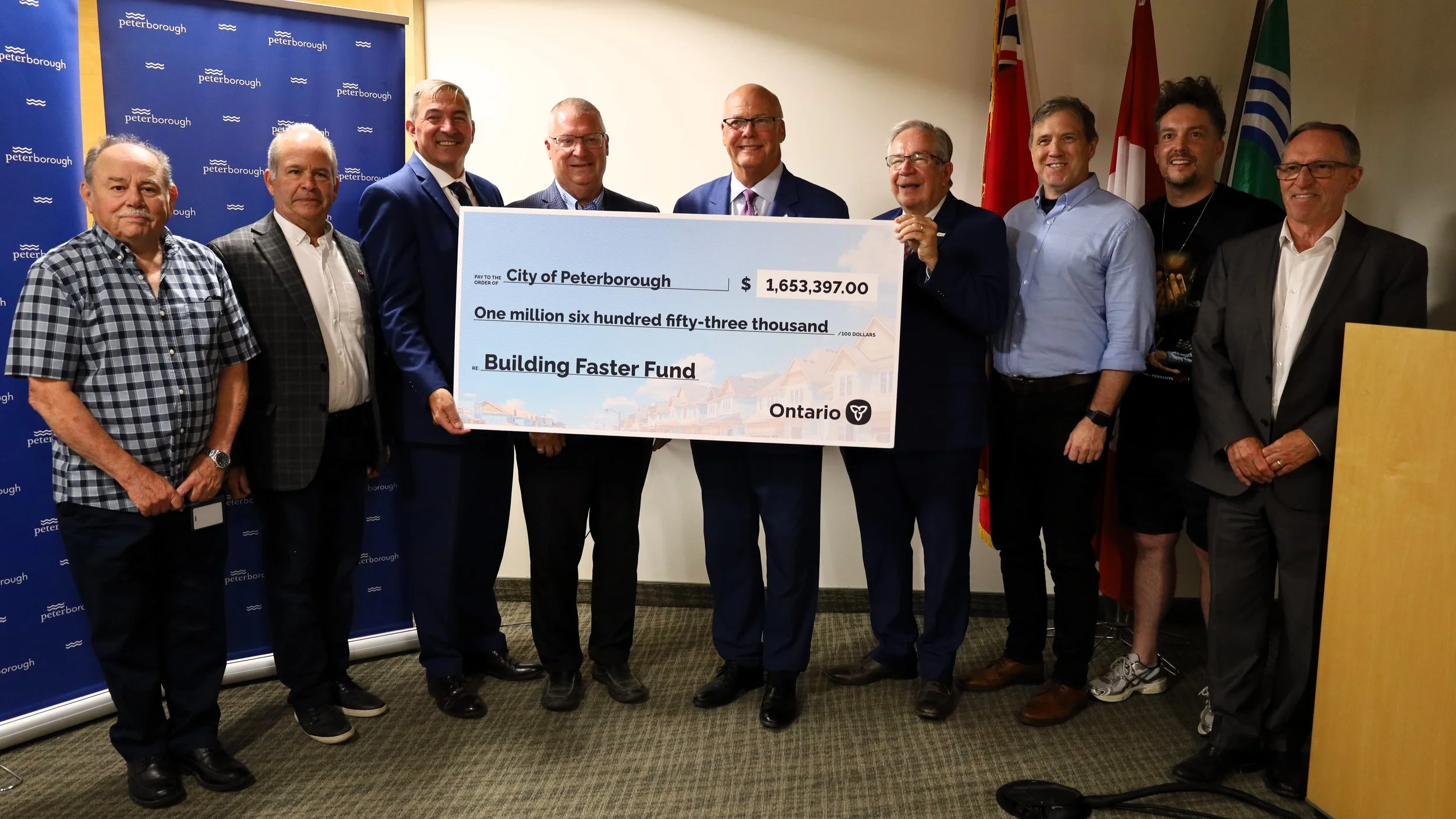
Through the 2025-26 Gas Tax program, the Ontario Government has invested $1,773,769 for the City of Peterborough and the County to better support public transit, announced at the Peterborough Transit Garage on Friday afternoon.

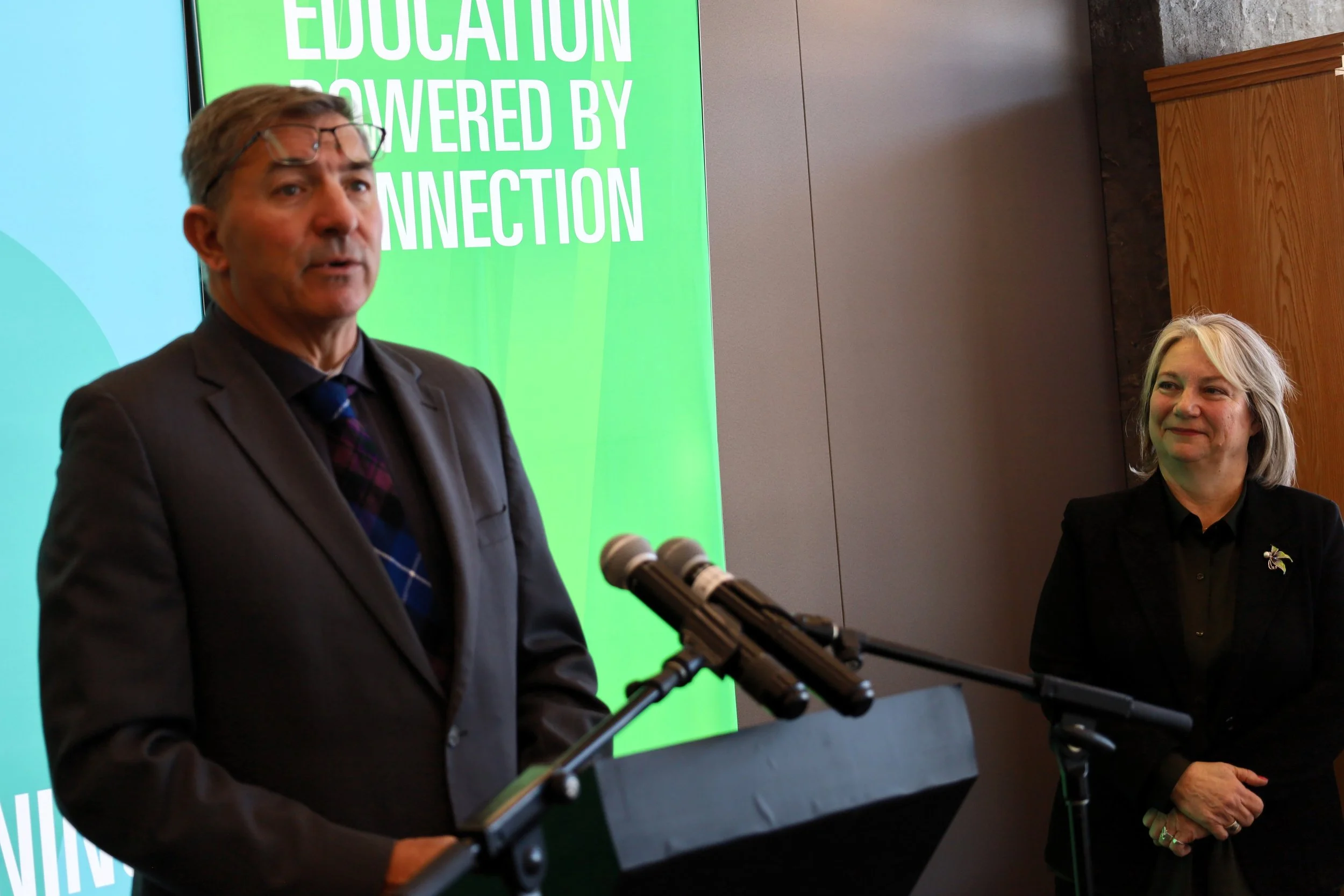
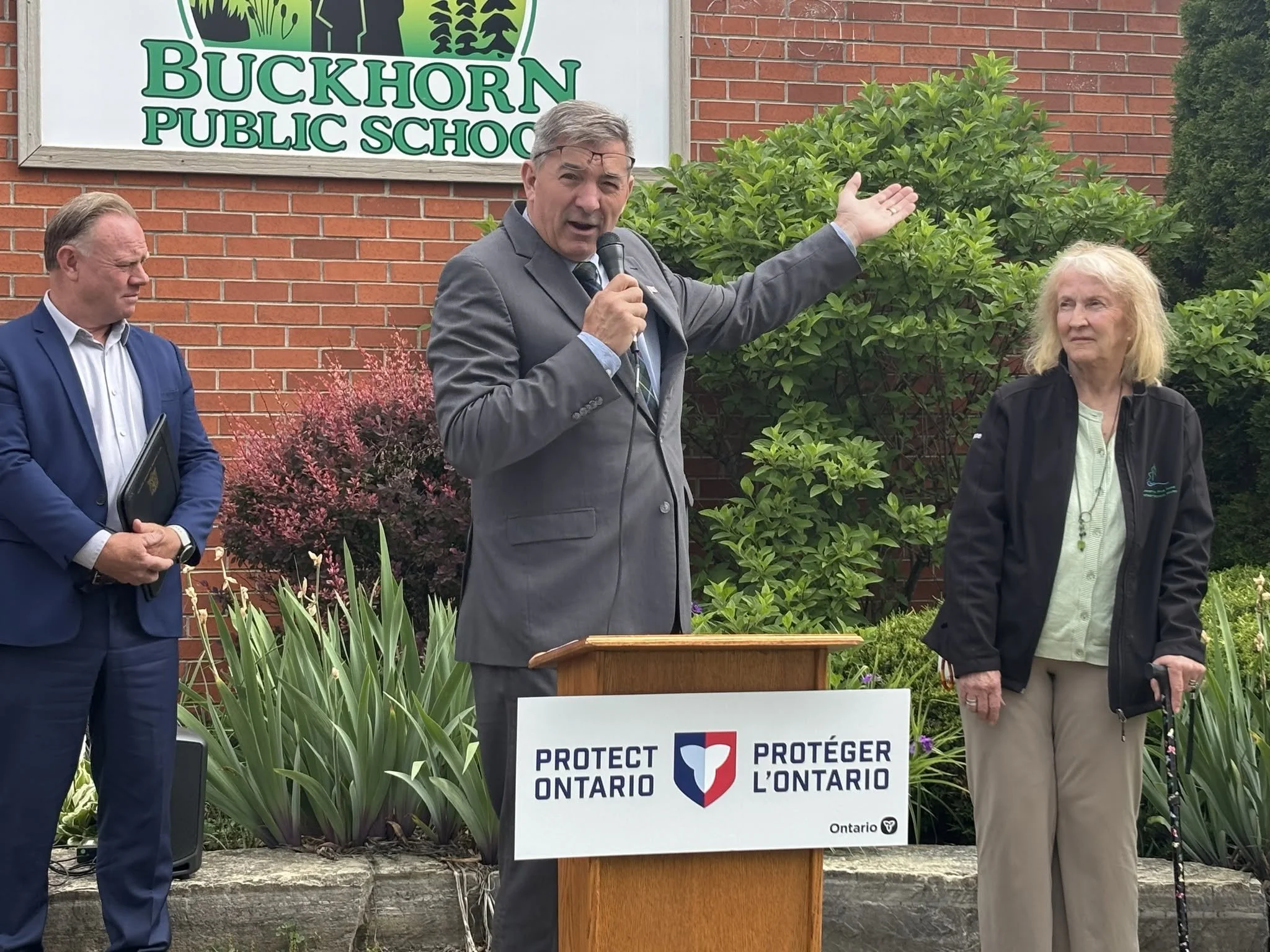
Dave Smith, Peterborough-Kawartha MPP (left); Sherry Senis, Selwyn Mayor (middle) and Jeff Leal, Peterborough mayor (right) at the Peterborough Transit Garage on Townsend Road in Peterborough. The Ontario Government is investing nearly $380 million through the 2025-26 Gas Tax program to support public transit in 107 municipalities. Photo by David Tuan Bui.

The City of Peterborough is receiving $1,732,762, while Peterborough County is getting $41,007. Under the ‘Dedicated Funding for Public Transportation Act’ in 2013, two cents per litre of the Gas Tax helped fund public transit, according to Dave Smith, Peterborough-Kawartha MPP.

“By providing these essential Gas Tax funds, we are empowering the City and County of Peterborough to enhance their transit networks, drive ridership and support the long-term growth of our region,” he explained. “This investment ensures that as our community expands, our residents have the reliable, accessible and efficient transportation they need to connect with jobs, local services and one another.”

The funding is to help public transit initiatives such as expanding service hours, increasing routes, purchasing new vehicles and improving accessibility while increasing transit ridership. While the funds are for the operational and capital side of Peterborough Transit, Mayor Jeff Leal said there are several ventures to seek as transportation evolves in the City.

“There are new technologies and vessels out there that save fuel and we want to be on the forefront of that,” he said.

Leal also mentioned that the $1.7 million provides the City with the possibility to extend its public transit reach into the County.

“It gives us the opportunities; that we have the link with Selwyn and we do get inquiries from Havelock, Norwood and Peterborough Regional Airport to extend that transit reach,” he explained. “It allows us to look at other transit options in actually servicing communities beyond the borders of the City of Peterborough. We do want to look at this area as a region and what we can do to have the City of Peterborough be that transit hub to help our fellow citizens of Peterborough County.”

Engage with us on social media on Twitter, Instagram, Facebook, Threads, Tiktok, Youtube and LinkedIn. Write to us at tips@ptbocanada.com. Sign up for our newsletter here.

Ontario Government Moves to Ban Uniform Fees at Large Companies to Protect Workers’ Paycheques

The Ontario Government is proposing new legislation that would ban employers from charging workers for mandatory uniforms, a move aimed at protecting paycheques and eliminating a common out-of-pocket cost for employees in sectors such as retail and hospitality.

photo courtesy of ja-neo.

In addition, the proposed new STAR Act would improve the transparency and oversight of talent agencies to better protect performers’ paycheques in the entertainment industry.

“Ontario workers are the backbone of our province and they deserve to keep more of what they earn. Whether you work in a restaurant or hotel, no one should have to pay out of pocket for a uniform just to earn a paycheque,” said David Piccini, Minister of Labour, Immigration, Training and Skills Development. “At the same time, Ontario’s entertainment and creative industries showcase our talent to the world and support thousands of good jobs. That’s why we’re improving fairness and transparency to ensure performers are paid what they’re owed.”

The government will propose changes to the Employment Standards Act, 2000 that, if passed, would prohibit employers from requiring employees to pay for uniforms or deducting those costs from their wages, except in limited situations, ensuring employees are not forced to pay out of pocket just to do their jobs.

There were 383,900 people employed in the restaurant and bar sector in Ontario in 2025, where uniforms can often be required. While the cost of uniforms can vary, some employees pay upwards of $50. The change would apply where uniforms are mandatory and employer-specific, including branded or logo apparel and not reasonably usable outside of work. If passed, the ministry would also consult on certain exemptions, such as small businesses. This change would address a common but often-overlooked cost barrier, particularly in entry-level sectors such as retail, hospitality and food service.

Seven other Canadian jurisdictions already limit or prohibit employers from charging employees for uniforms, including British Columbia, Quebec and Manitoba.

In addition, the government is proposing to establish the Strengthening Talent Agency Regulation (STAR) Act to strengthen transparency and oversight of payments handled by talent agencies. The proposed legislation would set a limit on commission rates, prohibit fees other than commissions and fees allowed by regulation, require timely payment to entertainment workers, and mandate a separate bank account for funds owed to those workers.

These proposed changes are part of a broader package of measures the government is introducing in the coming days to continue delivering on its plan to protect workers and make Ontario the most competitive place in the G7 to invest, create jobs and do business.

“We are encouraged to see the government taking meaningful steps to strengthen Ontario’s entertainment industry by enhancing protections for workers,” said Victoria Harding, Executive Director of the Directors Guild of Canada (Ontario). “Measures like the STAR Act reinforce Ontario as a leading jurisdiction in a globally competitive entertainment industry, a position built on both creative excellence and fair treatment for workers.”

Engage with us on social media on Twitter, Instagram, Facebook, Threads, Tiktok, Youtube and LinkedIn. Write to us at tips@ptbocanada.com. Sign up for our newsletter here.

Ontario Government Relaxing Alcohol Restrictions in Provincial Parks

Effective immediately, the Ontario government is easing alcohol restrictions and is allowing adults to consume them throughout provincial parks, announced at Bronte Creek Provincial Park in Oakville on Wednesday morning.

Todd McCarthy, Minister of the Environment, Conservation and Parks making his announcement at Bronte Creek Provincial Park of the relaxed restrictions of alcohol consumption in provincial parks. Screenshot.

According to Todd McCarthy, Minister of the Environment, Conservation and Parks, this move is part of the government’s plan to protect Ontario by building a more competitive, resilient and self-reliant economy while supporting a stronger tourism industry that creates jobs and drives economic growth across the province.

“Ontario Parks are some of the province’s most sought-after destinations for day trips and overnight camping, offering people a chance to connect and spend quality time together,” he said. “As families and friends gather for picnics or unwind after a long day on the trails, updated rules around where alcohol can be consumed are intended to improve the overall park experience and support local tourism, while continuing to prioritize safety. Ontario Parks are a key part of what makes our province a travel destination and we are supporting experiences that attract more visitors, strengthen communities and grow the economy.”

@ptbo_canada The Ontario government is loosening alcohol restrictions and adults can consume alcoholic beverages throughout provincial parks, effective immediately. ##ptbocanada##journalism##fyp##news##tourism ♬ original sound - PTBOCanada

The relaxed restrictions allow adults aged 19 and older to enjoy alcohol responsibly in most areas of provincial parks that are open and staffed for the 2026 season, such as picnic areas, beaches and other day-use areas. Park users will not receive tickets or fines for responsibly consuming alcohol in permitted areas outside of individual campsites. Existing rules still apply for unsafe or unlawful behaviour, including public intoxication, underage possession or consumption, and having open or improperly stored alcohol in a motor vehicle or boat.

Parks will post signage to identify areas that will remain alcohol-free such as sites of cultural or historical significance, buildings where food and drink are already restricted and areas that may pose significant safety risks.

Park staff continue to enforce rules including:

  • consuming alcohol only where it is allowed

  • respecting other park users

  • disposing of containers properly

  • never driving or boating while impaired

Engage with us on social media on Twitter, Instagram, Facebook, Threads, Tiktok, Youtube and LinkedIn. Write to us at tips@ptbocanada.com. Sign up for our newsletter here.

Ontario Government Announces Workplace Safety and Insurance Board Coverage Expansion For 29,000 Frontline Care Workers

The Ontario Government says it is taking action to strengthen workplace safety protections for 29,000 additional frontline care workers by extending mandatory Workplace Safety and Insurance Board (WSIB) coverage, announced in Hamilton on Wednesday.

Screenshot.

The expansion applies to all privately operated residential care facilities, retirement homes, and group homes. Examples of possible eligible workers include personal support workers, registered nurses, social workers, occupational therapists and operations staff.

It closes a long-standing gap that has left thousands of workers without protection if they are injured or become ill on the job and is another step in our government’s plan to protect workers and build a more resilient Ontario, stated David Piccini, Minister of Labour, Immigration, Training and Skills Development.

“Every day, frontline care workers show up to support people who rely on them,” he said. “They do this work with compassion and dedication, and they deserve to know they’ll be protected if something goes wrong. By extending WSIB coverage across the sector, we’re closing long-standing gaps and making sure no worker caring for others in these facilities is left without support when they need it most.”

The legislation, if passed, would provide workers in all privately operated residential care facilities with the same protections as workers doing the same job in a publicly operated facility, creating a level playing field, improving safety outcomes, and ensuring consistent protections for workers doing the same work regardless of who operates the facility.

Engage with us on social media on Twitter, Instagram, Facebook, Threads, Tiktok, Youtube and LinkedIn. Write to us at tips@ptbocanada.com. Sign up for our newsletter here.

Ontario Government Providing Over $9.9 Million For Ice Storm Recovery in Peterborough-Kawartha

To protect Ontario and keep communities safe, the provincial government is providing up to $9,931,000 for ice storm assistance in Peterborough-Kawartha.

Photo by David Tuan Bui.

The funding is part of Ontario’s $90 million Municipal Ice Storm Assistance program to help cover cleanup and emergency response costs resulting from a severe winter weather event on March 28, 2025.

“The ice storm of March 2025 was one of the most significant weather events our region has ever faced, and I saw firsthand the immense strain it placed on our families, businesses, and municipal services,” said Dave Smith, Peterborough-Kawartha MPP. “While the damage to our tree canopy and power grid was extensive, the spirit of our community remained unbroken. This $9.9 million investment is a vital step in our recovery, ensuring that the City and County of Peterborough have the resources they need to cover emergency costs without placing an undue burden on local taxpayers. Our government is committed to standing with our neighbors as we finish the cleanup and build a more resilient Peterborough-Kawartha.”

The storm resulted in widespread damage, leaving nearly 400,000 homes and businesses without power across Central and Eastern Ontario. In parts of Peterborough and the Kawarthas, the storm caused a declared State of Emergency following over 30 hours of continuous freezing rain and 20-25 mm of ice accretion which downed thousands of trees, snapped hydro lines and left some rural residents without power for over a week.

Allocations for municipalities in Peterborough-Kawartha are as follows (All numbers are the maximum provincial assistance, rounded):

  • County of Peterborough: $676,000

  • Douro-Dummer: $301,000

  • Havelock-Belmont-Methuen: $79,000

  • North Kawartha: $49,000

  • Peterborough: $7,950,000

  • Selwyn: $373,000

  • Trent Lakes: $503,000

“Our government will always protect Ontario, especially in times of need,” said Rob Flack, Minister of Municipal Affairs and Housing. “The relief being announced today will safeguard local jobs and help PeterboroughKawartha rebuild – stronger than ever.”

Engage with us on social media on Twitter, Instagram, Facebook, Threads, Tiktok, Youtube and LinkedIn. Write to us at tips@ptbocanada.com. Sign up for our newsletter here.

Ontario Minimum Wage to Increase to $17.95 An Hour On Oct. 1

To support over 700,000 workers, the Ontario Government is raising the minimum wage from $17.60 to $17.95 an hour, effective Oct. 1.

Under the Employment Standards Act, Ontario’s minimum wage increases annually based on the Ontario CPI, a measure of inflation that represents changes in prices experienced by Ontario consumers. Screenshot.

This annual increase, tied to Ontario’s Consumer Price Index at 1.9 percent, helps ensure wages continue to reflect economic conditions while protecting workers and providing businesses with greater stability according to David Piccini, Minister of Labour, Immigration, Training and Skills Development.

“Ontario workers are the engine of this province,” he said. “By raising the minimum wage to one of the highest in Canada, our government is putting more money in the pockets of Ontario workers, supporting families through economic uncertainty and giving businesses the stability and predictability they need to plan and grow."

Those earning the general minimum wage and working 40 hours per week will see an annual pay increase of approximately $728.

Engage with us on social media on Twitter, Instagram, Facebook, Threads, Tiktok, Youtube and LinkedIn. Write to us at tips@ptbocanada.com. Sign up for our newsletter here.

Ontario Government Invests $100,000 For Local Emergency Preparedness In Peterborough-Kawartha

The Ontario Government is investing $100,000 in North Kawartha and Havelock-Belmont-Methuen to improve local resilience and respond to emergencies more effectively, announced on Monday.

Photo by David Tuan Bui.

This funding is delivered through the Community Emergency Preparedness Grant (CEPG) and is designed to help small and medium-sized municipalities accordinf to Dave Smith, Peterborough-Kawartha MPP.

“Last year’s March 2025 ice storm was a stark reminder of how quickly our communities can be cut off when the power goes out and roads are blocked,” he said. “This investment is a direct response to those challenges. By providing the tools for reliable communication in North Kawartha and ensuring the HBM Community Centre has a backup generator to stay open as a warming site, we are making sure our residents are never left in the dark again.”

The CEPG funding is being allocated to address specific infrastructure and equipment gaps in the region:

  • North Kawartha ($50,000): The township will use this investment to modernize emergency communications and field operations. Key purchases include radios for parks and recreation vehicles, communication upgrades, a backup generator, and chainsaws. These tools will ensure safer, faster road clearance and more coordinated responses during natural disasters

  • Havelock-Belmont-Methuen ($50,000): Funding will support the purchase of a permanent backup generator for the HBM Community Centre. This upgrade ensures the facility can serve as a reliable emergency shelter and warming/cooling centre during power outages—a critical need identified following the prolonged outages of the March 2025 ice storm

“The $50,000 Community Emergency Preparedness Grant will assist the Township of Havelock-Belmont-Methuen with the purchase of a permanent backup power source for the local Community Centre,“ said Jim Martin, Havelock-Belmont-Methuen mayor. “This purchase will allow the Community Centre to be the Township’s main gathering spot in an emergency situation when the power is out.”

Engage with us on social media on Twitter, Instagram, Facebook, Threads, Tiktok, Youtube and LinkedIn. Write to us at tips@ptbocanada.com. Sign up for our newsletter here.

Ontario Government to End Funding For Seven Drug Injection Sites Including Peterborough

The Ontario Government is ending provincial funding for the seven active drug injection sites, including Peterborough’s existing Homelessness and Addiction Recovery Treatment (HART) Hub, announced on Monday.

To date, the province has invested almost $550 million to support 28 HART Hubs across Ontario. File photo.

In late January of last year, the Ontario Government provided $6.2 million for Peterborough’s HART hub.

According to a press release, the defunding is part of the government’s plan to protect families and communities. This latest step responds directly to local concerns over public safety associated with these sites and furthers the government’s plan to fund treatment and lasting recovery from addiction, rather than continued public funding of drug injection sites, according to Sylvia Jones, Deputy Premier and Minister of Health.

“Our government is focused on treatment, recovery and safer communities,” she said. “Through our almost $550 million investment to establish HART Hubs across the province, we are ensuring people struggling with addiction can access the care and supports they need to break the tragic cycle of addiction and rebuild their lives while protecting Ontario communities.”

The province is initiating a 90-day wind-down period — 60 days longer than required — to give clients time to transition to support from their local HART Hub. With Peterborough, the other sites include two in Toronto, two in Ottawa, one in Niagara Falls and one in London. During this period, the government stated that it would work directly with municipalities and community partners to ensure a safe, coordinated wind-down of provincial funding for the drug injection sites and a successful transition to the new recovery model.

The defunding follows legislation passed in 2024 that prohibits injection sites from operating within 200 metres of schools and child-care centres.

Engage with us on social media on Twitter, Instagram, Facebook, Threads, Tiktok, Youtube and LinkedIn. Write to us at tips@ptbocanada.com. Sign up for our newsletter here.

Provincial Government Launches Classroom Supplies Fund of $750 For Elementary School Teachers and Students

The Ontario Government has launched the Classroom Supplies Fund, providing $750 to elementary school homeroom teachers for classroom supplies starting this September, announced at Highfield Junior School in Etobicoke on Wednesday morning.

Screenshot.

The fund is part of the province’s 2026 budget and teachers will access it through a Classroom Supplies Card. It helps teachers have classroom materials without paying up front for them according to Doug Ford, Ontario Premier.

“Our government is making record investments so that our students have the support and supplies they need to succeed and grow in school,” he said. “The new $750 Classroom Supplies Card will give teachers across the province access to the resources they need, without forcing them to cover the costs themselves or wait to be reimbursed. It’s just one of the ways we are supporting our students and teachers while ensuring Ontario’s education system is focused on student success.”

Homeroom teachers can access the funding through a new provincial website. It allows them to order classroom supplies directly, with materials delivered to their schools. The Classroom Supplies Card directs teachers to the website and includes instructions for accessing it. According to the provincial government, the website will offer a grade-by-grade selection of commonly used classroom items, including writing supplies, notebooks, calculators, chalk, arts-and-crafts materials, tissues and paper towels.

This process allows elementary teachers to order the necessary supplies without paying up front and waiting for reimbursement, according to Peter Bethlenfalvy, Minister of Finance.

“Our government continues to make record investments to build an effective and strong education system. We are committed to protecting student learning and ensuring teachers have the support they need for every student to thrive,” he said. “We will continue to strengthen accountability across the system and ensure that every investment is focused on student success and reaches the classroom where it matters most.”

Providing a card also allows teachers to directly access funding rather than the chance of not seeing the money that school boards distribute to teachers said Paul Calandra, Minister of Education.

“We know that many teachers have been paying out of pocket for supplies. That isn’t fair for teachers or students,” he said. “While school boards receive funding for classroom resources, we have not always seen those dollars consistently reach every classroom. That is why we are putting funds directly in the hands of teachers to ensure their classrooms are equipped to support student achievement.”

Engage with us on social media on Twitter, Instagram, Facebook, Threads, Tiktok, Youtube and LinkedIn. Write to us at tips@ptbocanada.com. Sign up for our newsletter here.

Township of Selwyn Gets $1,378,504 Investment For Critical Water Infrastructure From Ontario Government

The Ontario government has invested $1,378,504 to rehabilitate water infrastructure for the Township of Selwyn’s George Street Watermain and Trunk Sewer.

Within the past few weeks, the Ontario Government has made announcements for provincial funding for Havelock, Peterborough and Selwyn’s water infrastructure. Photo by David Tuan Bui.

The funding comes from the province’s Municipal Housing Infrastructure Program’s Health and Safety Water Stream (MHIP-HSWS). It has been increased by $700 million to a total of $875 million to support access to safe drinking water, housing, job creation, and protection for communities in the event of extreme weather events according to Dave Smith, Peterborough-Kawartha MPP.

“This investment of over $1.3 million is a critical step in ensuring the long-term safety and reliability of water services for the residents of Lakefield,” he said. “By rehabilitating the George Street watermain and trunk sewer, we are not only addressing aging infrastructure but also creating the capacity needed to support new housing and economic growth in Selwyn. Our government remains committed to providing our municipal partners with the tools they need to build stronger, more resilient communities.”

Project upgrades include installing a new sanitary sewer to support future housing growth and replacing a section of aging watermain to increase water flow, improve fire protection and strengthen system reliability. Construction is expected to begin this spring, with excavation, pipe replacement, service reconnections and full roadway restoration.

“This funding represents a major investment in the long-term sustainability and livability of our community,” said Sherry Senis, Mayor of Selwyn Township. “By modernizing critical infrastructure along the George Street corridor, we are proactively addressing capacity challenges, strengthening system resilience, and ensuring Lakefield is well positioned to support planned growth. Projects like this protect public health, enhance service reliability, and demonstrate our commitment to responsible infrastructure planning for current and future residents.”

Engage with us on social media on Twitter, Instagram, Facebook, Threads, Tiktok, Youtube and LinkedIn. Write to us at tips@ptbocanada.com. Sign up for our newsletter here.