Peterborough Public Health Warns Public Of Increase In Suspected Drug-Related Deaths

Peterborough Public Health is notifying community members about an unusually high number of suspected drug-related deaths for April.

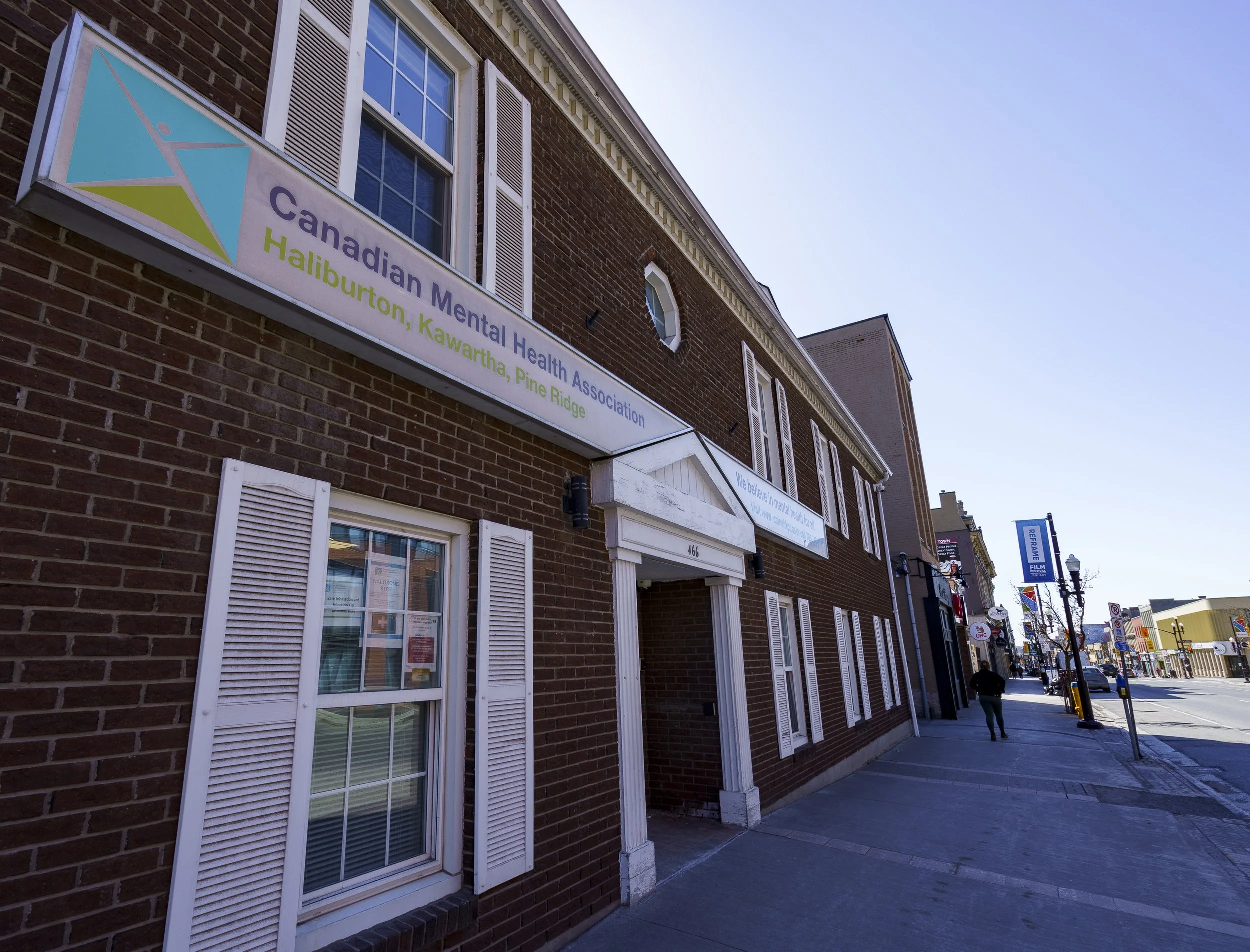
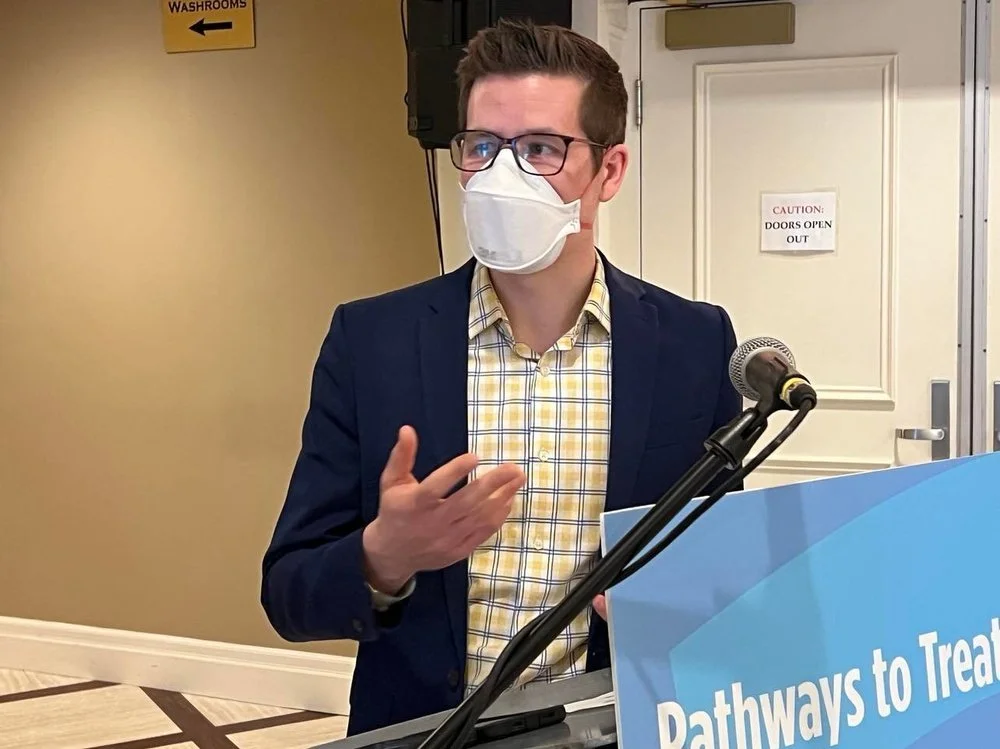
Photo by Luke Best.

Through Peterborough’s Early Warning and Surveillance System, Peterborough Public Health and partners have detected high numbers of suspected drug-related deaths.

As of April 19 , there have been 14 suspected drug-related deaths in Peterborough County and City.

This increase has prompted Peterborough Public Health to proceed with issuing this notice in the hopes of bringing awareness to and preventing further drug-related harms within our community. Any substance bought from an unregulated supply should be considered tainted. Any drug can be mixed or cut with toxic substances, and even a small amount can cause a fatal poisoning.

Peterborough Public Health advises if you use substances:

  • Do not use drugs alone.

  • If you using with a friend, do not use at the exact same time.

  • Have a plan – Ask someone to check on you or call the National Overdose Response Service 1-888-688-6677.

  • Carry a naloxone kit. Keep it visible and close by.

  • Avoid mixing drugs.

  • Test your drug by using a small amount first.

  • Call 911 immediately if someone starts to show signs of an overdose and/or cannot be resuscitated after

  • Naloxone is administered.

You are at greatest risk when you are using alone. If you are using drugs right now, it is critical that you take action to stay safe. Use with a friend and do not use at the same time. You can also ask someone to check in on you or call the National Overdose Prevention Service at 1-888-688-6677.

Community members are encouraged to know the signs of opioid poisoning and how to respond. An opioid poisoning may look like the following:

  • Skin is cold and clammy;

  • Fingernails or lips are blue or purple;

  • Body is very limp;

  • Cannot wake the person up;

  • Deep snoring or gurgling sounds;

  • Breathing is very slow, erratic or has stopped; and/or

  • Pupils are very small.

If an overdose is witnessed: Call 911. Give naloxone. Stay with the person until help arrives

Under Canada’s Good Samaritan Drug Overdose Act, anyone who seeks medical help for themselves or for someone else who has overdosed will not be charged for possessing or using drugs for personal use.

Peterborough Public Health is also encouraging members of the public to use the recently launched ‘Drug Reporting Tool’. This tool is an anonymous survey to report overdose incidents and harms in the community. Any information shared through the survey supports Peterborough Public Health and community partners in responding to and preventing overdoses in the Peterborough Area. The Drug Reporting Tool can be accessed by clicking here.

Engage with us on social media on Twitter, Instagram, Facebook and Tiktok. Write to us at tips@ptbocanada.com. Sign up for PTBOBuzz newsletter here.

Over $3.4 Million Invested Peterborough Regional Health Centre, Expansion of Eating Disorder Support and Services

Peterborough Regional Health Centre (PRHC) is receiving $3,409,974 from the Ontario Government as part of its $572.3 million investment to reimburse hospitals across the province for their lost revenue during the pandemic announced Friday.

Ontario has a total of 2,436 adult and pediatric ICU beds. Photo by David Tuan Bui.

The announcement was made in a Zoom meeting with MPP Dave Smith and Brenda Weir, PRHC Executive Vice President.

A one-time payment of $1,000,000 is included to immediately address the increased demand for services to support specialized care for children and youth diagnosed with eating disorders according to Smith.

“The pandemic worsened the challenges we face in health care and mental health supports after years of neglect and underfunding,” MPP Dave Smith said. “A $4,409,974 investment builds on our work to address hallway medicine, expand mental health services and ensure people in our community get the care they need,”

The program will focus on those up to the age of 24.

“The social isolation with the pandemic definitely has impacted how people have coped. Social isolation for any child or teen is significant as part of their development,” said Brenda Weir, PRHC Executive Vice President.

This funding is part of the province’s overall investment of over $1.2 billion to help hospitals recover from financial pressures created and worsened by the COVID-19 pandemic.

Hospitals have felt financial challenges not only through direct costs, but also through the loss of other forms of revenue such as co-payments for private rooms and the reduction of retail services, all of which contribute to patient care and support clinical services according to the press release.

“While the pandemic funding will help to offset the significant financial burden we have seen at the hospital as a result of COVID-19, the additional investment into PRHC’s Eating Disorders program will help us to address a dramatic increase in the need for this important service for youth in our community and region,” said Weir.

The investment in eating disorder supports and services is part of the 2021 Fall Economic Statement which allocates $8.1 million this year to immediately address the increased demand for services to support specialized care for children and youth diagnosed with eating disorders.

Engage with us on social media on Twitter, Instagram, Facebook and Tiktok. Write to us at tips@ptbocanada.com. Sign up for PTBOBuzz newsletter here.

PRHC Sees Record-Number COVID-19 Patients, Longer Wait Times Expected

Peterborough Regional Health Centre (PRHC) is seeing a record-high number of inpatients with COVID-19 combined with ongoing short-staffing, resulting in longer wait times announced on Thursday.

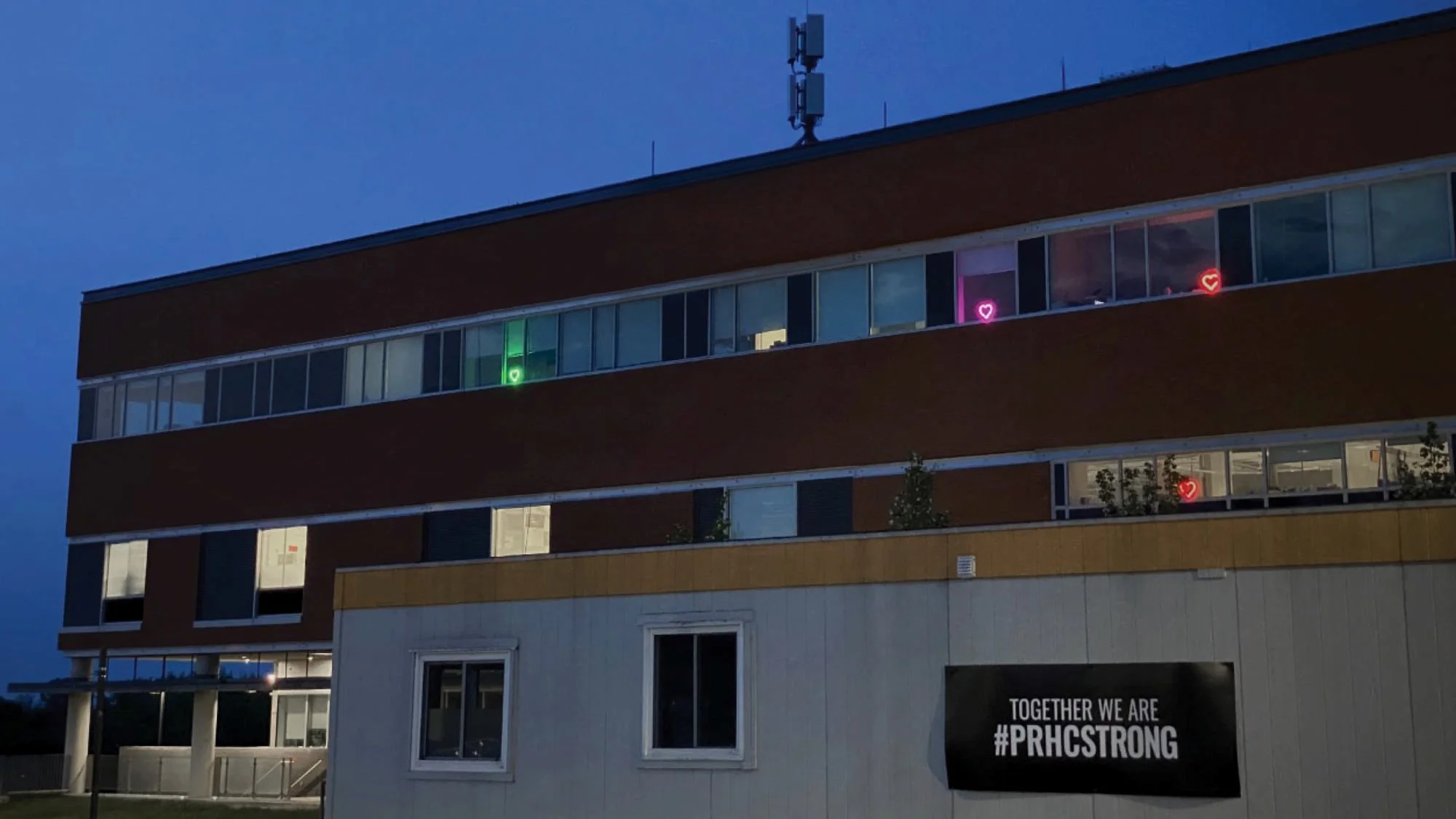
Photo courtesy of PRHC.

PRHC is asking community members to consider their alternative options before seeking care at the hospital.

“PRHC, like hospitals across Ontario, is very much still in the midst of the pandemic,” said Dr. Lynn Mikula, PRHC Chief of Staff and Chief Medical Executive. “While mandates have lifted in most public spaces, PRHC is not operating in its pre-pandemic state and in fact a number of key factors continue to converge at the hospital as we grapple with the effects of this sixth wave of COVID-19.”

Anyone visiting the Emergency Department for care should expect longer-than-usual waits to be seen for all but the most acute illnesses and conditions.

The hospital encourages those considering coming to the ED to assess their illness and consider alternative options for care if their situation is not an emergency:

  • Individuals who are registered with a family physician/practitioner should seek non-urgent care through their office before coming to the hospital.

  • Telehealth Ontario is also available; this is a free, confidential service that you can call at 1-866-797-0000 to get health advice or information 24 hours a day, seven days a week. Assistance is available in more than 300 languages.

“Our healthcare workers have also seen an increase in aggressive and abusive behaviours from some members of the public,” said Dr. Mikula. “PRHC staff and physicians are working incredibly hard right now, putting in long hours under increasingly challenging conditions in order to provide life-saving care for hundreds of patients each day.”

PRHC wants to remind everyone that:

Engage with us on social media on Twitter, Instagram, Facebook and Tiktok. Write to us at tips@ptbocanada.com. Sign up for PTBOBuzz newsletter here.


City Of Peterborough Requiring City Employees To Wear Face Masks While Indoors

Based on guidance from Peterborough Public Health, the City of Peterborough is requiring City employees to wear face coverings while indoors and in vehicles in the workplace.

These measures are intended to be temporary. The Emergency Control Group continues to monitor the situation.

Visitors to City facilities are not required to wear face masks; however, wearing a face mask in public indoor spaces is strongly encouraged.

Provincial regulations require the wearing of face masks in certain higher-risk settings, including public transit, shelters and other congregate care settings. Visit ontario.ca/covid19 for information on provincial information related to COVID-19.

Engage with us on social media on Twitter, Instagram, Facebook and Tiktok. Write to us at tips@ptbocanada.com. Sign up for PTBOBuzz newsletter here.


Public Health Announces Additional COVID Vaccine Clinics

Additional COVID-19 vaccine clinics have been added to the provincial booking system for the Peterborough Public Health region, announced on Tuesday.

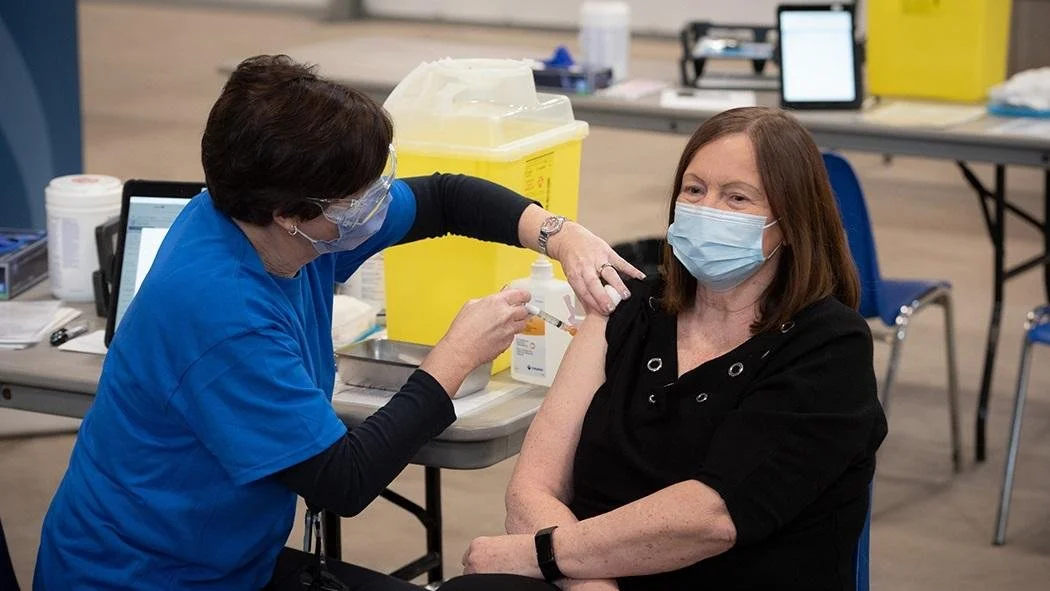
Stock Photo.

Clinics are now available to be booked from April 19 – May 13. Additional clinics for the month of May will be added within the next few weeks. Residents can find clinic details on the Peterborough Public Health vaccine clinic calendar.

Eligible residents can book an appointment using the provincial booking system. This can be done online (https://covid-19.ontario.ca/book-vaccine/) or over the phone at 1-833-943-3900.

Residents can learn about COVID-19 vaccine eligibility on the Peterborough Public Health vaccine clinic webpage using the COVID-19 vaccine immunization schedule or by calling the provincial vaccine booking call centre at 1-833-943-3900.

Engage with us on social media on Twitter, Instagram, Facebook and Tiktok. Write to us at tips@ptbocanada.com. Sign up for PTBOBuzz newsletter here.


Omemee Man In Search Of A Living Kidney Donor During Be A Donor Month

Craig Kennedy, a husband, father to three children, a school teacher and a proud farmer from Omemee has taken to Facebook to raise awareness about living kidney donation, and find a kidney for himself, during ‘Be a Donor’ month.

Kennedy was diagnosed with Polycystic Kidney Disease in 2010. At the time of his diagnosis his kidneys were still functioning well and there was no imminent threat, though he knew in the future he may face declining function and eventually require a transplant.

Kennedy says he began taking care of his health, keeping active and partaking in proactive treatment to prolong the onset of serious illness as much as possible.

Though in 2016 things took a turn for the worse.

Spring of that year his left kidney suffered irreparable damage in an accident, which accelerated his decline.

Currently his kidneys are functioning at 15 per cent, anything lower is considered kidney failure. He is now classified as having end stage kidney disease.

“You wouldn’t know it to see me, I look normal,” said Kennedy. “But I can feel it.”

With April being ‘Be a Donor’ month, Kennedy thought it would be the perfect time to begin promoting living donation, not just for himself but for everyone waiting on the donor list.

“I’m a teacher, so I’m off for March break. It was then that I realized a lot of my staff at school didn’t even know that I was sick,” said Kennedy. “I said to my wife ‘we’ve got to get this out there’ just so people knew. I’m not a very public person so it was quite hard for me to do.”

Through Facebook he has been able to reach a larger audience than he imagined, and even learned that one of his neighbours is also waiting for a kidney donation.

“Once my story went to Facebook I found out my neighbour that lives a few kilometers up the road from me is on Dialysis. He’s kept it quiet. It’s bizarre, all of a sudden you realize there’s a lot of people out there waiting for a donation. You just have to be brave enough that when someone asks how you are, you say ‘actually not good’.”

Kennedy hopes that by spreading information, he will encourage more people to not only consider becoming a donor, but to consider becoming a living donor.

“If I can find someone, great, but it’s more to promote living organ donations. When we made the first post we had so many people reach out and say they’d like to do it but they don’t know anything about it.”

According to www.beadonor.ca there are over 1600 Ontarians waiting for a life-saving transplant. 90 per cent of Ontarians support organ donation, but only 35 per cent are registered.

When someone becomes a living donor, they can either designate their organ to a certain person - and their compatibility will be tested, or they can donate anonymously to anyone that they fit with.

Kennedy notes that even if someone wanted to donate a kidney to him and they weren’t compatible, they could give it to someone else which in turn would shorten the waiting list for everyone needing a kidney.

To follow Craig’s story visit his Facebook page facebook.com/kidneydonor4craig to contact him, email livingkidneydonor4craig@gmail.com.

Engage with us on social media on Twitter, Instagram, Facebook and Tiktok. Write to us at tips@ptbocanada.com. Sign up for PTBOBuzz newsletter here.


Peterborough Public Health Reminds Community Members Of The Importance Of Drug Safety Ahead Of The Long Weekend

Ahead of the holiday long weekend, Peterborough Public Health (PPH) is reminding community members about the importance of drug poisoning prevention, not using drugs alone, and carrying a naloxone kit.

“If you or a loved one uses drugs, practicing harm reduction, planning ahead, and connecting to available supports can help you and your community stay healthy and as safe as possible,” said PPH in a media release.

When using drugs, please remember these prevention tips:

  • Do not use drugs alone.

  • If you using with a friend, do not use at the exact same time.

  • Have a plan – Ask someone to check on you or call the National Overdose Response Service 1-888-688-6677.

  • Carry a naloxone kit. Keep it visible and close by.

  • Avoid mixing drugs.

  • Test your drug by using a small amount first.

  • Call 911 immediately if someone starts to show signs of an overdose and/or cannot be resuscitated after naloxone is administered.

  • Under Canada’s Good Samaritan Drug Overdose Act, anyone who seeks medical help for themselves or for someone else who has overdosed, WILL NOT be charged for possessing or using drugs for personal use.

Community members are encouraged to know the signs of opioid poisoning and how to respond. An opioid poisoning may look like the following:

  • Skin is cold and clammy;

  • Fingernails or lips are blue or purple;

  • Body is very limp;

  • Cannot wake the person up;

  • Deep snoring or gurgling sounds;

  • Breathing is very slow, erratic or has stopped; and/or

  • Pupils are very small.

If you suspect an overdose, respond quickly by calling 911 right away. Give naloxone if available, and stay with the person until help arrives.

Where to Get Supplies Over the Holiday Long Weekend (April 15-18)

Naloxone and emergency overdose response

• Peterborough County-City Paramedics

  • All paramedics carry naloxone for distribution. When attending a drug-related 911 call, paramedics can provide naloxone kits to the patient whether or not naloxone has already been administered.

Naloxone and other Harm Reduction Supplies

• One Roof Community Centre

  • 99 Brock Street, Peterborough, ON o 705-874-1812

• Participating Pharmacies

  • ontario.ca/naloxone

Crisis Response

• Four County Crisis

  • If you are in crisis, please call 705-745-6484 or toll-free 1-866-995-9933. By phoning these numbers, you can access 24-hour, free, confidential crisis support.

• Telecare Distress Centre of Peterborough

  • Call 705-745-2273 for free, non-judgmental, and confidential crisis support available 24 hours per day, 7 days per week.

Peterborough Public Health is also encouraging members of the public to use the recently launched ‘Drug Reporting Tool’. This tool is an anonymous survey to report overdose incidents and harms in the community. Any information shared through the survey supports Peterborough Public Health and community partners in responding to and preventing overdoses in the Peterborough Area. The Drug Reporting Tool can be accessed by clicking here.

Engage with us on social media on Twitter, Instagram, Facebook and Tiktok. Write to us at tips@ptbocanada.com. Sign up for PTBOBuzz newsletter here.


COVID-19 Community Risk Index "Very High" Says Peterborough Public Health

Peterborough Public Health (PPH) has stated the community COVID-19 Risk Index has reached “very high” for the first time since its launch on March 30 announced on Wednesday.

Dr. Thomas Piggott has strongly urged the public to continue wearing masks despite the Ontario Government lifting the mandates on March 21. Photo by David Tuan Bui.

“I know this is not the news we wanted to hear before a long holiday weekend but the safest course of action is to wear a mask and avoid indoor social gatherings and high-risk settings where the transmission can occur,” said Dr. Thomas Piggott, Medical Officer of Health. “This is important for us all to decrease transmission, but especially those at high risk of severe illness with COVID-19.”

The Index is updated every Wednesday by 4 p.m. It uses data from wastewater surveillance signals, hospitalizations and deaths, percentage positivity of PCR tests, community-reported rapid-antigen tests and the local case incidence rate per 100,000 people.

The Index provides a risk level for each data point based on current values, which then is used to inform the overall risk level for the community.

Due to the “very high” risk levels, PPH offers guidance to the community:

  • Mask: Strongly Recommended for all interactions with people from outside your household.

  • Social Gatherings: Avoid social gatherings in all indoor settings.

  • High-risk Settings: Avoid attending high-risk settings.

PPH says it is one of the first health units in Ontario to produce a local COVID-19 Community Risk Index.

They encourage the community to check as often as they check a weather forecast. It is available online or by phone at 705-743-1000 to hear a recording stating the current level and associated public health guidance.

Engage with us on social media on Twitter, Instagram, Facebook and Tiktok. Write to us at tips@ptbocanada.com. Sign up for PTBOBuzz newsletter here.

Municipal Partners Of Campbellford Memorial Hospital Voice Support For Hospital Redevelopment

Campbellford Memorial Hospital’s (CMH) 11 municipal partners have all extended formal support for the redevelopment of the hospital as part of a campus of care to better serve the healthcare needs of their communities.

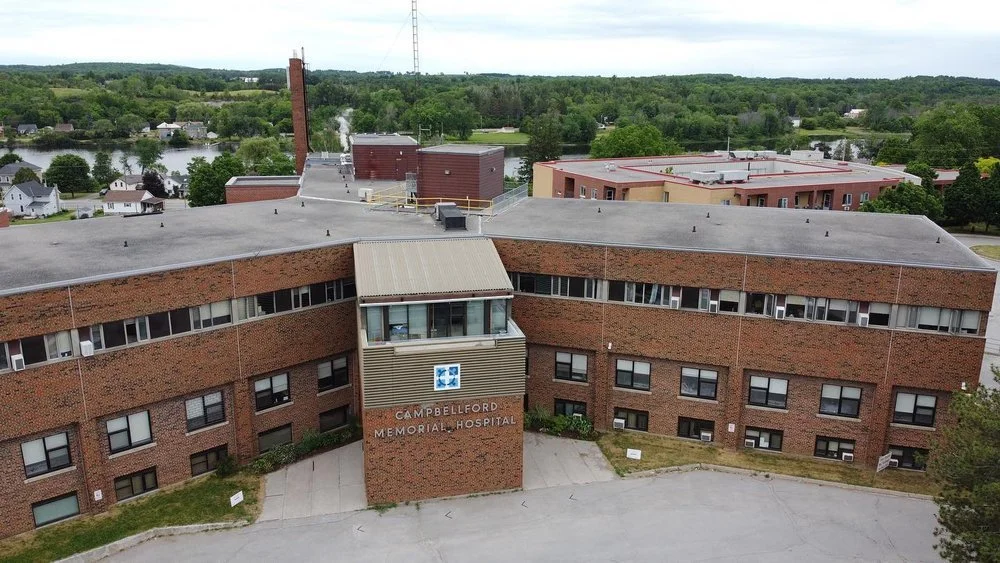
Stock Photo.

The municipal partners expressed their support by writing letters to Christine Elliott, Minister of Health, outlining why this project is so important, with copies sent to area MPPs.

“The unanimous support of our partners in municipal and regional governments demonstrates the importance of, and their commitment to, this redevelopment project,” said Eric Hanna, Interim President and CEO, CMH. “We need the provincial government to recognize the urgency behind this project and I want to thank all the municipal leaders who are helping us in that work.”

The 11 municipal partners include:

  • Alnwick/Haldimand Township

  • Township of Asphodel-Norwood

  • Municipality of Brighton

  • Municipality of Centre Hastings

  • Township of Havelock-Belmont-Methuen

  • Township of Madoc

  • Municipality of Marmora and Lake

  • Peterborough County

  • Northumberland County

  • Township of Stirling-Rawdon

  • Municipality of Trent Hills

“The redevelopment of CMH as part of a campus of care will serve the growing population in our catchment area of Northumberland County and parts of Peterborough and Hastings County,” said Mayor Bob Crate, Municipality of Trent Hills and Warden, Northumberland County. “Having care close to home is an important asset for our community.”

The Hospital has applied for a capital planning grant to redevelop the facility as part of a campus of care that would create one location for a continuum of health services for residents. The redevelopment project will, when approved, bring together the hospital, long-term care, affordable senior housing and services, mental health, primary care, and other healthcare services.

“CMH provides multiple medical services to our community and our neighboring communities on a year-round basis,” said Jan O’Neill, Mayor, Municipality of Marmora and Lake. “CMH is the closest hospital for residents particularly in the south of Marmora and Lake. Expansion of CMH will lead to increased availability of services and specialized treatments which will reduce transfers to other hospitals and ultimately allow residents to access their healthcare services closer to home.”

CMH’s application for a capital planning grant to build a campus of care is pending approval from the Ministry of Health.

“I can't thank Campbellford Memorial Hospital enough for all the work going into the redevelopment plan. The hospital is so important to Havelock-Belmont-Methuen as we are the most eastern Township in Peterborough County and we rely on CMH first for health care,” said Mayor Jim Martin, Township of Havelock-Belmont-Methuen.

Community members are encouraged to show their support for a redeveloped CMH by sharing on social media why it is important to them and using the hashtag #mynewCMH.

Engage with us on social media on Twitter, Instagram, Facebook and Tiktok. Write to us at tips@ptbocanada.com. Sign up for PTBOBuzz newsletter here.


Ontario Expands Access to COVID-19 Antivirals As Canada's Top Doctor 'Strongly Recommends" Masking Indoors

Ontario's chief medical officer of health, Dr. Kieran Moore, updated the public on Monday about how the province is managing COVID-19 and the expanding access to antivirals at announced Queen’s Park on Monday afternoon.

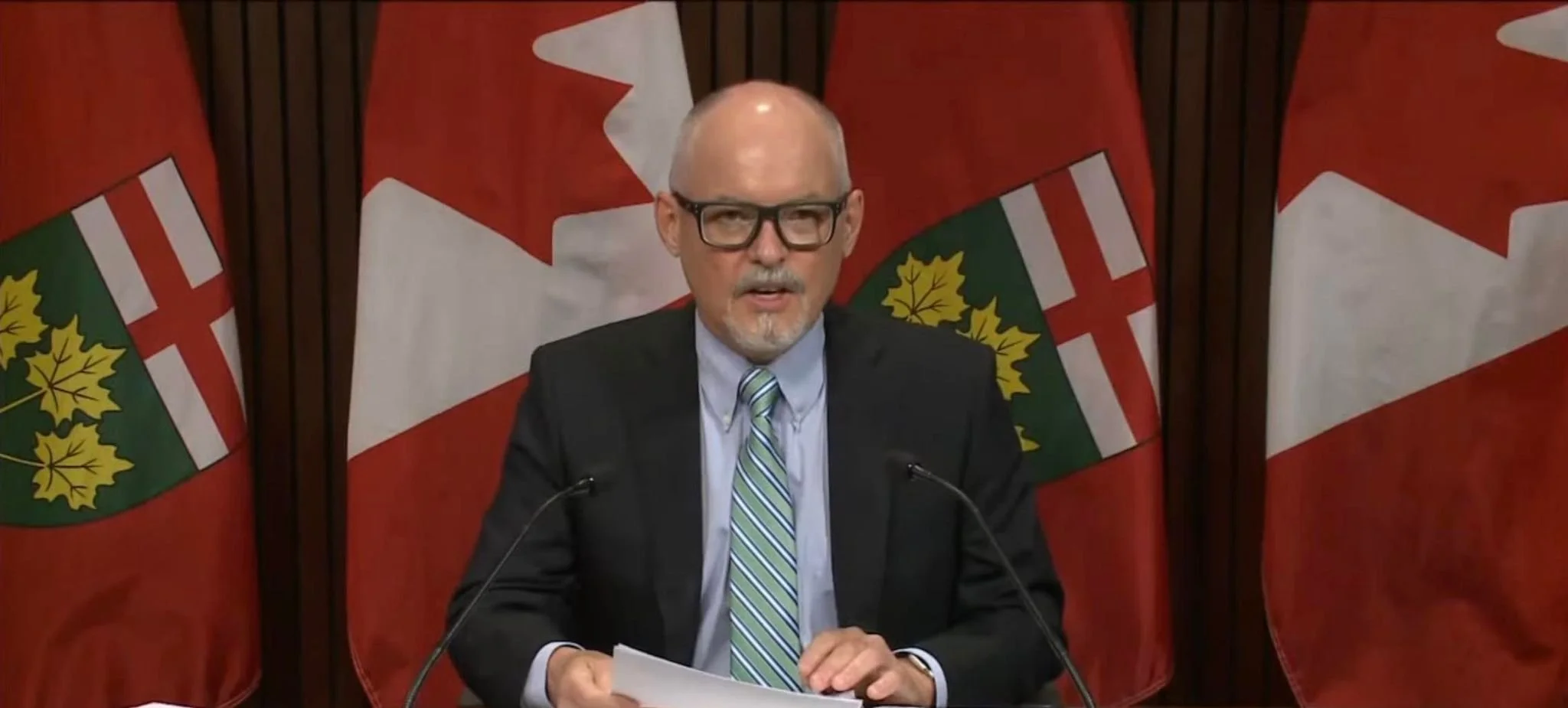
This was Dr. Kieran Moore’s first media appearance in five weeks. Screenshot.

Moore thanked the public for continuing to adopt the public health measures in place and strongly recommended to continue wearing a mask indoors. He stated the province will not be reintroducing a mask mandate at this time but to be prepared for those measures to return if a new variant of concern emerges or if the healthcare system is threatened due to rising cases.

“I ask everyone across Ontario to continue doing their part to keep their communities and loved ones safe by staying up to date on vaccinations and wearing masks,” said Moore. “I am pleased that we will be able to offer more accessible antiviral treatment options to more people across Ontario.”

Effective immediately, the following higher-risk groups are eligible to be tested and assessed for antiviral treatments such as Paxlovid, in Ontario:

  • Individuals aged 18 and over who are immunocompromised (have an immune system that is weakened by a health condition or medications);

  • Individuals aged 70 and over;

  • Individuals aged 60 and over with fewer than three vaccine doses; and

  • Individuals aged 18 and over with fewer than three vaccine doses and at least one risk condition (e.g., a chronic medical condition)

Anyone eligible for an assessment is also eligible for a PCR test at any testing centre in Ontario.

In most cases, treatment for antivirals must be started within five days of symptoms. A list of pharmacies dispensing Paxlovid will be available at Ontario.ca/antivirals as of Wed. 13 at 8:00 a.m. and will be updated as the list of participating pharmacies expands.

“Thanks to the millions of Ontarians who were vaccinated, we have been able to cautiously and safely reopen our province,” said Christine Elliott, Deputy Premier and Minister of Health. “By expanding access to antivirals and PCR testing, in addition to recently expanding eligibility for fourth doses, we are using every tool available to us to ensure Ontarians have the best protection available while we adapt to managing and living with COVID-19.”

Engage with us on social media on Twitter, Instagram, Facebook and Tiktok. Write to us at tips@ptbocanada.com. Sign up for PTBOBuzz newsletter here.