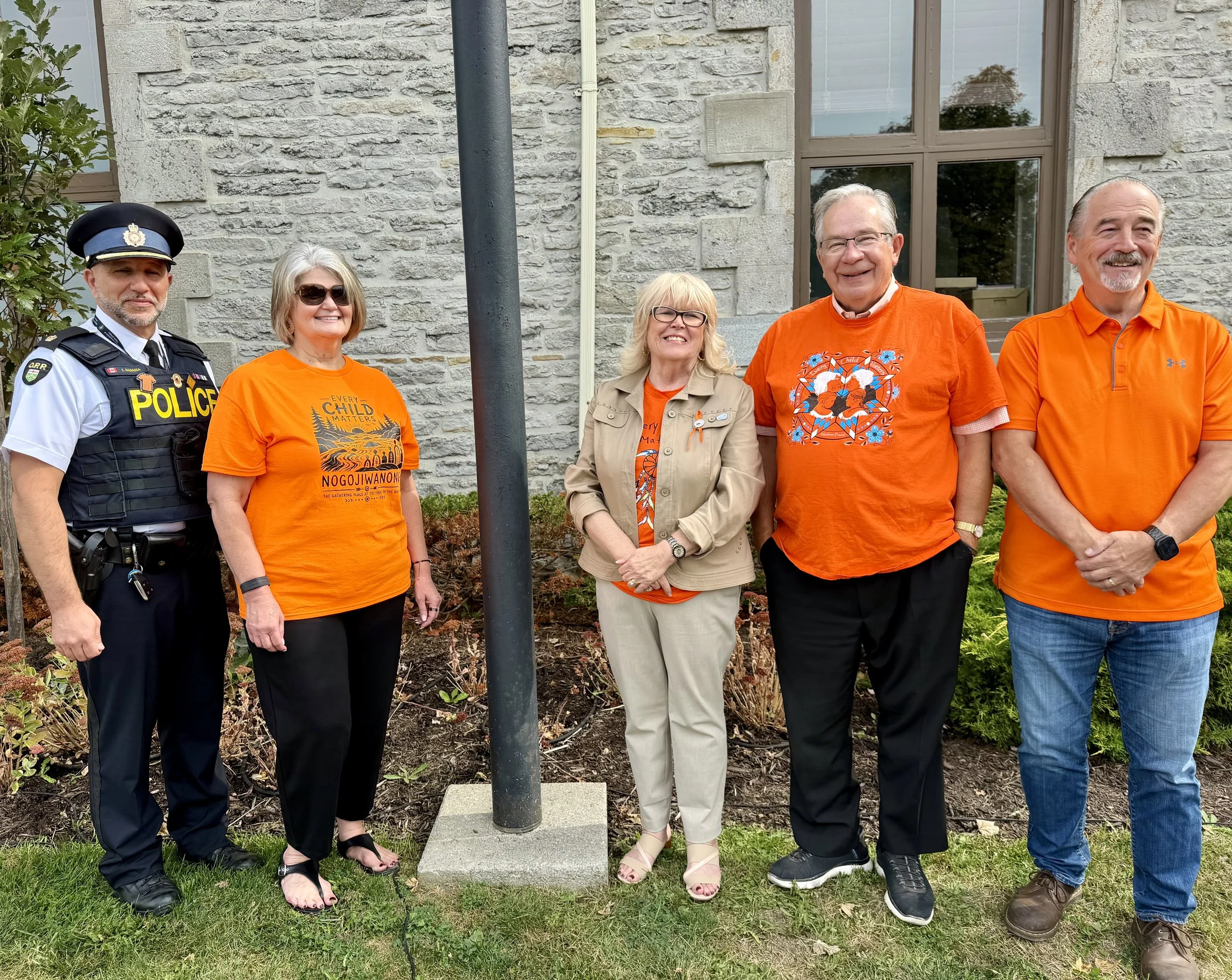
There was a heaviness to the ceremony at the Peterborough County Courthouse.
September 30th is the National Day for Truth and Reconciliation, a day to honour residential school Survivors, the children who never returned home, their families and communities, while recognizing the ongoing impacts of the residential school system.
But as the Every Child Matters flag was raised Wednesday afternoon, the message from those gathered was clear: this is not a celebration.
It is a day to remember.
And, perhaps most importantly, it is a day to listen.
Chief Laurie Carr of Hiawatha First Nation told those gathered that before the children taken to residential schools were numbers or names in government records, they were children.
“They were someone's son, someone's daughter, someone's grandchild, someone's brother or sister,” Carr said. “They were loved.”
“They had families, languages, cultures, dreams, and futures that should never have been taken from them.”
Carr said she carries a responsibility as a mother, grandmother, auntie, cousin and Chief to honour those children, stand with Survivors and stand with the families and communities that continue to carry the pain of those losses.
But she also stressed that reconciliation is a responsibility shared by everyone.
“It begins with the truth,” she said. “And the truth is painful. The truth is ugly.”
Canada's residential school system was part of a colonial policy of assimilation that removed Indigenous children from their families and communities and sought to separate them from their languages, cultures and identities. The federal government recognizes that the effects of that system continue to be felt today.
For Peterborough County Warden Bonnie Clark, that truth is difficult to comprehend.
In an interview following the ceremony, Clark became emotional while talking about the children who were taken from their homes.
“If any of us as parents had our children removed and never seen them again, how could you not just be changed?” she said.
“It's just about sharing that history and I just cannot fathom how taking a child away from their home, their family, it's just unimaginable.”
Clark said the annual flag raising has become about more than a ceremony.
Since she became Warden, the County has invited the Mayor, the Chiefs of the area's two First Nations communities and the OPP detachment commander to take part.
“To me, it's about establishing relationships,” Clark said. “We can't change the past, but we have to acknowledge that and move forward.”
She said the growing attendance at these events is encouraging because it reflects a greater recognition of what happened to Indigenous peoples.
“You have to know the truth,” Clark said. “And certainly I would say you have to know the truth and you have to own it.”