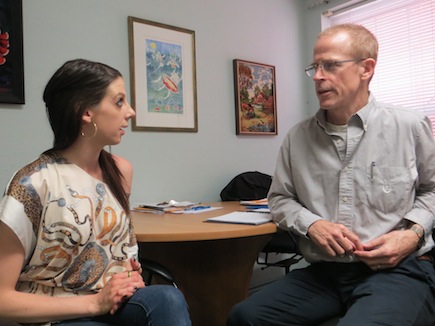
Renowned Adolescent Psychiatrist Dr. Stanley Kutcher Speaking At Ontario Shores

Screen shot 2013-09-13 at 11.25.12 AM.png

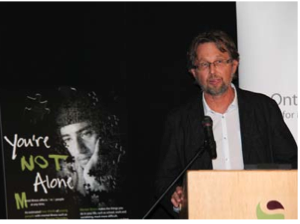
Ontario Shores Centre for Mental Health Sciences (Ontario Shores) is inviting parents to an evening symposium on Adolescent Mental Health next Wednesday, September 18th. Dr. Stanley Kutcher, leading adolescent psychiatrist, will provide an interactive presentation giving parents important adolescent mental health tools and information. Ontario Shores will also present its amazing adolescent mental health documentary short, Talk to Someone: You’re Not Alone.

Dr. Stanley Kutcher

Dr. Stanley Kutcher

Both local school boards in Peterborough—PVNCCDSB and KPR—are participating in mental health literacy training with Ontario Shores next week. Dr. Kutcher along with CMHA National Office created the curriculum that the teachers and allied support staff will be trained on in area schools. As part of this, Ontario Shores is offering this free interactive parent night with Dr. Kutcher at Ontario Shores.

The symposium takes place September 18th from 7:00 p.m. to 9:00 p.m. at the Lecture Theatre, Building 5, Level 2 Ontario Shores Centre for Mental Health Sciences, 700 Gordon St., in Whitby, Ontario.

For more information or to RSVP, contact Debbie Lenehan at 905.430.4055 ext. 6135. 

Tip us at tips@ptbocanada.com. Follow us on Twitter and Instagram, and Like us on Facebook.  

Trent University Partners with Community Agencies On Sexual Assault Prevention Campaign

Screen shot 2013-08-29 at 12.00.10 PM.png

Trent University is joining forces with several community agencies and downtown bars to launch a new educational campaign to prevent sexual assault in the Trent and Peterborough communities.
 
“The focus of this new campaign goes beyond the more traditional warnings to individuals – particularly women – about safety, usually by restricting their behaviour,” said Erica Colley, clinical team leader with Trent University Student Health Services. “We want to encourage all members of the community to help prevent sexual assault from happening. The shift is from primarily focusing on individual safety measures – which can lead to feeling blamed if sexual assault occurs – to giving people the tools understand sexual assault and to intervene when necessary.”
 
Running through the end of September, the new campaign consists of presentations to first-year students and training for student staff during Introductory Seminar Week, Trent’s orientation week for new students, which runs from September 2nd to 6th. The campaign also features printed materials such as posters, pamphlets and swag, and social marketing pieces, which will be widely distributed both on campus and in downtown bars.
 
The goal of this campaign is to educate the public and reduce the incidences of sexual violence. “We hope to raise awareness, challenge myths, fight victim-blaming, empower bystanders, and stand in solidarity with survivors,” Colley adds.
 
Partners in the campaign include: Trent University, Women’s Health Care Center of PRHC, Sexual Assault/Domestic Violence Program, Kawartha Sexual Assault Centre, Peterborough Lakefield Community Police Services and at least 17 different downtown bars and clubs frequented by Trent students.

 
Tip us at tips@ptbocanada.com. Follow us on Twitter and Instagram, and Like us on Facebook.
 

Gluten-Free Cafe The Food Forest Now Open On George St.

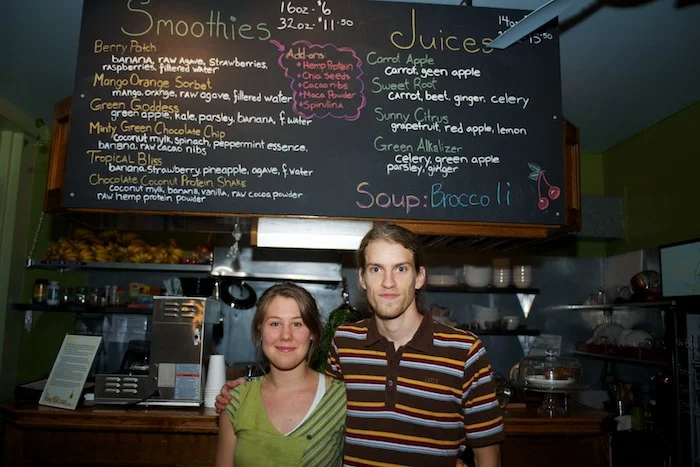
Photo by Evan Holt

Photo by Evan Holt

The Food Forest is located at 641 George Street North. Owners Katie and Adam are excited to bring their gluten-free, 100% plant based café to the area. Right now, they offer up a variety of smoothies and juices as well as light lunch option such as sandwiches and a soup of the day. They plan to expand their menu in the months to come. You can stay up to date with all their news on Facebook. The Food Forest is open Monday to Friday 7 a.m. to 4 p.m. and Saturday 8 a.m. to 4 p.m.

Photo by Julie Morris

Photo by Julie Morris

[Contributed by PtboCanada's Julie Morris and  Evan Holt]

Tip us at tips@ptbocanada.com. Follow us on Twitter and Instagram, and Like us on Facebook.


How It Works: Becoming A Blood Donor

There is always a need and a demand for blood donors. No matter what the season, the weather, the month of the year... someone, somewhere needs the gift of life. With the Sirens for Life campaign in full swing until September, PTBOCanada's Julie Morris wanted to give you a glimpse of the steps involved and how simple it really is to be a blood donor. If you've never donated before but have often been curious as to what is involved, we hope this encourages you to go ahead and make that appointment. Here's how it works...

BloodDonorclinic7.jpg

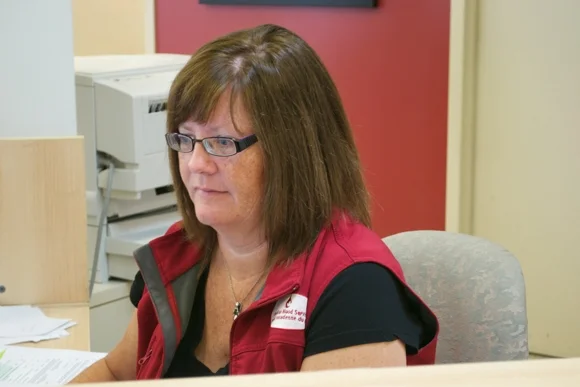
Shelley will greet you upon arrival at the clinic (the Blood Donor clinic is located at 55 George Street North) and help get your appointment underway and book your next one!

BloodDonor5.jpg

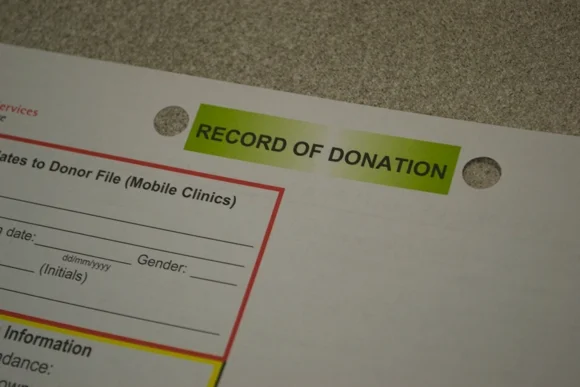
The next step is to get a quick poke to check your hemoglobin level. In order to proceed with the process, your hemoglobin count must be 12.5 or above. Anything lower and you will not be able to donate that day. After this step, you will then make a stop at one of the booths to fill out the first part of the questionnaire. It you'd like, prior to your visit you can preview the Record of Donation online.


DonorClinic6.jpg

The remainder of the questions on the questionnaire are verbally asked to you when you continue on to one of the privacy rooms. In addition to the remainder of the questions, you will also have your blood pressure and temperature taken. Your blood pressure must be no lower than 90/50 and no higher than 180/100.  Your temperature must fall between 35.8 C and 37.5 C. Check out the Basic Eligibility for complete details. 

DonorClinic5.jpg

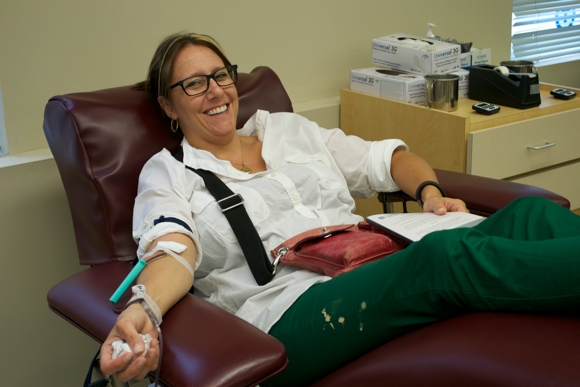
Tracey Hughes, who is a teacher at TASSS, in the middle of completing her 20th donation!  

DonoClinic4.jpg
BloodCLinic2.jpg

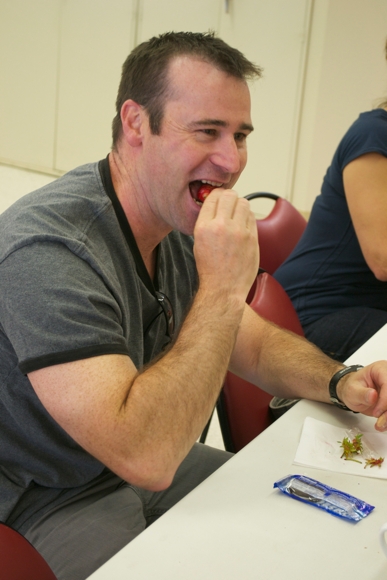
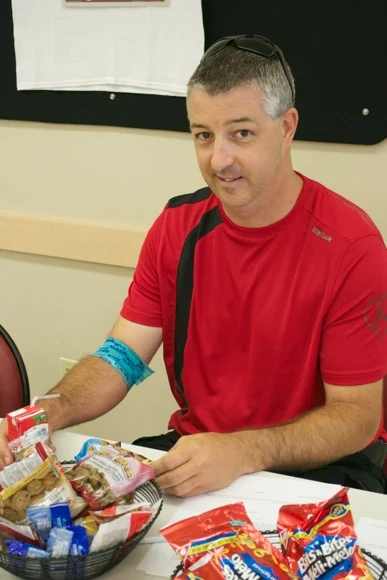
Dan Mundell from the Peterborough Fire Department and Don Broersma from the Peterborough-Lakefield Police both enjoy some snacks after donating. One of the many long term volunteers of the clinic will offer you treats and juice after your donation is complete and if you're lucky maybe even an ice cream cone!


DonorClinic3.jpg

The Peterborough permanent blood clinic is located at 55 George Street North. They are open Tuesdays from 3 p.m. to 7 p.m., Thursdays 11 a.m. to 7 p.m., Fridays 8 a.m. to noon, and the 2nd and 4th Saturday of each month from 8 a.m. to noon. You can check out their FAQs to answer any questions you might still have as you think about donating. 

[Contributed by PtboCanada's Julie Morris]

Tip us at tips@ptbocanada.com. Follow us on Twitter and Instagram, and Like us on Facebook.

PTBOPics & Coverage: Canadian Breast Cancer Foundation's Pink Tour

PinkBus4.jpg

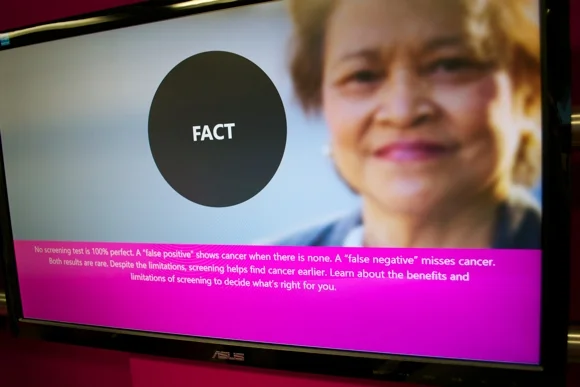
The Canadian Breast Cancer Foundation's Pink Tour arrived in Peterborough today (July 10th).  The goal of the tour—which is sponsored by CIBC and Shoppers Drug Mart—is to bring awareness to breast health and screening. When you board the bus, you can't help but feel comfortable in the environment they've created for sharing stories and information. There was an opportunity for interactive questionnaires to test your breast health knowledge and to clarify the facts from the myths. Women of all ages as well as men were visiting and asking questions during their first location stop this morning at the Downtown Farmers' Market before the bus headed to the CIBC on Monaghan Road for the afternoon. Be sure to sign the bus before you leave as it continues on its journey across Ontario. 

Pamphlets and information cards are available in many different languages.

Pamphlets and information cards are available in many different languages.

PinkBus2.jpg

[Contributed by PtboCanada's Julie Morris]

Tip us at tips@ptbocanada.com. Follow us on Twitter @Ptbo_Canada or Like us on Facebook.

PTBOPics & Coverage: Sirens For Life Summer Campaign Launches

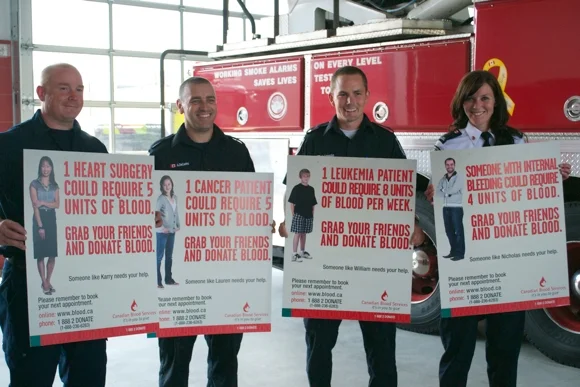
Today (July 2nd) marked the launch of the summer campaign Sirens for Life, a partnership between Canadian Blood Services and emergency response personnel stressing the importance of continuing to donate blood—a traditionally slow time because of vacation and family activities—in the summer months for people in need. The local event kicked off at Fire Hall #3 on Clonsilla Avenue and included representatives from local Blood Services, EMS, firefighters, police and Fleming College students currently enrolled in the Firefighter Education and Training Program. The message of the campaign is "Someone still needs YOUR help". Donating blood is a simple process which will take about an hour of your time. Call 1.888.2.DONATE for clinic locations and to book an appointment or go to Blood.ca for more info.


CBS2.jpg
CBS1.jpg
Sue Harris (at left) from Canadian Blood Services chats with Marsie MacKay about the initiative.

Sue Harris (at left) from Canadian Blood Services chats with Marsie MacKay about the initiative.

[Contributed by PtboCanada's Julie Morris]

Tip us at tips@ptbocanada.com. Follow us on Twitter @Ptbo_Canada or Like us on Facebook.


Top 10 Reasons Not To Build A Road On The Parkway Greenspace

ParkwayMapPIC3.jpg

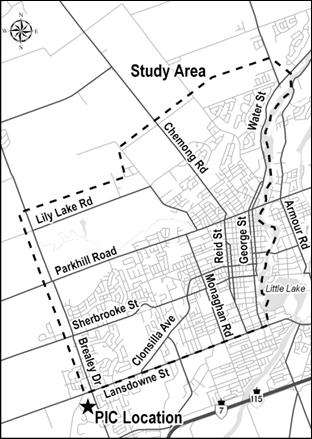
The Friends of Jackson Park and the Friends of Peterborough Trails have compiled a list of the Top 10 Reasons Not to Build a Road on the Parkway Greenspace. Here they are...

1. The Parkway is not a solution to our traffic problems

The proposed Parkway fixes perhaps one-tenth of our traffic problems in the north end of the City. It links one fifth of the City’s planned north end residential areas to only one of the two main employment areas in the City. The City proposed the original "Parkway" route to bypass the city limits as they were in 1947. Other options better connect the places where we live to the places we work.

2. The Parkway Greenspace is one of Peterborough’s most precious assets

The Parkway Greenspace corridor is the largest and most significant natural habitat and open space in the north end of Peterborough, and one of the largest areas of green space in the City. It is a key part of the City trails network. The Parkway route also serves as an important wildlife corridor, along which wildlife can traverse a large swath of the city. It allows citizens, and most importantly our children, to observe wildlife and connect with nature.

3. The Parkway is not the best investment of our hard earned tax dollars

The projected cost of the Parkway is around 40 million dollars. This does not include costs to deal with noise, flooding and other infrastructure. Realistically, the price could be easily around $50-­‐60 million. Do you want your taxes increased to pay for a road that doesn’t meet Peterborough’s needs; a road a majority of us don’t want, all for a time saving of one to three minutes? We have other critical spending priorities, including fixing the many poorly maintained roads we already have.

4. When given the opportunity to actually choose, the people of Peterborough said “No Parkway”

The Parkway has been a contentious issue in Peterborough for many decades. It was turned down by 55% of voters in a referendum in November 2003. Following that vote, City Council ordered the Chief Administrative Officer to have the Parkway removed from the Official Plan. This did not occur. Why was the voice of the people not respected and the why was the direction of Council not acted upon?

5. The Parkway Greenspace promotes a healthier population

Greenspace encourages people to get outside, to walk instead of drive, to interact with each other and connect with the natural world around them. Greenspaces are proven to support a better sense of community and improved mental health. The greenspace provides a place for city children to explore and play, for free, no matter what their financial means. We have an obesity epidemic costing us billions of dollars and untold health problems. Do we need to make the situation worse?

6. The Parkway Greenspace supports our children and our schools

There are five schools along the Parkway corridor. The Parkway will run directly alongside two primary schools. Putting a major arterial road directly next to or near these schools increases risks to students. Also, a main arterial road will eliminate safe opportunities for students to learn about science and nature, conduct their own research and experience outdoor education in a natural setting.

7. Previous consultants said we don’t have a problem, now or in the future

In their report to City Council on April 18th, 2011, consultants Morrison-­‐Hershfield reported that even with no road improvements beyond those presently committed, the best performance models for 2031 show no significant congestion except around river crossings. This congestion is not addressed in any of the proposals related to the Parkway.

8. We are not growing as fast as projected so do we really need a new road?

Growth projections prior to the 2012 Comprehensive Transportation Plan turned out to be optimistic, and current slow economic progress and an ageing demographic may impact the projections used in the 2012 Plan.

9. The Parkway Greenspace supports Provincial planning directives

A 2012 Ministry of Municipal Affairs and Housing Provincial Policy Statement on Land Use Planning requires all municipalities to have and protect natural heritage systems that include natural corridors and linkages such as Jackson Park and the Parkway Greenspace corridor. A decision to build a road through these natural corridors would be contrary to such provincial directions

10. Paving the Parkway Greenspace will certainly lead to a bridge through Jackson Park

You only have to look at the incremental history of the “Parkway by Stealth” campaign to see that this will happen (despite the promises it won’t). When the southern and northern parts of the Parkway are finished, do you think they will leave a big bend around Jackson Park between the two?

If you believe in permanently protecting the Parkway Greenspace and Jackson Park, please let your councillor know. Alternative 2 (Fairbairn/3rd Line) is a far more effective route than the Parkway for connecting the places people live and where they work and shop, now and in the future. The Fairbairn/3rd Line route will not see the destruction of our precious greenspaces and makes even more sense given the many fewer residences affected and the proposed Lily Lake housing development.

Join us at the next Parkway EA meeting Thursday, June 27th from 4:00 pm -­‐ 9:00 pm at the Peterborough Wellness Centre. This is the last time you will be able to ask questions about the route before the final proposal is presented to City Council in September!

---------------------------

[Contributed by PtboCanada's Evan Holt]

Tip us at tips@ptbocanada.com. Follow us on Twitter @Ptbo_Canada or Like us on Facebook.

YMCA Healthy Kids Day Is This Sunday

Tip us at tips@ptbocanada.com. Follow us on Twitter @Ptbo_Canada (hashtag #bethechangeptbo) or Like us on Facebook.

Dear Good Men Of Peterborough, You So Rock

Where are all the good men in Peterborough?

Like many other single women I know, I sometimes wonder if there are any good men out there. My girlfriends and I joke about it and come up with our own hypotheses for where these good men may be hiding.

When I dig a bit deeper, I realize that part of that cynicism comes from the horrible things that have been happening to women and communities in Afghanistan. But I also know that as a woman in Canada, I am still at risk for violence:

• Every week, at least one woman in Canada—and sometimes more—is murdered by a current or former partner.
• 39% of women report experiencing sexual assault sometime during their lives. 2/3 of all women victims of sexual assault are under 24.
• Violence against women costs Canada well over $4 billion each year in costs of social services, criminal justice, lost employment days and health care. The human costs are much higher.
• On any given day, over 3,000 women and 2,500 children are staying in an emergency shelter somewhere in Canada to escape domestic violence.*

My family and I are among the 14,000 women and children who have stayed at YWCA’s Crossroads Shelter since its inception in 1983.

This violence against generation after generation of women and girls has to stop.

It turns out, there is a long list of good men in Peterborough who agree—and a growing number of photos to prove it!

On Friday, May 31st, over 200 good men will slip into red high heels and walk tall against the prevalence of domestic abuse in our community. They will be supporting the YWCA’s work to provide women and their children with access to the safety and security of a women’s shelter and healing programs that provide longer-term support as they rebuild their lives.

I can’t think of anything sexier.

So if you’re in the market for good men, like the idea of seeing CEOs, bankers, firefighters, social workers, police officers and local celebrities in red high heels, you better block off your May 31st noon hour. Come and join me in cheering on these good men as they begin their walk in front of City Hall and back in bright red stilettos.

If you believe in what these men are doing and wish to encourage this kind of leadership, show your support by sponsoring a walker or a team.

If you’re a good man who has the courage to stand up, there is still time to sign up!

If you are a part of Walk A Mile In Her Shoes, please accept the sincere gratitude of at least one woman who found a healing turning point at the YWCA’s Crossroads Shelter.

Truly,

Maryam Monsef

—PTBOCanada.com contributor Maryam Monsef

*Statistics via.

-----------

Tip us at tips@ptbocanada.com. Follow us on Twitter @Ptbo_Canada (hashtag #bethechangeptbo) or Like us on Facebook.
Mental illness: Shawna Priestley's Inspiring & Courageous Story

Shawna Priestley & Gord Langill at CMHA’s downtown office in Peterborough.It all started at fourteen years of age. Mental illness does not care about age. It has no bias. For Shawna Priestley, now 25 years old, her story began over a decade ago.

Shawna lived through a horrific and tragic childhood. She was sexually abused by her father as a child, which she indicates was a major trigger for her. "It was really the tragic part that affected my mental health," she said.

At 15, Shawna decided to move out on her own. She dropped out of school and had her first child at age 16.

Shawna said she began self-medicating with drugs and alcohol to help her escape from reality. The birth of her child changed all of this. All of her time and energy went towards taking care of her child, yet the real issues she was dealing with were never addressed.

At 19, Shawna was ready to talk about what happened to her as a child. She spoke to her family about the abuse she suffered at the hands of her father. It was three weeks after that, and a week before her wedding, when her father took his own life in front of the family.

This experience added an unimaginable burden, not only to Shawna but her family as well. "I was trying to take it all on my shoulders and make everything better. That’s when I woke up one day and didn’t know my own name," said Shawna.

Her first experience with psychosis involved a multitude of delusions. These were incredibly real for Shawna, despite the fact that those around her could tell something was not right.

Psychosis is a condition of the brain that causes a person to potentially lose touch with reality. Their sensory perception, judgement and organization of thoughts can be distorted. The onset of psychosis is most common between the ages of 14 and 24, but psychosis can occur to anyone, at any age.

Shawna, now with two young children, was eventually admitted into the Peterborough Regional Health Centre Mental Health unit for three months. Looking back, Shawna says she still lacked the proper education and tools to remain healthy after her discharge.

Following a year of wellness, Shawna decided to move to Niagara Falls with her partner. About a year and a half later, her symptoms began to creep back into her life. Through her prior experience, she and her partner were aware of the signs and she was quickly admitted into hospital for the second time.

After another three month stay, she decided that, with two young children at home, the most important thing to do was to become educated about mental health.

“I wanted to stop myself from ever going back to that point. I wasn’t in a psychotic break or showing symptoms, but I actually took myself in to the Lynx Program in Campbellford and met Ann, who is now my social worker as well as my co-worker.”

Shawna wasn’t officially diagnosed with bi-polar disorder until the age of 19. She says there were early warning signs throughout her adolescence, but they were never caught. She says this was due to a lack of knowledge about what mental health actually looks like. This is one of the main reasons Shawna now is giving her voice to mental health awareness.

She has now come full circle with a job as a peer support worker with the Lynx Program in Campbellford.

“Since that day I have never felt healthier. The more I learn, the more I become confident in being bi-polar, and by talking, it helps to remove the stigma.”

Lynx provided Shawna with the tools and education to be the strong person she is today. Through their multi-disciplinary team, which includes case managers, family education and support workers, peer support workers and psychiatrists, the Lynx program is one of the most renowned models for early intervention in Canada.

There are seven collaborating agencies which form a network to deliver early intervention services throughout the four counties. They include: Canadian Mental Health Association, Haliburton, Kawartha, Pine Ridge Branch, Peterborough Regional Health Centre, Ross Memorial Hospital, Haliburton Highlands Mental Health Services, Campbellford Memorial Hospital, Northumberland Hills Hospital and the Schizophrenia Society of Ontario.

The Lynx Program has a commitment to respond by phone within 72 hours, have a face to face visit with the client within three days after the phone conversation and, if they screen in with possible psychosis, the individual will meet with a program psychiatrist within three weeks.

Gord Langill, who works for the Lynx Program in Peterborough, says by identifying the illness in its early stages, many people are able to continue living a regular life.

“Without early intervention many individuals experience a lot more suffering. Their work, school and social life all can go downhill. That is why we need early intervention, it helps prevent this process and the psychosis will have less drastic effects.”

Some of the early warning signs include: suspiciousness; things seeming different, unreal or surreal; recent decline at school or at work; a decline in concentration; social withdrawal; decrease or increase in energy.

“The signs are subtle. They are real, they are clear, but they are not acute,” Langill states.

With greater acceptance and education, programs like Lynx are better able to serve individuals who are experiencing psychosis.

“I think a lot of young people who I talk to now are cooler with psychosis. They don’t talk about it with as much fear or discomfort or stigma as we saw, even five years ago,” said Langill.

Looking back on her experience, Shawna says she didn’t know what mental health was. “I wanted to be a teacher, I wanted to do things with my life but I thought, well, I’m a crazy person, who’s going to let me do anything? So I educated myself and surrounded myself with people, with and without mental illness, and realized it’s not that few and far between.”

The work and education Shawna has done through the Lynx program has changed her perception of what mental health actually looks like.

“I have a 100% different view on mental health now that I am working with and through Lynx than I did before.”

About one in four people—over six and a half million Canadians—will experience a mental health problem during their lifetime.
 
Unfortunately, many people don’t ask for help. They feel ashamed or scared. People may judge them and treat them negatively based on a mental health problem. Others have trouble finding a place to live, finding a job, maintaining relationships and other important parts of life.  In fact, most people living with a mental health issue say that stigma is worse than the symptoms they feel.
 
Shawna believes we have made tremendous strides in trying to break down the stigma. “The stigma will be removed if people just start standing up and say: "Hey, it's not what you think it is." This is no different than cancer or a broken leg. Just because we can’t see it doesn’t mean physically it’s not there.”

Statistics show there is such value in standing up and telling someone in your life something is wrong. It can make all the difference in getting the proper help needed.

“You can’t expect people to know about something you haven’t given a voice to,” she said. “Don’t allow yourself to be alone in your head with it. It can be so damaging and just giving your problems a voice is what it comes down to because we all have them and it’s not as rare as you think it is. Everybody has something and it is no less relevant than the other.”

The passion with which Shawna talks about her own story and about mental health in general is awe inspiring. She is a very courageous woman whose message has the power to change someone’s life.

“Use your voice. Don’t be afraid to talk. Everybody talks. Give a voice to the problem because if it’s not yourself you are helping, you may be helping the next person beside you that you don’t even know is going through something.”

For further information about the Lynx Early Psychosis Intervention program or about CMHA programs, call: (705) 748-6711.

—story by PTBOCanada contributor Kyle Dupont

Kyle is a Communications Officer with the Canadian Mental Health Association's Peterborough Branch and a freelance writer. Born and raised in Peterborough, Kyle is a recent graduate from New Brunswick Community College and he also holds a BA in History from Brock University. You can reach him here.

-----------

Tip us at tips@ptbocanada.com. Follow us on Twitter @Ptbo_Canada (hashtag #bethechangeptbo) or Like us on Facebook.