Ontario Government Funding Over 1,500 More Seats With $38 Million at Trent University to Prepare Students for In-Demand Careers

The Ontario government has invested $38 million to fund 1,504 additional seats at Trent University to connect more students to good-paying, in-demand careers, announced on campus on Monday morning.
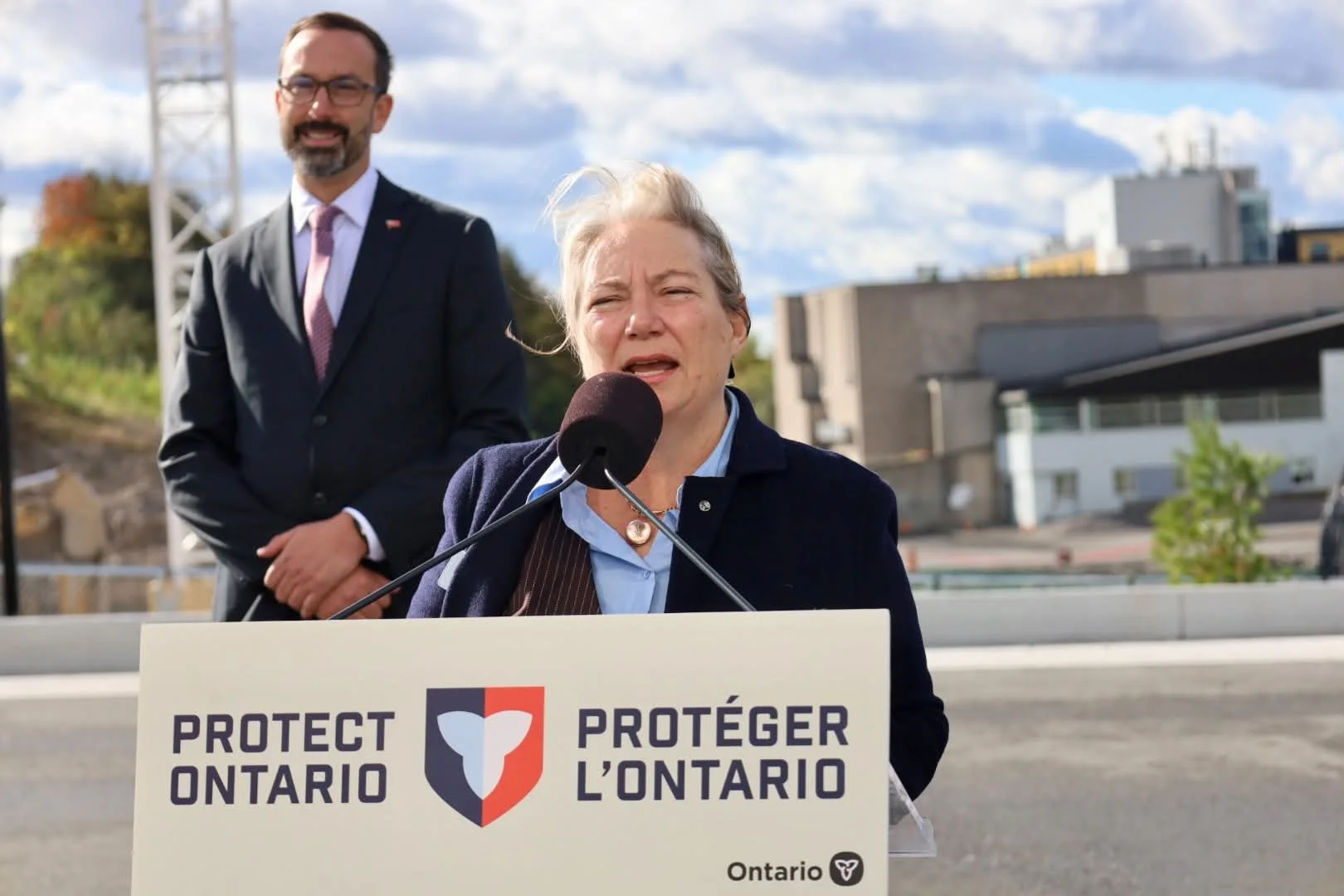
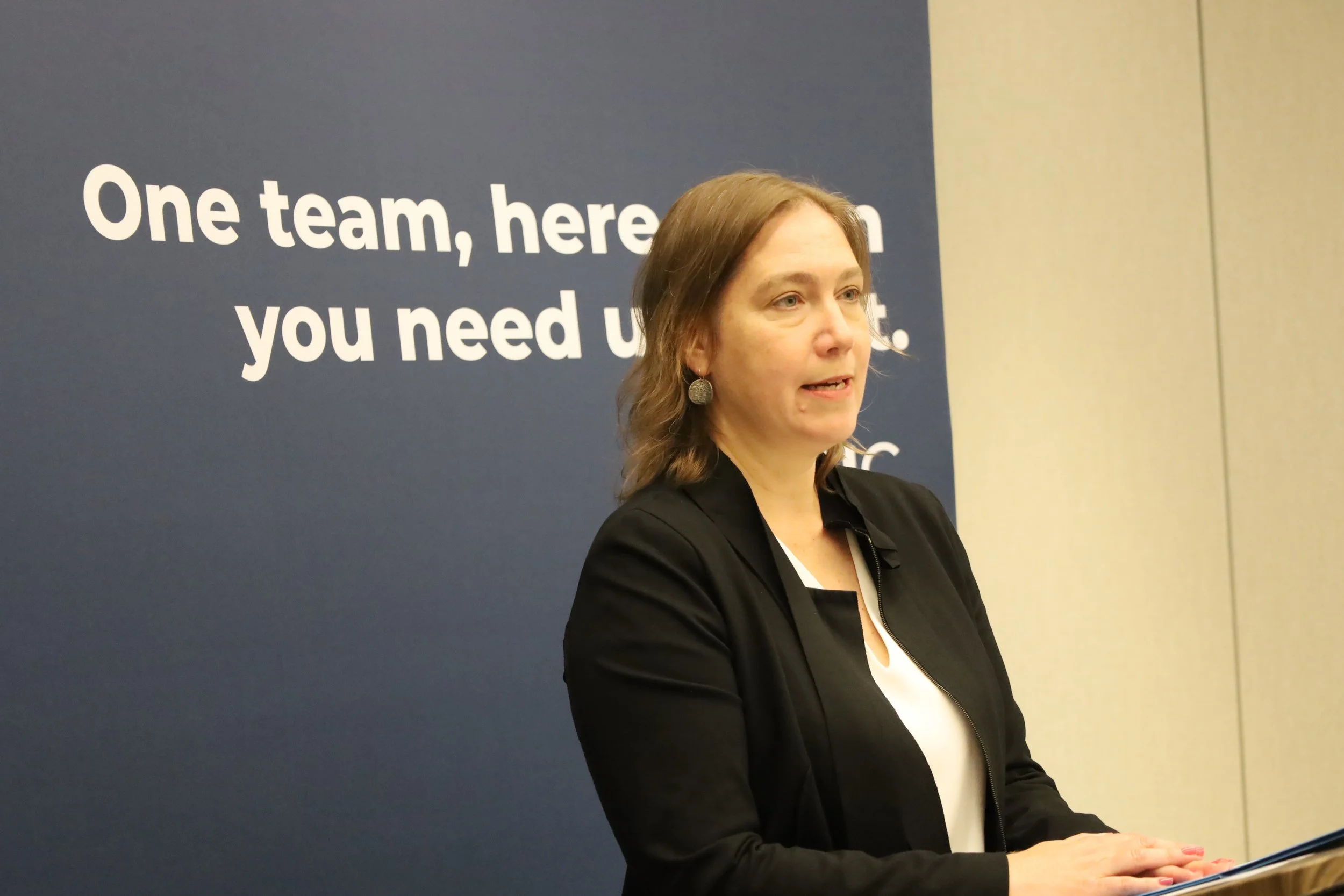
Dr. Cathy Bruce, Trent president and vice-chancellor (right) and Nolan Quinn, Stormont—Dundas—South Glengarry MPP (left) making one of two funding announcements at Trent University on Monday. Photo by David Tuan Bui.

According to Nolan Quinn, Minister of Colleges, Universities, Research Excellence and Security, this allocation, which is part of a broader $1.7 billion investment to support a total of 70,000 new seats, supports the province’s plan to protect Ontario and build a more competitive economy by continuing to develop a world-class workforce. He added that the high-demand areas receiving additional seats at Trent University include programs in STEM, health and trades, with seats available for student enrollment as early as the fall 2026 academic year.

“Our province’s greatest strength is our highly skilled workforce – and those workers are trained at our world-class colleges and universities,” said Quinn. “This investment is supporting the largest seat expansion in Ontario in more than a decade and will ensure more students have the opportunity to train for good-paying careers that protect and strengthen our communities, industries and province.”

This investment is part of the government’s $6.4 billion investment in the postsecondary sector, including $1.7 billion to fund more than 70,000 additional postsecondary seats in high-demand sectors at publicly assisted colleges and universities. This seat expansion is the largest postsecondary seat expansion in more than a decade and aims to help the province stand up to tariffs and economic uncertainty by building a highly skilled workforce to support the most competitive economy in the G7.

The government announced the allocation of the first 30,000 seats in May when it launched a call for proposals for the remaining 40,000 new seats. Colleges and universities worked with their local communities and industries to identify programs that will prepare students for in-demand jobs and meet regional labour market needs. Ontario evaluated proposals based on institutional capacity, local industry needs and student demand to ensure the greatest impact on workforce development and economic growth.

The 1,504 newly funded seats at Trent University include:

  • 1,081 seats for STEM programs

  • 163 seats for education programs

  • 126 seats for health programs

  • 134 seats in other labour-market driven programs
“Trent University welcomes the Priority Growth Fund announcement and the Ontario government's commitment to expanding access to university education,” said Dr. Cathy Bruce, Trent president and vice-chancellor. “The Priority Growth Fund aligns closely with areas of strength and growing momentum at Trent. As a regionally responsive university, we are committed to preparing graduates to contribute meaningfully to their communities, workplaces, and Ontario's future economy.”

Engage with us on social media on Twitter, Instagram, Facebook, Threads, Tiktok, Youtube and LinkedIn. Write to us at tips@ptbocanada.com. Sign up for our newsletter here.

Ontario Government Invests $100 Million For Trent University Student Housing and Academic Infrastructure

The Ontario Government has invested $100 million through its Building Ontario Fund to build two new student residences and additional academic spaces at Trent University, announced on campus Monday morning.

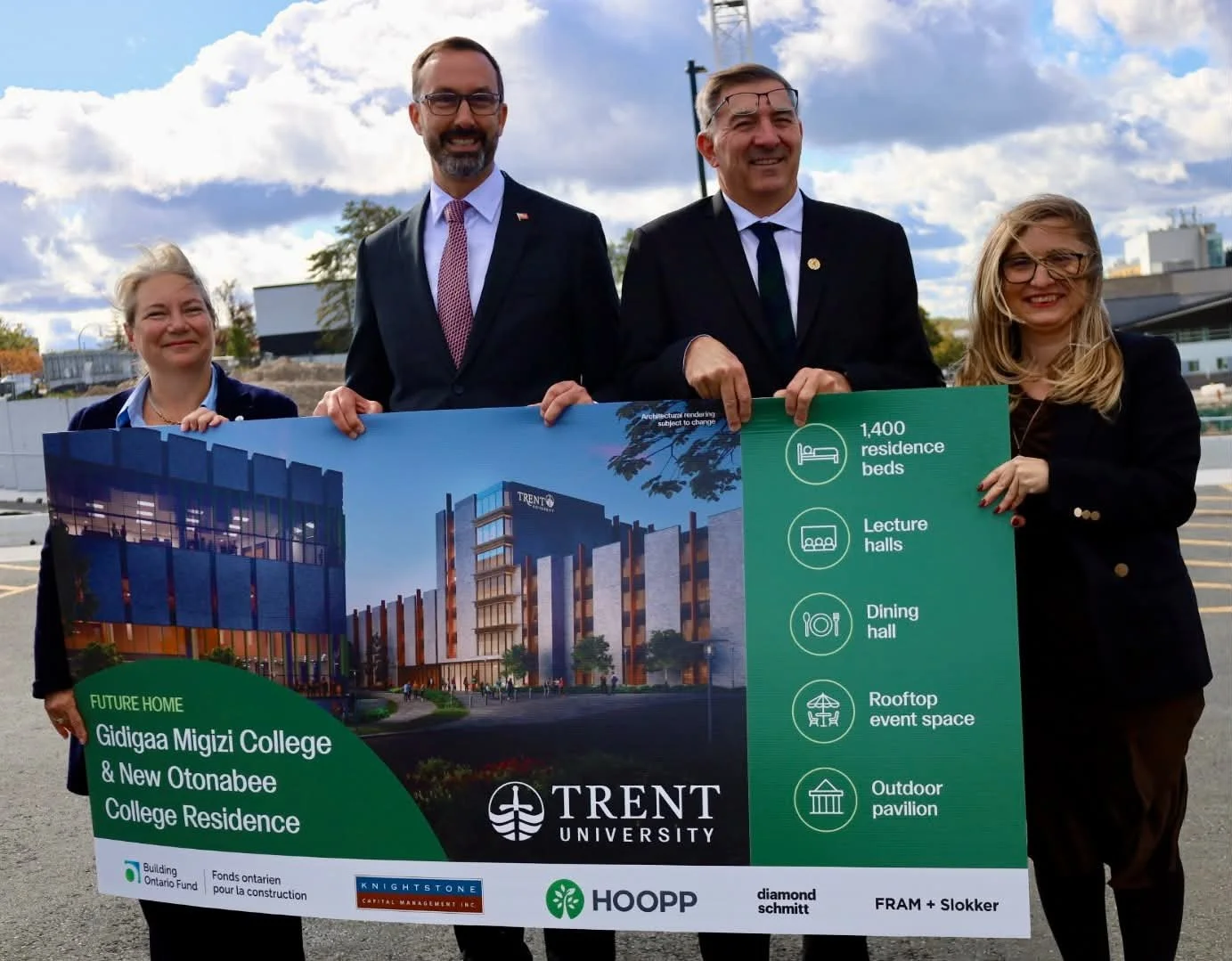
(From left to right) Dr. Cathy Bruce, Trent president and vice-chancellor; Nolan Quinn, Stormont—Dundas—South Glengarry MPP; Dave Smith, Peterborough-Kawartha MPP and Alena Thouin, Building Ontario Fund Chief Strategy and Operations Officer. Photo by David Tuan Bui.

The spaces are the Gidigaa Migizi College and the new Otonabee College residence which provides 1,400 student beds and 134,000 square feet of state-of-the-art academic, social, and administrative space. The project is expected to be completed in August 2029.

“This project represents one of the largest infrastructure investments in Trent University's history and a significant investment in the future of our students, our University, and our community,” said Dr. Cathy Bruce, Trent president and vice-chancellor.

“Protecting Ontario’s future workforce starts with supporting student success inside and outside the classroom,” said Nolan Quinn, Minister of Colleges, Universities, Research Excellence and Security. “By expanding academic spaces and student residences at Trent University, our government is ensuring that more students can focus on getting the skills they need to launch rewarding, good-paying careers while continuing to support Trent’s long-term growth and sustainability.”

@ptbo_canada The Ontario Government has invested $100 million through its Building Ontario Fund to build two new student residences and additional academic spaces at Trent University. #fyp #news #ptbocanada #trentuniversity #journalism ♬ original sound - PTBOCanada

Dave Smith, Peterborough-Kawartha MPP, was thrilled to help get the donation for Trent, saying that it will only have a positive impact on the local economy.

“We know right now that Trent students are spending about $100 million in the economic impact in the greater Peterborough area, with 1,400 more students being able to live on the main campus, that opens up more opportunities then for growth,” he explained. “It means the businsses downtown will have more people who can come and enjoy the things that we have there. It's a great thing for the whole community.”

The $100 million investment will be repaid after the residences are occupied and generating revenue, then reinvested into other projects across six priority areas including affordable housing, energy, transportation, long-term care, municipal and community infrastructure and critical minerals.

“Students come to Peterborough to learn, build connections and begin the next chapter of their lives,” said Smith. “This investment will expand the university’s campus and provide new academic, student and residential spaces that will enhance the student experience and support Trent’s future growth.”

Engage with us on social media on Twitter, Instagram, Facebook, Threads, Tiktok, Youtube and LinkedIn. Write to us at tips@ptbocanada.com. Sign up for our newsletter here.

Canada and the City of Peterborough Jointly Invest Over $7.5 Million In Little Lake Loop

The City of Peterborough and the federal government will complete a new segment of the Little Lake Loop through a joint investment of more than $7.5 million, announced on Tuesday.

Photo courtesy of the City of Peterborough.

The investment helps complete the 4.46-kilometre multi-use trail as part of the Little Lake Master Plan. The Loop is vital to the City’s cycling and pedestrian network and helps to connect residents and visitors to businesses, parks and major tourism destinations.

“The Little Lake Loop is part of a long-term vision that will help make Peterborough a more connected, active, and beautiful place to live,” said Emma Harrison, Peterborough-Kawartha MP. “I am grateful for the federal government’s support for multi-use trails across the country, which strengthens communities and improves people’s lives. I’m pleased to see funding support this important project for Peterborough – a project residents have long advocated for and care deeply about.”

The Little Lake Loop is currently 2.34 kilometres long and this project will extend it by another 1.15 kilometres along Crescent Street and Haggart Street.

This trail segment will include 250 metres of lakeside pedestrian paths, 600 metres of two-way cycle tracks, 860 metres of sidewalk and 350 metres of multi-use paths and a Woonerf or shared streetscape. The plan also includes landscaping, plantings, shade structures and seating areas.

"Completing another segment of the Little Lake Loop is an important step toward creating a more connected and accessible trail network in Peterborough,” said Mayor Jeff Leal. “This investment will provide more opportunities for residents and visitors to walk, cycle and enjoy the natural beauty of Little Lake, while connecting people to our parks, businesses and tourism destinations. We’re pleased to see this vision continue to take shape and to invest in infrastructure that will serve our community for years to come.”

Engage with us on social media on Twitter, Instagram, Facebook, Threads, Tiktok, Youtube and LinkedIn. Write to us at tips@ptbocanada.com. Sign up for our newsletter here.

St. Paul CES Lakefield Receives $16,000 Grant For Music Program Growth

Students at St. Paul Catholic Elementary School in Lakefield will have more opportunities to explore, create and learn through music thanks to a $16,000 grant from MusiCounts, announced on Wednesday.

Photo courtesy of PVNCCDSB.

The grant application was developed last year by then-Principal Jennifer DeMaeyer and music teacher Elena Johnson.

The funding was used to purchase a variety of musical instruments and materials, provide safe storage for the equipment and support a music program subscription for the current school year and next year. As a result of the application, St. Paul may also be eligible to apply for a secondary grant in the coming years. 

Jean-Paul St-Amour, St. Paul principal, says the new resources will give students opportunities to explore music through hands-on experiences while introducing them to a wide range of instruments, musical traditions, and creative tools. 

“These tools will provide hands-on experiences that deepen students’ understanding of rhythm, melody, and cultural traditions. Instruments like egg shakers, xylophones, and bells will introduce basic concepts and allow for interactive rhythm exploration,” he said. “Recorders serve as an accessible entry point for wind instruments, while bucket drums make practicing drumming patterns enjoyable. Drumsticks will enable students to explore various percussion techniques and ukuleles will promote collaboration through learning chords and strumming.”

He adds that the investment will help St. Paul CES continue building a music program where students can develop musical skills while experiencing the creativity, collaboration and cultural learning that music can bring to the classroom. 

“Incorporating Indigenous drums will diversify our program and enhance our cultural context. Additionally, integrating music software will foster creativity and composition skills. We would also like to invite Indigenous Music leaders to share their knowledge and lead us in Indigenous music workshops,” explained St-Amour. “Together, these resources will create a vibrant, hands-on music program that would inspire creativity and a lifelong love of music among our students.”

Engage with us on social media on Twitter, Instagram, Facebook, Threads, Tiktok, Youtube and LinkedIn. Write to us at tips@ptbocanada.com. Sign up for our newsletter here.

Art Gallery of Peterborough Receives Funding Boost From Ontario Arts Council

The Art Gallery of Peterborough (AGP) has received an increase to its Ontario Arts Council (OAC) multi-year operating grant funding, beginning next year.

Photo courtesy of the City of Peterborough.

Through the Ontario Arts Operating Fund (OAOF), the OAC provides sustained investment in Ontario’s arts infrastructure by supporting not-for-profit arts organizations and for-profit publishers led by, working with, and providing services to professional artists across arts disciplines and sectors. 

For the next three years, beginning in 2027, the AGP will receive a 7.1 per cent increase in operating grant funding, with a B+ rating from the OAC. 

According to the City of Peterborough, this continued investment recognizes the AGP’s role within Ontario’s arts sector and supports the gallery’s ongoing work to present exhibitions, care for its collection and offer accessible arts experiences to the Peterborough community. 

“We appreciate the additional funds and the recognition of the work we do here at the AGP,” said Celeste Scopelites, AGP director. “We thank all who contribute to our ongoing success: the City of Peterborough, our staff, volunteers and Board of Directors, our educators, sponsors and AGP members.”

OAC Director, Michael Murray, notes that roughly half of returning organizations applying for operating funding through the OAC (including those in year 1, 2 and 3 of their funding cycles) will see changes to their funding levels this year, based on alignment with program objectives, performance measures, funding principles and assessment results. 

This includes: 

  • 27 per cent of returning operating funding applicants have received increased support

  • 45 per cent of returning applicants will be receiving the same funding amount as in 2025-26

  • 11 per cent of returning applicants received a reduced amount, compared to 2025-26

  • 12 per cent will be exiting from the operating funding program 

  • Of the 26 organizations newly-applying for operating funding at the spring OAOF application deadlines, 38 per cent have been admitted into the operating funding stream.

Engage with us on social media on Twitter, Instagram, Facebook, Threads, Tiktok, Youtube and LinkedIn. Write to us at tips@ptbocanada.com. Sign up for our newsletter here.

Federal Government Invests Over $3.9 Million For Selwyn's Water and Wastewater Systems

The Federal Government has invested more than $3.9 million in water and wastewater systems in Selwyn, announced on Monday.

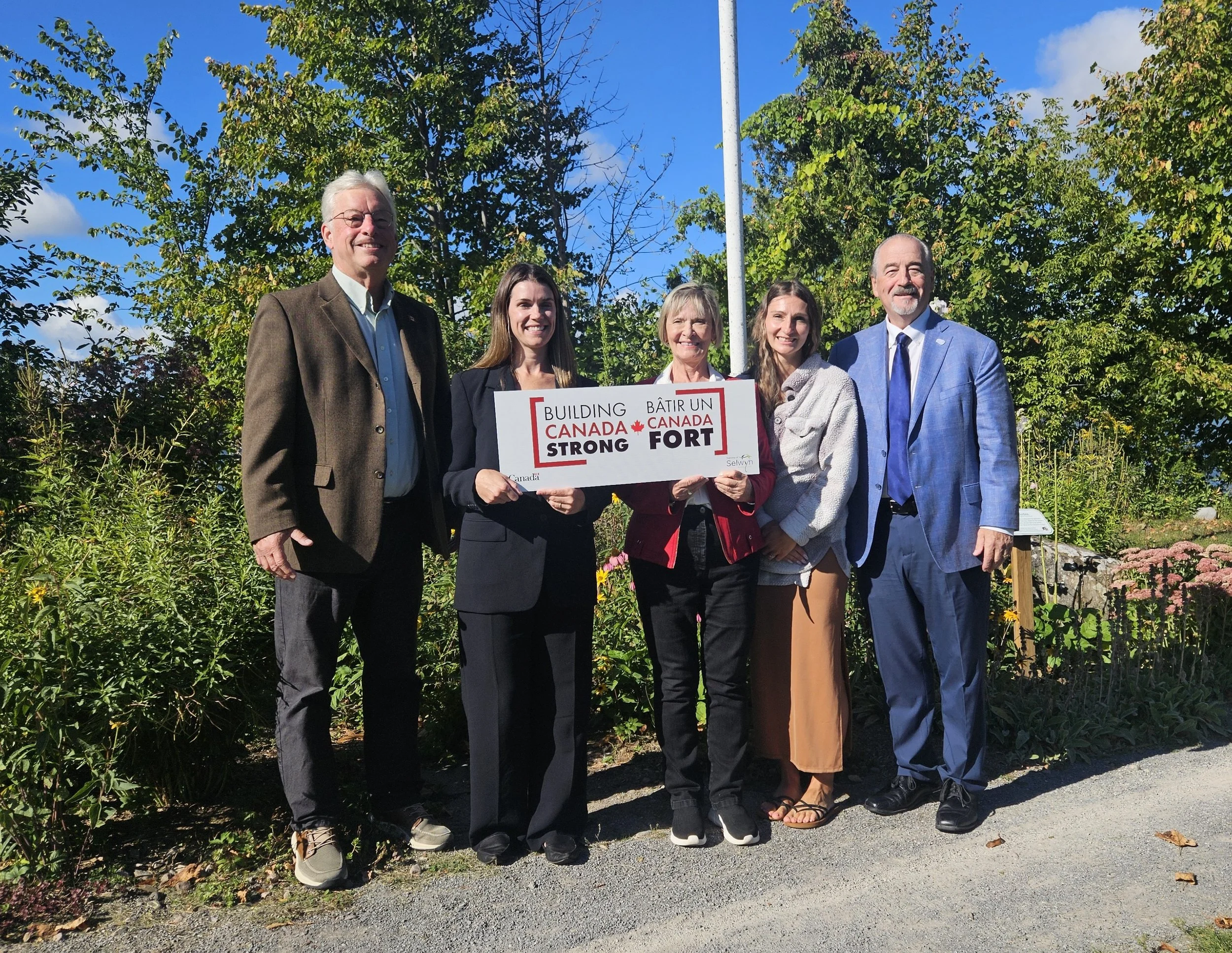
(From left to right) John Boyko, Lakefield Ward Councillor; Emma Harrison, Peterborough-Kawartha MP, Sherry Senis, Selwyn Township Mayor; Mary Coulas, Ennismore Ward Councillor and Ron Black, Selwyn Township Deputy Mayor. Photo courtesy of Selwyn Township.

This project will upgrade two sections of sewer infrastructure and install a twin force main beneath the Otonabee River in the Lakefield South Development Area. These improvements will support sustainable growth by maintaining reliable wastewater services, reducing overflow risk, enhancing fire protection and meeting growing capacity demands as the population grows.

“This funding will help us make the critical water and wastewater upgrades needed for the Lakefield South Development Area, while ensuring our systems can reliably serve existing and future residents,” said Sherry Senis, Selwyn mayor. “These upgrades will not only enable new homes but also support the creation of a stronger, more sustainable Lakefield for generations to come.”

The investment is through the Build Communities Strong Fund, which is investing $51 billion in a wide range of infrastructure projects across the country that support economic prosperity, housing, sport, education, health, transit, and climate adaptation.

“The Build Communities Strong Fund is building the infrastructure that Canadians rely on every day,” said Emma Harrison, Peterborough-Kawartha MP. “Today’s investment in water and wastewater infrastructure in the Township of Selwyn will help ensure that critical infrastructure keeps pace with development, supporting a safe, healthy, and resilient community for years to come.

Engage with us on social media on Twitter, Instagram, Facebook, Threads, Tiktok, Youtube and LinkedIn. Write to us at tips@ptbocanada.com. Sign up for our newsletter here.

City Council Approves $25,000 Pilot Program to One City PTBO For Street Cleaning Initiative

City Council has approved providing $25,000 to One City Community Development Services to deliver an eight-week Community Stewardship - Clean Streets pilot program cleaning initiative near the One City shelter and downtown areas this fall.

photo courtesy of Peterborough dbia.

The pilot program will be funded through existing waste collection and operations funding.

The City continues to explore approaches to address the impacts of homelessness on neighbourhoods and public spaces while strengthening relationships among people experiencing homelessness, residents, businesses, service organizations and the broader community.

According to the City, the One City Clean Team initiative would create opportunities for individuals facing barriers to traditional employment, including people experiencing or at risk of homelessness, to contribute directly to improving the neighbourhoods and public spaces where they live, spend time and connect with community. Through visible, supervised work, participants would play an active role in creating cleaner, safer, and more welcoming shared spaces while building positive connections with residents, businesses and community organizations.

Staff propose an eight-week pilot in fall 2026, initially focused on the blocks surrounding the Trinity building and the downtown area bounded by Hunter Street, Charlotte Street, Park Street, and Water Street.

The $25,000 investment would seed the program and confirm the stewardship model. Based on the results, Staff would return to Council in early 2027 with recommendations regarding next steps, including opportunities to expand the model into other identified areas of need through financial participation from businesses, community organizations and other partners.

Engage with us on social media on Twitter, Instagram, Facebook, Threads, Tiktok, Youtube and LinkedIn. Write to us at tips@ptbocanada.com. Sign up for our newsletter here.

Ontario Government Invests $8.1 Million to Support Peterborough Hospital Operations

The Ontario Government has invested $8,193,000 to improve operations and reduce wait times at Peterborough Regional Health Centre (PRHC), announced on Friday morning.

Photo by David Tuan Bui.

This funding is part of a $1.1 billion investment in Ontario's hospital sector in Budget 2026, A Plan to Protect Ontario, representing a four per cent increase in annual support for the fourth consecutive year according to Dave Smith, Peterborough-Kawartha MPP.

“This investment is a major win for families in Peterborough—Kawartha,” he said. “By strengthening core clinical services at PRHC, we are ensuring our local hospital has the reliable funding needed to shorten wait times, expand diagnostic imaging, and deliver high-quality care closer to home.”

Dr. Lynn Mikula, PRHC president and CEO, said that this investment will support the operations of PRHC’s core clinical services to better meet growing patient needs. She added that the funding will help maintain 24/7 emergency department operations, cushion inflationary and wage pressures and shorten wait times for surgical and diagnostic procedures—including MRI, CT, cardiac, stroke, neuroservices, orthopedics and cataract surgeries.

“Over the last several years, Peterborough Regional Health Centre has been strategically investing into the care we provide and how we provide it,” she said. “Provincial investments like this one are critical to furthering ongoing work in priority areas at PRHC, including the continued growth and expansion of our leading-edge data and analytics program and establishing a command centre to support real-time decision-making and improve access to care across the hospital.”

Over the next 10 years, the provincial government plans to invest approximately $64 billion in major health infrastructure as part of its plan to build more than 50 major hospital projects across the province, adding approximately 3,000 new hospital beds.

“We remain deeply committed to achieving the ambitious goals we have set out for ourselves, and to ensuring we continue to provide the best possible care and service to the 600,000 people we serve across this region,” said Mikula.

Engage with us on social media on Twitter, Instagram, Facebook, Threads, Tiktok, Youtube and LinkedIn. Write to us at tips@ptbocanada.com. Sign up for our newsletter here.

City Council Supports $25,000 Pilot Program to One City PTBO For Street Cleaning Initiative

City Council backs the initiative to provide $25,000 to One City Community Development Services to deliver an eight-week Community Stewardship - Clean Streets pilot program cleaning initiative in the vicinity of the One City shelter and downtown areas this fall.

photo courtesy of Peterborough dbia.

The pilot program will be funded through existing waste collection and operations funding.

An eight-week pilot for this fall was proposed and initially focused on the blocks surrounding the Trinity building and the downtown area bounded by Hunter Street, Charlotte Street, Park Street, and Water Street.

The $25,000 would seed the program and confirm the stewardship model. Based on the results, staff would return to Council early next year with recommendations regarding next steps, including opportunities to expand the model into other identified areas of need through financial participation from businesses, community organizations and other partners.

The City says they will continue to explore approaches to address the impacts of homelessness on neighbourhoods and public spaces while strengthening relationships among people experiencing homelessness, residents, businesses, service organizations and the broader community.

Engage with us on social media on Twitter, Instagram, Facebook, Threads, Tiktok, Youtube and LinkedIn. Write to us at tips@ptbocanada.com. Sign up for our newsletter here.

Three Trent University Researchers Receive $643,477 For Advanced Research Infrastructure

Three Trent University researchers have received a combined $643,477 from the Canada Foundation for Innovation’s (CFI) John R. Evans Leaders Fund for advanced research infrastructure, announced on Friday.

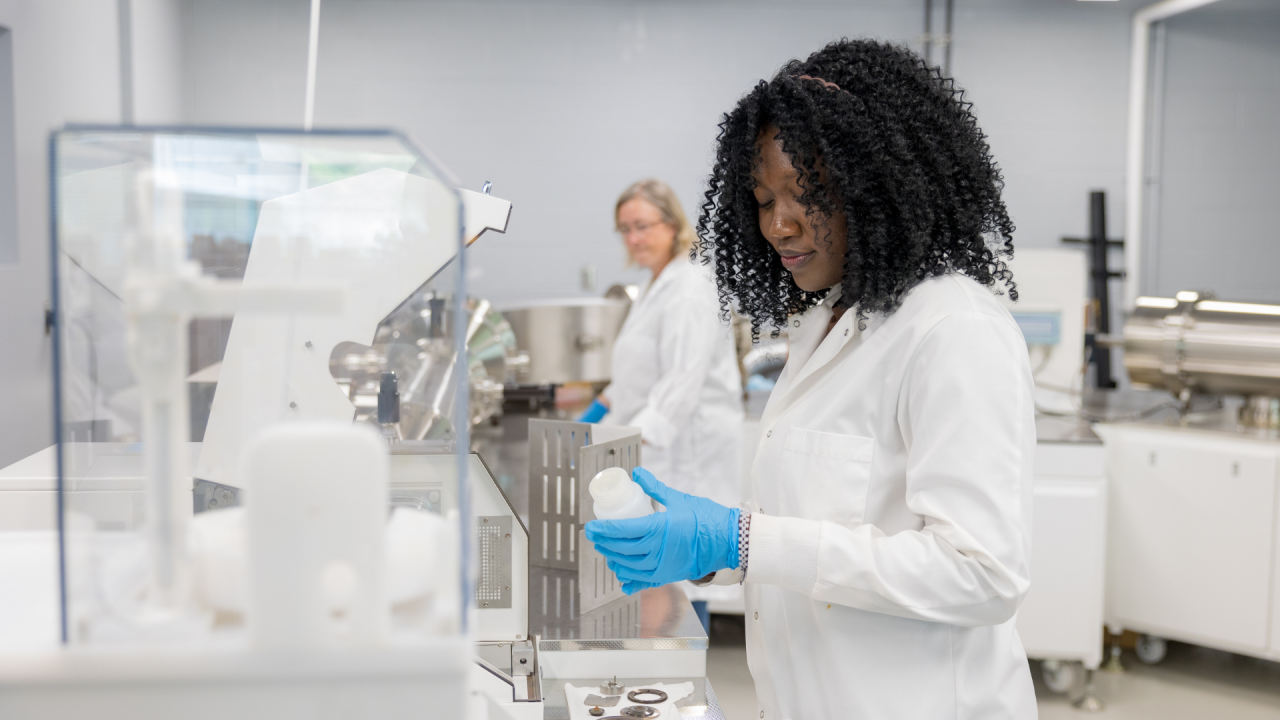
Faculty and student researchers conducting investigations in Trent's Water Quality Centre will benefit from a new state-of-the-art mass spectrometry instrument supported by JELF funding. Photo courtesy of Trent University.

The money allows the researchers to acquire advanced tools and equipment that will strengthen scientific investigation in fields of growing importance to Canada, including aging and dementia care, environmental contaminants and medical innovation, according to Dr. Cathy Bruce, Trent president and vice-chancellor

“The federal government is supporting important research for Canada – a nation that values knowledge creation, innovation, and productivity grounded in deep research,” she said. “Thanks to the Canada Foundation for Innovation, Trent researchers can equip campus spaces and labs with state-of-the-art tools and equipment that help attract world-class talent to the University and push discovery further.”

Psychology professor Dr. Raheleh Saryazdi is using the funding to support research in her Cognition, Health, Aging, and Technology (CHAT) Lab at Trent University, Durham. Research includes examining how sensory and cognitive changes affect communication as people age. Using tools such as eye-tracking equipment and a social robot, her team will study communication between people and how older adults interact with emerging technologies. Research findings will help inform new interventions for people experiencing hearing loss or dementia and support the design of more effective technologies for Canada’s aging population.

Chemistry professor Dr. Michael Burt plans to build a globally distinctive laboratory with a titanium-sapphire laser, allowing researchers to observe how complex molecules change during chemical reactions. Research at the Spectroscopy and Optics Lab at Trent Lightsource (SPOTLIGHT) will advance applications in greenhouse gas storage and medicinal chemistry and provide students with training on ultrafast spectroscopy, mass spectrometry and scientific computing.

Dr. Mary-Claire Buell, assistant professor in the Trent School of the Environment and Forensic Science, is using funding to acquire a new high-resolution liquid chromatography-mass spectrometer to be housed in Trent’s Water Quality Centre (WQC), Canada’s most comprehensive mass spectrometry facility. The new instrument will advance the work of her 14-person research lab working to detect and analyze per- and polyfluoroalkyl substances (PFAS)—known carcinogens often referred to as “forever chemicals’—and other emerging contaminants in freshwater and coastal systems.

“Modern scientific tools are essential to producing the reliable data that communities need to understand potential risks and consider approaches to mitigation,” said Professor Buell. “The new mass spectrometry equipment has greater sensitivity that will allow researchers to identify contaminants at very low concentrations and determine how much is present in water, soil and traditional food sources. The new instrument will help us train the next generation of researchers while producing evidence that communities can use.”

Shared access to the new mass spectrometer in the WQC expands research and training opportunities for other programs at Trent, including Chemistry, Forensic Science, Biology, Anthropology, and Physics disciplines, as well as for collaborators in government, other universities and the private sector. Over the past year, more than 75 faculty, staff, undergraduate and graduate students and post-doctoral researchers used facilities in the WQC supporting research across Canada and internationally.

Engage with us on social media on Twitter, Instagram, Facebook, Threads, Tiktok, Youtube and LinkedIn. Write to us at tips@ptbocanada.com. Sign up for our newsletter here.