A Primer On The History Of Economics In Peterborough (And What's Driving It Now)

At this time of year, we often reflect on where we've been and look to where we may go. In economic terms where we have been is a lot clearer than where we might go.  However, taking a longer term view there are some hints about where we could go, if we chose to go there.

Peterborough, in general terms, has seen two quite different economic eras—an era when natural resources and agriculture dominated—the nineteenth and early twentieth centuries, and a manufacturing era that was at its peak in the middle of the last century. Between these two eras was a period of transformation. In this period new ways of doing business began to emerge, new roles for government became clearer, even the roles within families and families themselves changed to take advantage of the new opportunities of the manufacturing era.

For the sake of perspective, if we were to think of the age of transformation being five years before the beginning of WWI (1909) and five years after the end of WWII (1950), we can see an era of enormous development technologically that was accompanied by unprecedented changes in social roles. In the forty-one years from 1909 to 1950, Peterborough was transformed. In that transformation, the fundamental functioning of the Peterborough economy changed. In effect, the two eras are two very different economies with very different economic relationships.

As much as many mainstream economists—the ones who led us into the current economic mess—would like us to believe that the fundamentals of economies are not subject to history, politics, or culture, the reality is they are. Separating fact from myth reveals very different economic characteristics in different technological and socioeconomic eras—not common underlying behaviours. What can we learn from this?

It has been forty-one years since what could be considered the beginning of the end of the era dominated by manufacturing. 1971 was just prior to the OPEC oil crisis that signalled the beginning of a long struggle with inflation that was combined with high rates of unemployment, and difficult economic times. Peterborough was not immune to this economic disease, and for those who went through it, it was clear that things would never be the way they were no matter how much we wished they could be. Like it or not, another era of transformation began in the early 1970s and we continue to find ourselves in it today.

In the tranformation, old ways of doing many things were left behind—technologically and socially—and new, creative opportunities were pursued. Change was embraced rather than seen as a threat. Of course, in an era of transformation that included two World Wars separated by the Great Depression is a very different circumstance than we face today. 

The lesson from history—not from economics—is that the foundations of economic growth in the past are not sufficient to support the prosperity we are capable of in the future. The longer it takes for us to figure out how to build the new foundation, the more difficult the transition will be. It is time to get on with creative change in the way we do things right here in Peterborough.

Thankfully, we have within the community what it takes to move forward. To support the transition, we have a large creative class that will provide news ways to get things done. This class according to Richard Florida’s work, and a recent description of it by Dan Taylor, CEO of the Greater Peterborough Area Economic Development Corporation and the Greater Peterborough Innovation Cluster, show that not only does the creative class drive innovation, it is also an economic driver onto itself. 

Thirty percent of the population belongs to the creative class. Those in the creative class earn significantly more than average and possess seventy percent of total disposable income. In a time of transformation the creative class is where the jobs are, and the results of their work will bring more jobs across the whole community.

All indications are that we have all the pieces in place that can lead to a new era of prosperity here in Peterborough. We have a creative class that can lead innovation. We have the resources—people, money, and technologies—necessary to move forward. The question is: Do we have the will to embrace new ways of doing business, new roles for government, new approaches to education, etc., so that we can use the resources we have at hand to their best advantage? How can we combine and integrate what we do have in creative, productive ways.

Rest assured that if we cling to the ways of an older era, communities less well blessed with resources will embrace new, productive ways. Their success will make ours that much longer and more difficult to achieve. This could be the time for us to take the leap—including a leap of faith—into a new era of creativity, opportunity, and prosperity.

------------------

Contributed by PtboCanada's Tom Phillips Ph. D. Phillips is Economist & Sustainability Director - Greater Ptbo Innovation Cluster.

Tip us at tips@ptbocanada.com. Follow us on Twitter @Ptbo_Canada.

What Peterborough Needs To Do To Solve The Productivity Puzzle

With Canada suffering less than most industrial nations from the global economic malaise, we tend to think that we are ahead in the economic "game".  In fact, for more than a decade we have lagged behind in productivity—e.g. production of goods and services per worker—than most industrial nations. 

Each year, the gap between us and other more productive nations gets bigger. We talk—more like whisper—about this, but we rarely do anything concrete about it. We wait for something to happen that will turn us around. Maybe a decade of waiting is long enough. It is time to act.

In 2012, let's stop waiting for big government, bigger corporations, the rest of the world, or the "universe" to do it for us and do what it takes, right here in Peterborough, to become more productive.

Think of it this way. We, in Peterborough, have received a Christmas present—a new jigsaw puzzle. In its sturdy box, the puzzle contains all the pieces we need to solve the productivity puzzle. We've unwrapped the puzzle, looked at the picture on the front of the box, but we have not yet opened the box. Between Christmas and New Years, we've talked to family and friends about the picture on the box (no one seems to know exactly what it is—kind of abstract, it seems), so we still haven’t opened it. 

According to the instructions, there are pieces that represent aspects of the work being done at Fleming College, Trent University, PRHC, OMNR, GE, Siemens, SGS Lakefield Research, Rolls Royce, QTG Pepsico-Frito Lay, Operitel, McColl Turner, LLF, Merit Precision, Steel Works, Page Design, the City and County of Peterborough, a vibrant and creative downtown, talented and ambitious people, and enough technology to sustain much larger communities than Peterborough. 

Still, we’re talking more about putting the pieces together than actually trying to do it. We are not alone in this. Many communities are in the same situation. The competitive reality is that the community that puts the puzzle together first will reap the greatest economic benefit.

When we finally open the box and spread the pieces on the table, there is one thing we can be sure of: The puzzle will not be put together by the invisible hand of the market. It will only come together from our will to act, and the action itself.

We, in Peterborough, have all the pieces—resources—we need but we need to complete it, but we need a new way to put this difficult puzzle together. Old ways of putting puzzles together simply will not work. We need to creatively and collectively find new ways to solve the puzzle; news ways to benefit from the resources available for us to use.

And we need to do it right here in Peterborough.    

------------

[Contributed by PtboCanada's Tom Phillips Ph. D. Phillips is Economist & Sustainability Director - Greater Ptbo Innovation Cluster.]

Tip us at tips@ptbocanada.com. Follow us on Twitter @Ptbo_Canada.
51 Things We Hope To See In Peterborough In 2012

In no particular order, here we go...


1. A place(s) to play ping pong in downtown Peterborough.
2.
PCVS
3.
More hilarious tweets from @/PTBO_Y_U_NO.
4.
More jobs being created in Peterborough.
5.
Buses running later at night in Peterborough. It's near impossible to get a cab when the bars close. And we don't want to see people ever drinking and driving.
6.
More music and cultural festivals. The more, the merrier. (Our music scene is one of the best in Canada.)
7.
More people biking on Peterborough's streets and trails. More people biking in general.
8.
The Peterborough Petes in the playoffs.
9.
More great music acts at the likes of Historic Red Dog, Market Hall, Showplace, The Spill, Spanky's and Gordon Best.
10.
More plaid.
11.
An authentic Irish pub.
12.
PCVS
13.
More restaurants and businesses opening, and less closing.
14.
Less blackouts for no real reason.
15.
Reggie's launching a hot dog version of their burger.
16.
More tourists coming to our great city.
17.
More great anti-bullying programs in the city. More people standing up to bullies.
18.
More Creative Cocktails, which was one of the best things to come to Peterborough this year.
19.
More funny typos on signs.
20.
Continued generosity of Peterborough community.
21.
A continued resurgence of the downtown—and the continued good work of the DBIA.
22.
Continued transparency from city council, the Mayor's office and our tweeting Mayor, who has settled into the role nicely and is having a great first year in office.
23.
A couple town hall meetings. Or one. Hey, why not? Healthy thing to try to bring community together.
24.
People doing random things like dancing on bubble wrap.
25.
Another great Festival of Trees downtown.
26.
More Tom Phillips columns.
27.
More people trying breakfast at The Only Cafe. It's worth the wait.
28.
More readers submitting tips.
29.
More local people and businesses joining the Twitterverse.
30.
More parody accounts on Twitter. Good satire can be a great equalizer.
31.
Continued development of the Peterborough Wednesday Market and Saturday Farmer's Market.
32.
A splash pad at Nicholl's Oval.
33.
PCVS
34.
Peterborough Roller Derby taking off.
35.
Less domestics on police reports. Less drug busts. Less break and enters. Less stabbings. Less crime. More jobs.
36.
More flash mobs around Peterborough.
37.
CP Rail bridge gets fixed, allowing pedestrian walkway/bikeway again (and our shortcut back to East City)
38.
More Peterborough playlists.
39.
The return of 4 Dudes On The Balcony.
40.
More Stormtroopers. More Band Wagons.
41.
Continued impact/recognition of Peterborough's Creative Class.
42.
More shocked looks on the faces of visitors to our Zoo when they discover it's free.
43.
Peterborough Square and Portage Place making an Eighties comeback.
44.
Less complaining and whining about what's wrong with the city, and more solutions for how to fix things.
45.
More/continued attention to the amazing artists, musicians and athletes in this city.
46.
PCVS
47.
A show called Culturally Speaking on TV Cogeco as spinoff of Politically Speaking.
48.
The excellent owners of the now closed Have You Seen... returning with a new venture.
49.
More people visiting our awesome galleries and museums—the Canadian Canoe Museum is world class.
50. Not as many people wearing pajamas as outdoor wear.
51. A town square. Well, at least more discussion about it.

That's it, you rock.

What do you hope to see in Peterborough in 2012? Add to our comments section below.

Tip us at tips@ptbocanada.com. Follow us on Twitter @Ptbo_Canada.

PtboPics: Electric City Lights Show & Sale

Electric City Lights Show & Sale by Gallery in the House took place over the weekend. Here's pictures:


[Contributed by PtboCanada's Julie Morris]

Tip us at tips@ptbocanada.com. Follow us on Twitter @Ptbo_Canada.

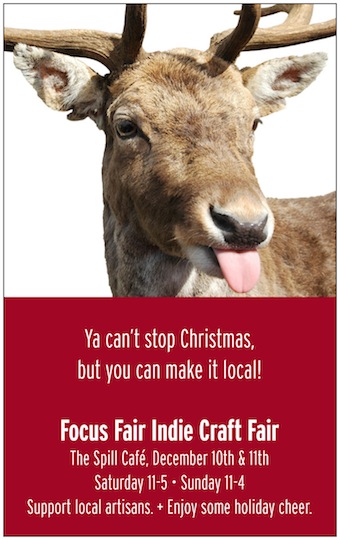
Support Local Artisans At Focus Fair Indie Craft Fair At The Spill This Weekend

This year's Focus Fair takes place at The Spill this weekend (December 10th and 11th). Click here to view pictures from last year's to give you a flavour.

[Focus Fair Indie Craft Fair]

Tip us at tips@ptbocanada.com. Follow us on Twitter @Ptbo_Canada.

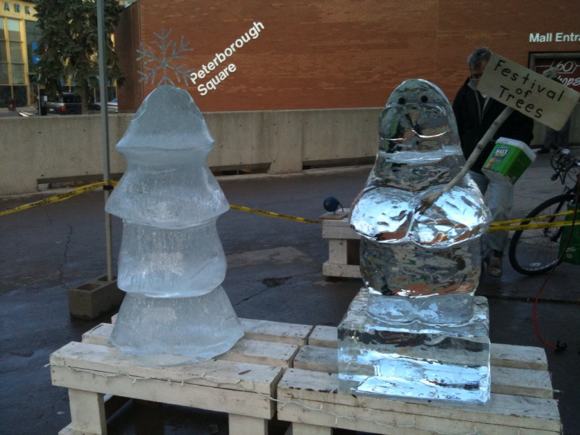
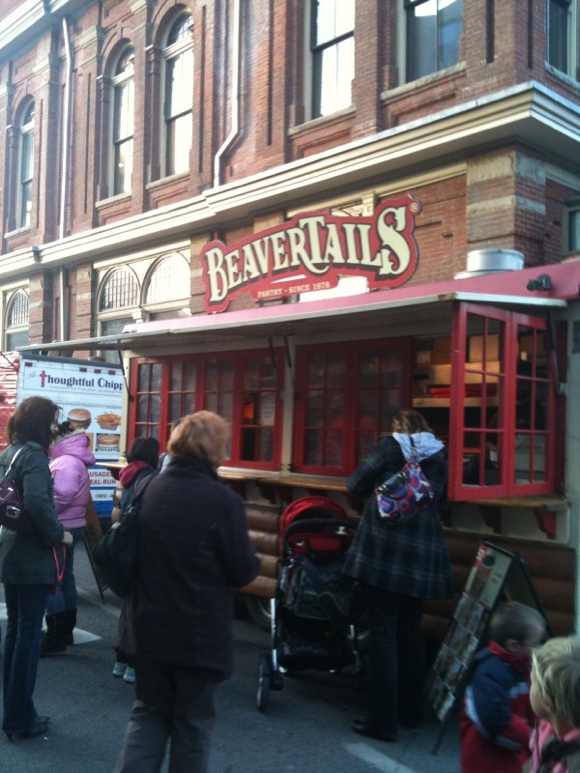
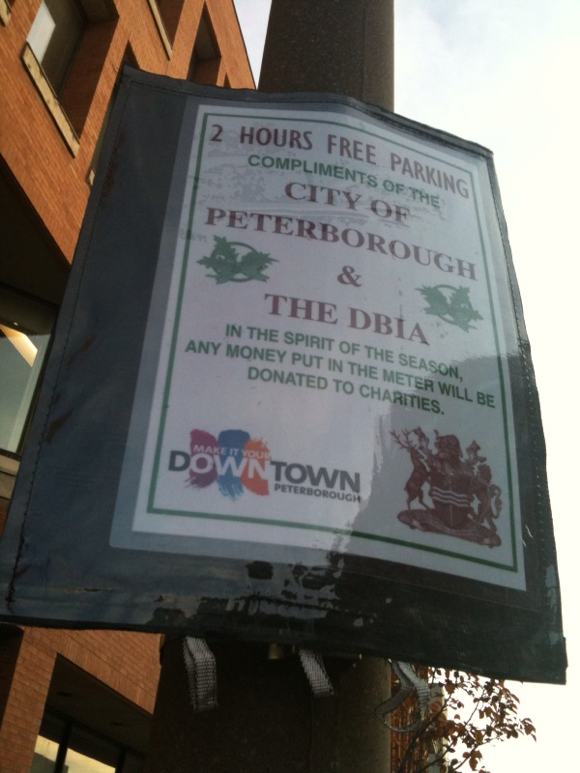
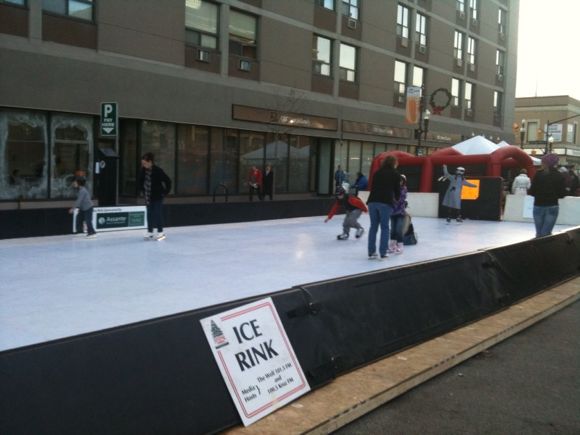
PtboPics: Downtown There's Ice Sculptures, Reindeer, BeaverTails, An Ice Rink & Free Parking


[pictures by PtboCanada's Christi Morton]

Tip us at tips@ptbocanada.com. Follow us on Twitter @Ptbo_Canada.

A Day In The Life of Mayor Bennett In Pictures

PTBOCanada got to spend a day with our Mayor last Friday to see what goes on behind the scenes...

Read More

Teleperformance In Downtown Peterborough Is Shutting Down

[chextvDOTcom]

Tip us at tips@ptbocanada.com. Follow us on Twitter @Ptbo_Canada.

Water Is Peterborough's Greatest Economic Opportunity In Decades

In times of economic turmoil, the tendency is often to look for ways to entrench and wait out the storm. However, this belies the fact that in tumultuous times great opportunities often emerge. Joseph Schumpeter, the late Harvard economist, claimed that times like these possess forces for "creative destruction." It is from the "creative" nature of economic change that opportunities arise. One such opportunity for the future of the Peterborough-area economy is emerging.

There is no doubt that the public sector has targeted water as a primary infrastructure and public health challenge. Over the past decade, the emphasis has changed from supplying water (e.g., transmitting large quantities of water) to one of water quality. Water quality is emerging as the fastest growing global issue of our time. 

Fortunately, it is in the area of water quality that the region has existing expertise. The recent Ontario Speech from the Throne (March 8, 2010) spoke directly to developing "clean-water" organizations in the private and public sectors. This is clear recognition of water as a public policy challenge and the growth that will be supported through public funding.

In 2010, the GPAEDC and Greater Peterborough Innovation Cluster released a major study that mapped and analyzed the energy and water sectors in the area. In the water field, there are fourteen active and five interested Peterborough-area firms in the water supply chain. It is a good sign that all segments of the supply chain are currently populated by Peterborough-area firms. 

Photo: Evan HoltIn addition to private sector firms, the water related research Fleming College (the Centre for Alternative Wastewater Treatment) and Trent University (the Trent Water Quality Centre) make the sector in our region that much stronger. 

All indications are that Peterborough could—should it act quickly and in a concerted way—become a global centre in the field. The challenge comes not from just growing locally, or attracting those from outside, but from combining existing technologies and expertise to better position it for future growth.

Thankfully we are not beginning from scratch. Along with existing businesses in the field, there is a high level of academic involvement in research centres and programs being offered at Trent University (10 centres/programs) and Fleming College (10 centres/programs) that are related to water. 

In each centre and program has faculty, research and students attached to them.  They represent a very significant resource—particularly human—in the field.  Combining these centres and programs with the private-sector activity that has been identified reveals a strong foundation upon which to build a comprehensive water cluster in the region.

As much as the analysis of the private- and public-sector strengths that exist in the area's water sector, it is clear that it is made up of several successful, but rather isolated elements—there are few interconnections across the sector. With the considerable technological capacities, and high-level expertise, and a growing market, it is apparent that the region's water sector is less than the sum of its parts. That is, it is possible for the region to take a stronger position in the water sector if it were able to better utilize its existing technologies and expertise. 

To shift the situation to one where the whole is greater than the sum of its parts, the water sector resources available in the region must be combined in such a way to improve its overall productivity and innovativeness to better position it to grow in this burgeoning, national and international market.

The greatest challenge is not in getting skilled people or technologies in place. The challenge is to create an organizational structure that can help the relatively isolated organizations identify and create new collaborations that can strength the region’s place in the national and global water market. In effect, we need to create an organization that can provide the overarching, coordinating services that were once provided by the "umbrella" organization of a multi-divisional corporation. 

When new market opportunities arise, there needs to be an organizational mechanism by which the existing technologies and expertise can be assessed relative to the opportunity. Should the technologies and expertise exist, a new business entity must be created to exploit it. 

In the past, when a large corporation was faced with a new market opportunity, it would pursue it by re-combining its existing expertise and technologies by simply creating a new division. Our current circumstances call for the creation of innovative business partnerships across—not within—organizations (e.g., joint ventures, strategic alliances) that promote growth, jobs, and the creation of wealth in the region.

There is absolutely no doubt that water will be a global issue in the twenty-first century. It will be a thriving international business sector. For Peterborough, taking a key role in that growing sector is an opportunity that we either proactively move on soon or lose to a less well equipped, but more organized community.

Opportunities like this do not present themselves often. We must seize the day.


[Contributed by PtboCanada's Tom Phillips Ph. D. Phillips is Economist & Sustainability Director - Greater Ptbo Innovation Cluster.]

****[UPDATE BY TOM PHILLIPS: Here's Dan Taylor, President & CEO of the Greater Peterborough Innovation Cluster, speaking about the potential for a Water Cluster in the Peterborough Region]


Tip us at tips@ptbocanada.com. Follow us on Twitter @Ptbo_Canada.

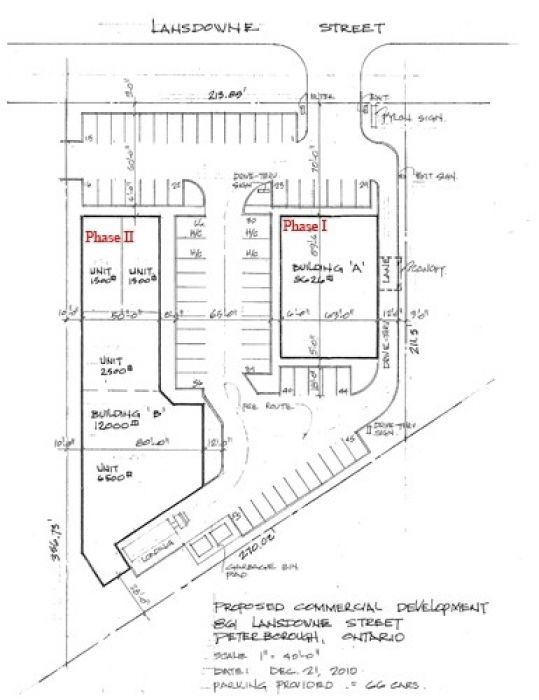
Take A Look At The Design For A Proposed Commercial Development Going In On Lansdowne Street

The Peterborough Co-Op has returned to its roots and moved out to Highway 7 West to supply farmers. The original Rural Roots building, however, is being demolished to make room for a new plaza. It looks like a national bank is moving into the first building, but the second building is still available for lease to be ready for approximately Spring 2012. Take a look at the design of the proposed development:

[Contributed by PtboCanada's Evan Holt]

Tip us at tips@ptbocanada.com. Follow us on Twitter @Ptbo_Canada.