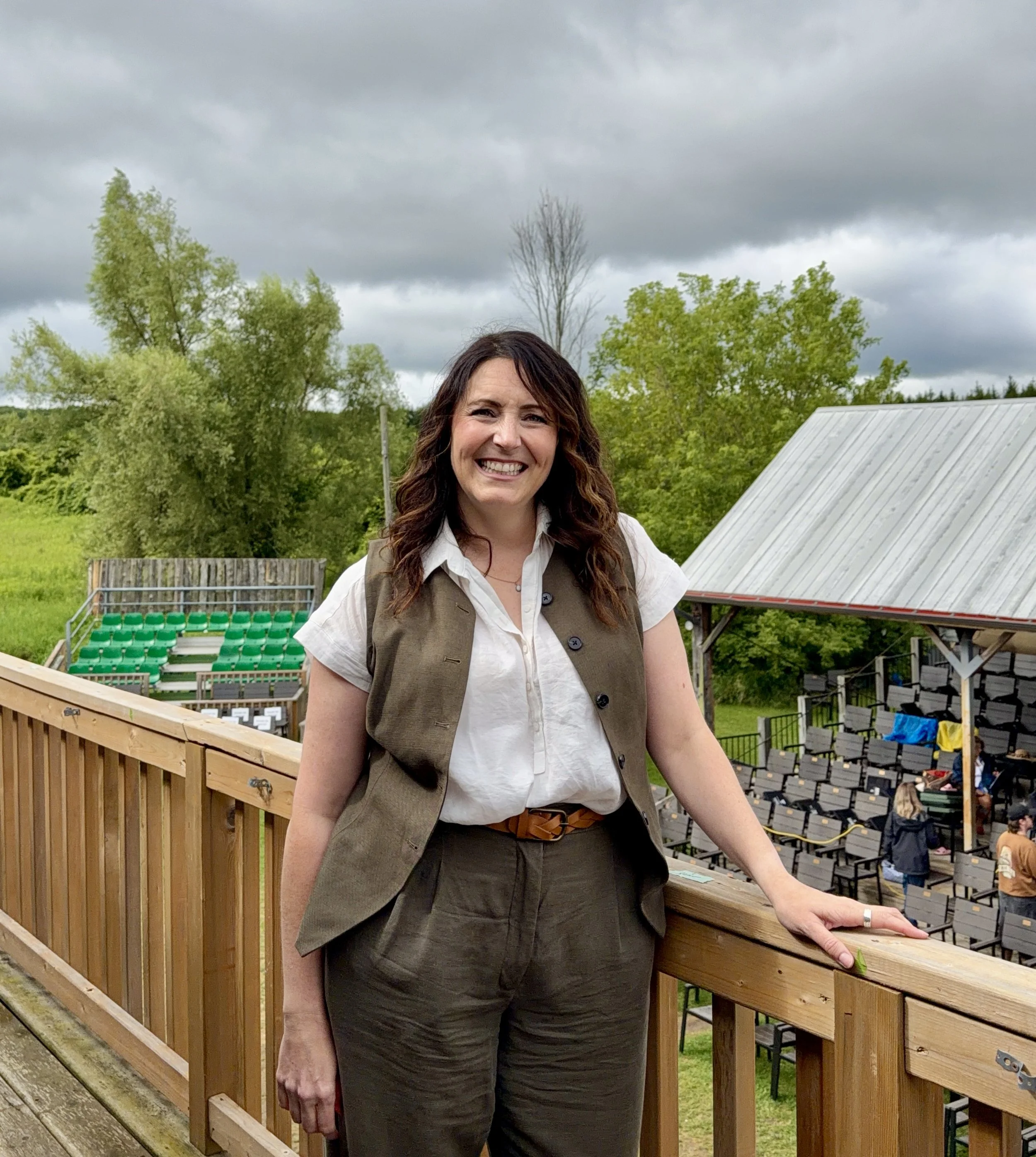
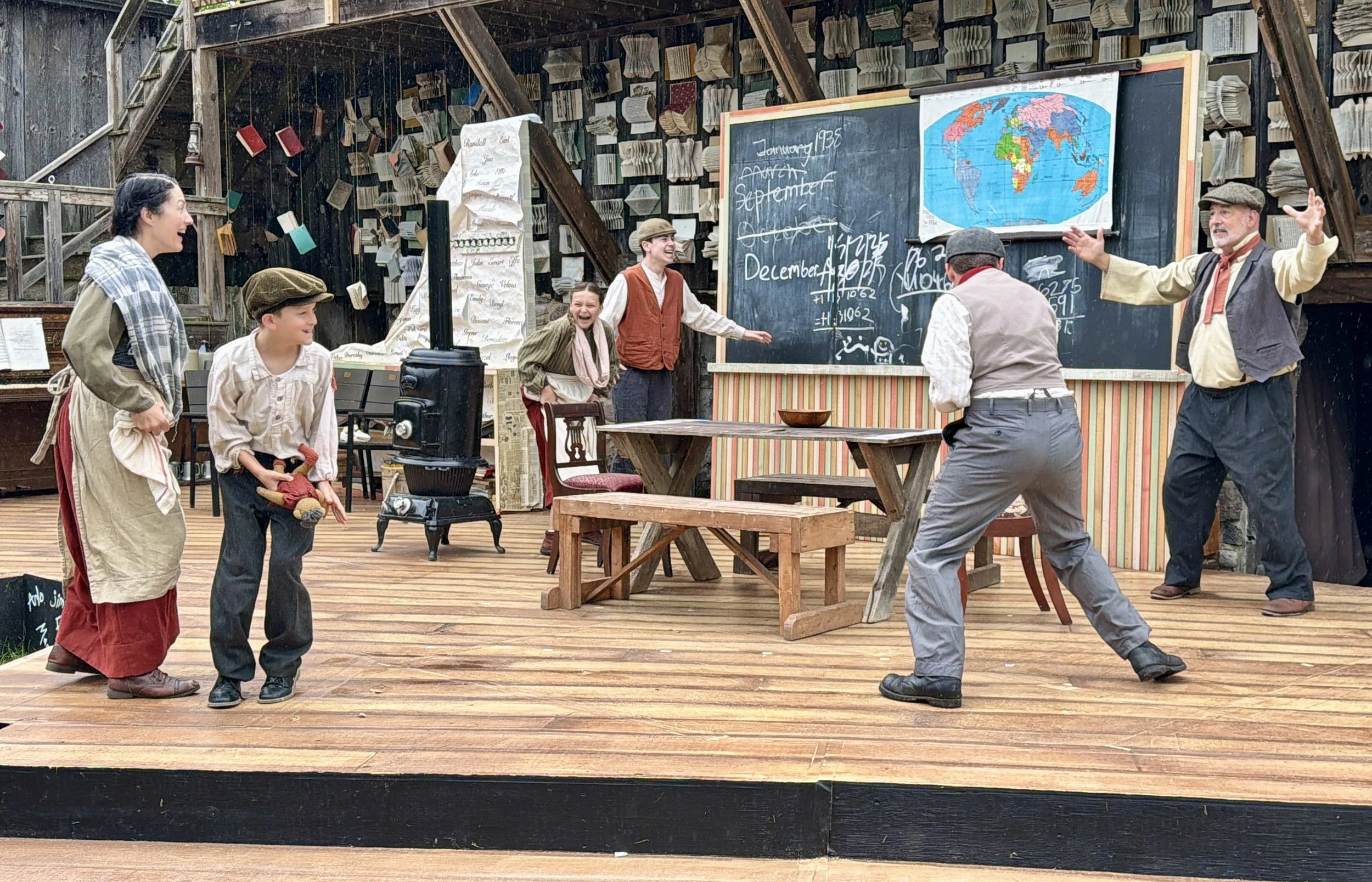
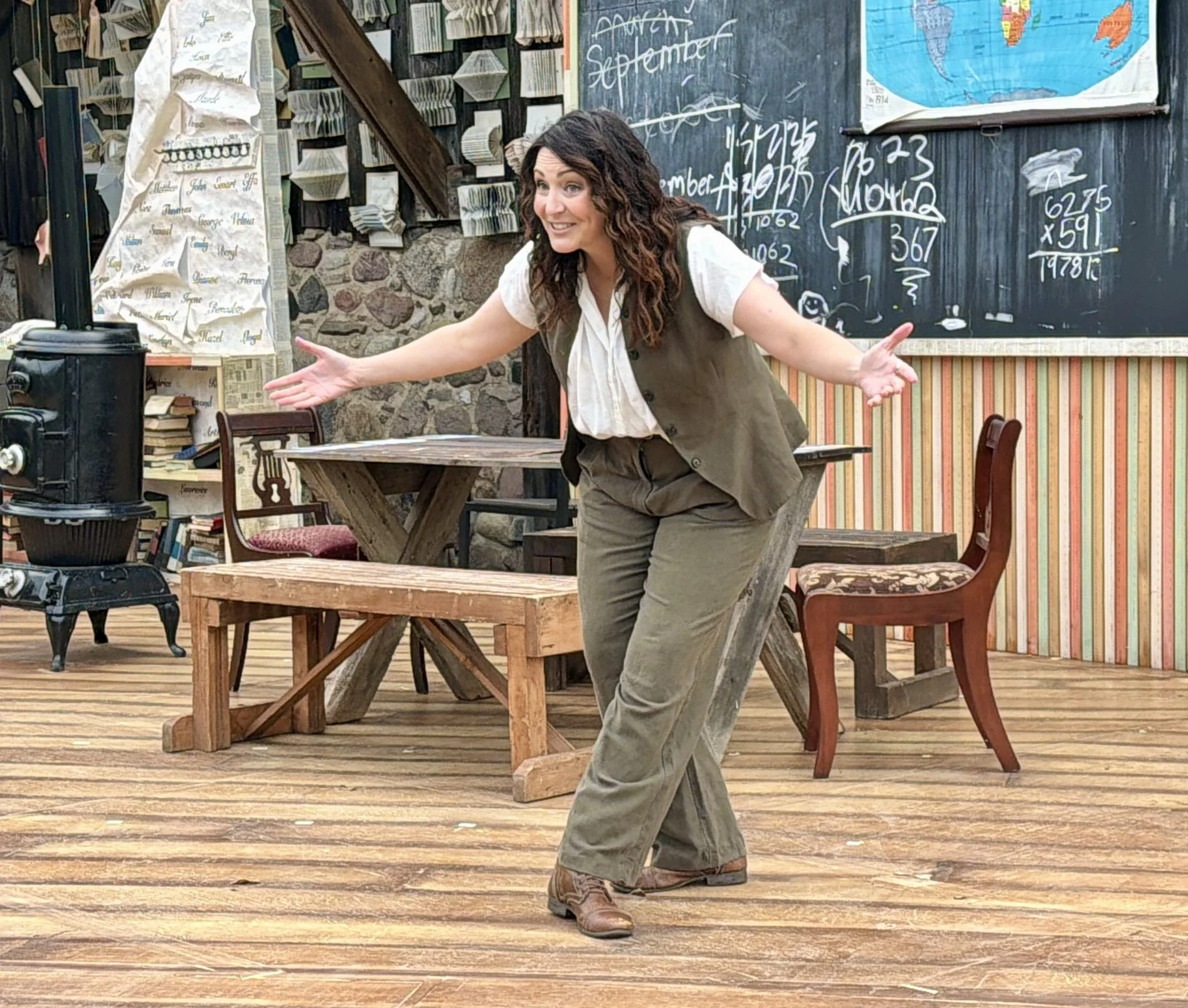
For Murphy, telling that story meant looking beyond dates and historical documents.
When she first accepted the challenge of writing the play, she found herself surrounded by stacks of family histories and genealogy books loaned by local residents eager to see their ancestors represented.
"So many people trusted me with their family stories," Murphy said. "I felt like I had to tell everybody's story."
For nearly a year, she admits she barely wrote anything.
"It was really hard," she laughed.
Eventually, Murphy realized she wasn't writing a history textbook.
"I had to get some of the history right, obviously, because it's a historical story, but it wasn't a lecture," she said. "I had to get the heart of it right."
She found that heart in the story of the Hickey family, whose experiences became the emotional backbone of the production.
"It was a universal tale of family struggle, migration and hope," Murphy said. "It had everything I needed."
Murphy also wanted the story to reflect another important chapter of local history.
Working alongside Indigenous Story Consultant Patti Shaughnessy, local Indigenous leaders and elders, she incorporated the first encounters between Irish settlers and the Indigenous communities already living in the area.
"I wanted to do this piece as part of reconciliation," Murphy said. "I wanted to tell that part of the story too."
Those personal connections don't stop with the playwright.
Many members of the cast have their own ties to the story they're telling.