FCM Grant Helps City of Peterborough Enhance Urban Canopy

The City of Peterborough is restoring its urban canopy and increasing tree coverage by planting thousands of new trees through grants from the Government of Canada’s 2 Billion Trees Program and the Federation of Canadian Municipalities’ Green Municipal Fund (GMF) totalling $1,623,230.

Photo courtesy of the City of Peterborough.

The money was from GMF’s Growing Canada’s Community Canopies (GCCC) initiative, to plant up to 4,000 trees throughout the city, maximizing benefits for residents and the City’s urban canopy. 

Jointly announced by the Government of Canada and FCM in May 2024, GCCC will support the planting of at least 1.2 million new trees across Canada by the end of March 2031, while providing funding, resources, and coaching to communities.  

“This initiative reflects the Federal Government’s commitment to addressing the impacts of climate change by restoring the vital ecosystems in our community,” said Emma Harrison, Peterborough-Kawartha MP. “Planting trees brings immediate benefits to all living beings and lasting benefits for generations to come. I’m proud to be part of planting the seeds today that our children and grandchildren will one day enjoy.”

“Fair and equal access to trees means ensuring that every resident, in every neighbourhood, can enjoy the cleaner air, shade, and beauty that our urban forest provides,” said Mayor Jeff Leal. “The support from this FCM grant will not only help us expand canopy coverage city-wide, but it will also allow us to replace the many trees we’ve lost. Peterborough's tree canopy has been greatly impacted over the last few years by a derecho in May of 2022, the ice storm in March of 2025, and the invasive emerald ash borer. With this grant, we'll be able to rebuild and replenish our urban forest, making sure the benefits of trees are shared equitably while building a greener, more resilient Peterborough for the future.”

“With the right trees in the right places, communities of all sizes can unlock environmental, social and economic benefits,” said Rebecca Bligh, President of the Federation of Canadian Municipalities. “Through the Growing Canada’s Community Canopies initiative, our municipalities now have access to the funding, training and resources they need to make tree planting a smart investment in the long-term health and resilience of our communities.” 

Trees will be planted along road allowances, parks and open spaces. The City will maintain the trees.   

Factors like space, soil conditions, sunlight, and nearby utilities and structures will help determine the location and species of the tree to be planted. Large, native-growing trees are planted whenever possible.  

As part of the City’s annual tree planting program, notification letters are sent to property owners when a tree is going to be planted on a boulevard or road allowance. A door hanger is also provided when the tree planting location has been marked in advance of the planting.

Engage with us on social media on Twitter, Instagram, Facebook, Threads, Tiktok, Youtube and LinkedIn. Write to us at tips@ptbocanada.com. Sign up for our newsletter here.

Fleming College Awarded Over $357,000 to Launch Research On Resilience In Nursing

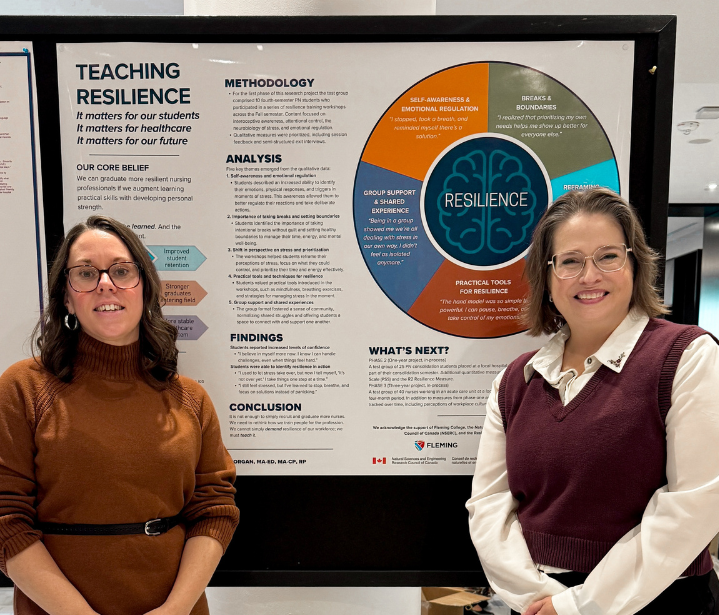
Fleming College has been awarded $357,033 to fund a three-year applied research project aimed at improving nurse well-being at Peterborough Regional Health Centre (PRHC) through structured resilience training, announced last Friday.

Photo by David Tuan Bui.

The money was awarded by the Canadian Institutes of Health Research (CIHR), in collaboration with the Natural Sciences and Engineering Research Council of Canada (NSERC) and the Social Sciences and Humanities Research Council (SSHRC). The funding is provided through the College and Community Social Innovation Fund (CCSIF), one of the main grant types under the tri-agency College and Community Innovation (CCI) program.

The project is led by Fleming College faculty members Jill Henderson, MN, RN; Wendy Morgan, MA-Ed, MA-CP; and Melissa Sherrer, MN, RN, from Fleming’s School of Health and Community Services. They are joined by Dr. Michael Ungar, Professor and Canada Research Chair in Child, Family and Community Resilience at Dalhousie University.

“The nursing workforce in Canada faces severe challenges with devastating rates of burnout and projected shortages,” said Dr. Theresa Knott, Acting Co-President, Fleming College. “A recent poll from the Canadian Federation of Nurses Unions reports 40 per cent of nurses intend to leave the profession within the next year. This funding will help address these workforce pressures and strengthen the future of health care in Ontario and across the country.”

The CCSIF-funded project builds on a successful pilot study led by Henderson and Morgan, previously funded by NSERC. In that study, the duo delivered resilience training to fourth-semester students in Fleming’s Practical Nursing program. Their research demonstrated clear benefits: participants reported improvements in overall mental health, increased self-awareness, better emotional regulation, and greater confidence in managing stress. Many also valued the group-based support.

With this new funding, the research team will adapt and expand their resilience training model to support nurses at PRHC and study the impact of the training over time. The goal is to help nurses’ psychological well-being, reduce burnout and strengthen job satisfaction. The study offers a scalable training model to shape best practices in nurse support at the provincial and national levels said Dr. Knott.

“Fleming College is proud to support the well-being of nurses already in the field through this important new resilience training,” she said. “While we remain committed to preparing career-ready nurses through our academic programs, this applied research project allows us to make a direct, meaningful impact on those currently serving in our healthcare system. It’s a response to real needs in our community.”

Engage with us on social media on Twitter, Instagram, Facebook, Threads, Tiktok, Youtube and LinkedIn. Write to us at tips@ptbocanada.com. Sign up for our newsletter here.

Trent University Receives $1 Million Grant to Advance Trauma-Informed Care in Long-Term Care

Through a $1-million research project grant, Trent University will introduce trauma-informed care practices into long-term care homes.

Photo courtesy of Trent University.

The practice is led by Dr. Kimberly Ritchie, an assistant professor in the Trent/Fleming School of Nursing (whose research focuses on trauma and dementia.

“We know from research by Dr. Ritchie that the need for trauma-informed approaches is pressing, with nearly two-thirds of Canadian adults reporting at least one potentially traumatic event in their lives,” says Dr. Holger Hintelmann, Trent vice-president of research and innovation. “This is valuable funding for a critical project that could inform innovations in care for our aging populations.”

Ritchie will lead a four-year project with colleagues from McMaster University to co-design, implement and evaluate a trauma-informed care framework. According to Trent, this work is part of the Canadian Consortium on Neurodegeneration in Aging and is supported by the Canadian Institutes of Health Research, in particular its Strategy for Patient-Oriented Research initiative, as well as the Azrieli Foundation, Canadian Centre for Caregiving Excellence, Brain Canada Foundation and SPOR.

Trauma-informed care emphasizes understanding the lasting impact of trauma, creating safe and inclusive environments, and equipping staff with tools to recognize triggers, de-escalate distress and build trust with residents says Ritchie.

“Research shows a two-way relationship between PTSD and dementia, making transitions into institutional settings especially difficult,” she said. “For many residents, long-term care environments can unintentionally trigger trauma memories, leading to distress and behavioural symptoms. Embedding a trauma-informed approach means safer, more inclusive and supportive environments for both residents and staff.”

The project will also focus on supporting care staff, who often face high levels of stress and burnout. The framework will be piloted in one home, refined and then tested in a national trial across four long-term care homes.

Engage with us on social media on Twitter, Instagram, Facebook, Threads, Tiktok, Youtube and LinkedIn. Write to us at tips@ptbocanada.com. Sign up for our newsletter here.

City of Peterborough Releases OLG Gaming Revenue Spending

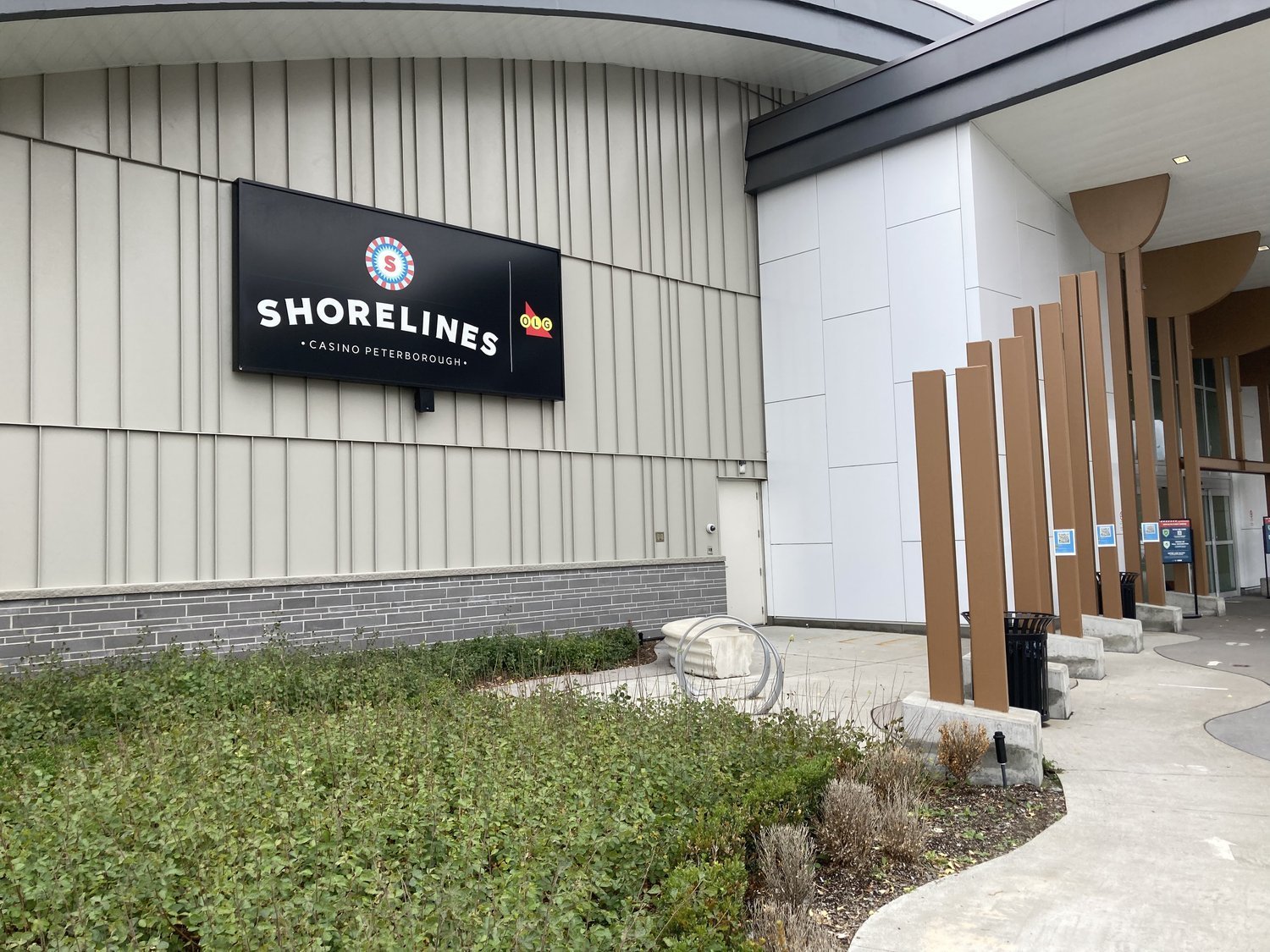
The City of Peterborough has released its funding recipients from revenue by the Ontario Lottery and Gaming Corporation as the host community for Shorelines Casino Peterborough.

Since the gaming site opened in October 2018, the City of Peterborough has received $16,524,145. File Photo.

Ontario Lottery and Gaming Corporation revenues totaled $2,717,827 for the 2024/2025 fiscal year.

Examples of how the funding was directed to benefit the community in 2025 include:

  • $880,900 toward police equipment needs, including replacing vehicles 

  • $500,000 for planting trees 

  • $500,000 toward the City’s commitment of providing $4 million to the Canadian Canoe Museum’s capital campaign for its new facility 

  • $473,000 for Fairhaven long-term care facility’s capital funding 

  • $155,000 for improvements to parks 

  • $89,100 for public art 

  • $75,000 for sport tourism activities 

“Being a casino host community allows us to reinvest OLG revenue in areas where it will enhance the quality of life for residents and help our city grow. Thank you to the provincial government and OLG for being a strong partner through these significant investments in community infrastructure,” said Mayor Jeff Leal.

“OLG is proud to be a vital part of the City of Peterborough,” said Kathleen Devine, OLG’s Senior Municipal Relations Manager. “For the last 50 years, since the organization’s start in 1975, 100 per cent of OLG profits are reinvested in Ontario to support provincial priorities.  From critical infrastructure to important local programs, to community festivals, OLG’s profits are hard at work in the City of Peterborough and all across our province to build stronger communities. We also appreciate the contribution of gaming employees at Shorelines Casino Peterborough who are making life in Peterborough that much better. When you play at an Ontario casino, you play for Ontario.”

Engage with us on social media on Twitter, Instagram, Facebook, Tiktok, Youtube and LinkedIn. Write to us at tips@ptbocanada.com. Sign up for our newsletter here.


Trent University Receives $359,000 Grant From TD Bank Group For University Green Network

Trent University has received over $359,000 from the TD Bank Group (TD) to support conservation and learning on the University Green Network (UGN), announced on Wednesday.

A student conducts research in a forested area part of the University Green Network at Trent University. Photo courtesy of Trent University.

The network is a large, interconnected 868-acre system on Trent’s Peterborough campus, including habitat restoration, biodiversity monitoring, Indigenous Knowledge integration, and experiential learning opportunities for students, according to Julie Davis, Trent's vice-president of external relations and development.

“Thanks to this latest funding from TD, we can take the next step in realizing the vision for the UGN – implementing the Ggwepnandizamin Systems-Level Plan,” she said. “The plan provides a structured approach to monitoring and enhancing biodiversity and ecosystem health across campus. This funding support will allow us to restore and enhance habitats, establish best practices in conservation, and create meaningful opportunities for students and the community to engage with the natural environment.”

This new grant builds on funding received from TD in 2022 to support multiple initiatives within the UGN, a system that includes diverse habitats, wildlife corridors, productive landscapes, and various green spaces that promote ecological function and biodiversity according to a press release. The UGN was first envisioned in the Trent Lands and Nature Areas Plan.

Earlier funding from TD facilitated the development of the Ggwepnandizamin Plan in collaboration with faculty, students, Michi Saagiig First Nations, and local organizations, including Camp Kawartha and Peterborough Green-Up.  The word Ggwepnandizamin means ‘together, putting our best effort forward towards something important’ in Anishinaabemowin. The name was provided by the Elders and Knowledge Keepers Council at Trent, who provided wisdom and guidance in developing the plan.

“Trent University's focus on enhancing biodiversity and embedding Indigenous Knowledge in environmental stewardship reflects a deep commitment to reconciliation and sustainability,” said Robyn Small, TD Bank Group senior manager, Philanthropy, Sustainability and Corporate Citizenship. “Through the TD Ready Commitment, TD is proud to continue supporting Trent University in advancing this important work that honours Indigenous knowledge and creates hands-on opportunities for students and community members to meaningfully connect with the environment.”

During the next three-year funding period, Trent says the will implement key actions from the Ggwepnandizamin Plan, including developing wildlife corridors and natural areas, such as pollinator gardens; creating Michi Saagiig cultural harvesting areas; reducing invasive species, such as phragmites; launching Indigenous storytelling initiatives; and expanding teaching and learning opportunities.

The grant will also fund a part-time ecological land planning coordinator to implement the plan, integrate ecological planning into campus projects, support environmental monitoring, facilitate Indigenous engagement and involve students and faculty.

Engage with us on social media on Twitter, Instagram, Facebook, Threads, Tiktok, Youtube and LinkedIn. Write to us at tips@ptbocanada.com. Sign up for our newsletter here.

Ontario Government Invests Over $12 Million For Infrastructure In Peterborough City and County

The Ontario Government is investing $12,011,899 in the City and County of Peterborough to help renew and rehabilitate critical infrastructure.

In 2026, Ontario will allocate $400 million in OCIF funding to help 423 small, rural and northern communities address critical infrastructure such as roads, bridges, water and wastewater systems. Photo by David Tuan Bui.

The funding will be delivered through the 2026 Ontario Community Infrastructure Fund (OCIF) as part of the government’s more than $200 billion capital plan to protect Ontario by building key public infrastructure that will strengthen the economy and keep workers on the job in the face of tariffs and economic uncertainty according to MPP Dave Smith.

“This provincial commitment ensures our communities receive the reliable, predictable funding necessary to maintain and rehabilitate critical infrastructure assets such as local roads, bridges, and essential water and wastewater systems,” he said. “By empowering our local councils with this resource, we are stabilizing costs, strengthening the foundational services that residents depend upon, and facilitating continued economic growth throughout the county.”

The OCIF provides funding for local infrastructure projects in municipalities with populations under 100,000, rural and northern municipalities, as well as for Local Services Boards that own water or wastewater systems.

“Peterborough County thanks the Government of Ontario for its continued investment in local infrastructure through the Ontario Community Infrastructure Fund,” said Bonnie Clark, Peterborough County Warden. “This funding supports essential projects that help maintain the services our residents rely on every day. We remain committed to working collaboratively to ensure all communities in Peterborough County can thrive."

“This funding will help us maintain and improve our roads for the benefit of all residents,” said Mayor Jeff Leal.

The amount of funding for 2026 is as follows:

  • North Kawartha: $125,000

  • Peterborough County: $1,260,030

  • Selwyn: $232,869

  • Trent Lakes: $125,000

  • Havelock-Belmont Methuen: $144,000

  • Douro-Dummer: $125,000

  • City of Peterborough: $10,000,000

Engage with us on social media on Twitter, Instagram, Facebook, Threads, Tiktok, Youtube and LinkedIn. Write to us at tips@ptbocanada.com. Sign up for our newsletter here.

OLG Issues Second-Quarter Gaming Revenue Payment to Peterborough of $716,653

Ontario Lottery and Gaming Corporation (OLG) has made their second quarter payment totaling $716,653 to the City of Peterborough for hosting Shorelines Casino Peterborough.

Since 1994, host communities have received more than $2.3 billion in non-tax gaming revenue. File Photo.

The quarter was from July 1 to Sept. 30.

During OLG’s fiscal year (April 1, 2024 to March 31, 2026), Peterborough has received $1,428,934. Since the gaming site opened in October 2018, Peterborough has amassed $16,524,145 according to a press release.

These payments to host communities are based on a formula consistently applied across all gaming sites in Ontario using a graduated scale of gaming revenue at the hosted site as stated in a press release. 

“Peterborough is able to offer local programs and improve the quality of life of our residents through the economic activity generated through revenue from Shorelines Casino Peterborough,” said Dave Smith, Peterborough-Kawartha MPP. “The people of Ontario benefit from OLG’s gaming revenues as 100 per cent of OLG profits are reinvested in the province to support provincial priorities.”

Engage with us on social media on Twitter, Instagram, Facebook, Tiktok, Youtube and LinkedIn. Write to us at tips@ptbocanada.com. Sign up for our newsletter here.


Ontario Government Invests $981,888 to Peterborough Police Service to Combat Theft and Human Trafficking

The Peterborough Police Service (PPS) is receiving a $981,888 investment from the Ontario Government to enhance local crime-fighting capabilities across two major initiatives: retail theft and human trafficking, announced at the Peterborough Police Station on Friday afternoon.

Chief Stuart Betts (left) and MPP Dave Smith explaining to the media on how the new investment will be used. The Peterborough Police Service project is one of 127 projects being funded across the province for 2025-26. Of the 127 projects, 88 projects will address local priorities and 39 projects will address provincial priorities, including gun and gang-related violence, sexual violence and harassment, human trafficking, mental health and addictions, hate-motivated crime, housing and homelessness and commercial/retail theft. Photo by David Tuan Bui.

The money is delivered through the Community Safety and Policing Grant Program. This is part of a $91 million investment to help protect families and communities across the province.

Funding has been secured to strengthen the PPS's successful Community F.L.R.S.T. (Focused Investigation Response and Support Team), which targets retail and provincial theft. The F.I.R.S.T. Unit has made 466 arrests and recovered over $119,000 in stolen property for local businesses since launching in January last year.

There is $500,000 invested to strengthen the PPS's efforts against the provincial priorities of sexual violence, harassment and human trafficking.

This funding will be used to enhance survivor-informed strategies across three key pillars:

  • Training & Personnel: Ensuring all frontline officers receive continuous, trauma-informed training, supported by dedicated specialized roles like the Human Trafficking Investigator and Domestic Violence Coordinator.

  • Technological Tools: Expanding the Community Safety CCTV Network and installing high-resolution Automatic License Plate Recognition (ALPR) technology. These tools are crucial for tracking suspect vehicles and disrupting exploitation through transportation networks.

  • Community Engagement: Improving public education and outreach, with the technology expansion guided by a transparent, community-led CCTV Steering Committee. This investment directly supports the PPS's strategic goal of strengthening community partnerships and providing both proactive enforcement and compassionate, effective support for victims of complex and often hidden crimes.

“Every resident deserves to feel safe in their community,” said Dave Smith, Peterborough-Kawartha MPP. “This substantial funding will equip our police service with the resources to not only crack down on organized retail crime and put repeat offenders behind bars through the successful Community F.I.R.S.T. team, but also to deliver specialized, trauma-informed support for victims of the horrific crimes of human trafficking and sexual violence. Our government is committed to ensuring our police have the tools they need to protect our families and make our streets safer.”

“Because of this investment, the Peterborough Police Service will be able to continue to tackle issues that impact residents and visitors and help us achieve our strategic goals of enhancing community safety, modernizing the service through technology and supporting our people,” said. Chief Stuart Betts of the Peterborough Police Service.

This funding provides new technology to simplify the reporting process for residents. It also helps continue to train and educate officers in trauma-informed practices around human trafficking and sexual violence.

The money also allows the Peterborough Police to enhance its CCTV program to install cameras at key intersections that lead in and out of the community according to Chief Betts.

“As I have stated many times, many of the most severe crimes that have occurred in this community over the past two years have been perpetrated by people who have travelled here; having cameras equipped with automatic license plate readers at strategic locations will assist in a multitude of investigations,” he said. “These are issues that are important to our community and with this support we will continue to be able to make strides in solving crimes and ensuring the safety of all residents in our community.”

Engage with us on social media on Twitter, Instagram, Facebook, Threads, Tiktok, Youtube and LinkedIn. Write to us at tips@ptbocanada.com. Sign up for our newsletter here.

Ontario Government Invests Over $186,000 For Peterborough County OPP Mobile Crisis Response Teams Expansion

The Ontario government is investing $186,860.34 over two years to support the mobile crisis response team expansion, led by Peterborough County OPP, announced at the Peterborough Police Station on Friday afternoon.

Photo by David Tuan Bui.

The funding will enable police to work with trained crisis workers to provide the specialized support often needed when interacting with people who are experiencing a mental health-related crisis.

“Our police are increasingly confronted with the need to assist vulnerable people in a mental health crisis,” said Dave Smith, Peterborough-Kawartha MPP. “This funding will assist the Peterborough County OPP deliver appropriate services focused on de-escalation. Meeting the unique needs of an individual who is in crisis will help ensure a better outcome for everyone involved.”

For 2025-26 and 2026-27, 36 police services and OPP detachments will receive approximately $9 million through the Mobile Crisis Response Team Enhancement Grant to increase the capacity of mobile crisis response teams across the province.

“We’re supporting our police services by providing them with the resources they need to assist vulnerable people in crisis situations,” said Solicitor General Michael Kerzner. “Mobile Crisis Response Teams are best positioned to respond to people experiencing a mental health or addictions crisis and are an important part of how police in collaboration with this government are working hard to keep Ontarians safe.”

“This grant will enable the OPP to expand its Mobile Crisis Response Teams (MCRT), allowing us to improve pathways and connections to necessary services for those experiencing crisis,” said Chris Galeazza, Inspector/Detachment Commander, Peterborough County OPP. “When police and health partners can continue working together through initiatives like this, safety is improved, and we see better outcomes for everyone.”

“We're proud to receive this enhancement grant to expand live crisis response across the 4,000 km² region served by the OPP,” said Calli Lorente, CMHA-HKPR Manager of Integrated Crisis Services. “With a second team in place, we can respond in real time to support those experiencing crisis. This timely response allows for a stronger connection to the person and a more appropriate connection to the right service. Connecting people in the community to people at resources in their community is the goal of this team. The expansion is exciting as it supports positives outcomes in all aspects of the community.”

Engage with us on social media on Twitter, Instagram, Facebook, Threads, Tiktok, Youtube and LinkedIn. Write to us at tips@ptbocanada.com. Sign up for our newsletter here.

Federal and Provincial Governments Provide $830,015 of Additional Funding For Seven Housing Units In Peterborough

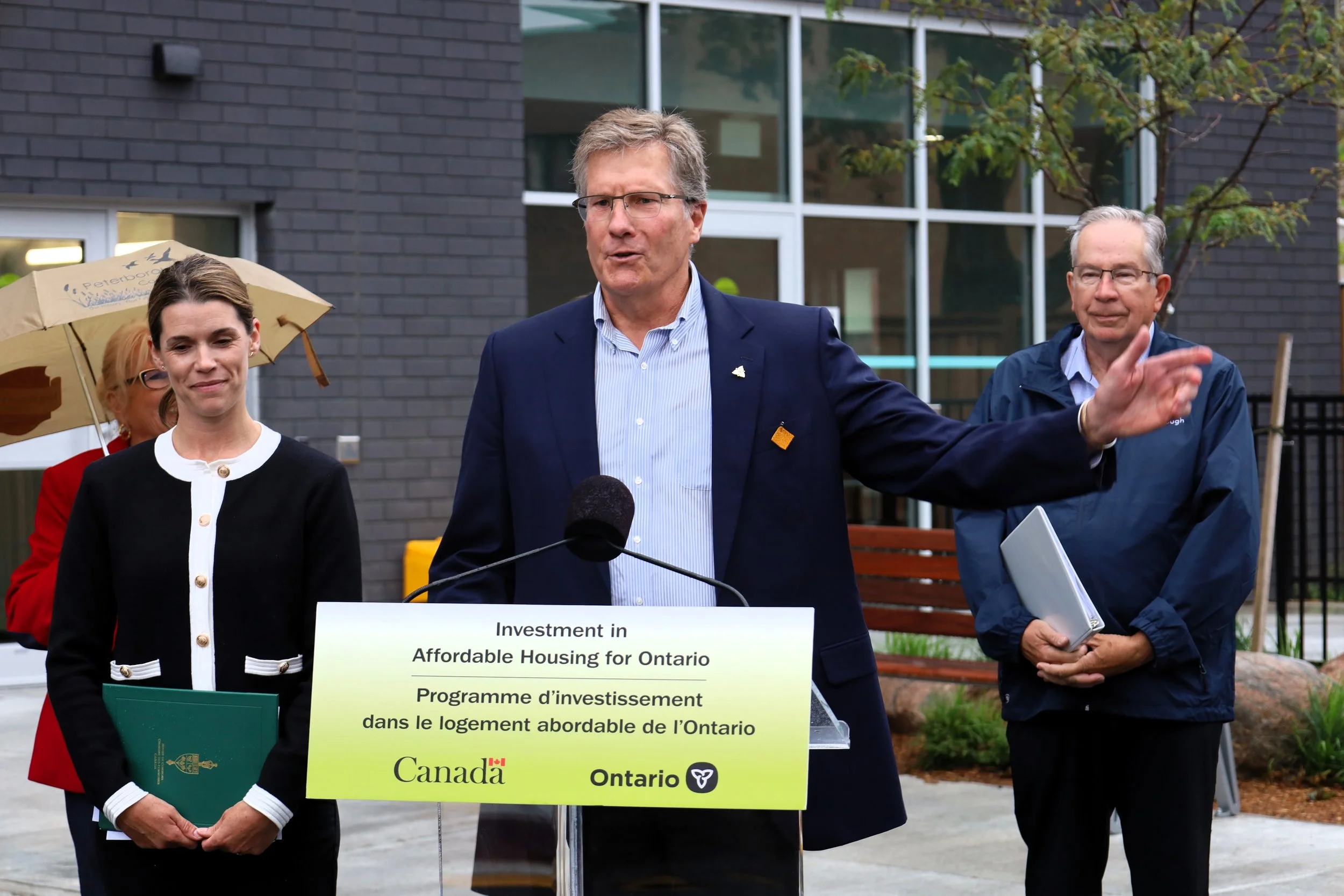
During the grand opening of the multi-storey housing unit at 681 Monaghan Rd., the federal and provincial governments announced an additional investment of $830,015 for constructing seven housing units for vulnerable populations in Peterborough on Thursday morning.

Emma Harrison, Peterborough-Kawartha MP (left); Gregor Robertson, Minister of Housing and Infrastructure and Minister (centre) and Mayor Jeff Leal (right) during the grand opening of the multi-storey housing on 681 Monaghan Rd. Photo by David Tuan Bui.

The announcement was made by Emma Harrison, Peterborough-Kawartha MP, on behalf of Gregor Robertson, Minister of Housing and Infrastructure and Minister responsible for Pacific Economic Development Canada; and Brian Saunderson, Parliamentary Assistant to the Honourable Rob Flack, Ontario’s Minister of Municipal Affairs and Housing, alongside Jeff Leal, Mayor of Peterborough and Bonnie Clark, Warden of Peterborough County.

“Everyone deserves a roof over their head and a safe place to call home. This investment will help many families and individuals to heal and rebuild their lives, offering not just a home but also hope,” said Harrison. “The federal government’s ongoing support and commitment to creating affordable housing will help improve the lives of the most vulnerable from our community, here in Peterborough.”

“The federal government is committed to helping communities develop local solutions to address the housing crisis,” said Robertson. “The projects announced today will provide more safe, affordable homes for the most vulnerable residents of Peterborough. I’m proud of our government’s involvement, and of the tangible difference it will make for people in this community.”


Rebekah Victor or Peterborough Housing Corporation tours (far left) the dignitaries through a vacant unit of the multi-storey unit. The Governments of Canada and Ontario previously announced over $854,000 for this project, bringing the total joint federal-provincial investment to more than $1.6 million. Photo by David Tuan Bui.

The units are part of a new six-storey affordable housing development. The building comprises 53 units; including 37 one-bedroom, 11 two-bedroom and five three-bedroom units. The building is designed to support individuals and families facing challenges. This project represents a significant step toward addressing the community's urgent housing needs according Mayor Jeff Leal.

“The City of Peterborough is facing significant housing challenges, and the project at 681 Monaghan Rd. represents a major step forward in addressing them,” he said. “By working in partnership with the federal and provincial governments, we are securing the resources needed to build and repair affordable homes for the people who need them most. These investments provide safe, stable housing, and they strengthen our community for years to come. This project shows what we can accomplish at the local level by working together with our provincial and federal partners.”

This investment is made through the Ontario Priorities Housing Initiative. It is an initiative under the Canada-Ontario Bilateral Agreement, part of the National Housing Strategy.

Engage with us on social media on Twitter, Instagram, Facebook, Threads, Tiktok, Youtube and LinkedIn. Write to us at tips@ptbocanada.com. Sign up for our newsletter here.