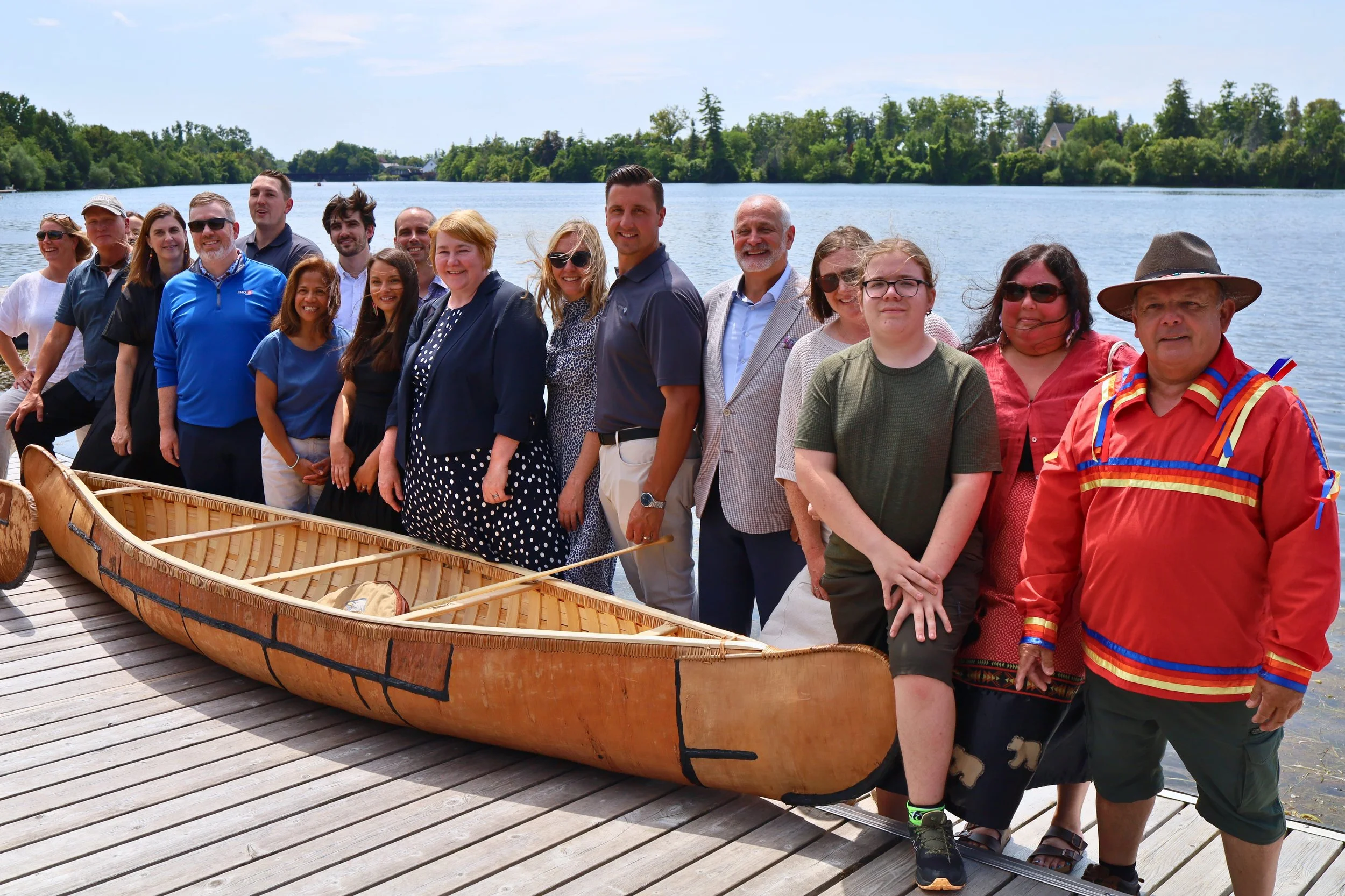
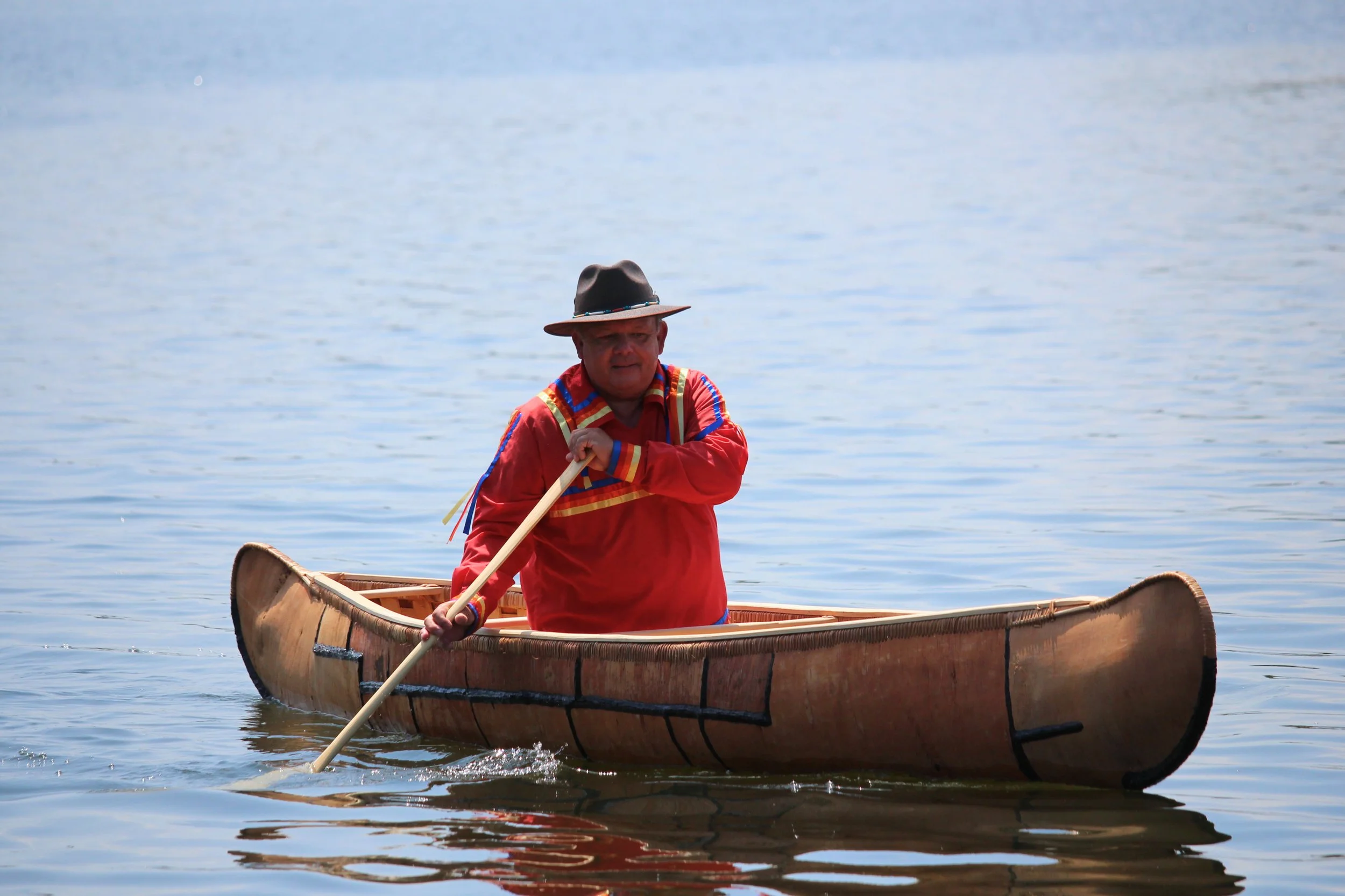
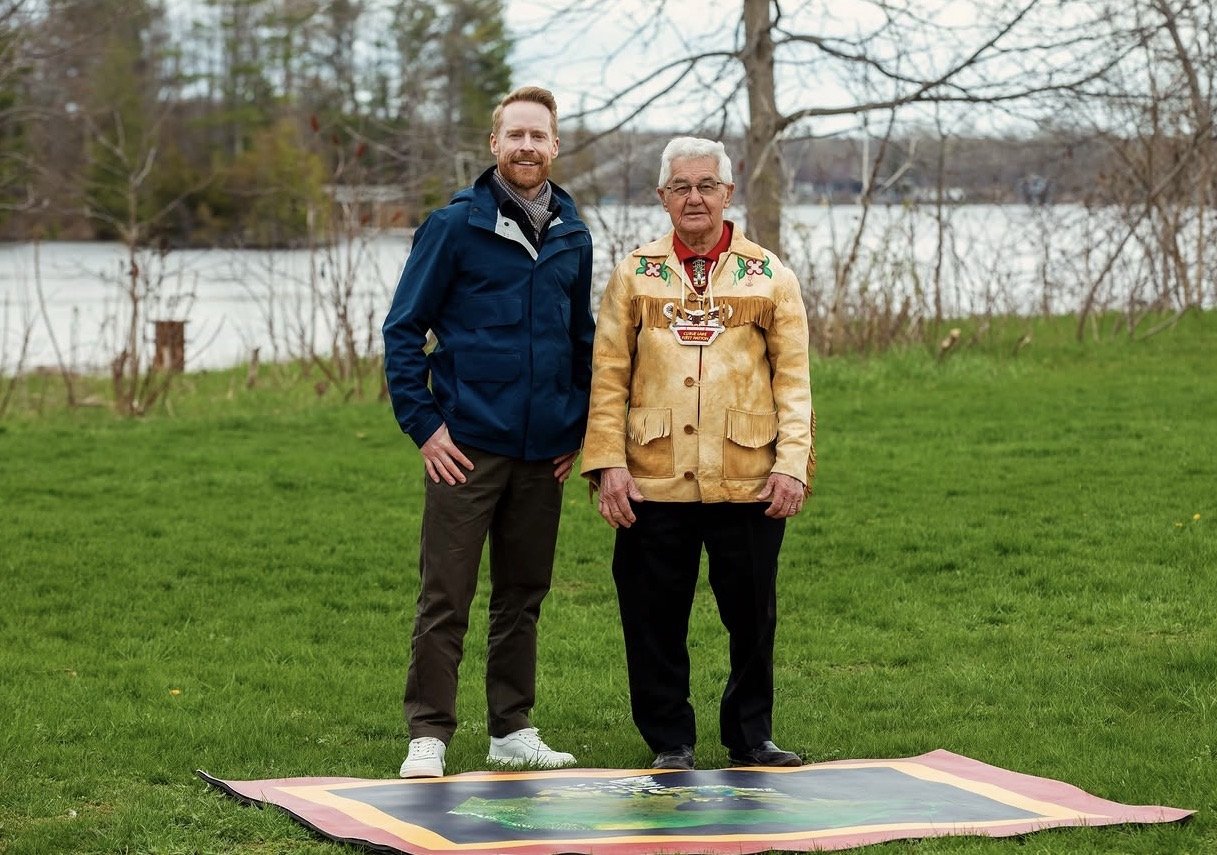
Labrador, who was raised on the Wildcat Reservation in Queens County, Nova Scotia, is one of only a handful of people still practicing the traditional craft of Mi’kmaq birch bark canoe building. His residency gave visitors a rare chance to watch the canoe take shape while learning about the history, techniques and cultural significance behind the centuries-old tradition.
The launch also reunited the new canoe with another built by Labrador and his family several years ago for the Museum's collection. That 21-foot ocean-going birch bark canoe, complete with a sail, was created during the development of the Museum's new home and represents the Mi'kmaq tradition of ocean travel.
Labrador's residency was part of the Canadian Canoe Museum's Builders in Residence Program, which invites canoe and kayak builders, artists and makers from across Canada to share their knowledge and craftsmanship with visitors.
In addition to building canoes, Labrador is known for creating traditional baskets, hand drums and other Indigenous works, and has shared his skills across North America and internationally.
The Museum says the residency gave visitors the opportunity to do more than simply watch a canoe being built. They were able to meet Labrador, ask questions, and gain a deeper appreciation for a traditional craft that was once close to being lost.